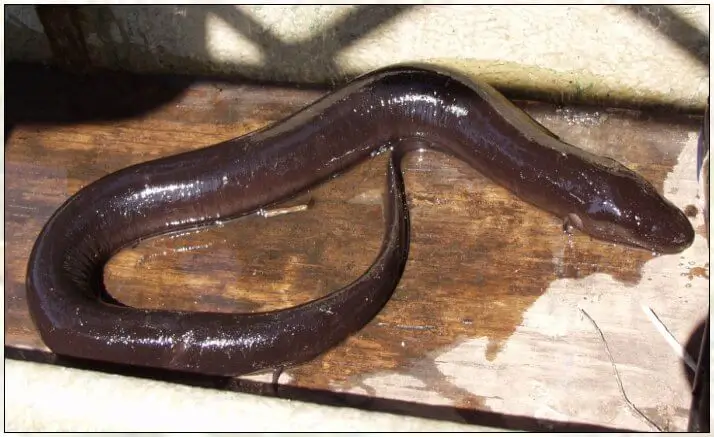
There are only three species in this family. Amphiuma are found in the southeastern United States.
They have smooth skin, very long bodies, and very tiny legs. Amphiuma look like eels and are sometimes called Congo eels.
Amphiumas have gill slits and lungs and are found in slow-moving streams, lakes, marshes, swamps, ditches, and bayous. They spend the day in burrows in the mud or vegetation.
Amphiumas are nocturnal and eat amphibians, insects, reptiles, crayfish, worms, and fish. One species, the three-toed amphiuma, can be three feet long!
Female amphiumas lay clusters of up to 200 eggs. The female cares for the eggs until they hatch at 20 weeks. The larvae have external gills. When they become adults, they lose their gills but keep a pair of gill slits.