There are three species in this family. They are found in South America in tropical and subtropical wetlands, grasslands, and floodplains. Screamers get their name from their extremely loud vocalizations that can be heard for up to two miles away.
Screamers are large birds, 2.5 – 3 feet in length, with a wingspan of 5.5 feet. They have a goose-like body and a chicken-like head. They have a short, hooked bill and long, thick legs with three front toes and one rear toe. The front toes are connected with a little bit of webbing.
Screamers have two sharp, curved spurs on their wings and a crest of feathers on the top of their head. They use the spurs on their wings when they fight over territory and mates.
Screamers are herbivores and eat aquatic plant leaves, stems, flowers, and roots.
Both the male and the female screamer build the nest. The female usually lays around 4-5 eggs. Both the male and the female incubate the eggs and care for the chicks.
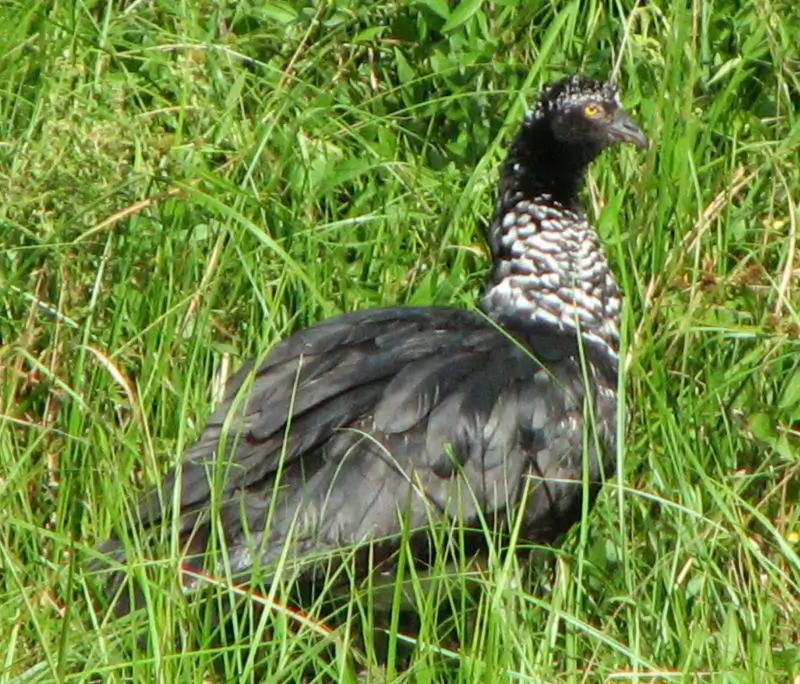
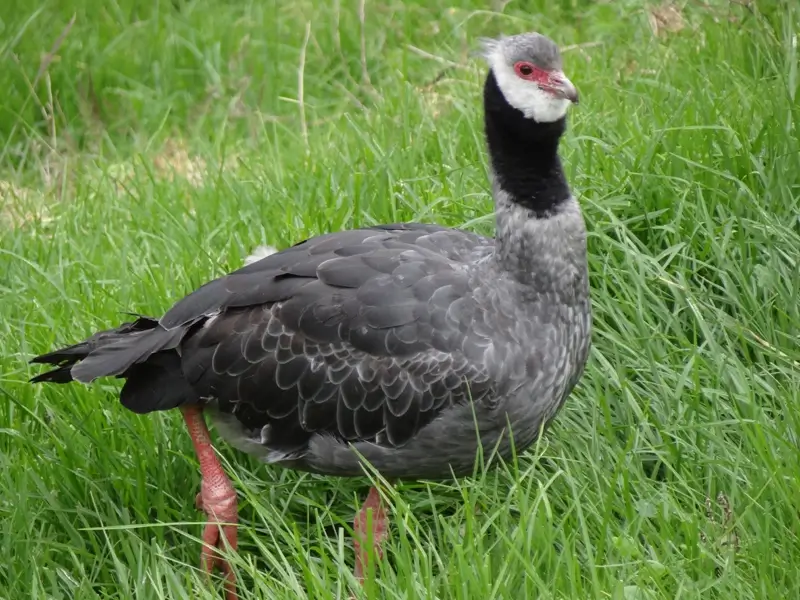
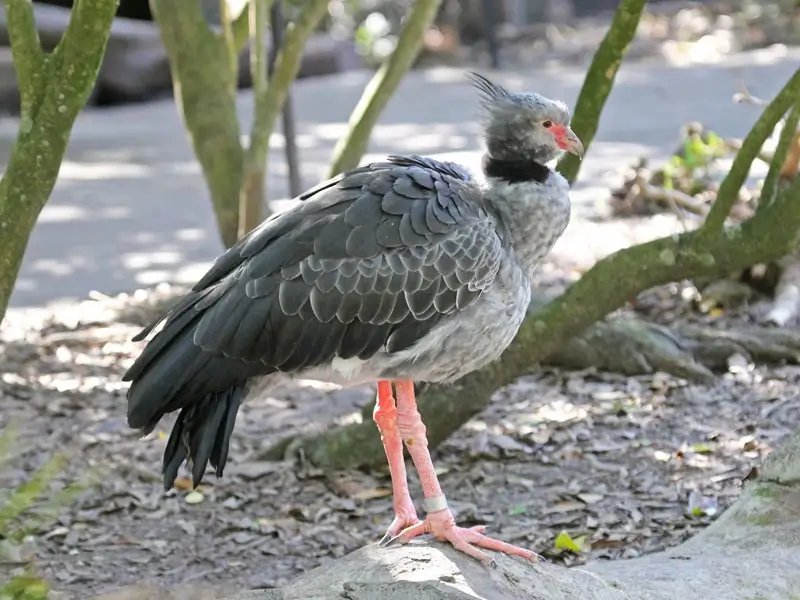
Species in this family include the horned screamer, the northern screamer, and the southern screamer.
Horned Screamer (Anhima cornuta)
The horned screamer is found in Bolivia, Brazil, Colombia, Ecuador, French Guiana, Guyana, Paraguay, Peru, Suriname, and Venezuela. IUCN Redlist Status: Least Concern
Northern Screamer (Chauna chavaria)
Northern screamers are found in Colombia, and Venezuela IUCN Redlist Status: Least Concern
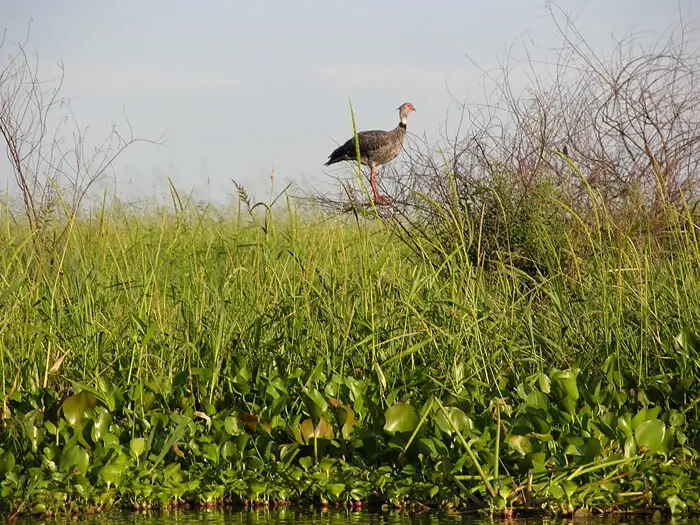
Southern Screamer (Chauna torquata)
Southern screamers are found in Argentina, Bolivia, Brazil, Paraguay, and Peru. IUCN Redlist Status: Least Concern