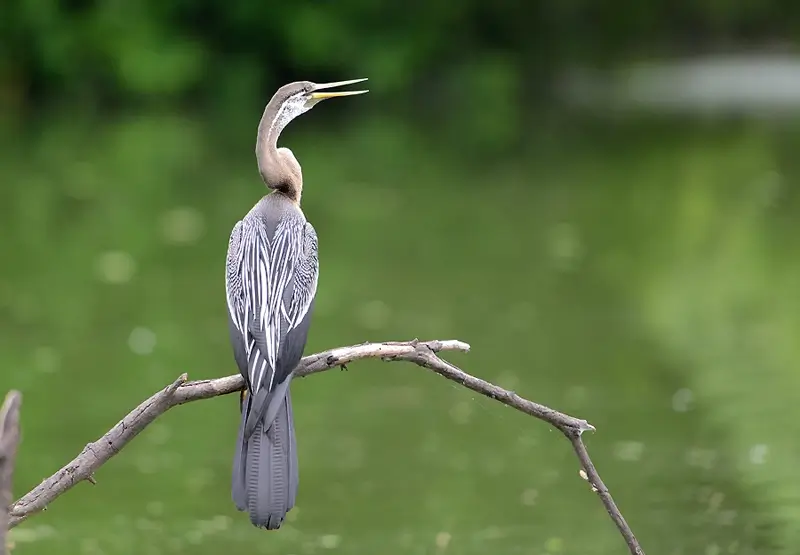
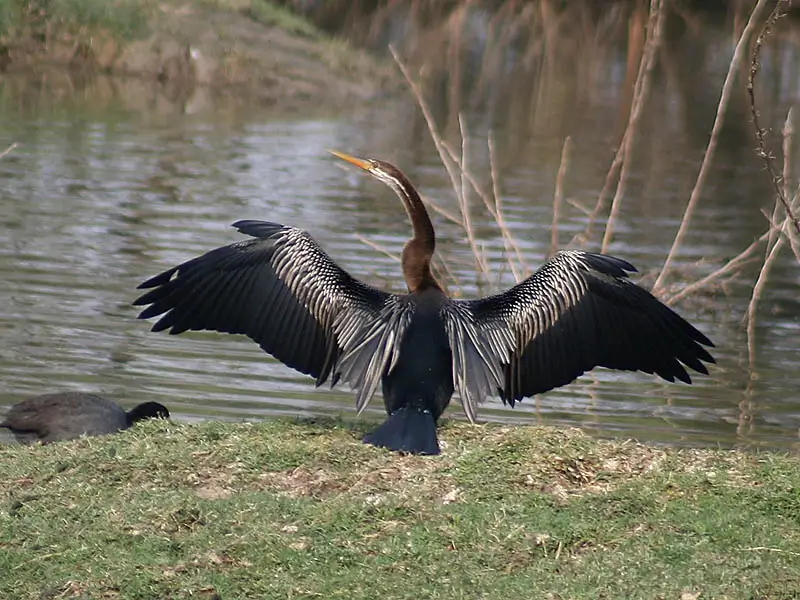
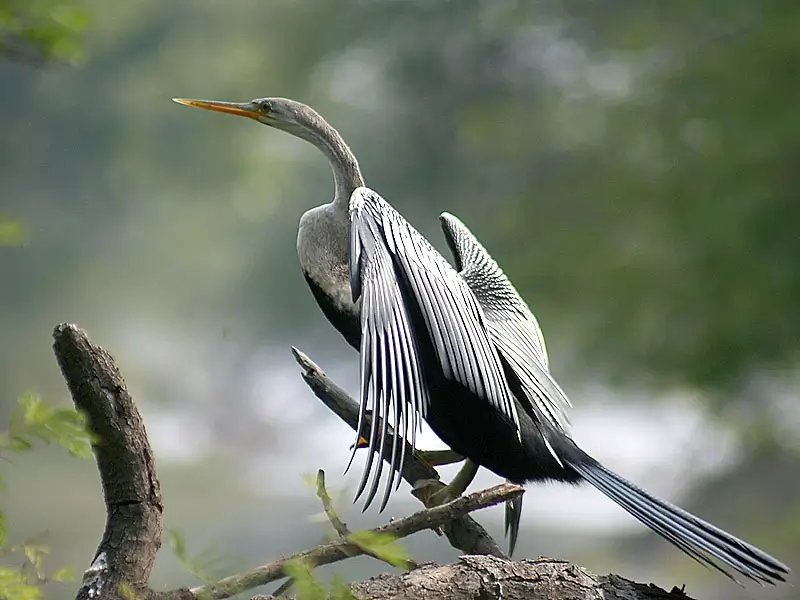
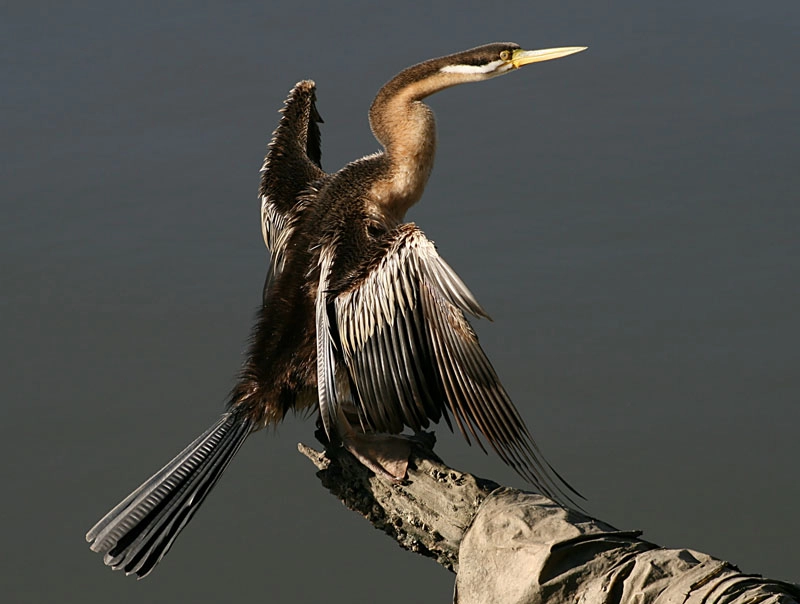
There are four species of large birds in this family. They are found on lakes, rivers, marshes, swamps, estuaries, lagoons, and bays in tropical and subtropical environments.
Anhingas and darters have long, slender necks; short legs; long, pointed bills; and long tails. Males have a crest of feathers on their necks. Males and females are the same size. Anhingas and darters are brown or black.
Males and females form monogamous pairs during the breeding season, and both the male and female incubate the eggs using their webbed feet. Both parents care for and feed the chicks.
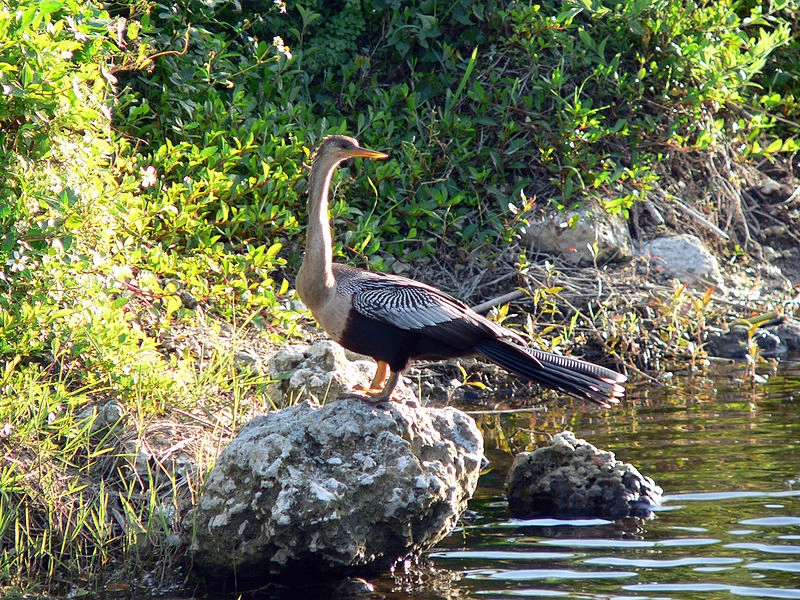
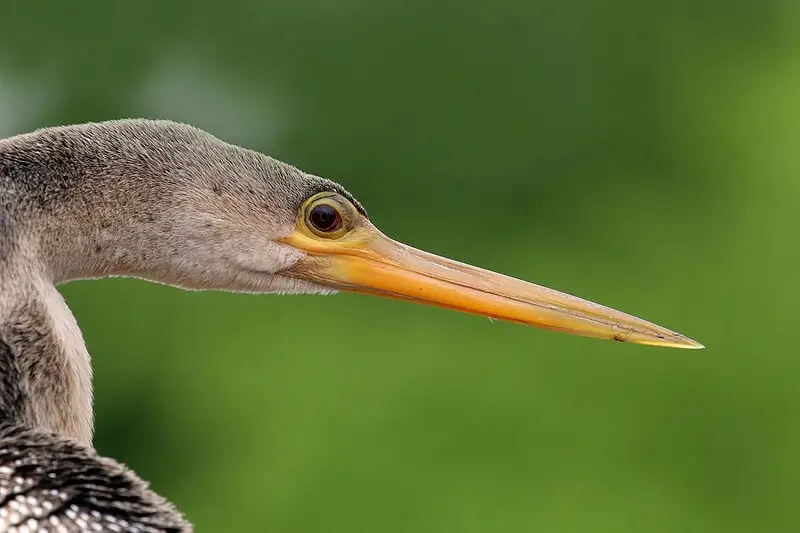
Anhinga (Anhinga anhinga)
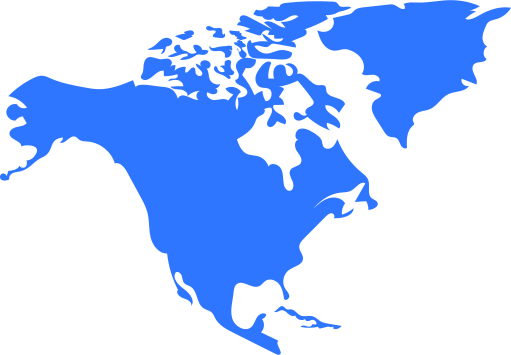
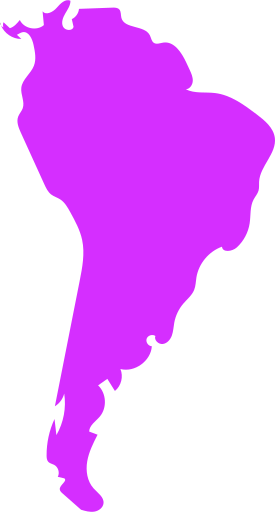
The anhinga is found off the Gulf Coast and the Atlantic Coast from North Carolina to Texas and in the Mississippi Valley north to Kentucky and Missouri. It is also found in Central America, South America, and the Caribbean. IUCN Redlist Status: Least Concern
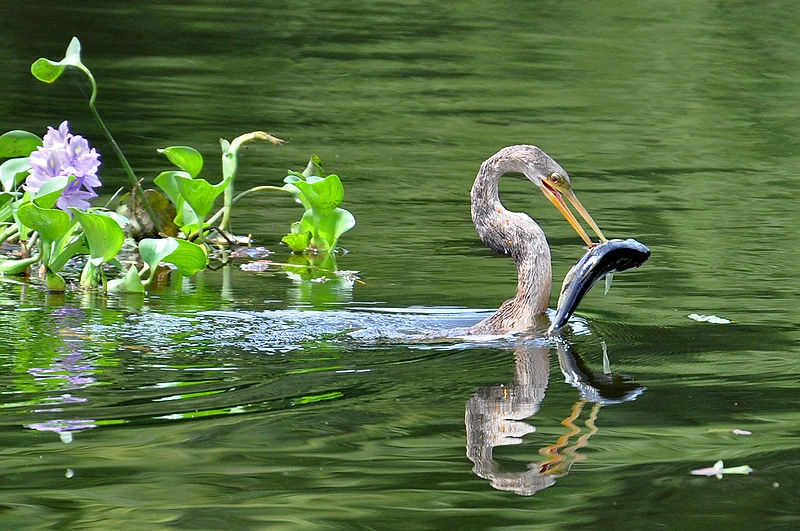
Anhinga (Anhinga anhinga)
Using its sharp bill, the anhinga spears fish, flips them in the air, and swallows them head-first! Sometimes, the anhinga spears a fish so hard that it has to return to shore with the fish still stuck on its bill. IUCN Redlist Status: Least Concern
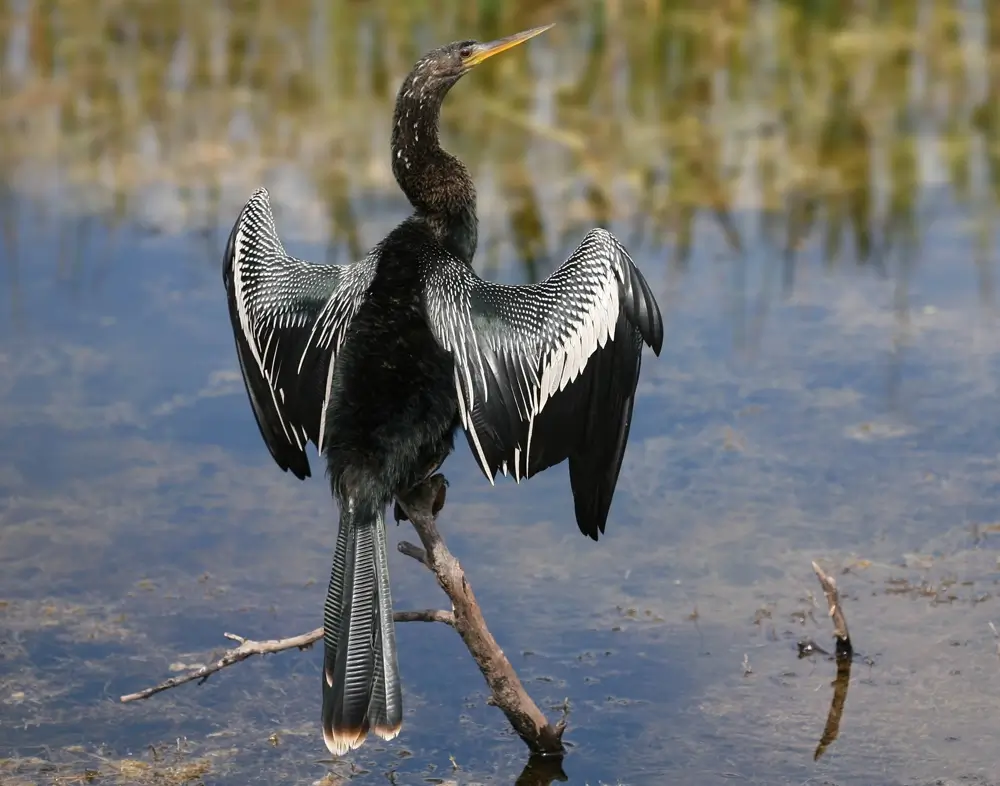
Anhinga (Anhinga anhinga)
The anhinga has poorly developed oil glands, and its feathers aren't as waterproof as the feathers of other water birds. It perches in a tree with its wings open to dry its feathers and warm its body. IUCN Redlist Status: Least Concern
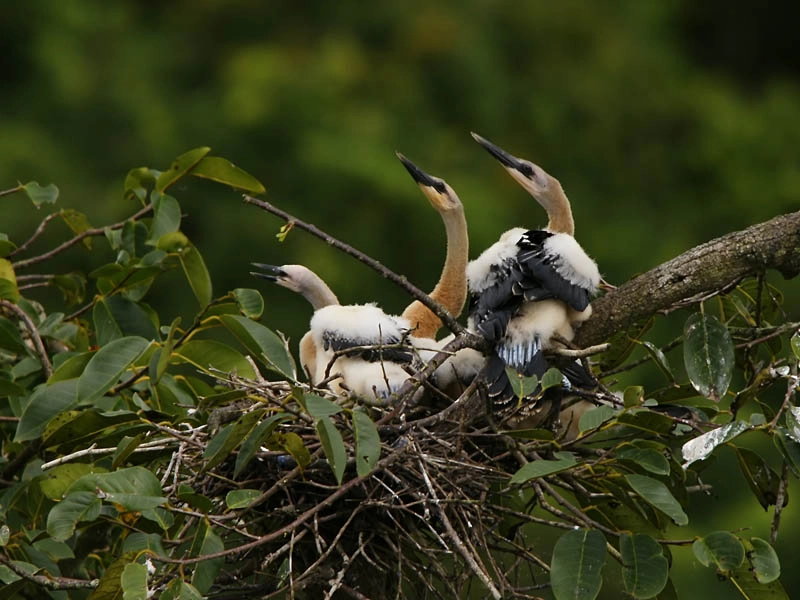
Anhinga (Anhinga anhinga)
Anhinga chicks fledge when they are six weeks old, but they stay with their parents for a few more weeks. IUCN Redlist Status: Least Concern
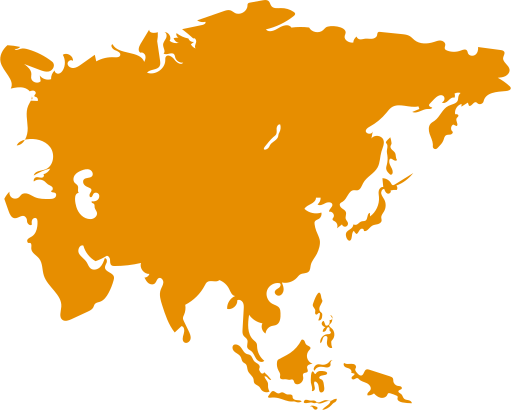
Oriental Darter (Anhinga melanogaster)
The oriental darter is found in freshwater streams, swamps, and lakes in Bangladesh, Brunei Darussalam, Cambodia, India, Indonesia, Laos, Myanmar, Nepal, Pakistan, Philippines, Sri Lanka, Timor-Leste, and Vietnam. IUCN Redlist Status: Least Concern
Oriental Darter (Anhinga melanogaster)
The oriental darter is threatened by pollution, drainage of water from its habitat, hunting, and the collection of its eggs and nestlings. IUCN Redlist Status: Least Concern
Oriental Darter (Anhinga melanogaster)
The oriental darter perches on a rock or tree branch and spreads out its wings to dry them. IUCN Redlist Status: Least Concern
Australian Darter (Anhinga novaehollandiae)
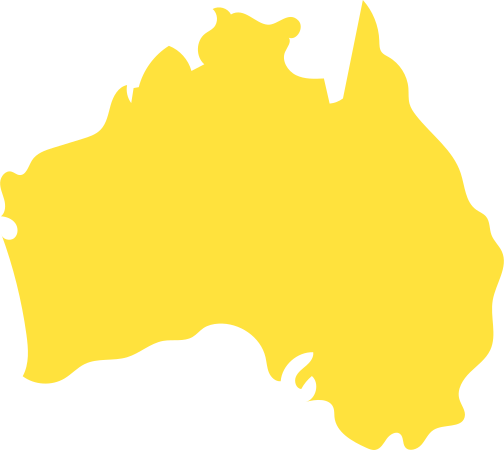
The Australian darter is found in Australia, Indonesia, Papua New Guinea, and Timor-Leste. IUCN Redlist Status: Least Concern
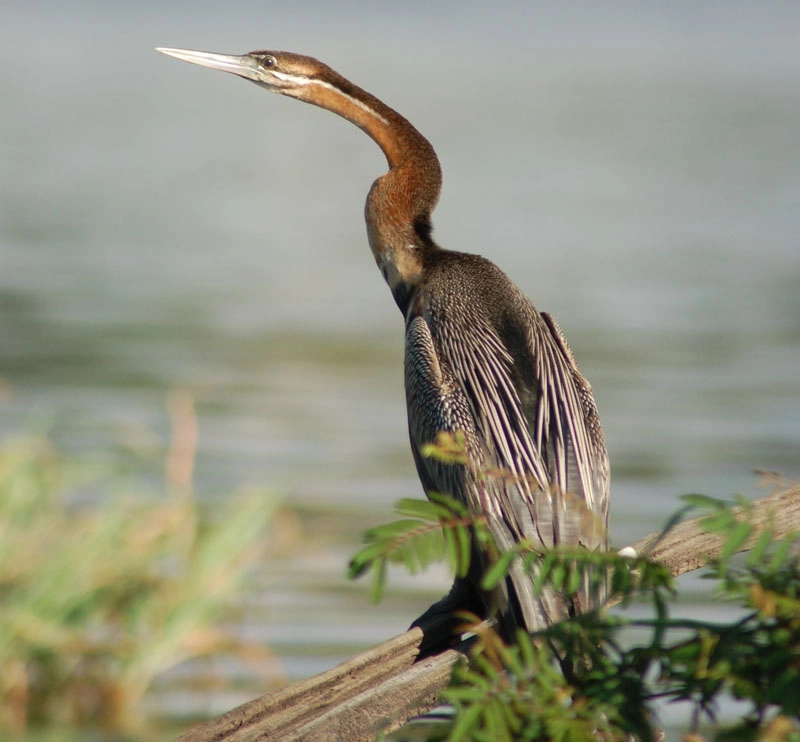
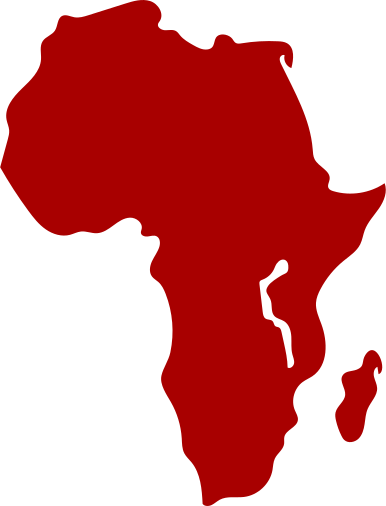
African Darter (Anhinga rufa)
The African darter is found in Sub-Saharan Africa. IUCN Redlist Status: Least Concern