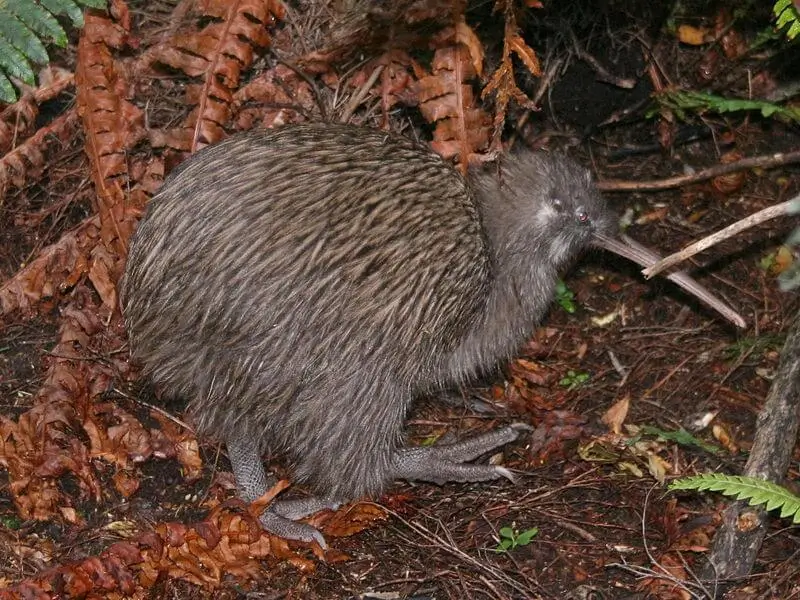
There are five species of stout, chicken-sized birds in this family. All species are found in the forests of New Zealand.
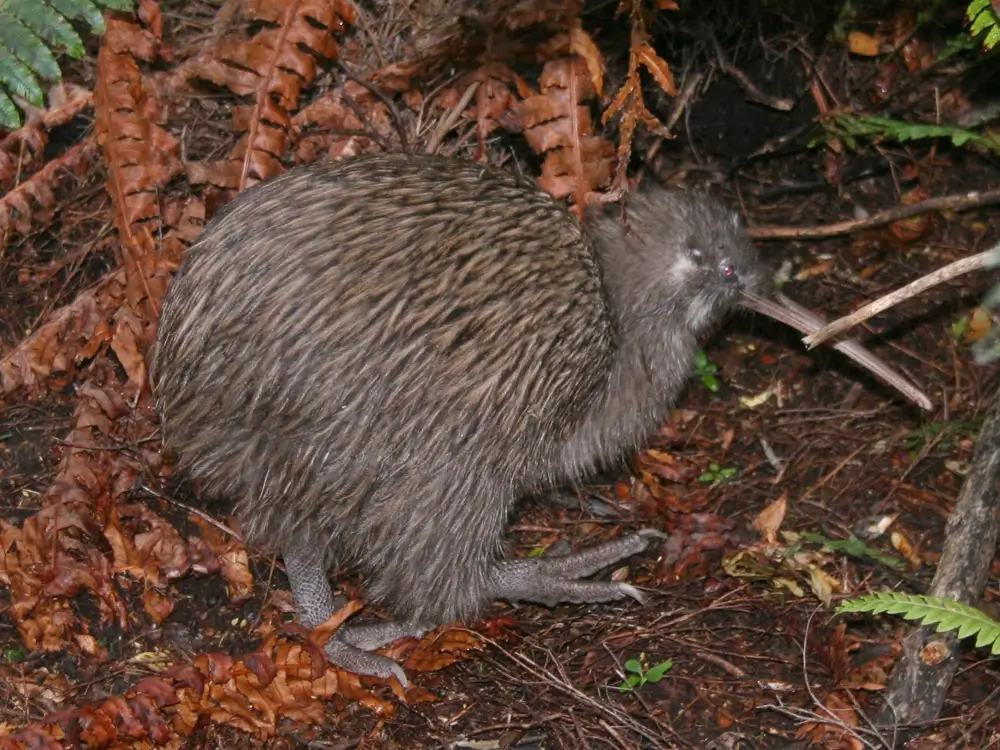
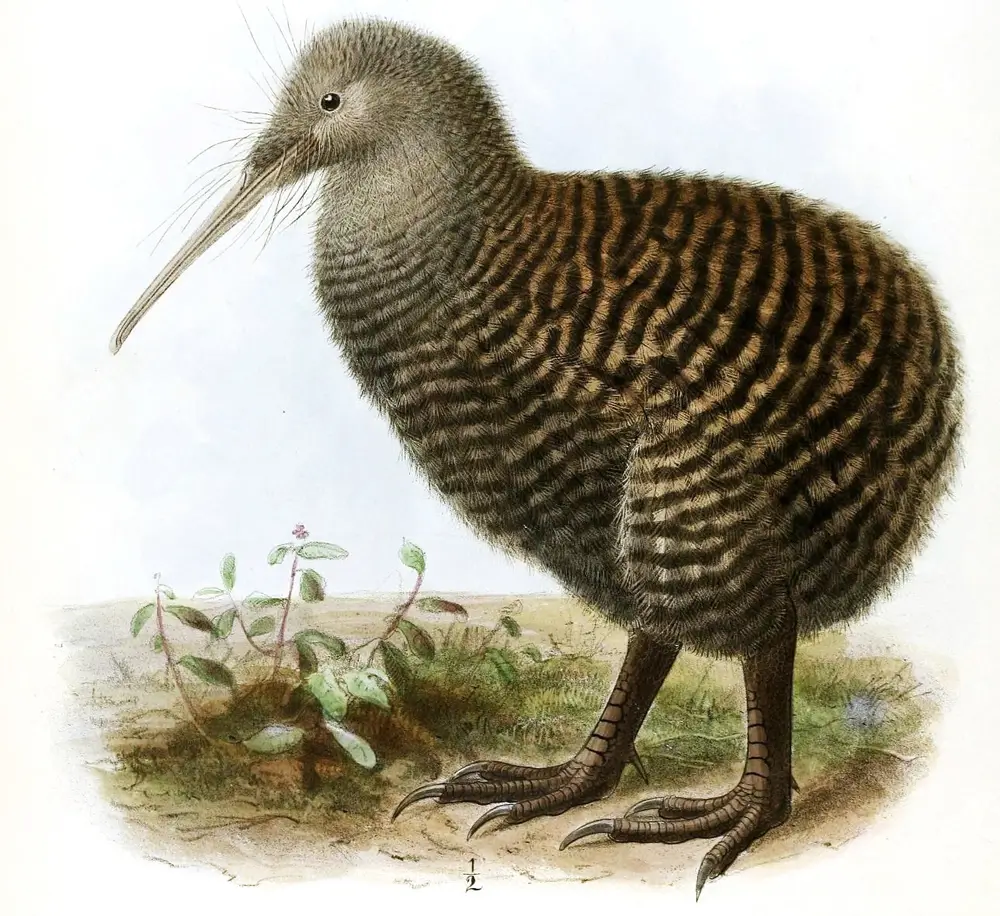
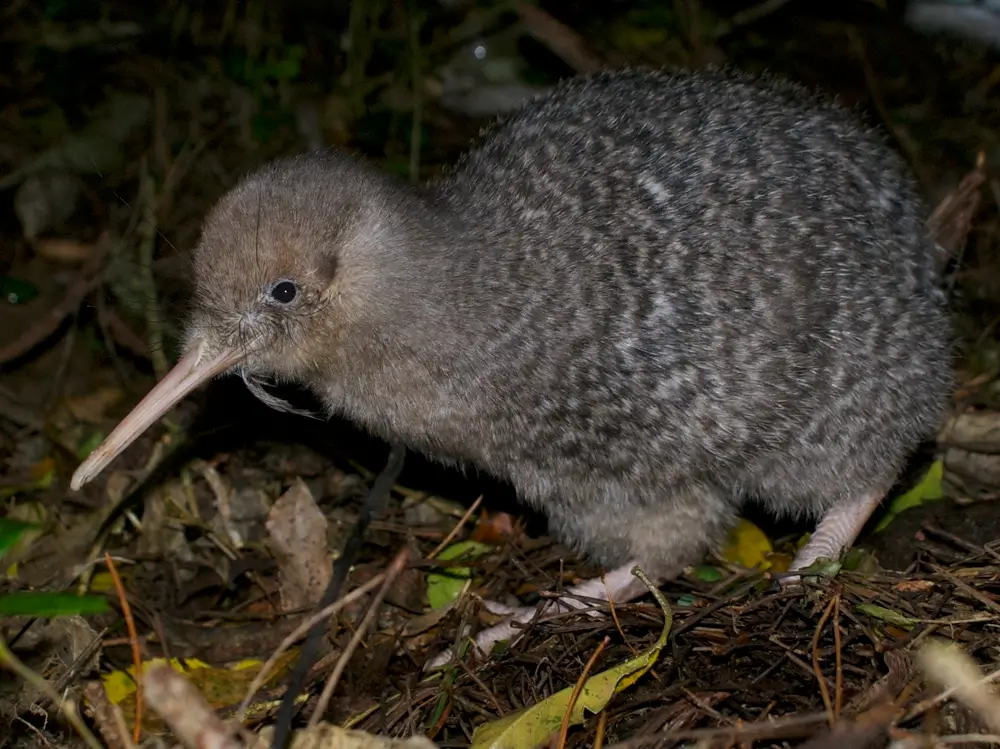
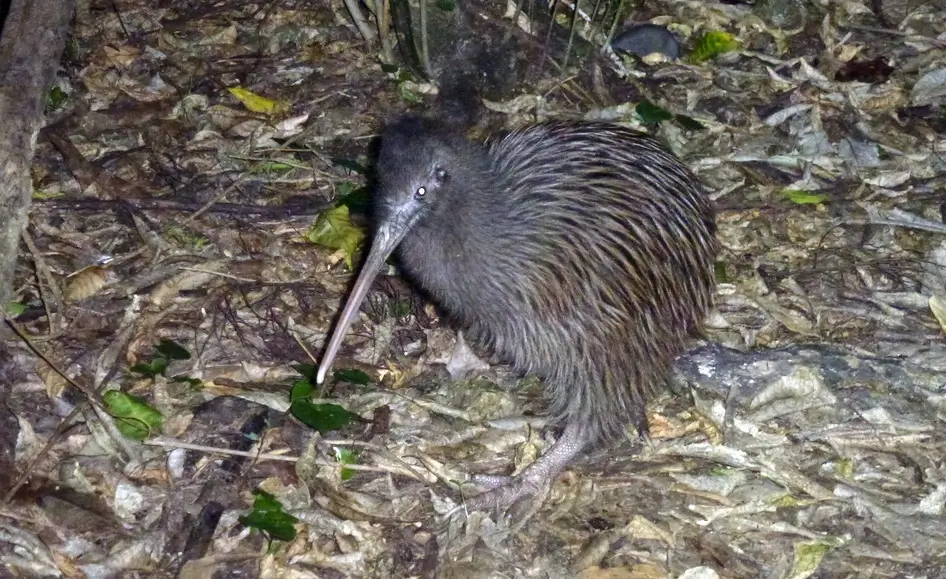
Kiwis have long, flexible bills with nostrils at the tip; small, rounded heads; and small, round eyes. They have soft, shaggy, fur-like, grayish brown feathers; tiny wings that are hidden by their feathers; strong legs; and clawed toes on their feet. Unlike most birds, they have very poor eyesight but a good sense of smell!
Kiwis are nocturnal; they use the long rictal bristles at the base of their bill to navigate around in the dark. Kiwis use their long bills to poke in the leaf litter on the forest floor to search for food like worms, insects, crayfish, fruit, and berries.
The female lays 1-2 very large eggs in a burrow in the ground, and the male incubates them for 70-80 days. The chicks, unlike most birds, don’t have an eyetooth and have to kick their way out of their shell with their legs. Kiwi chicks are precocial and feed themselves shortly after birth.
Southern Brown Kiwi (Apteryx australis)
The southern brown kiwi is found on Fiordland and Stewart Islands in New Zealand. IUCN Redlist Status: Vulnerable
Great Spotted Kiwi (Apteryx haastii)
The great spotted kiwi is found on the South Island of New Zealand IUCN Redlist Status: Vulnerable
Little Spotted Kiwi (Apteryx owenii)
The little spotted kiwi was once found throughout New Zealand. It is now only found on a number of small islands where it has been introduced and three larger islands where it has been reintroduced. IUCN Redlist Status: Near Threatened
Okarito Kiwi (Apteryx rowi)
The Okarito kiwi is found in lowland forest on New Zealand’s South Island. IUCN Redlist Status: Vulnerable