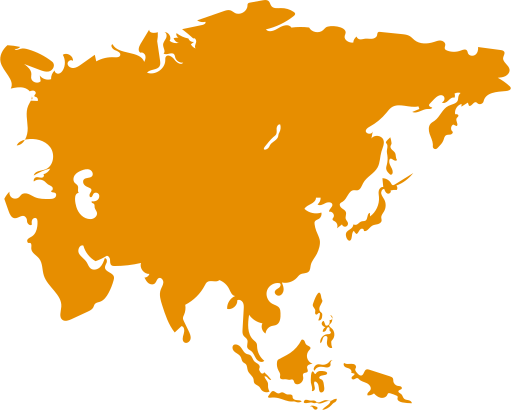
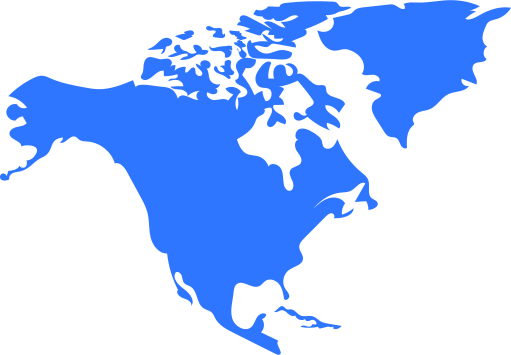
There are only three species in this family. They are found in the eastern United States, China, and Japan.
They are the largest species in the caudata order. The Chinese giant salamander and the Japanese giant salamander can grow to almost six feet in length. The hellbender can grow to three feet in length.
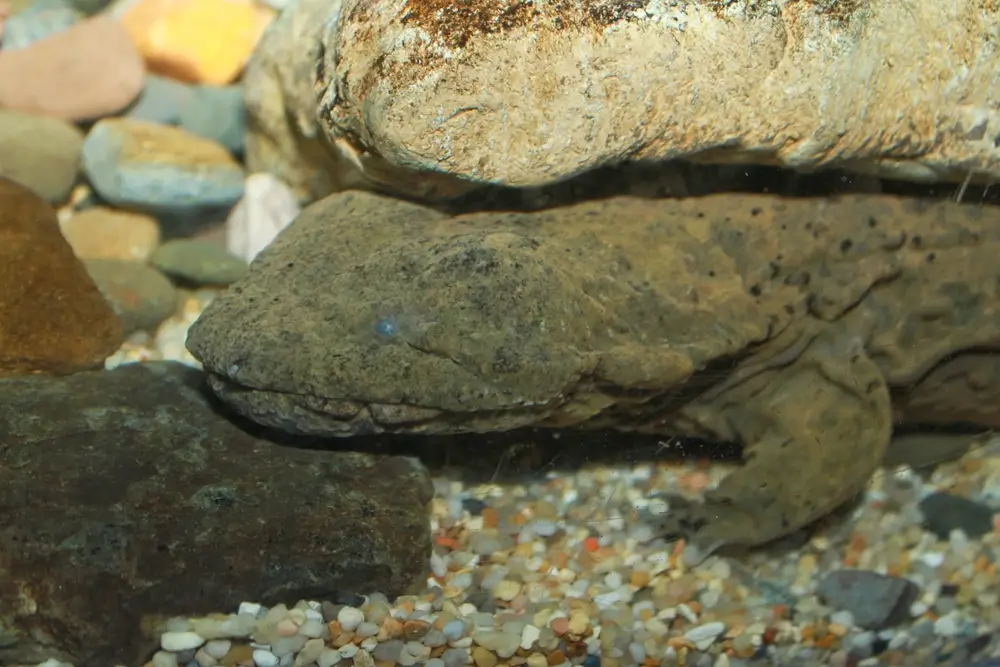
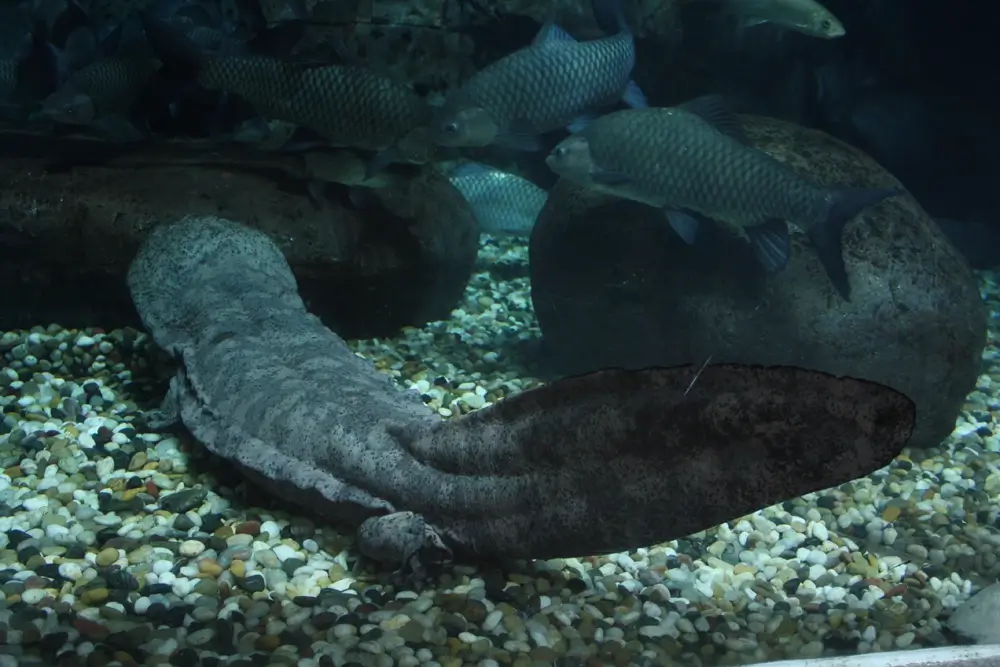
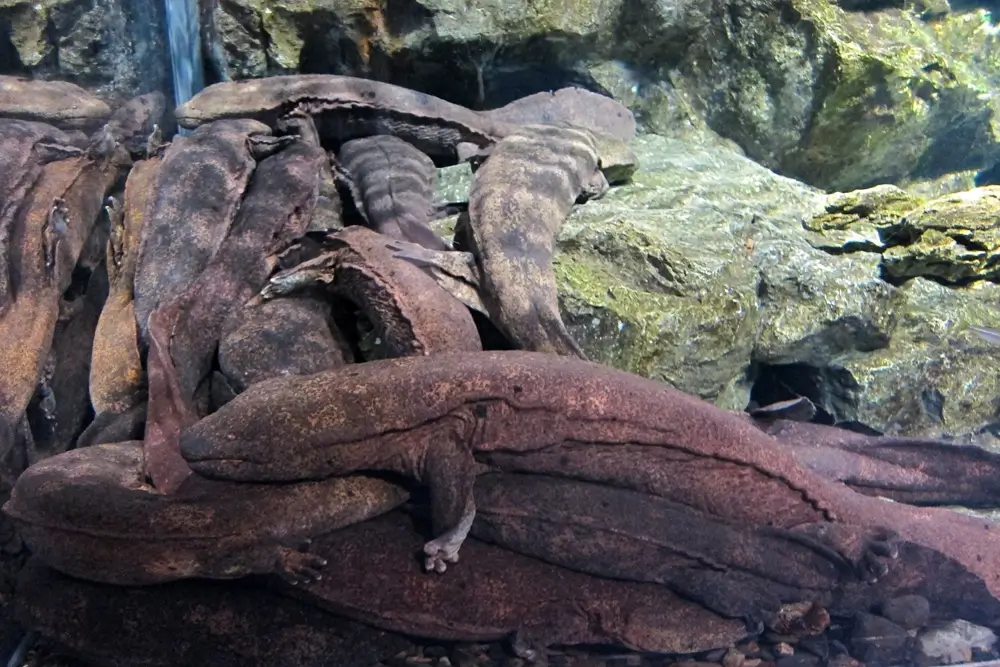
They have large, flat bodies; short, stocky legs; and laterally flat tails. Their flat bodies help them squeeze under rocks and logs in the water.
The species in this family live in the water. They don’t have gills; they breathe through their loosely hanging skin. They eat insects, crayfish, salamanders, and worms.
The male makes a nest under a rock or log, and the female lays a string of eggs. The male fertilizes the eggs and guards them for 2-3 months until they hatch.
Hellbender (Cryptobranchus alleganiensis)
The hellbender is found in the Susquehanna River drainage in southern New York and Pennsylvania, and large portions of the Missouri, Ohio, and Mississippi River drainage from western Pennsylvania, southern Ohio, extreme southern Indiana, most of West Virginia, Kentucky, and Tennessee, northern Alabama and Georgia, western North Carolina and Virginia. IUCN Redlist Status: Vulnerable
Chinese Giant Salamander (Andrias davidianus)
The Chinese giant salamander is found in central, southwestern, and southern China. IUCN Redlist Status: Critically Endangered
Japanese Giant Salamander (Andrias japonicus)
The Japanese giant salamander is found in Japan. IUCN Redlist Status: Near Threatened