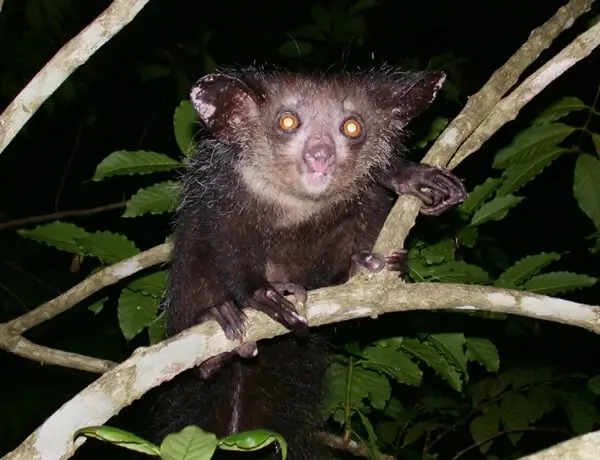
There is one species in this family. The aye-aye is found in forests and thickets in Madagascar.
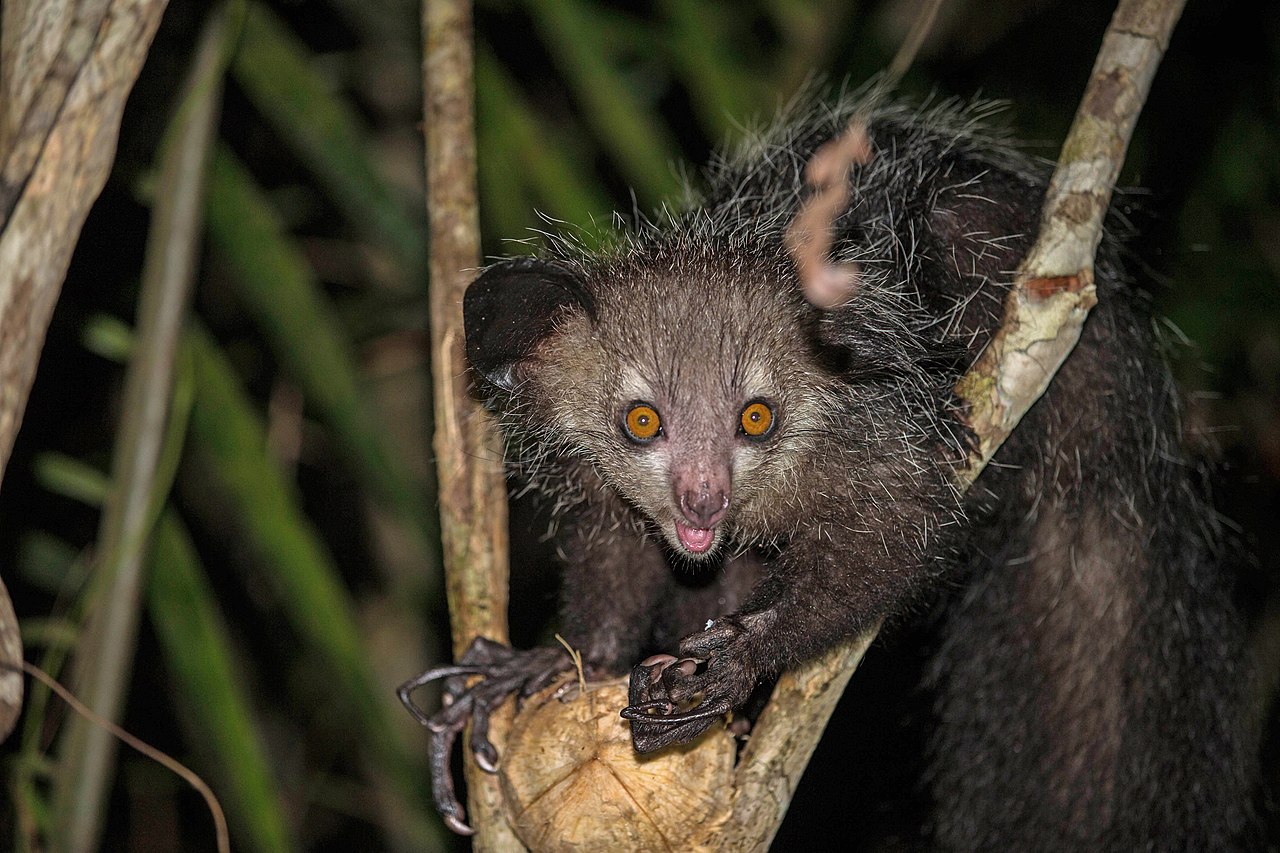
It lives in trees and is nocturnal; in fact, it is the largest nocturnal primate.
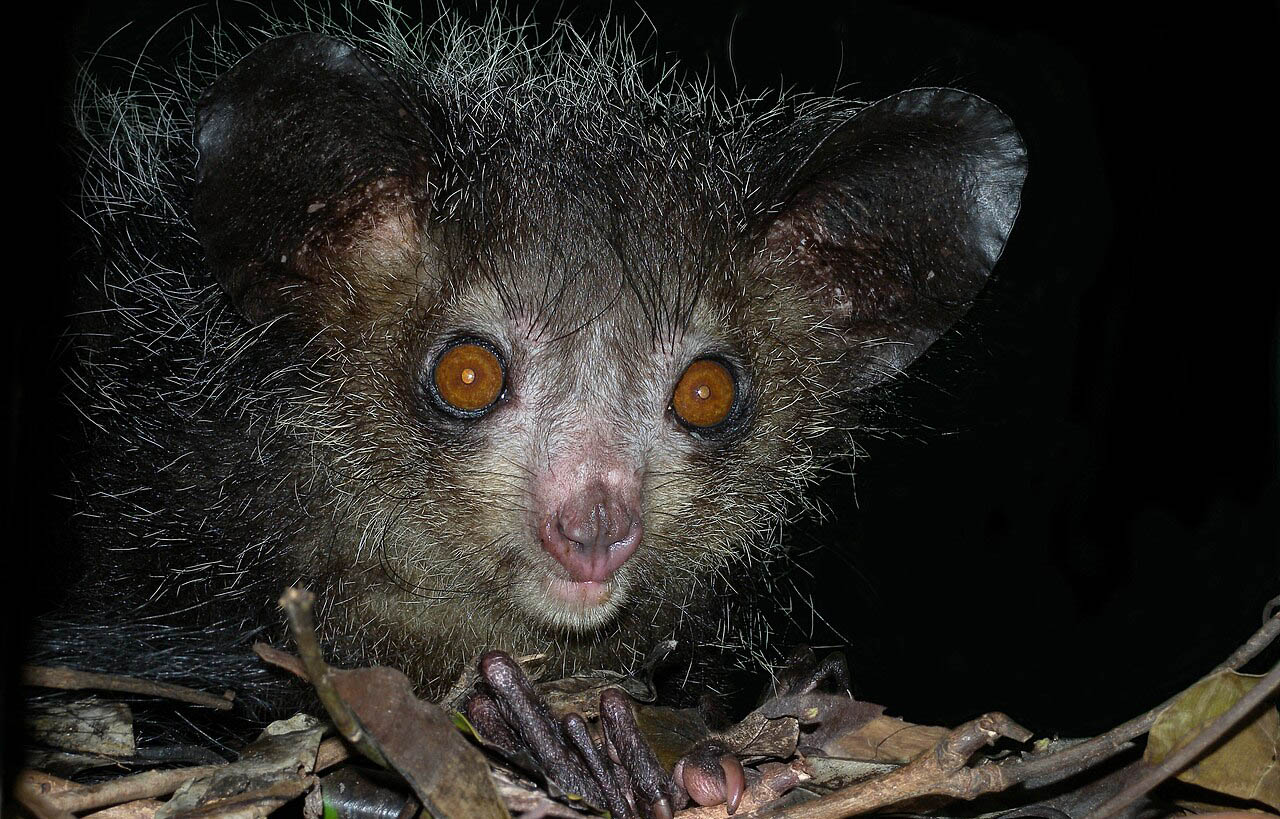
Its body is about 1.5 feet long and it has a two foot long bushy tail. It has large, round orange eyes; large, pointed ears; and long, coarse, brown to black fur tipped in white.
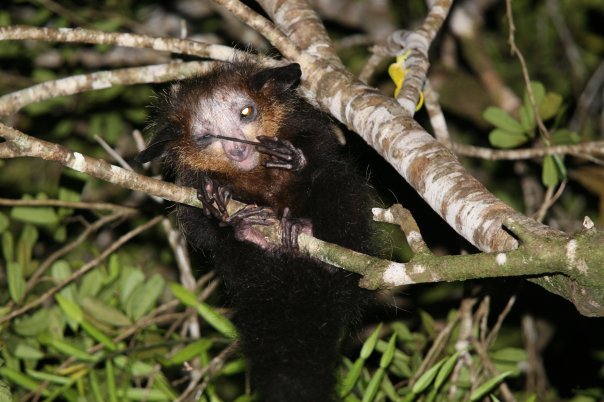
It has five long fingers on its hands, and its clawed middle finger is extra long and thin. It uses its long middle finger to tap on trees to locate larvae and insects. It then gnaws on the tree to rip open the bark, and then it uses its middle finger to dig out its prey.
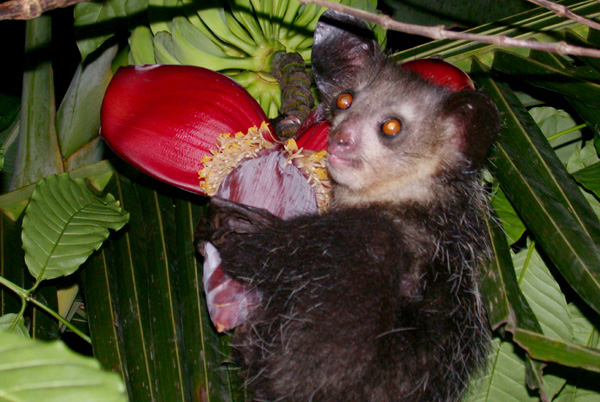
The aye-aye’s incisors grow throughout its life, so they are always nice and sharp! The aye-aye also eats nectar, seeds, and fruit.
Aye-ayes live alone or in pairs. The female aye-aye gives birth to a single baby. The baby is weaned when it is about seven months old, but it stays with its mother for two years.
Aye-Aye (Daubentonia madagascariensis)
The aye-aye is found in forests and thickets in Madagascar. IUCN Redlist Status: Endangered
Aye-Aye (Daubentonia madagascariensis)
The aye-aye uses its long middle finger to tap on trees to locate larvae and insects. IUCN Redlist Status: Endangered
Aye-Aye (Daubentonia madagascariensis)
The aye-aye lives in trees and is nocturnal. IUCN Redlist Status: Endangered
Aye-Aye (Daubentonia madagascariensis)
The aye-aye eats insect. It also eats nectar, seeds, and fruit. IUCN Redlist Status: Endangered