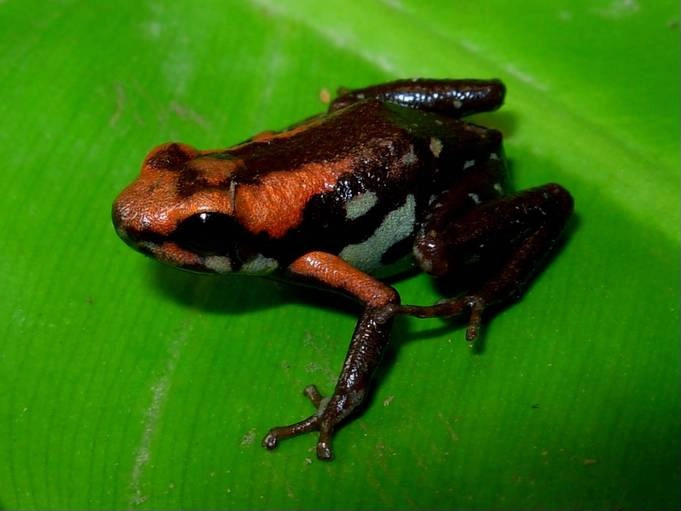
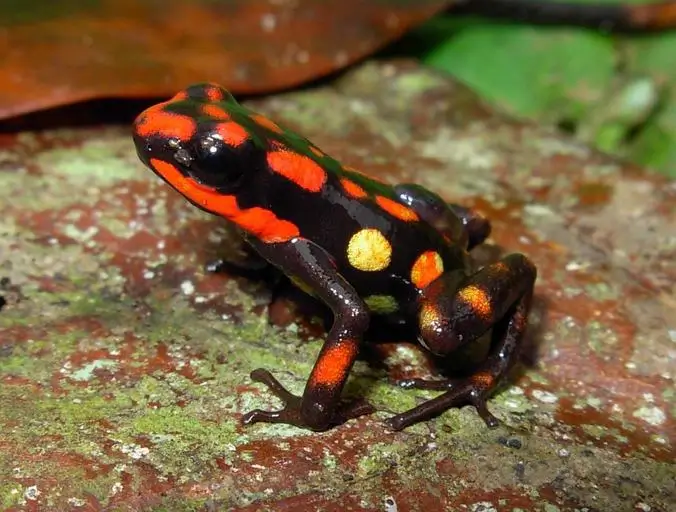
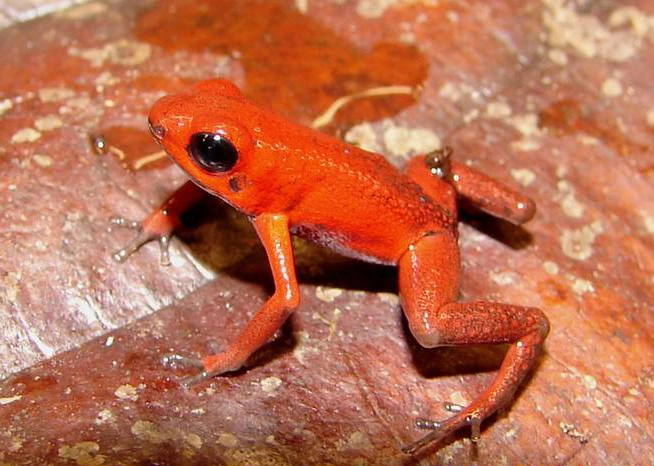
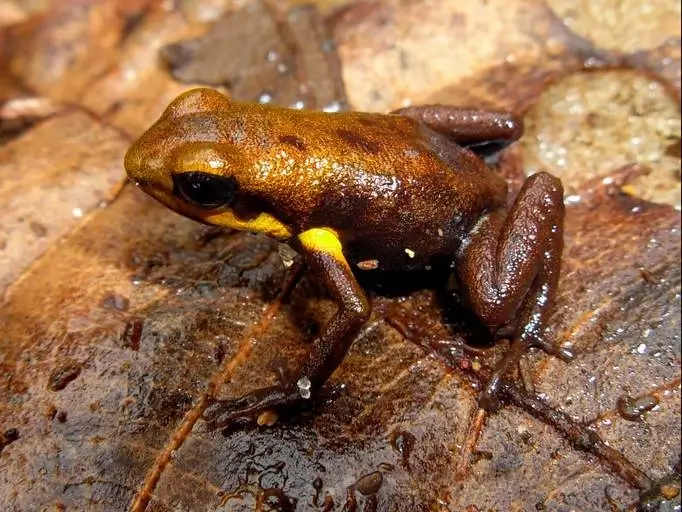
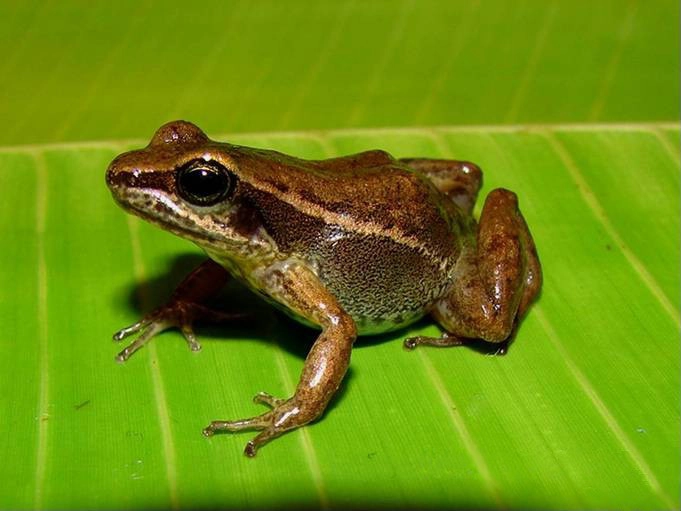
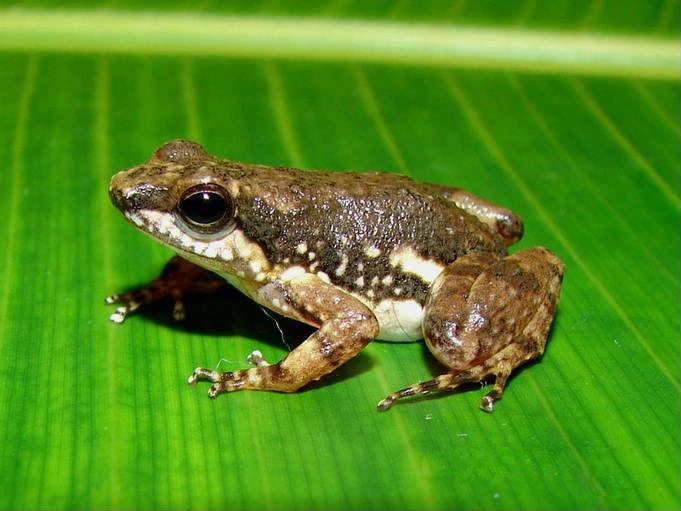
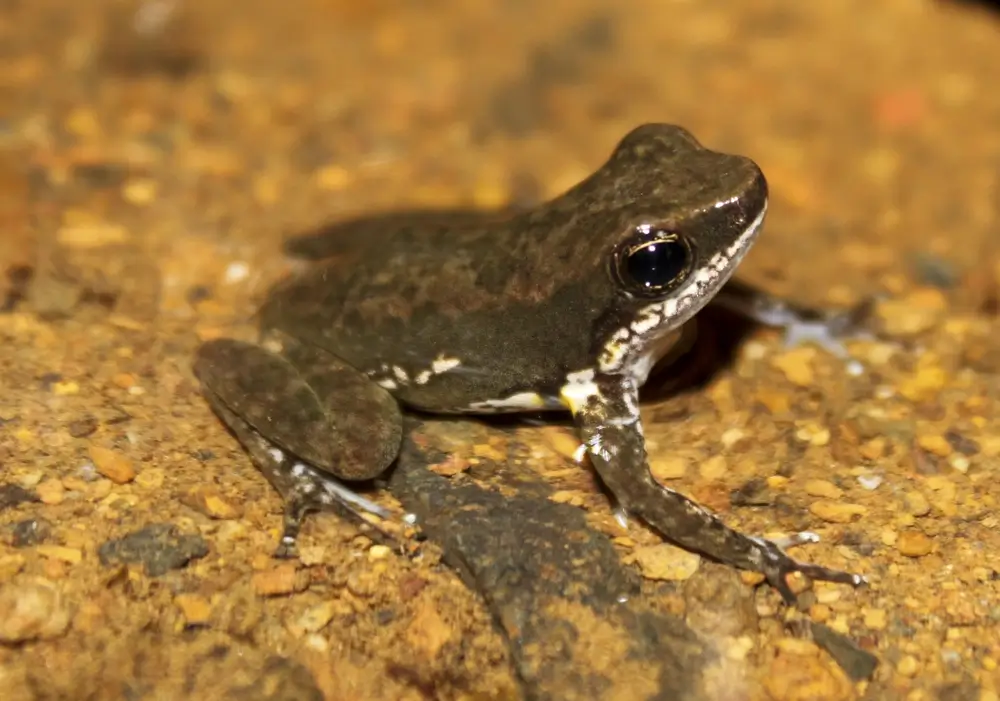
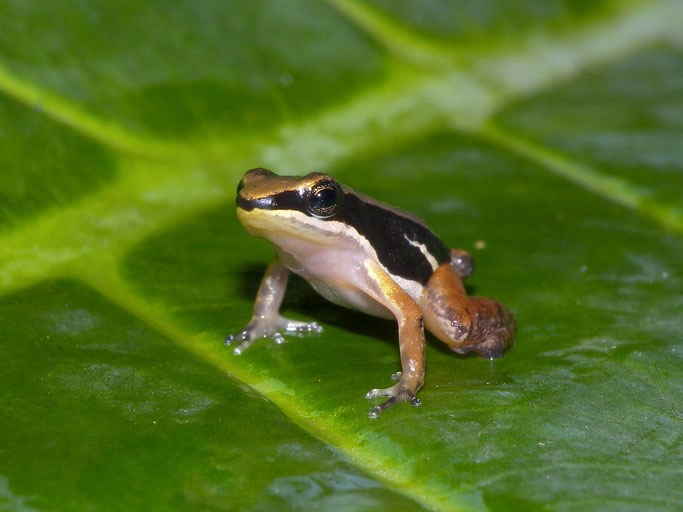
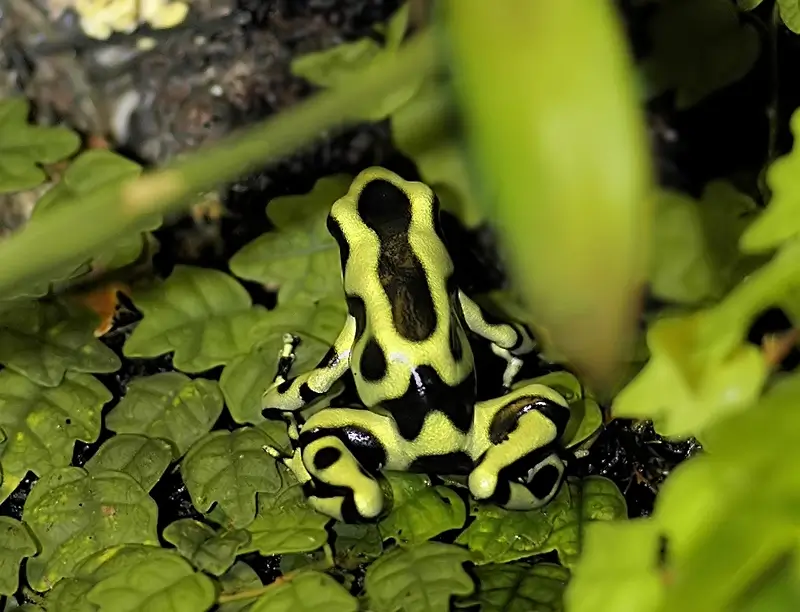
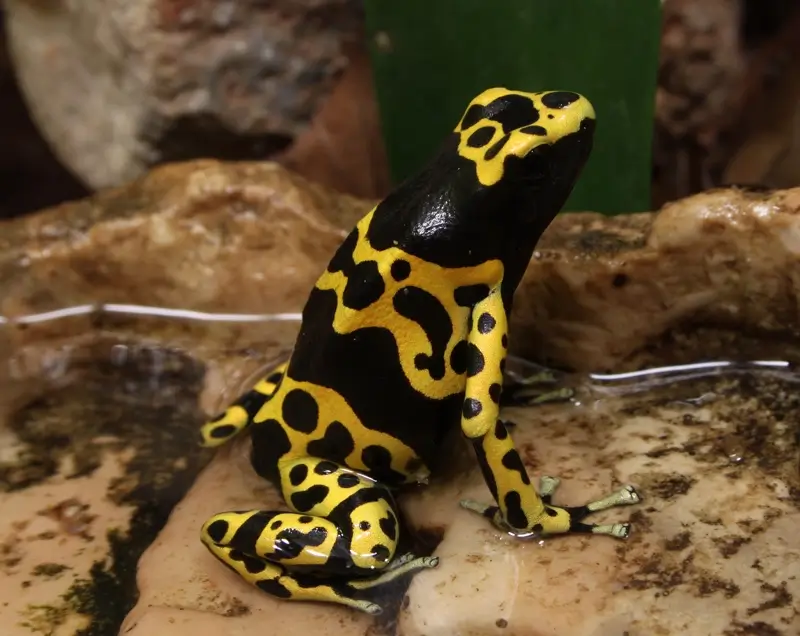
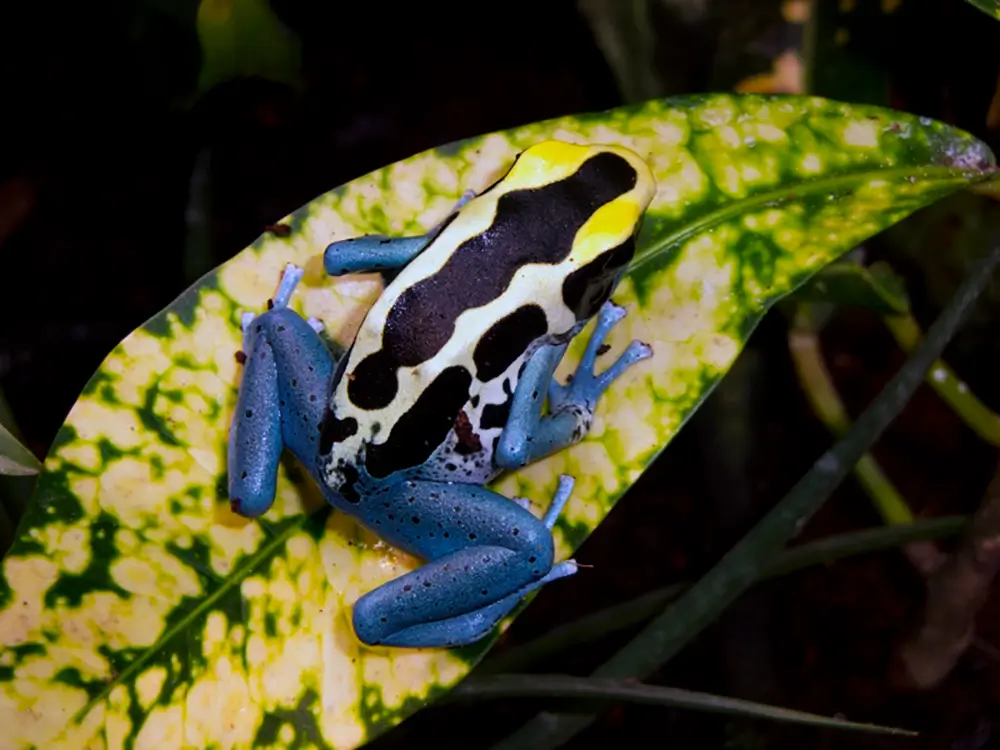
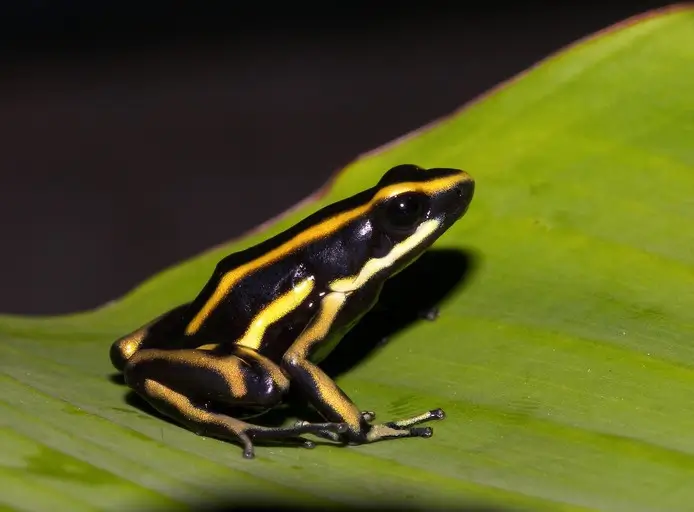
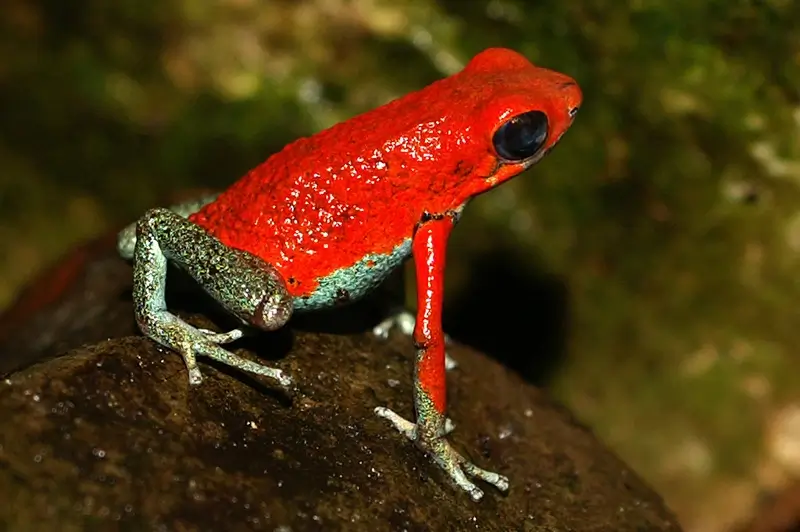
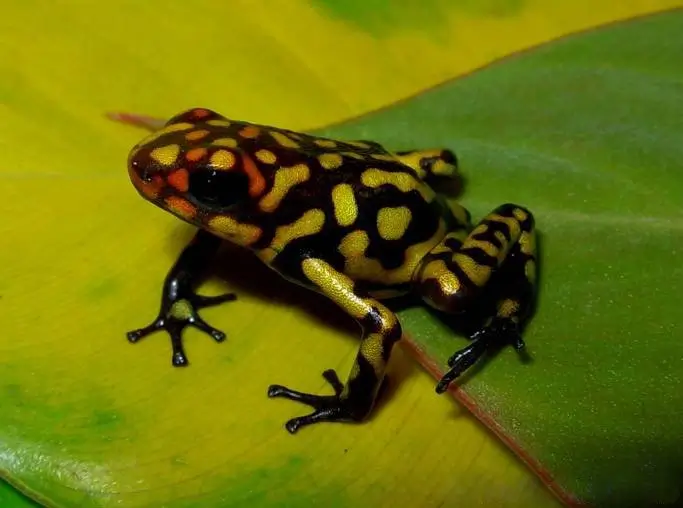
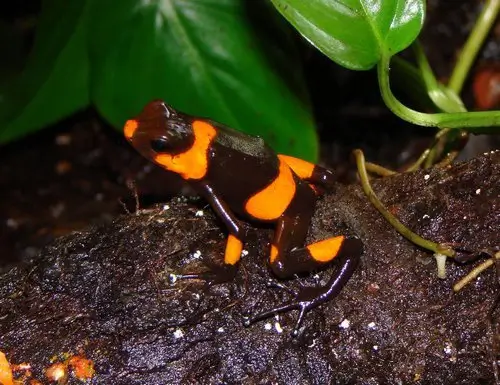
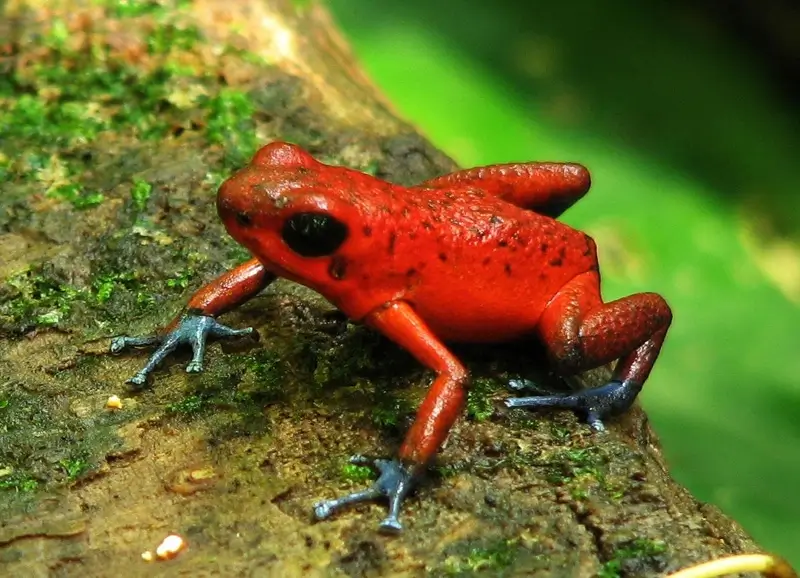
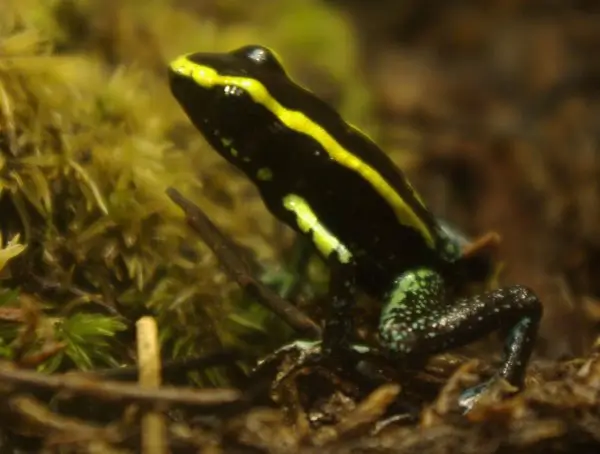
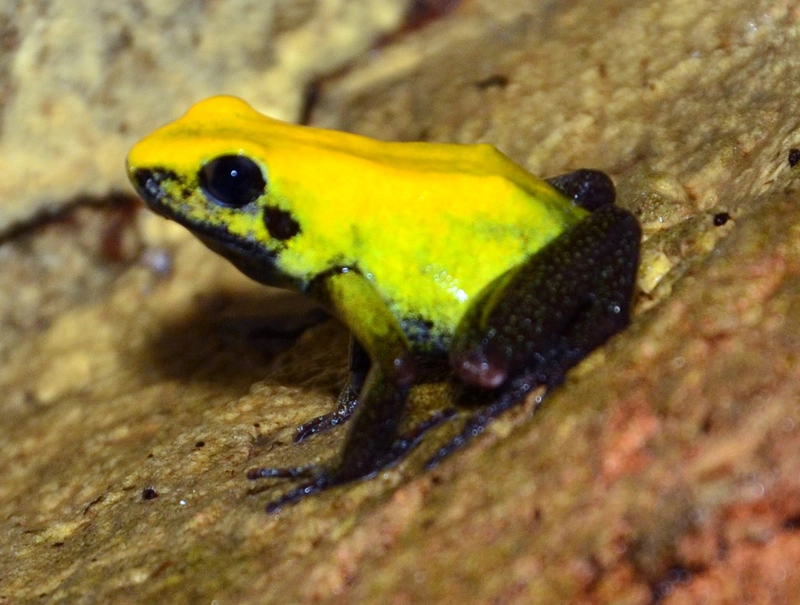
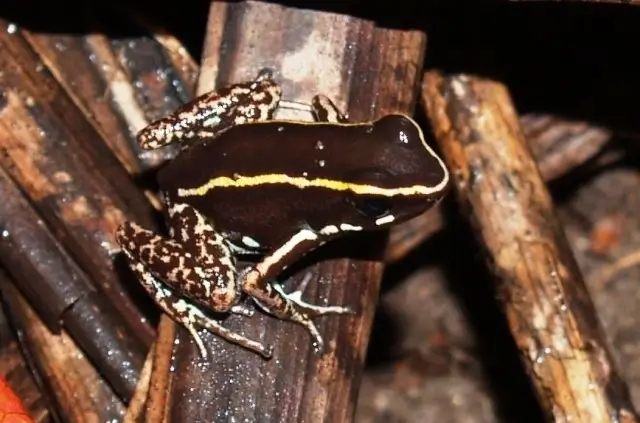
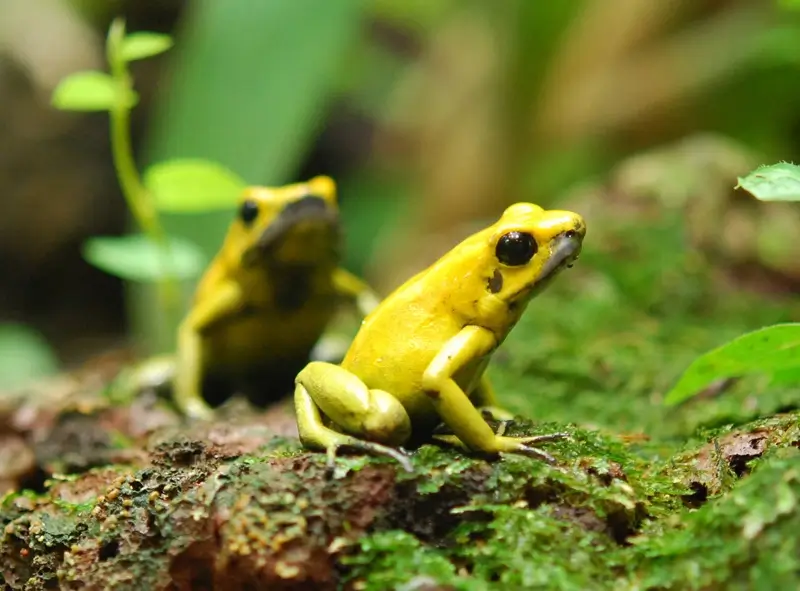
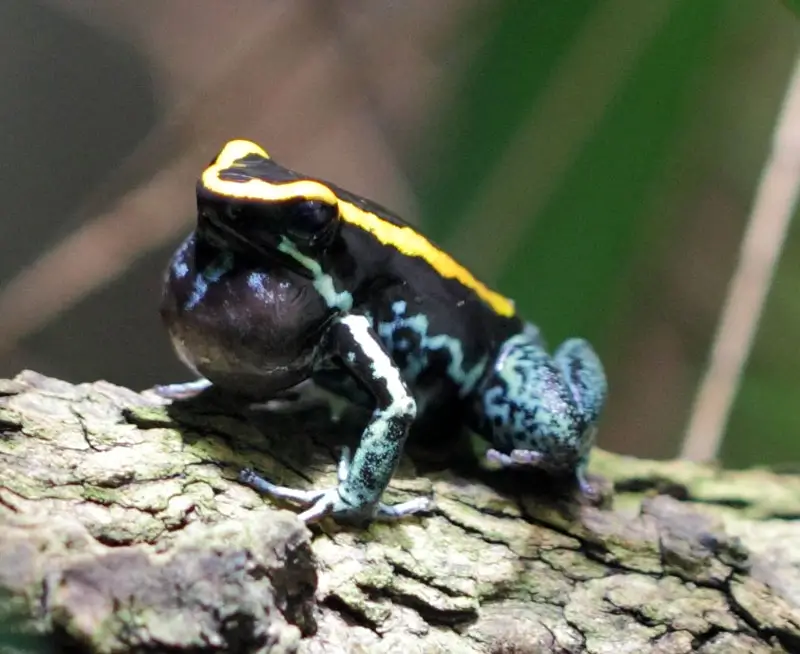
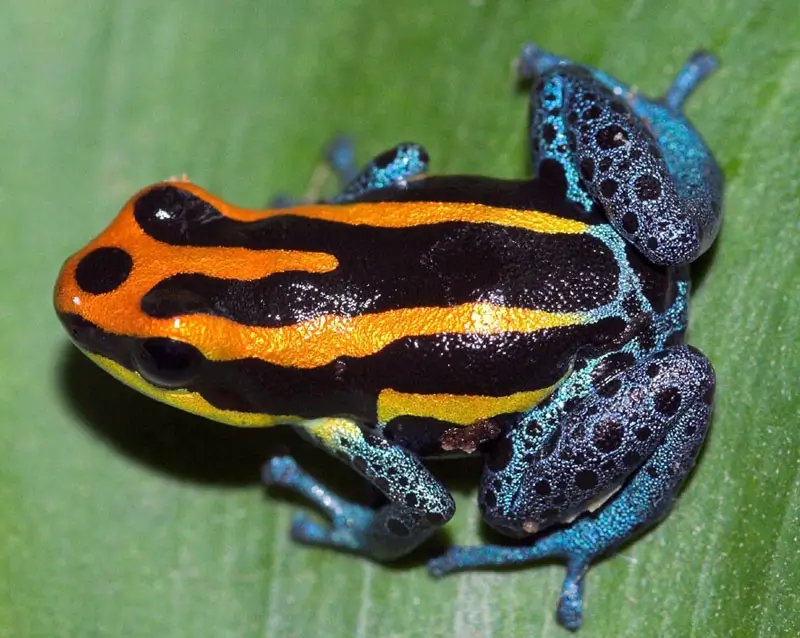
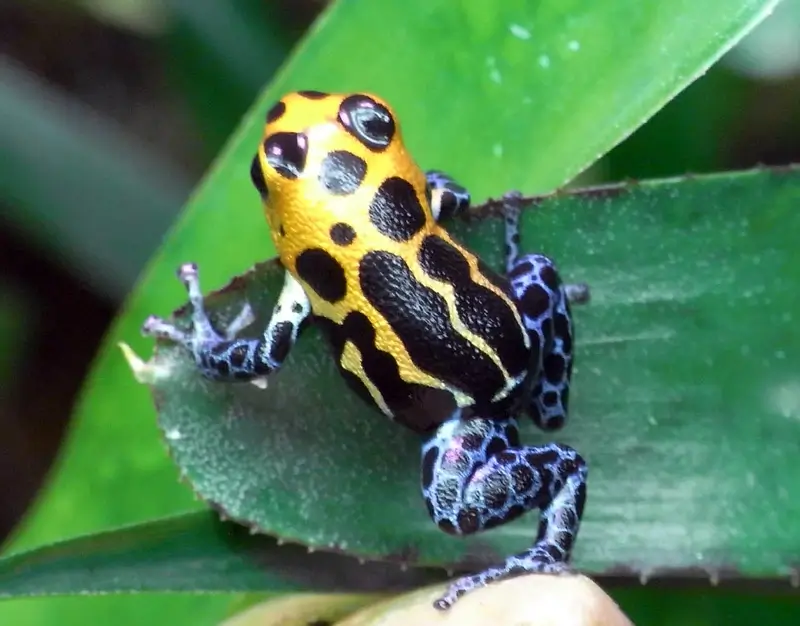
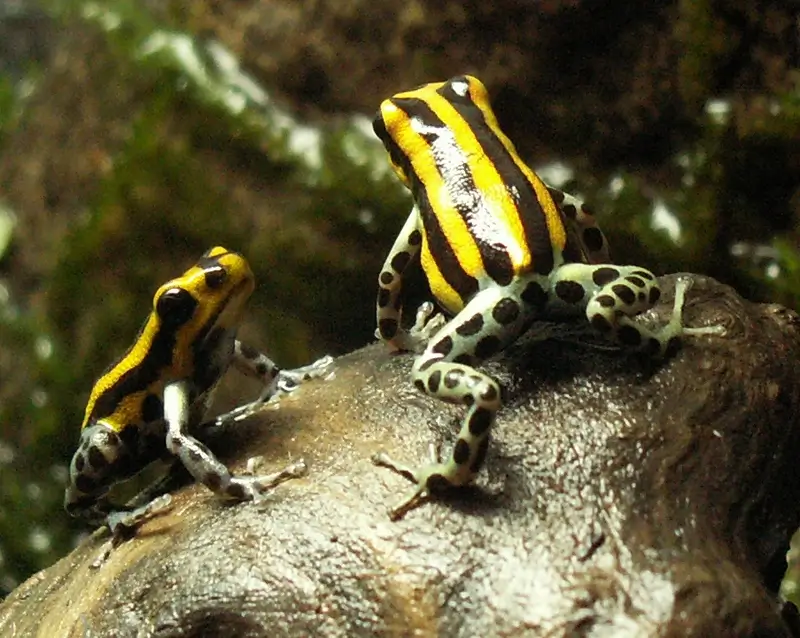
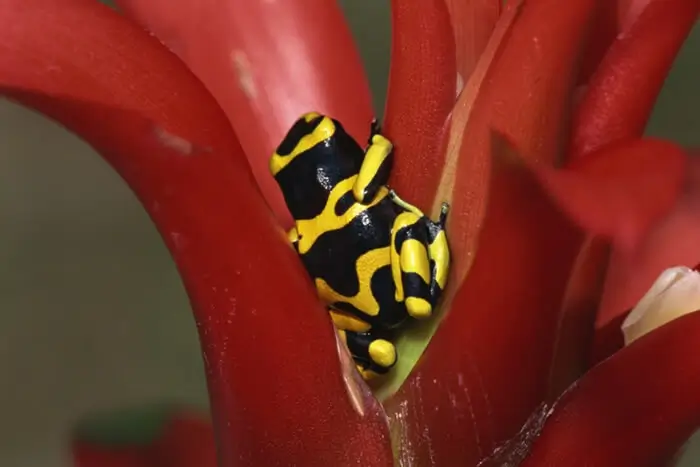
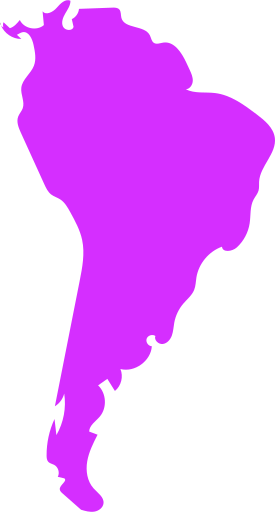
There are around 157 species in this family. They are found in Central and South America.
Poison frogs are also known as poison-arrow frogs because the poison they secrete on their skin was rubbed on the tips of blowguns by some native tribes in Colombia. In some species, the poison is strong enough to kill a human.
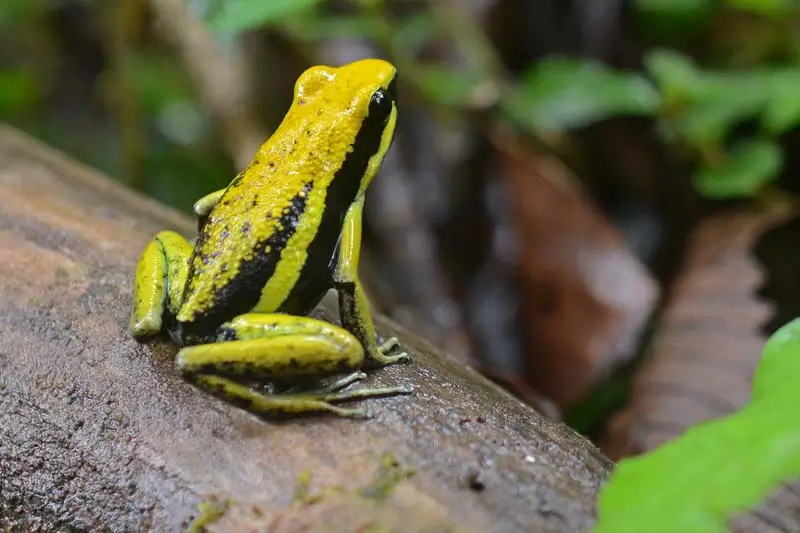
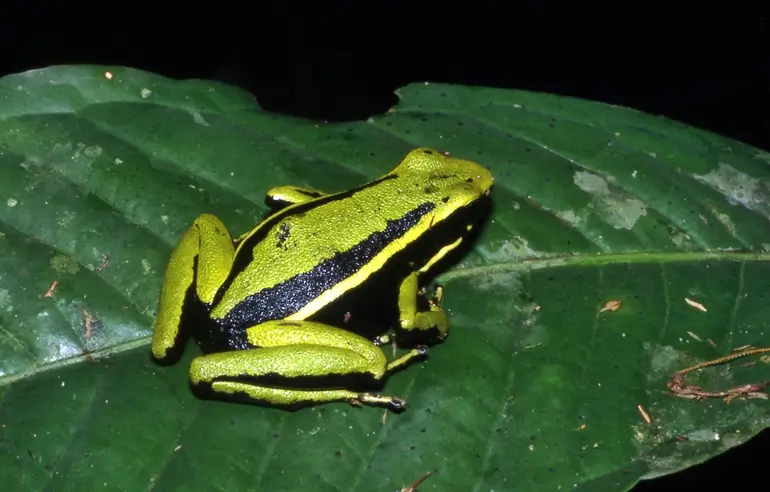
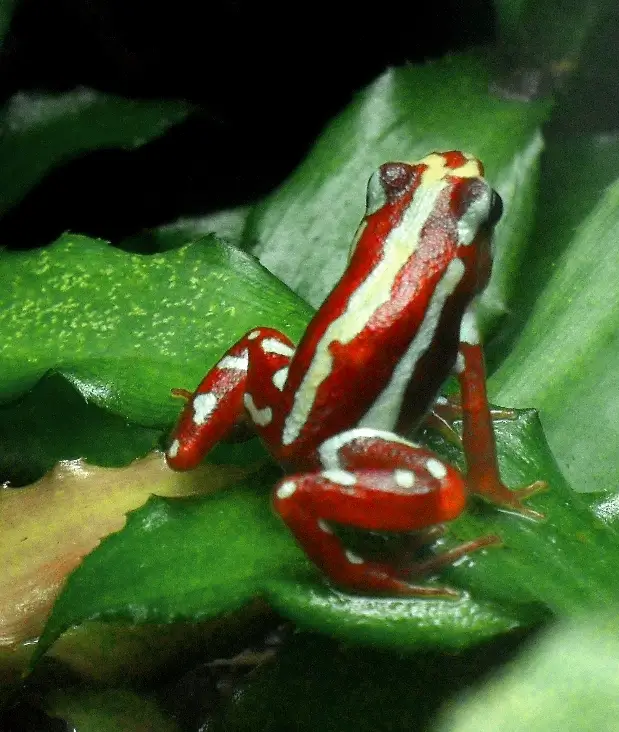
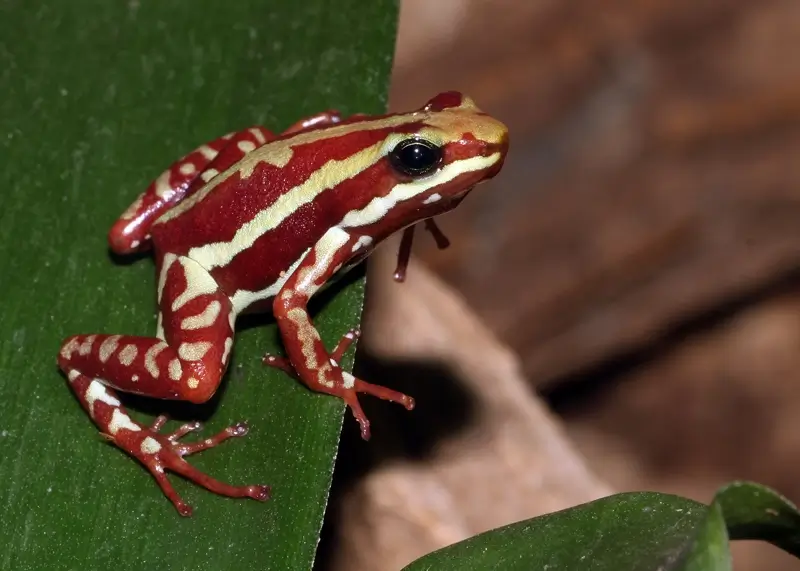
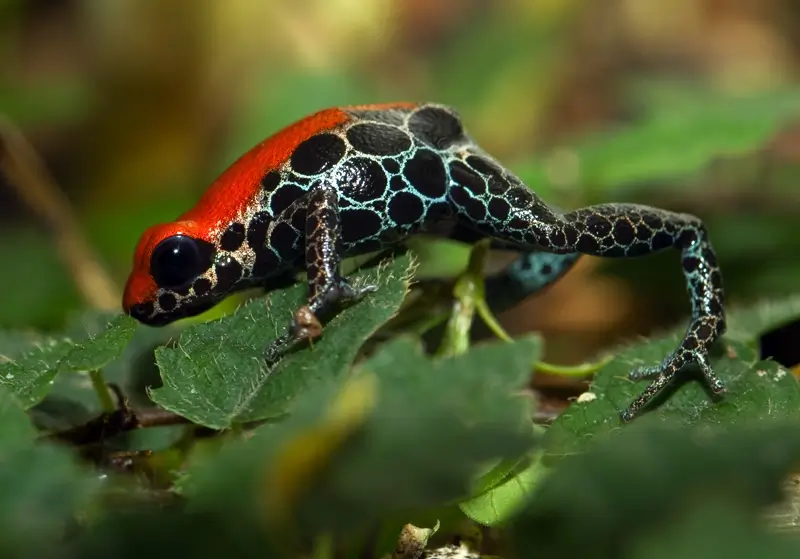
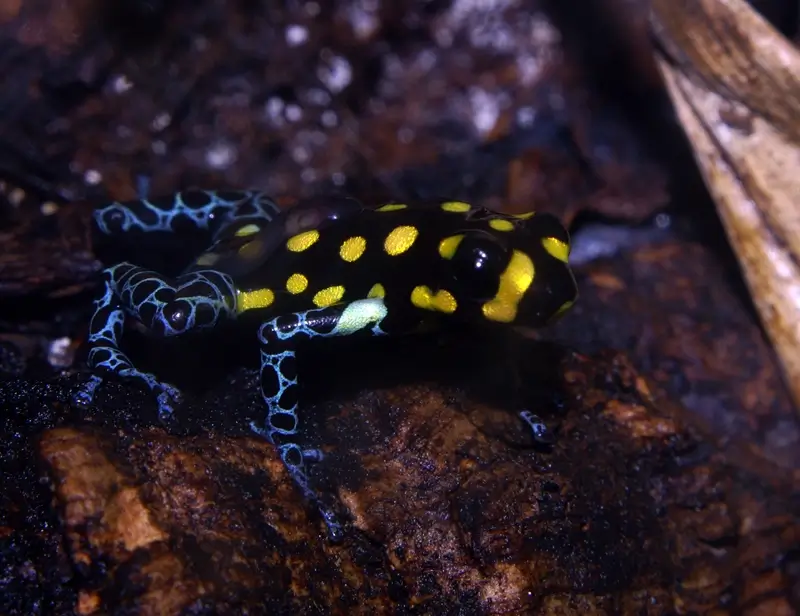
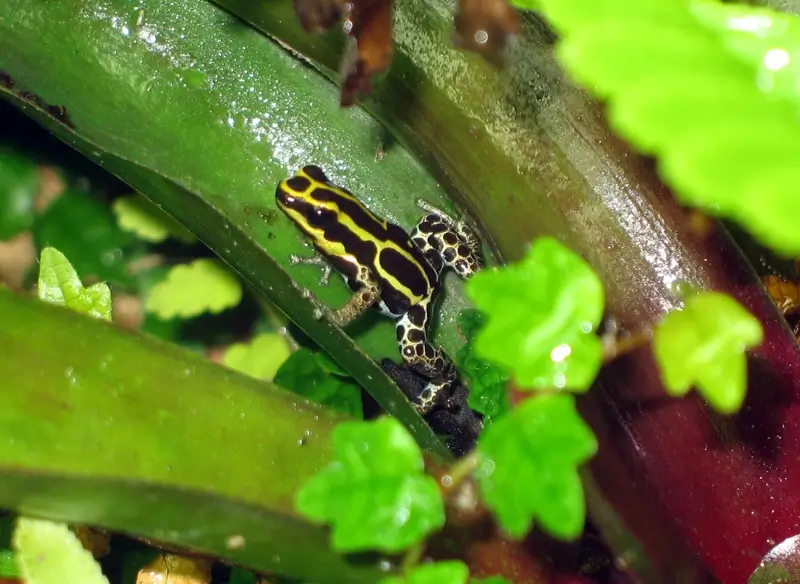
Many of the frogs in this family are brightly colored. Their bright coloring is a type of coloration called a badge that warns predators away.
The species in this family are tiny, only about 1-1.5 inches in length. They live in trees or on the ground and eat ants, beetles, and mites. Scientists believe they get their poison from the organisms they eat.
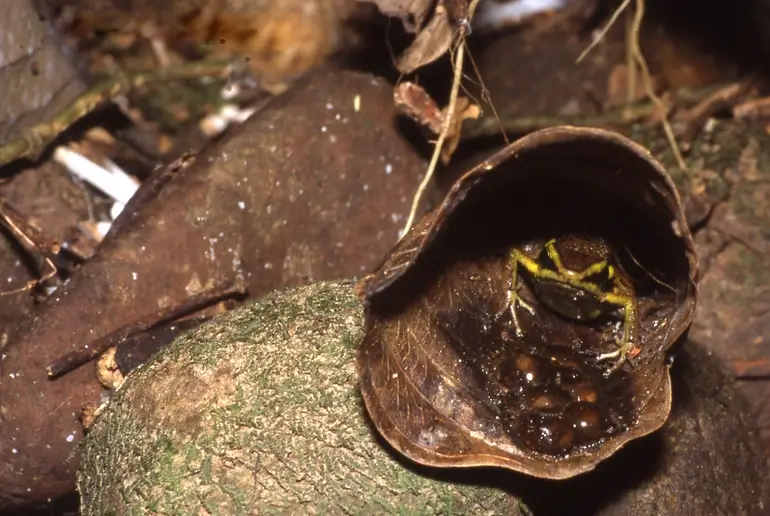
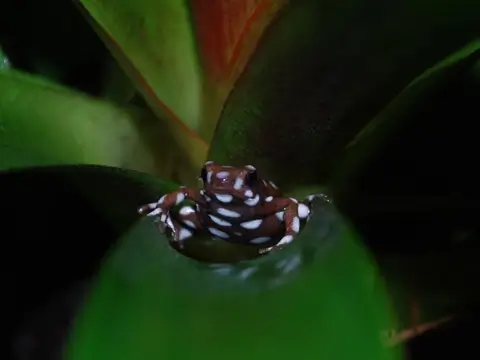
Tadpoles in this family are carried on the backs of the adults to a body of water. The body of water can be water that has gathered in a crevice or a flower. In some species, the male carries the tadpoles; in other species, the female carries them.
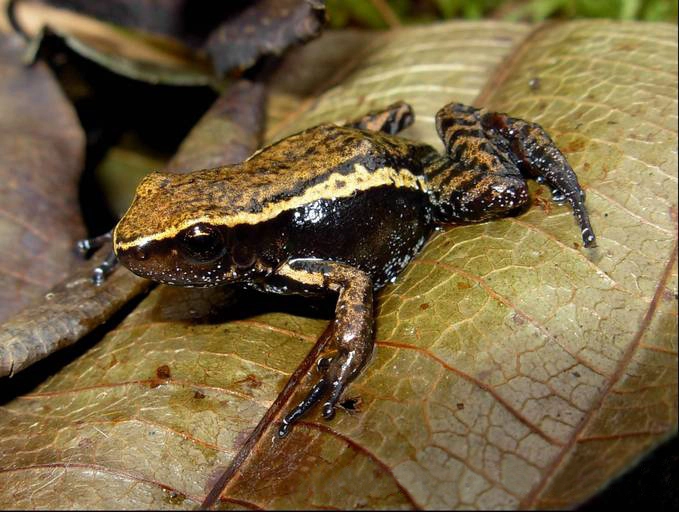
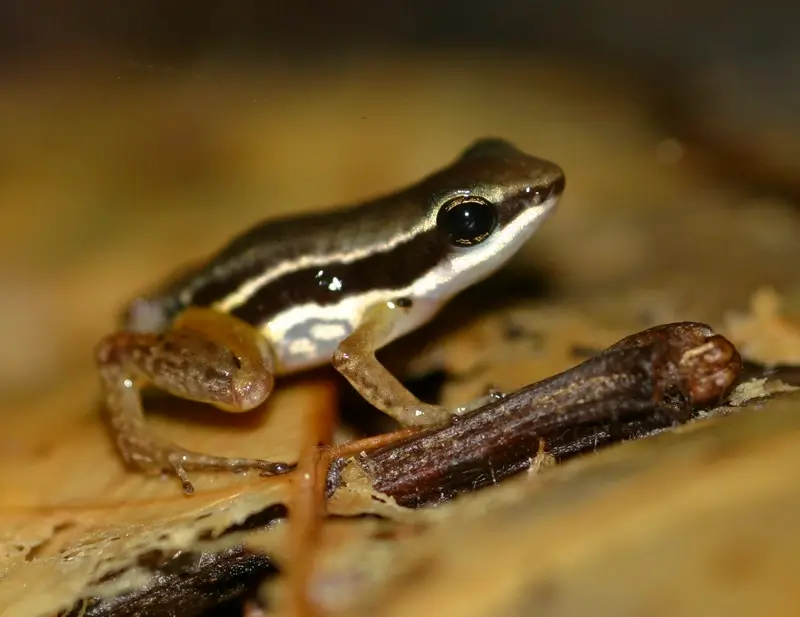
Pleasing Poison Frog (Ameerega bassleri)
The pleasing poison frog is found in Colombia.
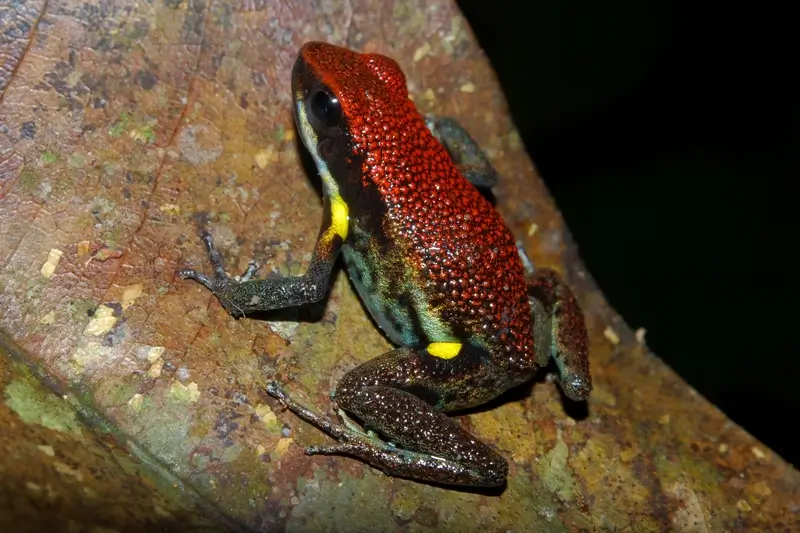
Ecuador Poison Frog (Ameerega bilinguis)
The Ecuador poison frog is found in Colombia and Ecuador.