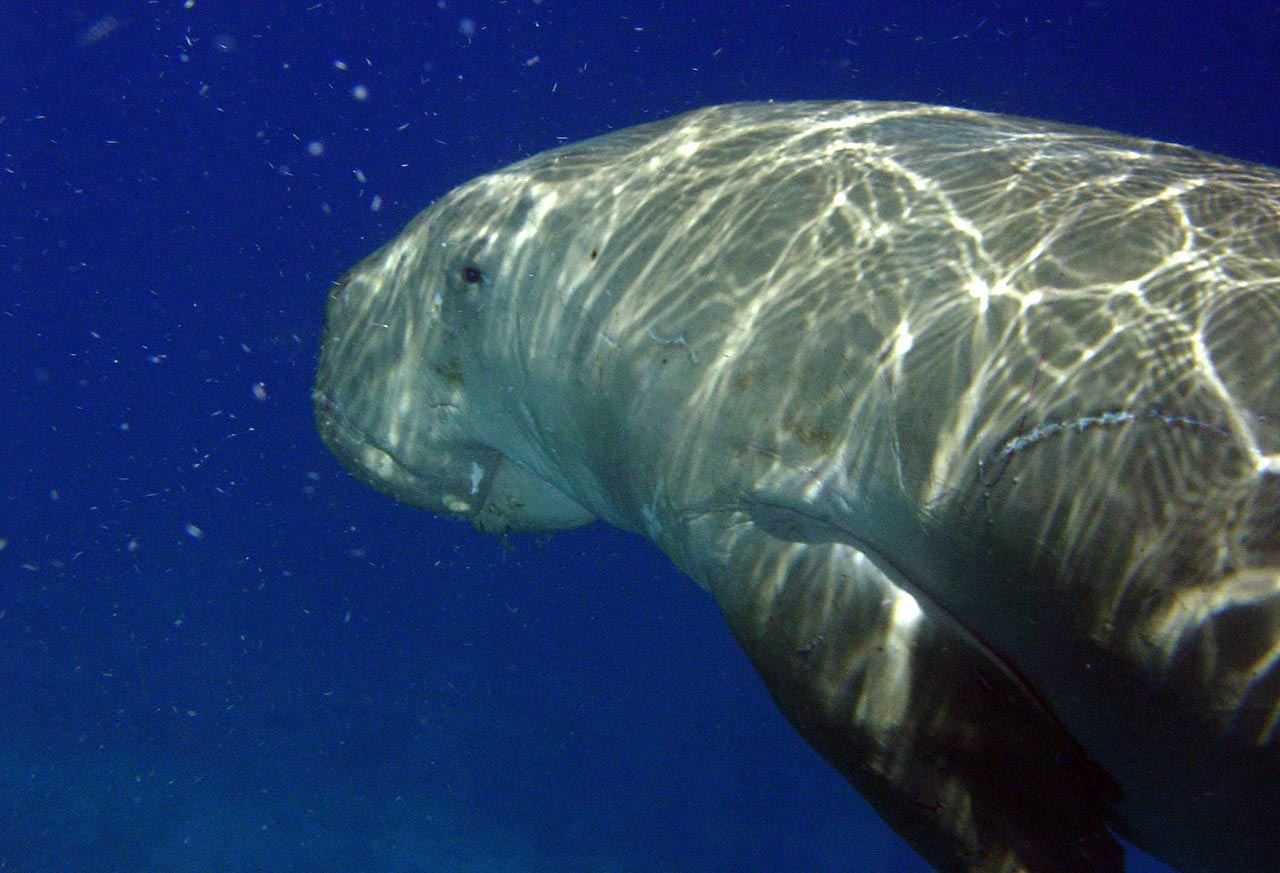
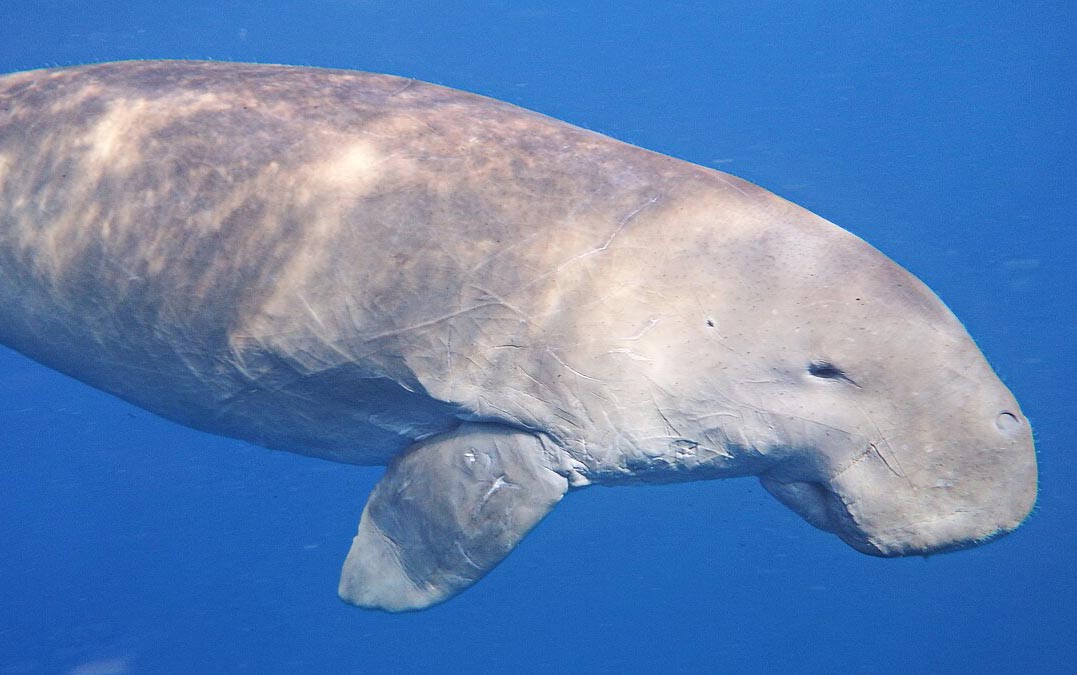
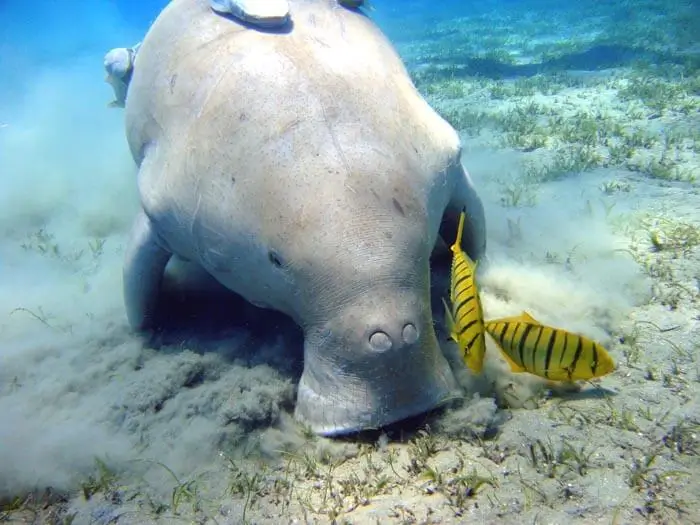
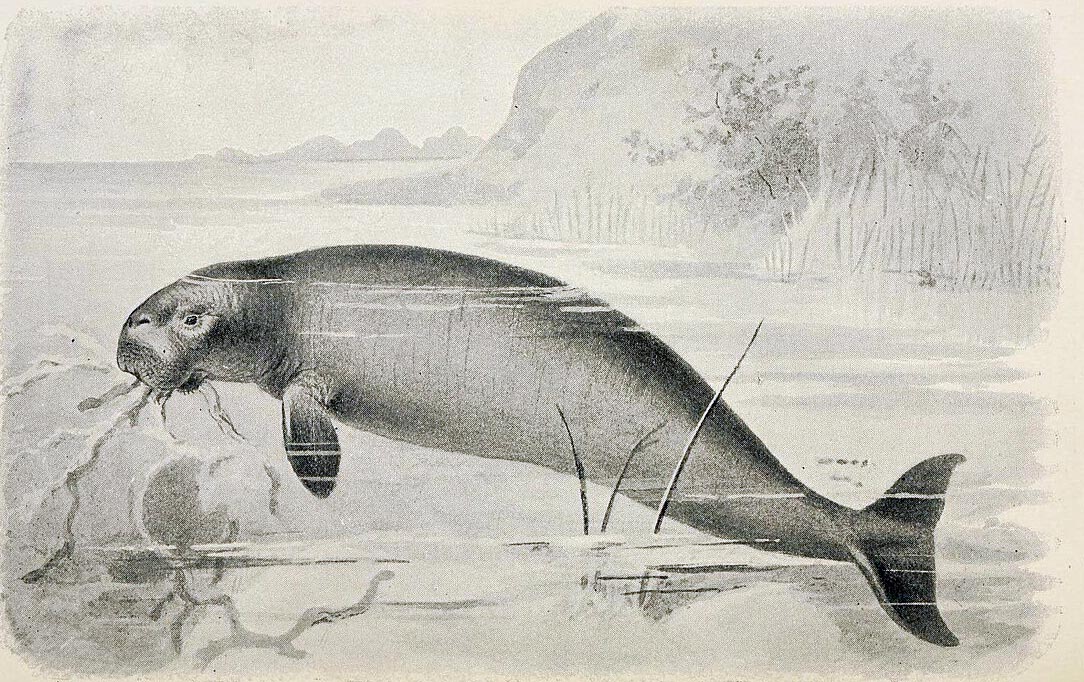
There is one living species in this family. The dugong (Dugong dugon) is found in warm, shallow coastal waters of Africa, India, Australia, New Guinea, and other South Pacific Islands.
At 8-10 feet in length, the dugong is the smallest member of the Sirenia order.
Dugongs have cleft lips, small eyes, brownish-gray skin that is lightly covered with hair, paddle-like front flippers, and a tail with a dolphin-like fluke.
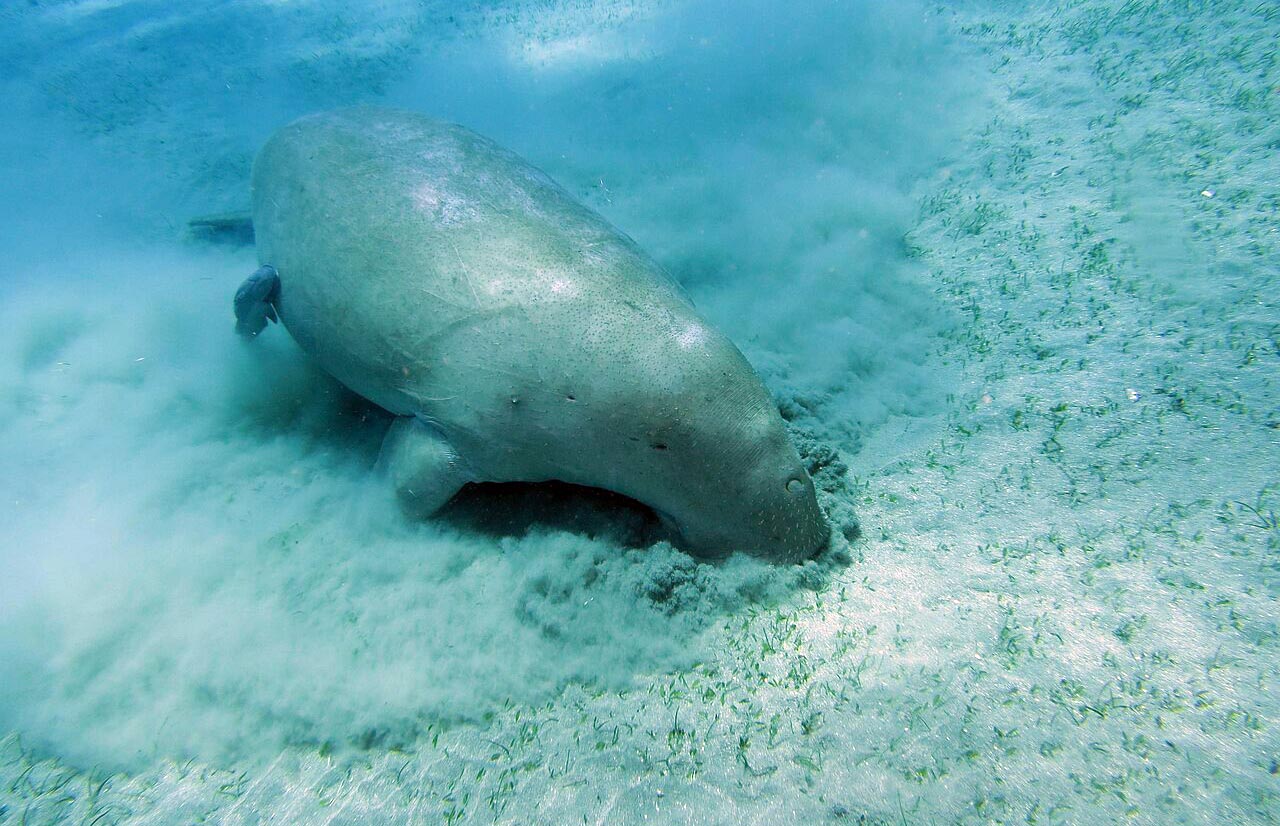
Dugongs eat sea grasses and algae.
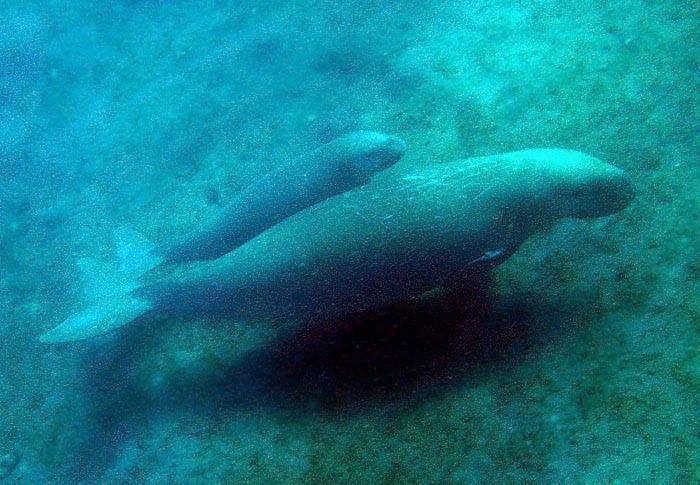
Females give birth to a single calf 12-14 months after mating. A calf may stay with its mother for up to six years. Dugongs can live to be 70 years old in the wild.
STELLER’S SEA COW
Steller’s sea cow (Hydrodamalis gigas) is an extinct member of this family. It was once found in the North Pacific Ocean, along the coasts of Alaska and Russia. Unlike other members of the Sirenia order, it thrived in cold waters. It was around 28 feet in length. It had no teeth and ate kelp and algae.
It was first reported by Georg Wilhelm Steller, a naturalist who was part of the crew of Vitus Bering’s ship, the St. Peter. The St. Peter shipwrecked off the coast of Kamchatka in Russia in 1741.
The crew killed six of the slow-moving creatures for food to survive. The crew was able to leave in 1742 and reported what they had found when they returned home. Other crews returned and hunted the sea cow, and by 1768, it had been hunted to extinction.