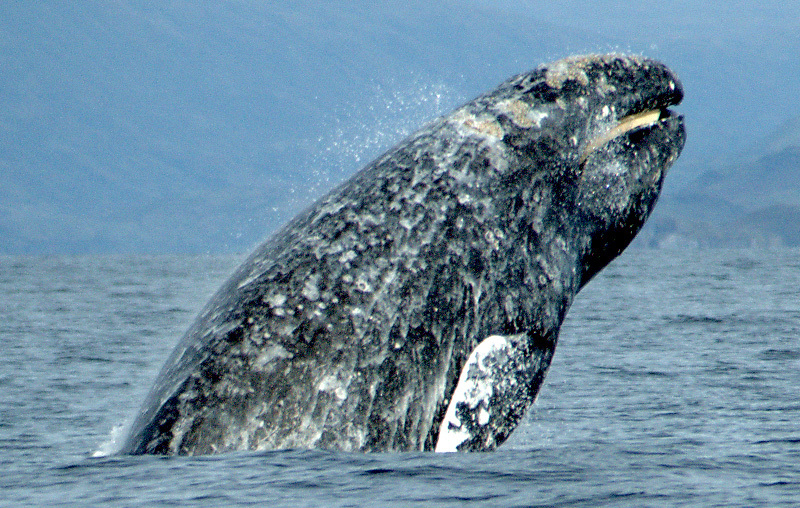
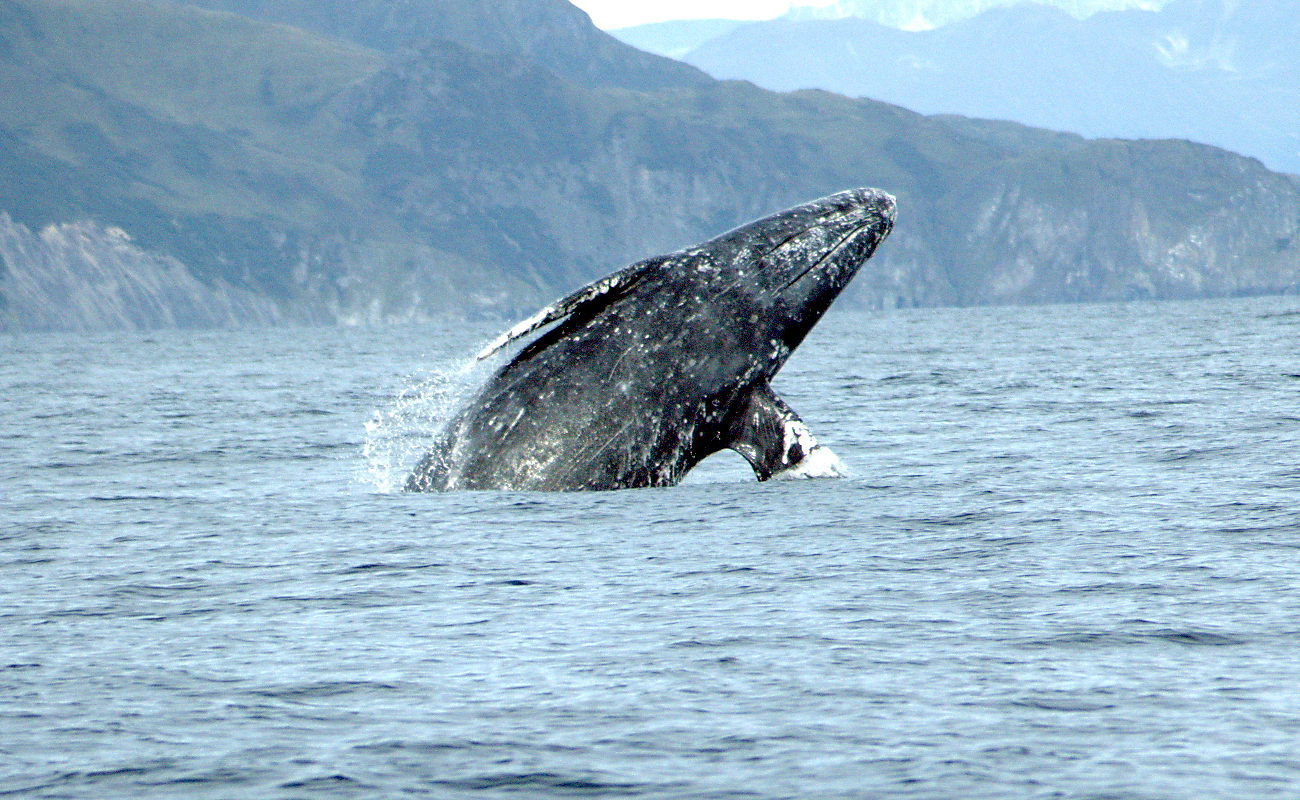
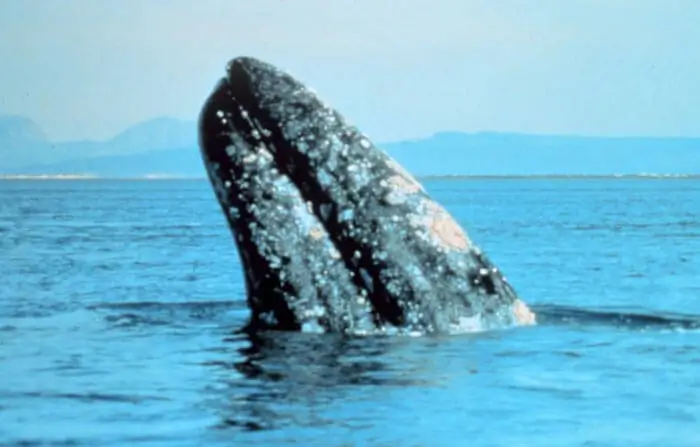
There is one species of baleen whale in this family, the gray whale (Eschrichtius robustus). They are found in northern Pacific waters
Gray whales are 45-50 feet in length and weigh 30-40 tons. Gray whales are gray and have 2-5 throat furrows. The furrows allow the gray whale to expand its throat when it is taking in water.
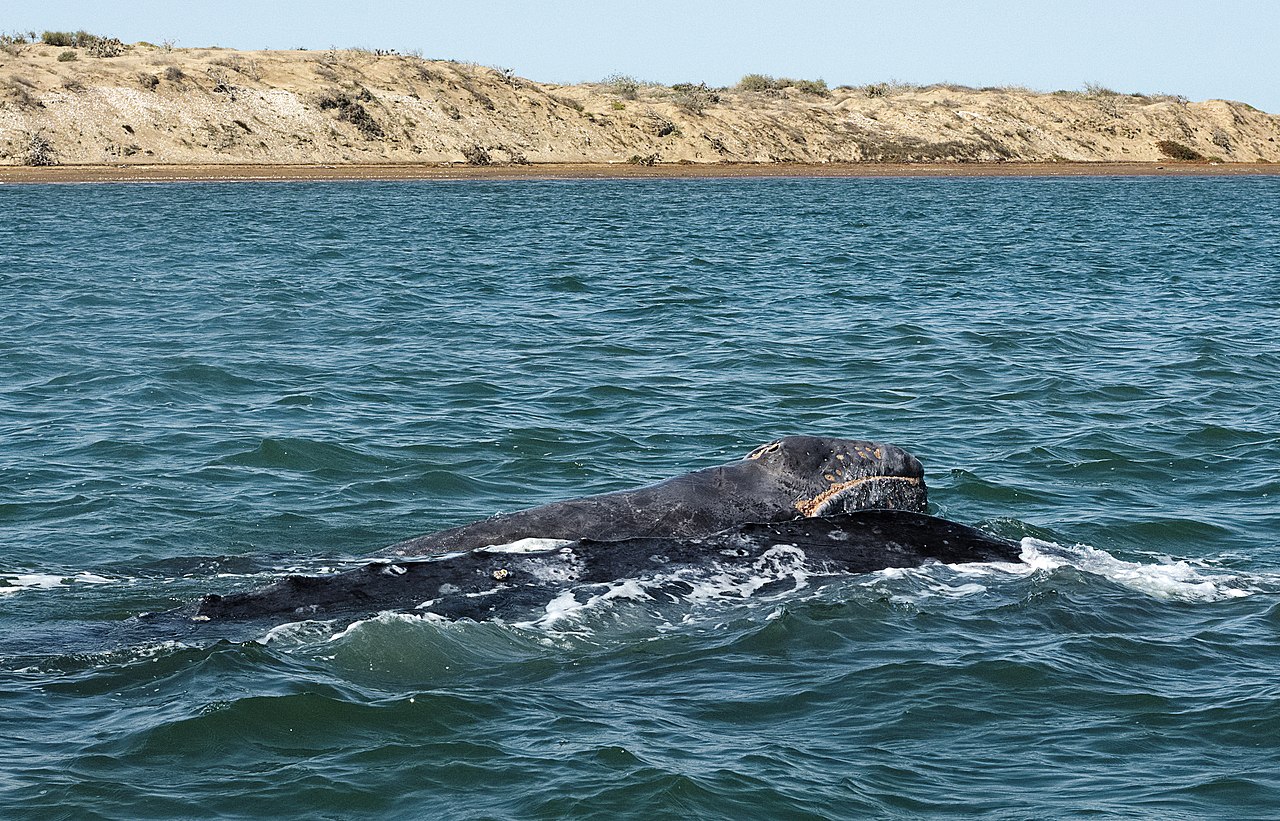
Gray whales have long, narrow heads; slightly arched upper jaws; and small dorsal humps on their backs. Gray whales are usually covered with barnacles and whale lice, except for on their right sides. They don’t have barnacles and lice on their right sides because they scrape along the ocean floor on their right side when they are feeding, and any barnacles and whale lice get scraped off!
Gray whales are filter feeders. They take in large amounts of water and filter out small crustaceans, plankton, mollusks, and small fish through their baleen.
Gray whales live in pods of 3-12 individuals. They feed in cold Arctic waters in the summer months. In the fall, gray whales migrate from the Arctic to their breeding grounds off the coast of Baja, Mexico, and off the Korean coast. It is a round-trip migration of 10,000-14,000 miles!
Gray Whale (Eschrichtius robustus)
Gray whales are found in northern Pacific waters. IUCN Redlist Status: Least Concern
Gray Whale (Eschrichtius robustus)
Gray whales are 45-50 feet in length and weigh 30-40 tons. IUCN Redlist Status: Least Concern
Gray Whale (Eschrichtius robustus)
A gray whale mother and her calf. IUCN Redlist Status: Least Concern