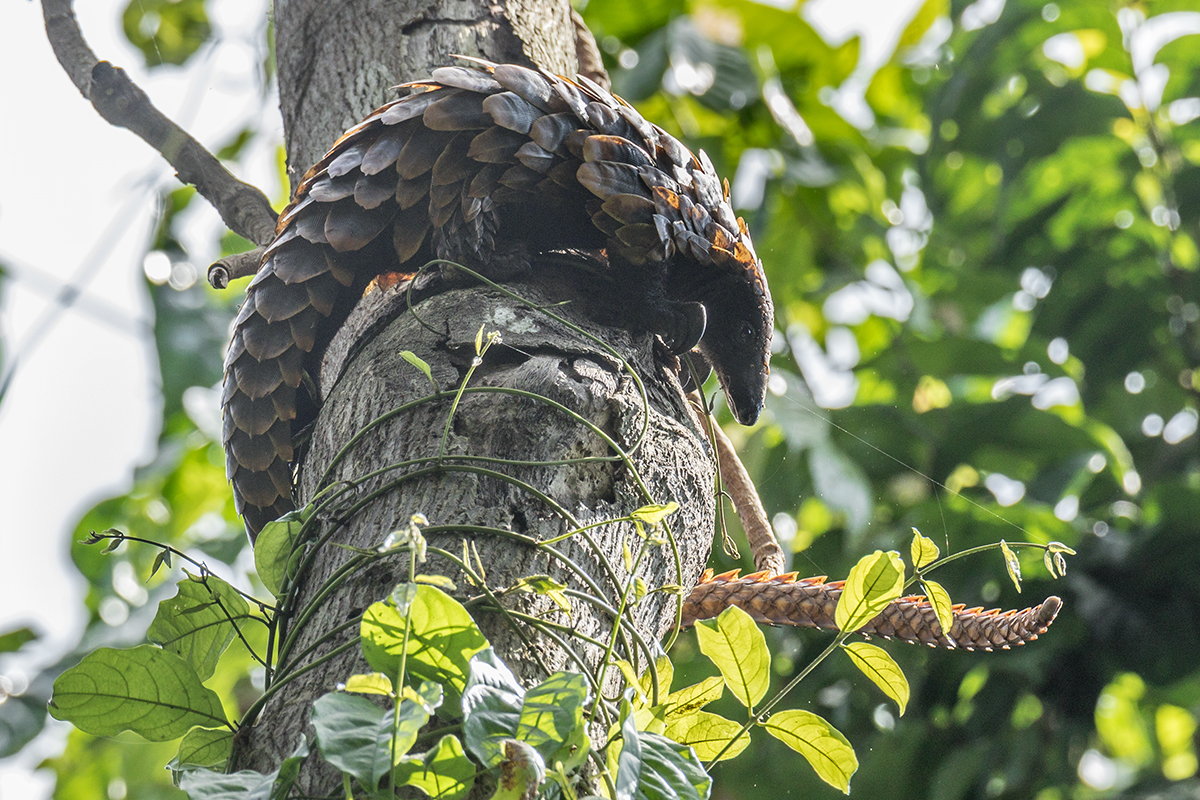
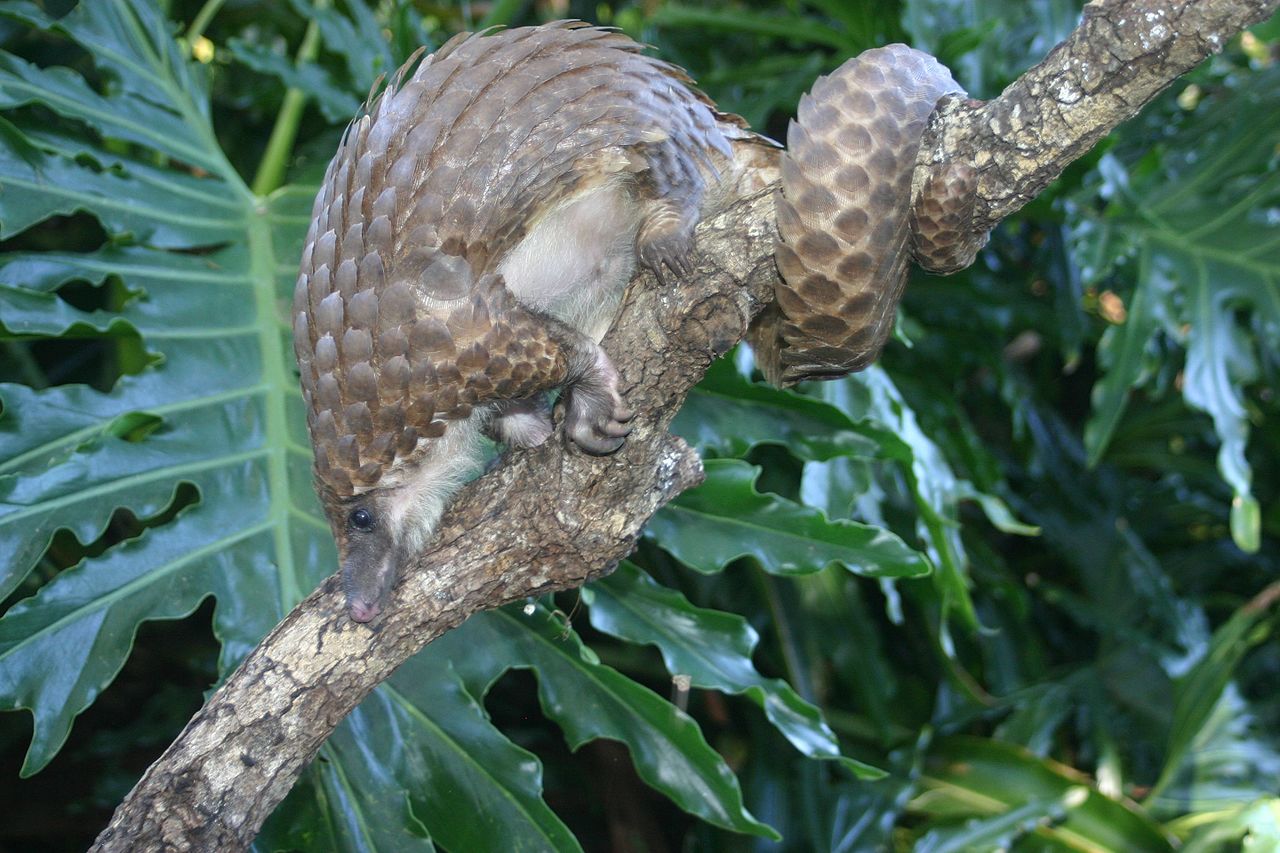
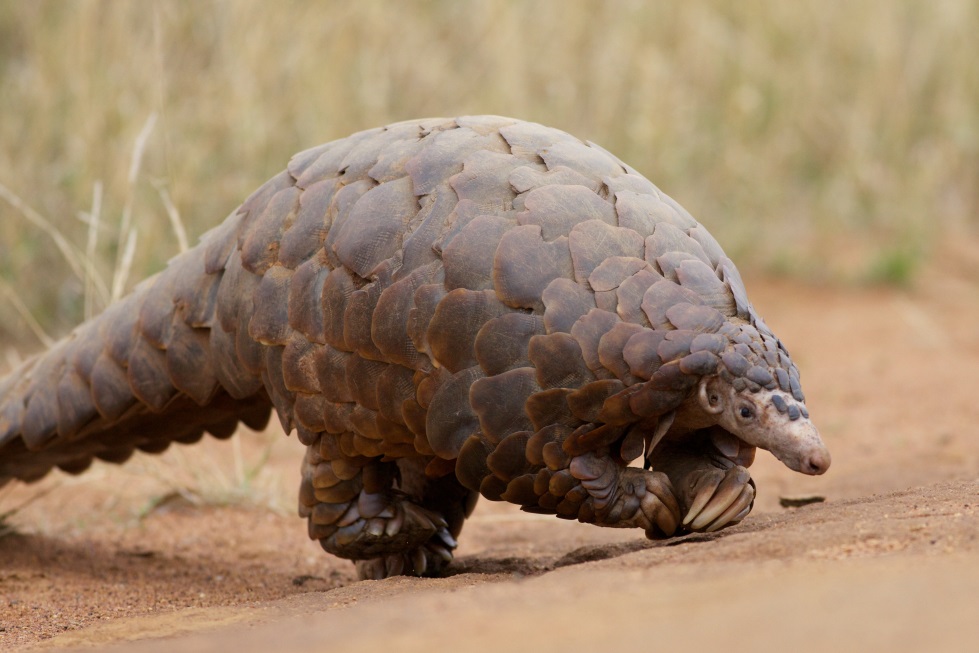
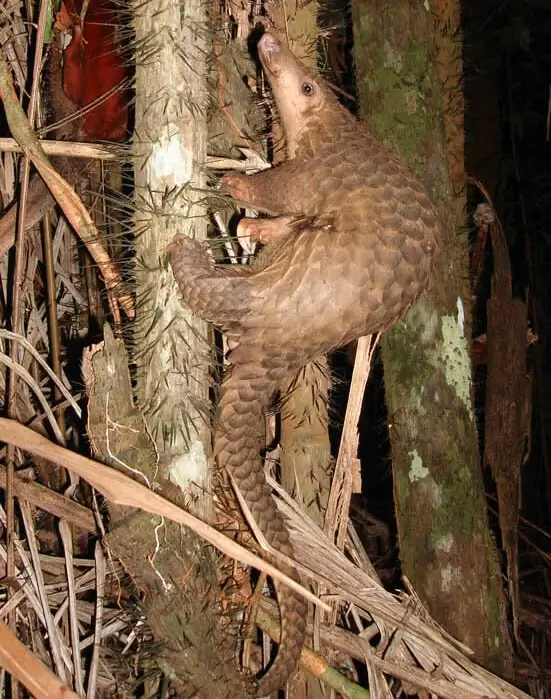
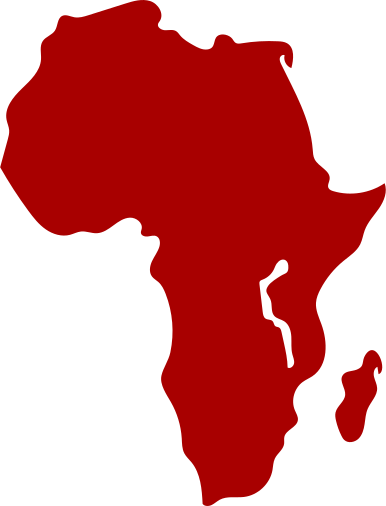
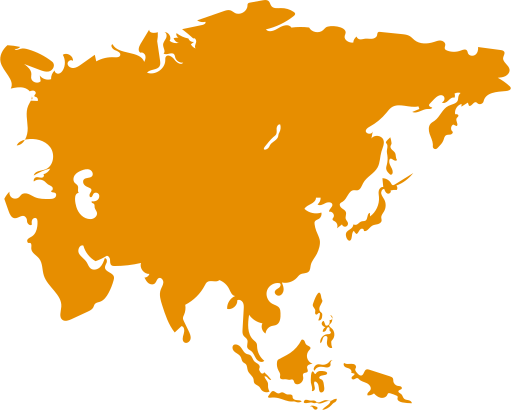
There are eight species in this family. They are found in Africa and Asia.
Pangolins are also called scaly anteaters. Most pangolin species are nocturnal. They range in size from one to three feet in length.
Pangolins don’t have teeth! They use their long, strong front claws and long, muscular tongues to excavate insects like termites and ants. They use their highly developed sense of smell to locate insects.
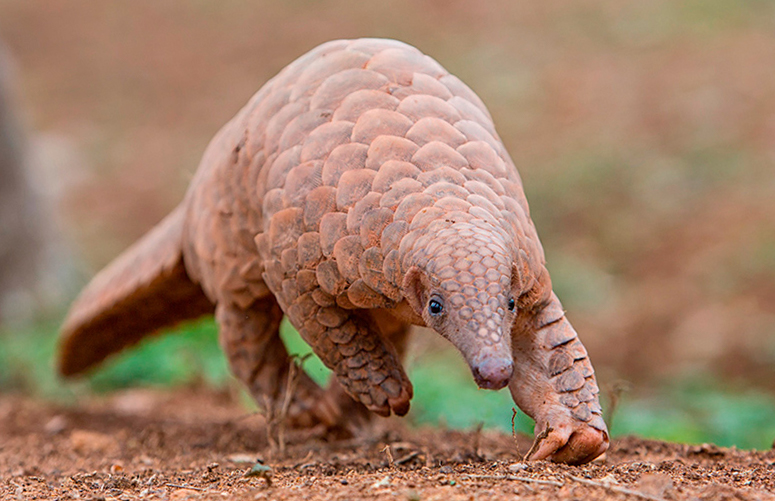
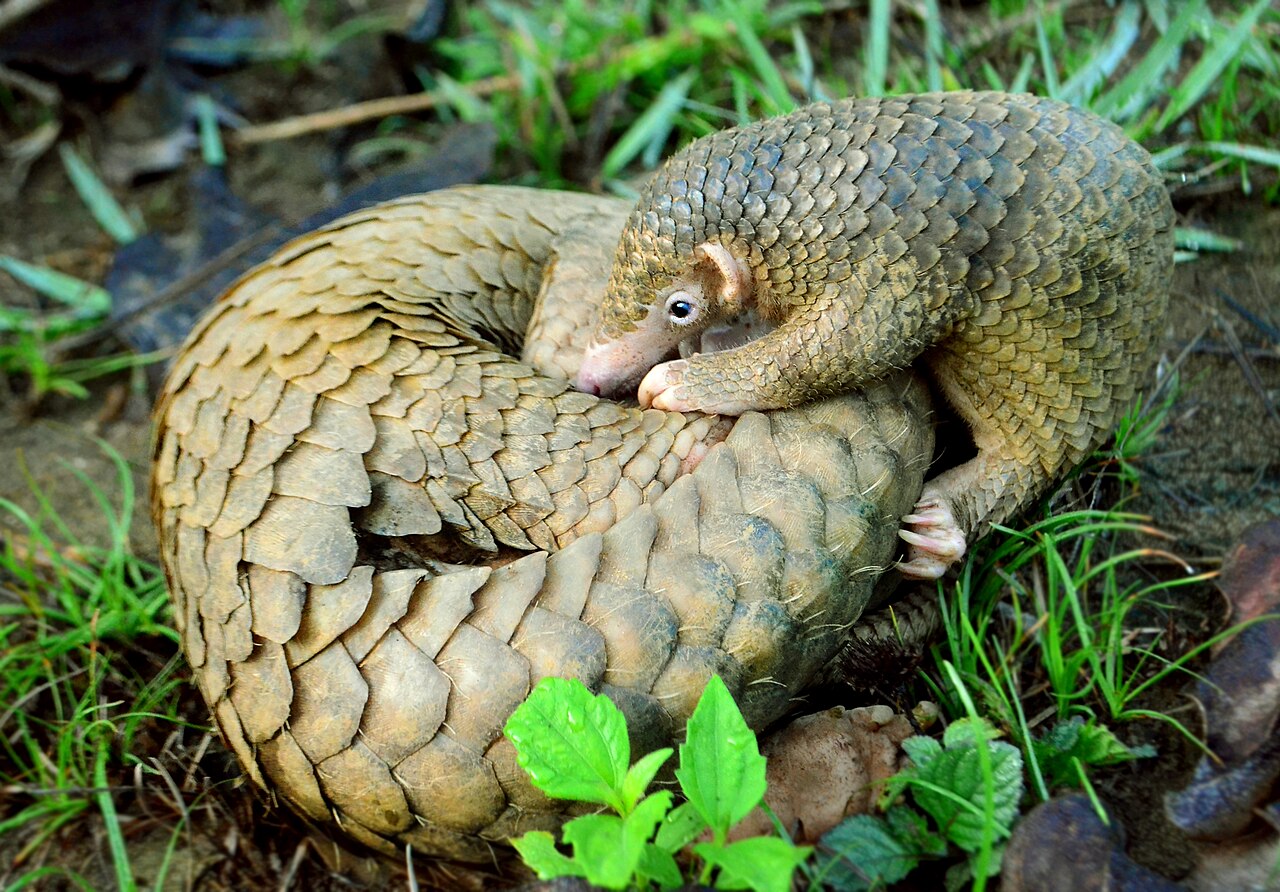
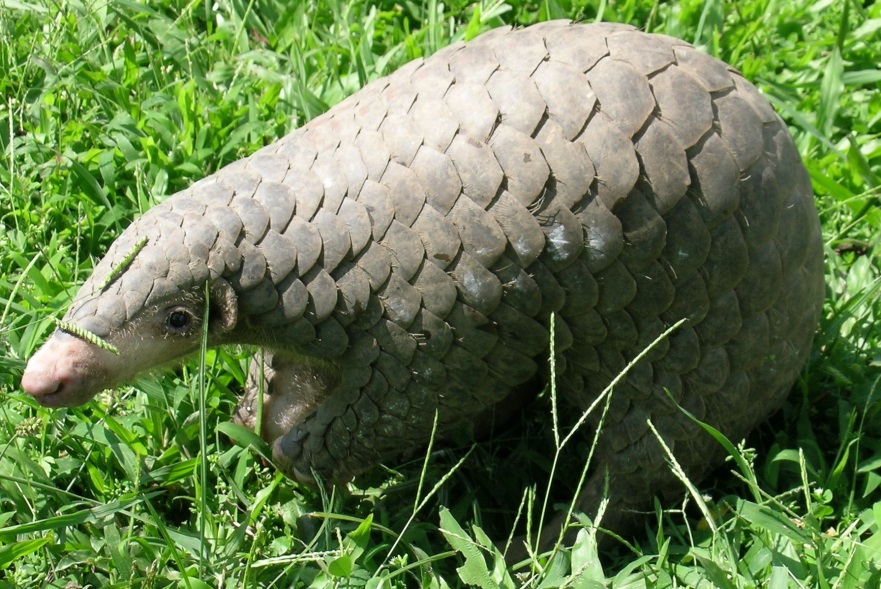
Pangolins are covered with razor-sharp scaly plates. When a pangolin is threatened, it curls up in a ball to protect its vulnerable underside.
The pangolin’s scales are made of keratin. Keratin is found in animal horns, human fingernails, claws, and reptile and turtle shells. The pangolin is the only mammal with keratin scales. Pangolins are born with soft scales that harden as they get older.
Pangolins also have long, curved front claws. Their front claws are so long that pangolins have to curl their front paws over to walk on the ground.
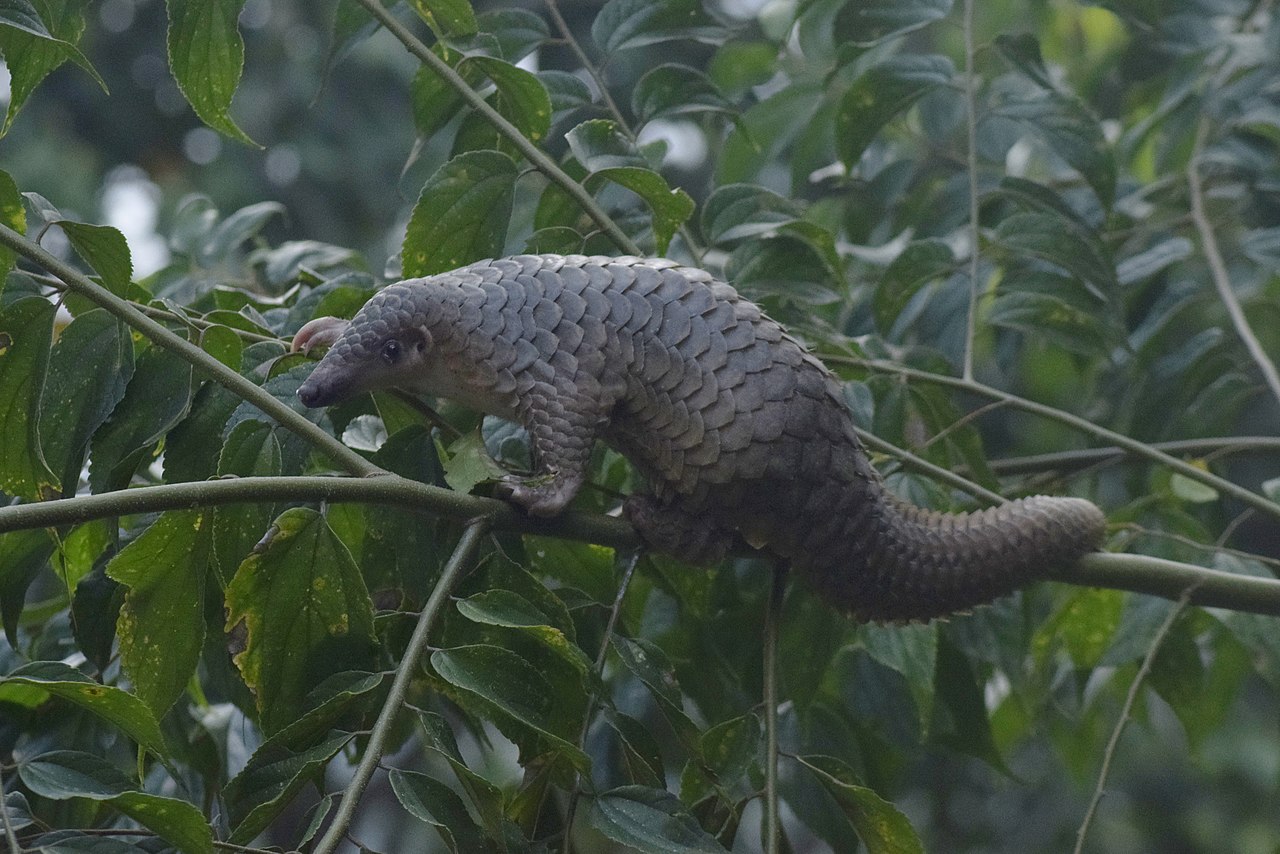
Some pangolin species live in trees. Other species live on the ground.
Indian Pangolin (Manis crassicaudata)
The Indian pangolin is found in Bangladesh, India, Nepal, Pakistan, and Sri Lanka. IUCN Redlist Status: Endangered
Philippine Pangolin (Manis culionensis)
The Philippine pangolin is found in the Philippines. IUCN Redlist Status: Critically Endangered
Sunda Pangolin (Manis javanica)
The Sunda pangolin is found in Brunei Darussalam, Cambodia, Indonesia, Laos, Malaysia, Myanmar, Singapore, Thailand, and Vietnam. IUCN Redlist Status: Critically Endangered
Chinese Pangolin (Manis pentadactyla)
The Chinese pangolin is found in Bangladesh, Bhutan, China, Hong Kong, India, Laos, Myanmar, Nepal, Taiwan, Thailand, and Vietnam. IUCN Redlist Status: Critically Endangered
Black-Bellied Pangolin (Phataginus tetradactyla)
The black-bellied pangolin is found in Cameroon, Central African Republic, Congo, The Democratic Republic of the Congo, Côte d'Ivoire, Equatorial Guinea, Gabon, Ghana, Guinea, Liberia, Nigeria, and Sierra Leone. IUCN Redlist Status: Vulnerable
White-Bellied Pangolin (Phataginus tricuspis)
The white-bellied pangolin is found in Angola, Benin, Burundi, Cameroon, Central African Republic, Congo, Congo, The Democratic Republic of the, Côte d'Ivoire, Equatorial Guinea (Equatorial Guinea (mainland), Bioko), Gabon, Ghana, Guinea, Guinea-Bissau, Kenya, Liberia, Nigeria, Rwanda, Sierra Leone, South Sudan, Tanzania, Togo, Uganda, and Zambia. IUCN Redlist Status: Endangered
Temminck's Pangolin (Smutsia temminckii)
Temminck's pangolin is found in Angola, Botswana, Burundi, Central African Republic, Chad, Ethiopia, Kenya, Malawi, Mozambique, Namibia, Rwanda, South Africa, South Sudan, Sudan, Tanzania, Uganda, Zambia, and Zimbabwe. IUCN Redlist Status: Vulnerable