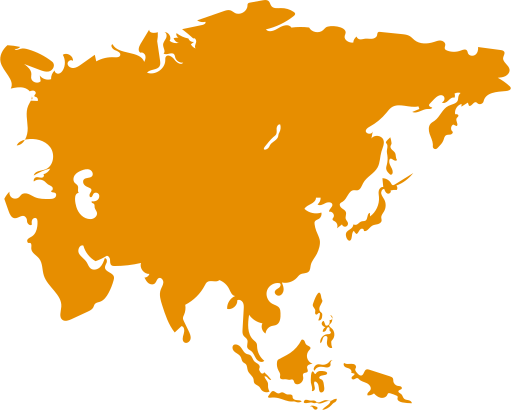
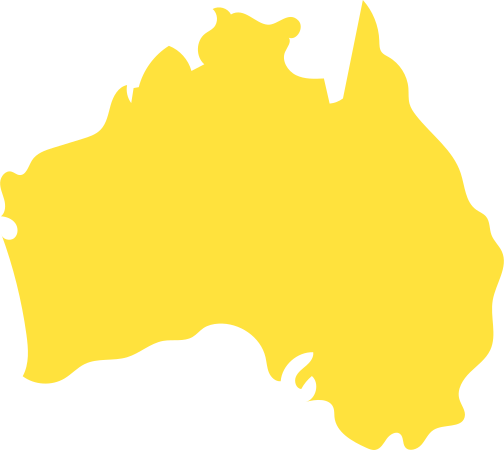
There are five species in this family of medium to large-sized bats. They are found in Central Africa, Australia, and Southeast Asia.
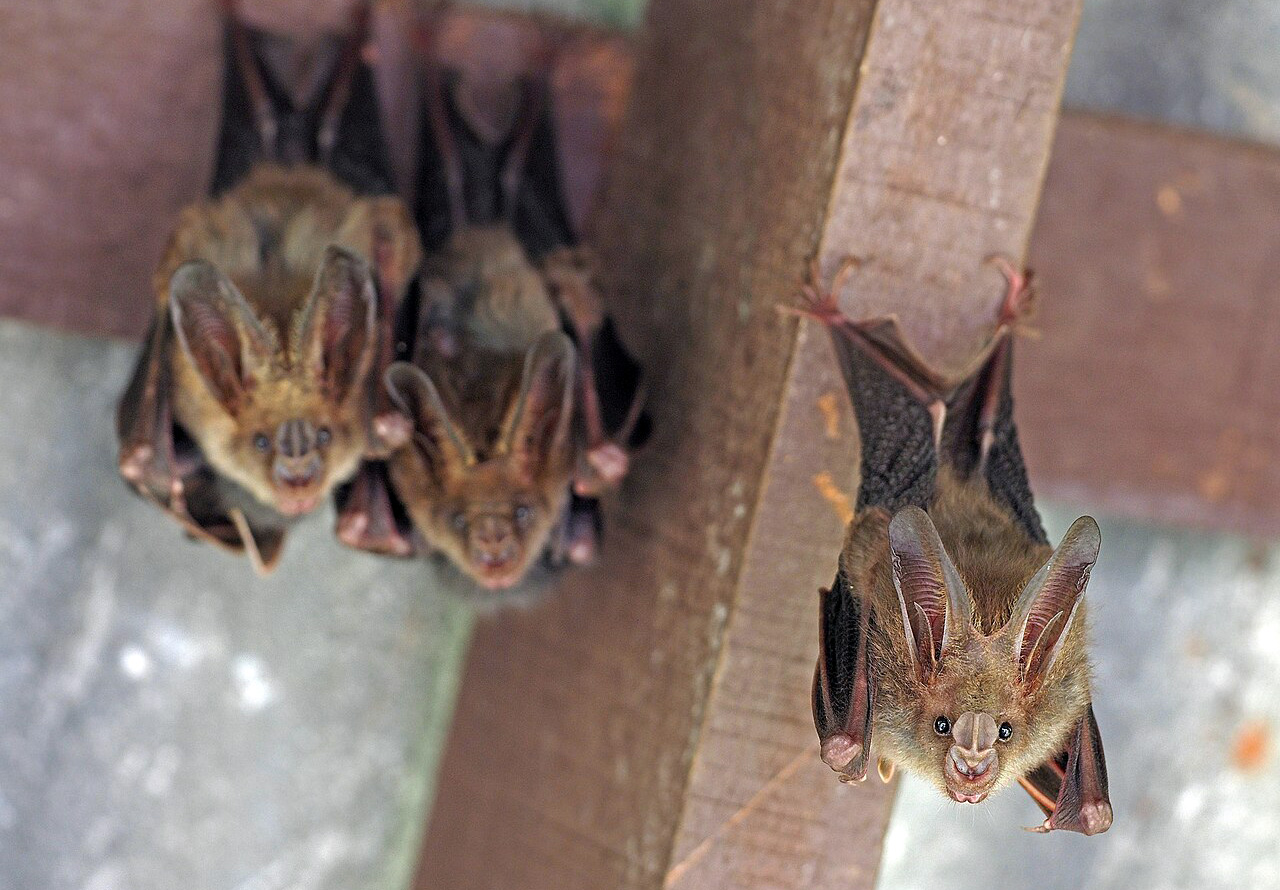
They have no external tails, large eyes, and large ears that are joined by a membrane at the base. False vampire bats have large, upright noseleaves; the noseleave is the fleshy flap that sticks out from the nose.
Most species eat insects, and two species eat fish, frogs, lizards, birds, mice, or other bats.
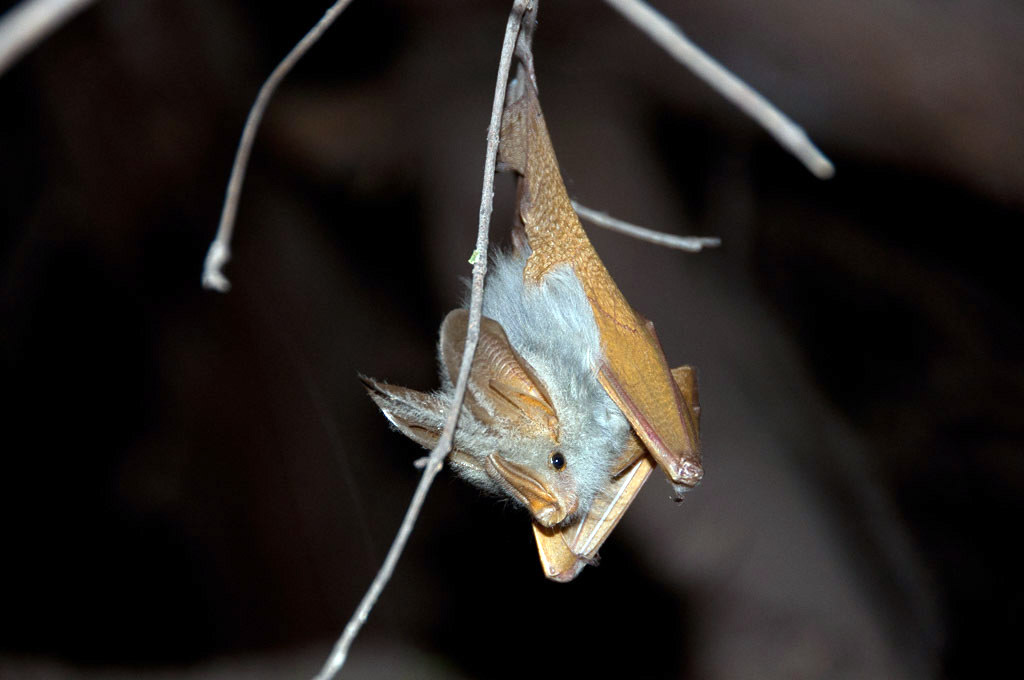
One species, the yellow-winged bat, roosts in trees and waits for insect prey.
Species in the family include: the heart-nosed bat, the Australian false vampire bat, the yellow-winged bat, the greater false vampire bat, and the lesser false vampire bat.
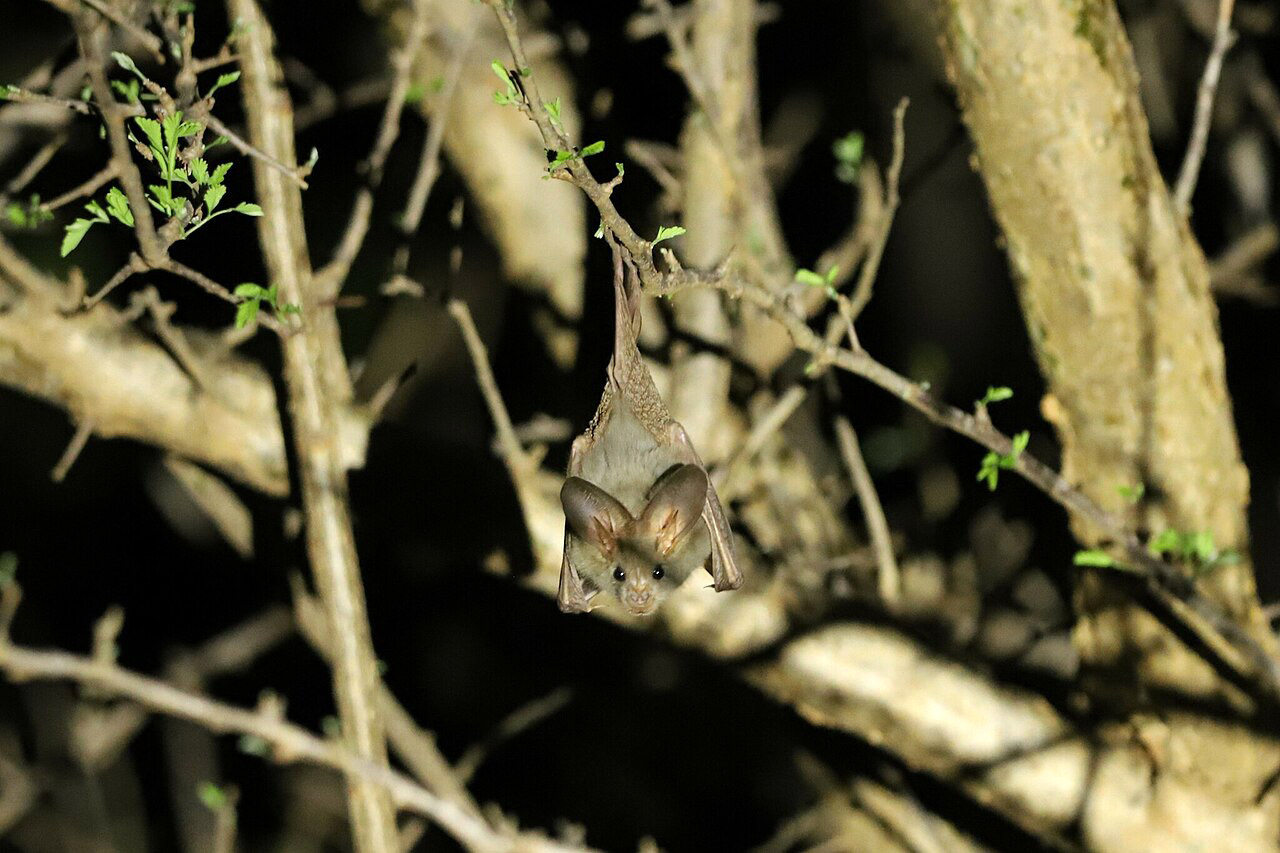
Heart-Nosed Bat Cardioderma cor)
The heart-nosed bat is found in Djibouti, Eritrea, Ethiopia, Kenya, Somalia, South Sudan, Sudan, Tanzania, and Uganda. IUCN Redlist Status: Least Concern
Yellow-Winged Bat (Lavia frons)
The yellow-winged bat is found in Sub-Saharan Africa south to northern Zambia. IUCN Redlist Status: Least Concern
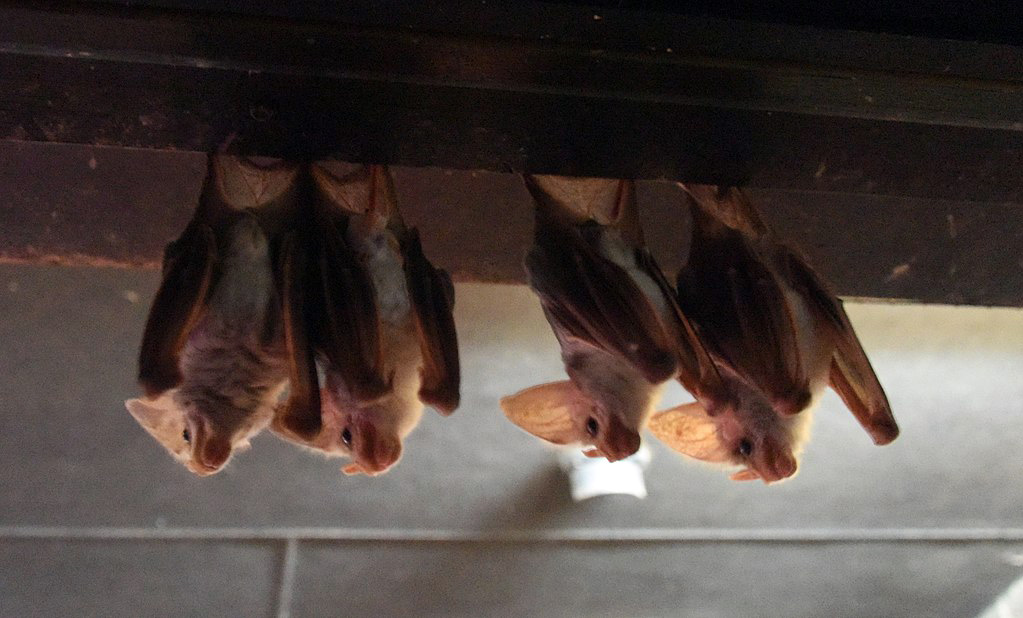
Ghost Bat (Macroderma gigas)
The ghost bat is found in Northern Territory, Queensland, and Western Australia. It roosts in caves, old mine tunnels and in deep cracks in rocks. IUCN Redlist Status: Vulnerable
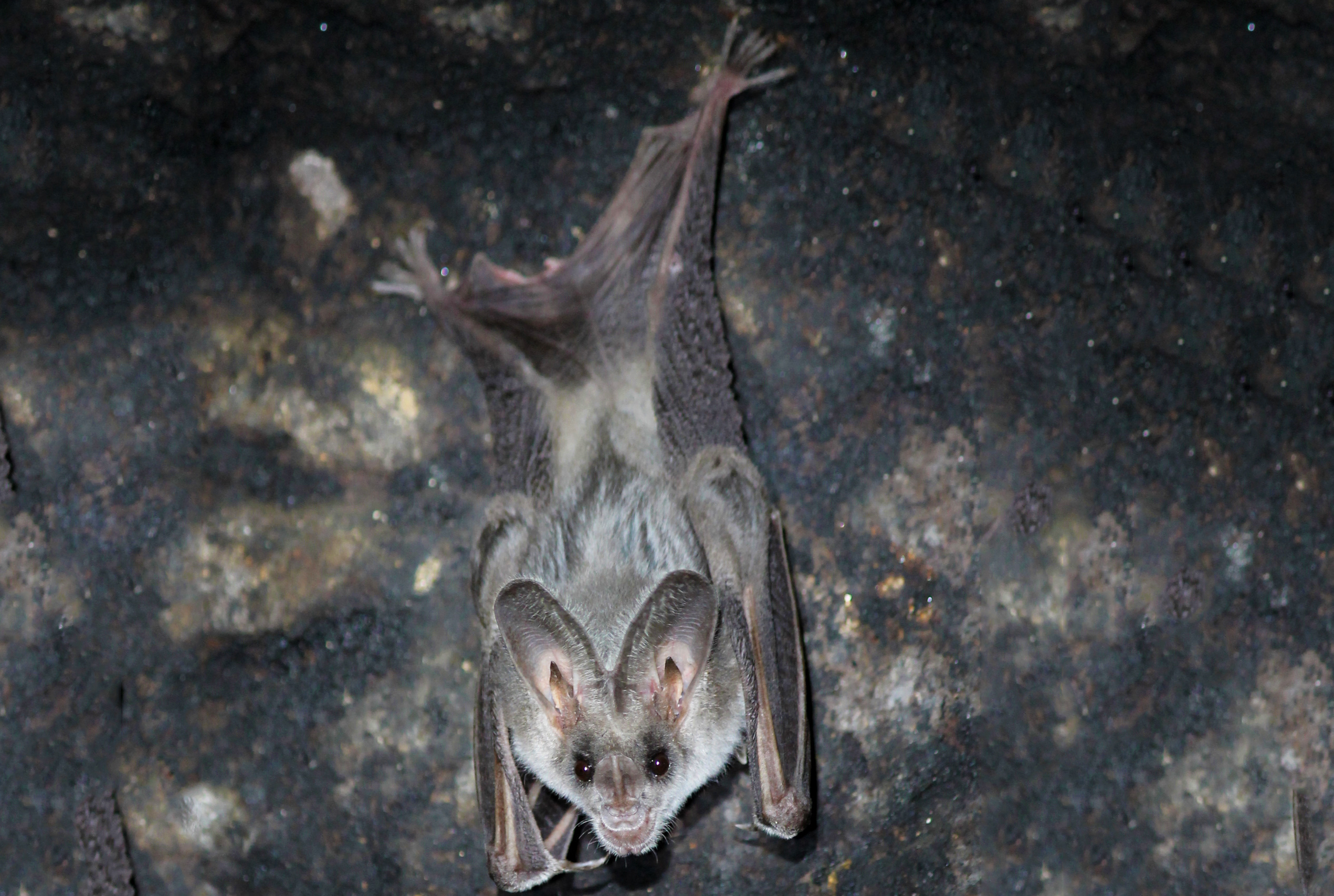
Greater False Vampire Bat (Megaderma lyra)
The greater false vampire bat is found in Afghanistan, Bangladesh, Cambodia, China, India, Laos, Malaysia, Myanmar, Nepal, Pakistan, Sri Lanka, Thailand, and Vietnam. IUCN Redlist Status: Least Concern
Lesser False Vampire Bat (Megaderma spasma)
The lesser false vampire bat is found in Bangladesh, Brunei Darussalam, Cambodia, India, Indonesia, Laos, Malaysia, Myanmar, Philippines, Singapore, Sri Lanka, Thailand, and Vietnam. IUCN Redlist Status: Least Concern