There is only one bird in this family, and it is a strange bird! The hoatzin (Opisthocomus hoazin) is found in the rainforests of the Amazon.
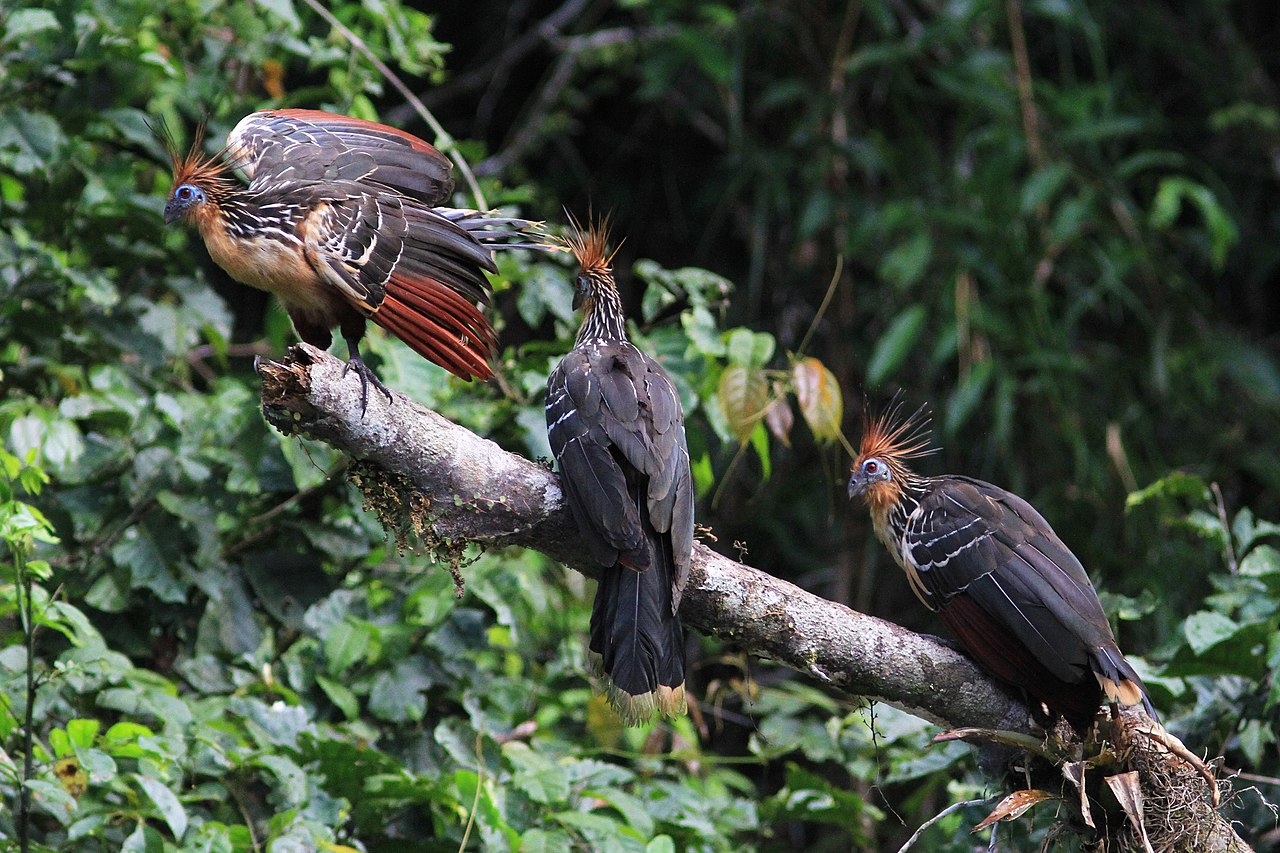
The hoatzin lives in family groups and is folivorous. Folivorous animals eat mostly leaves. The hoatzin’s diet is made up mostly of leaves, although it does eat some fruit and flowers.
Because its diet is mostly made up of leaves, the hoatzin has an unusual digestive system. It has a large crop that uses bacteria to break down the leaves that it eats. The crop is a pouch-like extension of the esophagus that is found in birds. It is used to store food before digestion.
The hoatzin is unique because it has bacteria in its crop that break down its food while it is still in the crop in a process called foregut fermentation.
This process is usually found in mammal ruminants like cows and sheep, although in mammals, the rumen is used for foregut fermentation instead of the crop. The hoatzin is the only bird species that uses foregut fermentation.
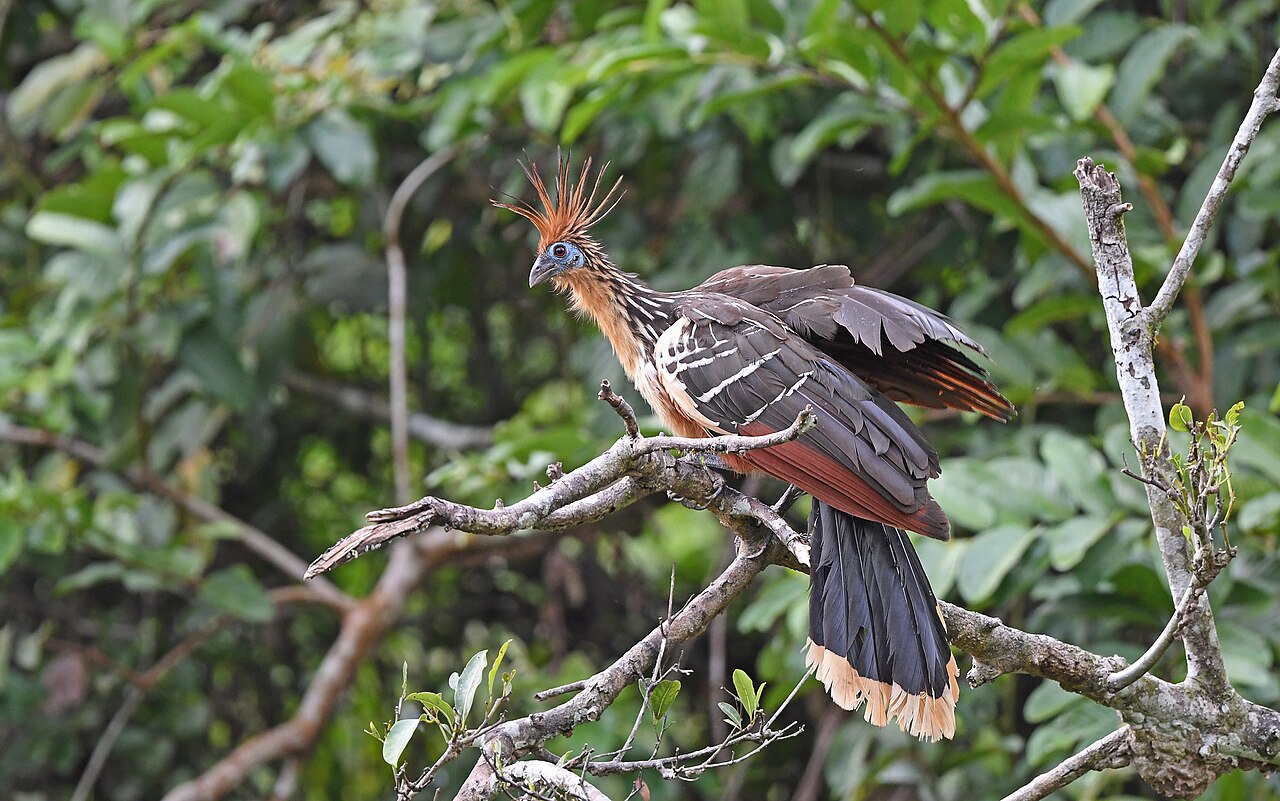
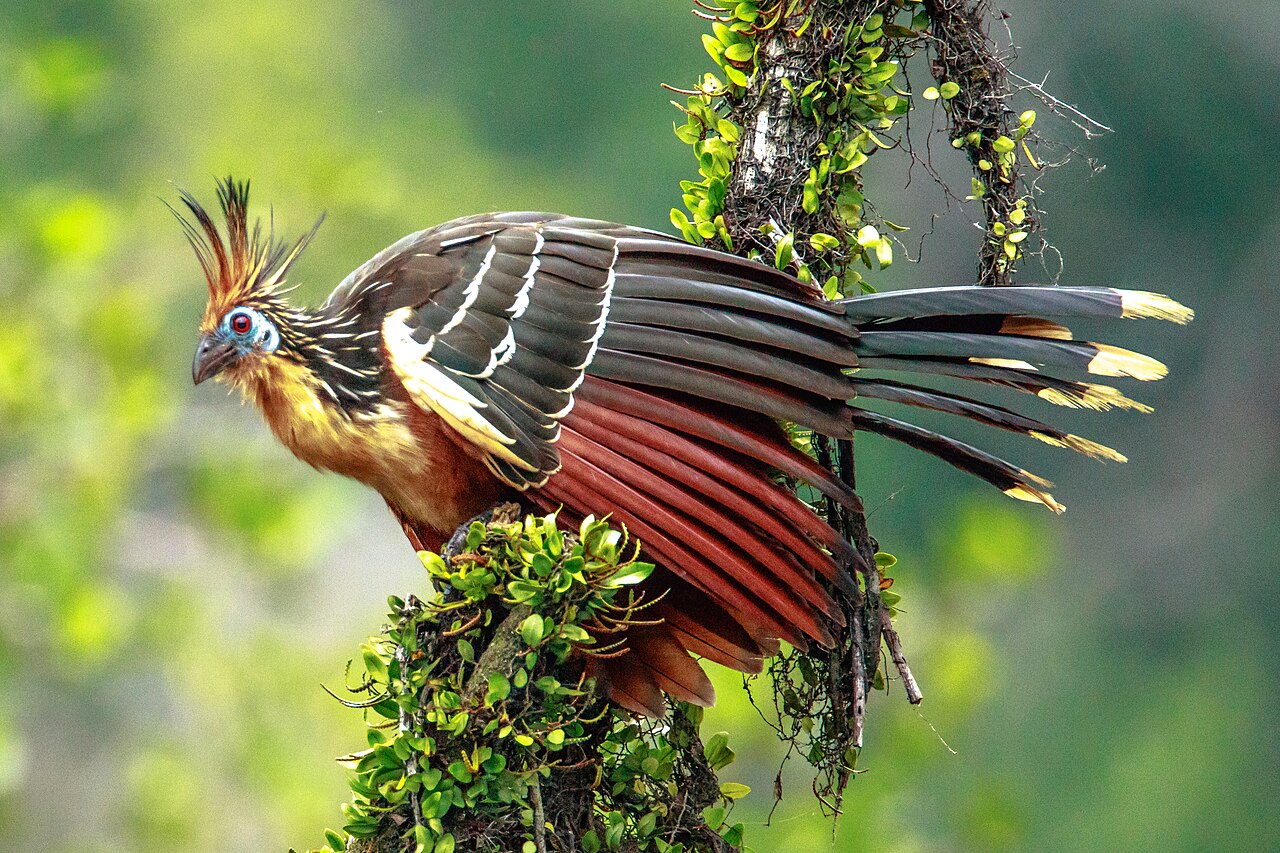
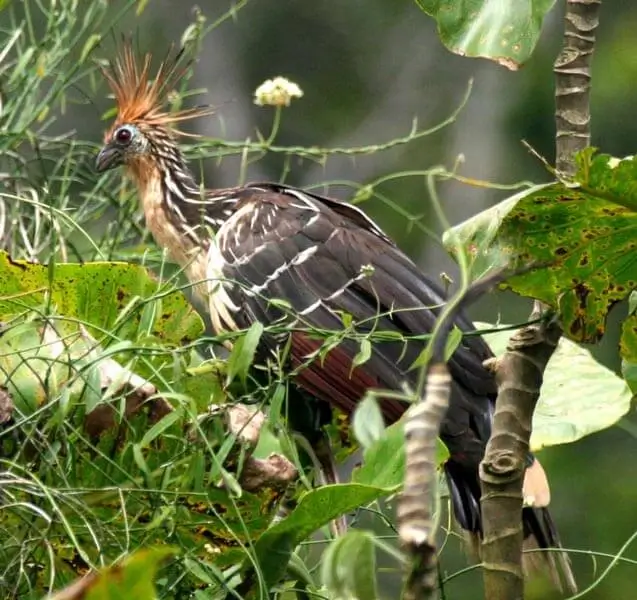
The hoatzin is about the size of a chicken – about 24-26 inches in length. It has a bright blue featherless face, red eyes, and a crest of feathers on its small head. It has a long neck and long tail feathers.
The hoatzin has claws on its wings that chicks use to help them climb in trees. The claws are useless on the wings of adult hoatzins.
Hoatzin (Opisthocomus hoazin)
The hoatzin is found in Bolivia, Brazil, Colombia, Ecuador, French Guiana, Guyana, Peru, Suriname, and Venezuela. IUCN Redlist Status: Least Concern
Hoatzin (Opisthocomus hoazin)
The hoatzin is about the size of a chicken. IUCN Redlist Status: Least Concern
Hoatzin (Opisthocomus hoazin)
The hoatzin lives in family groups and is folivorous. Folivorous animals eat mostly leaves. IUCN Redlist Status: Least Concern