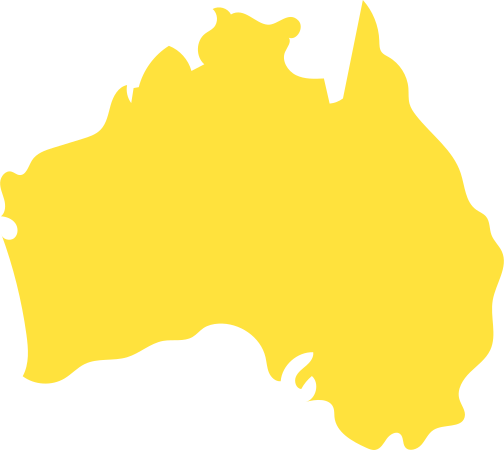
The platypus (Ornithorhynchus anatinus) is the only species in this family. It is found in eastern Australia.
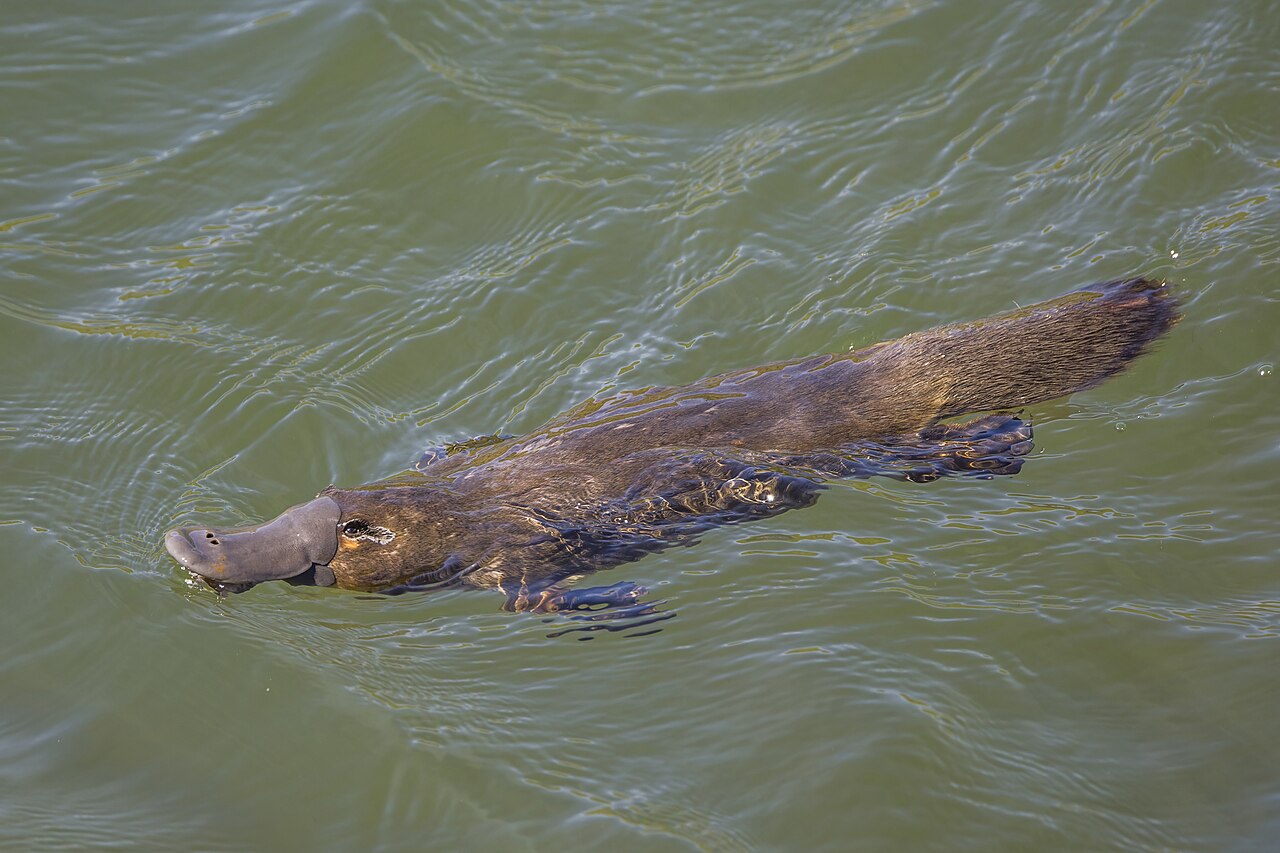
The platypus is 19-22 inches in length, and it looks like it is made up of pieces of other animals.
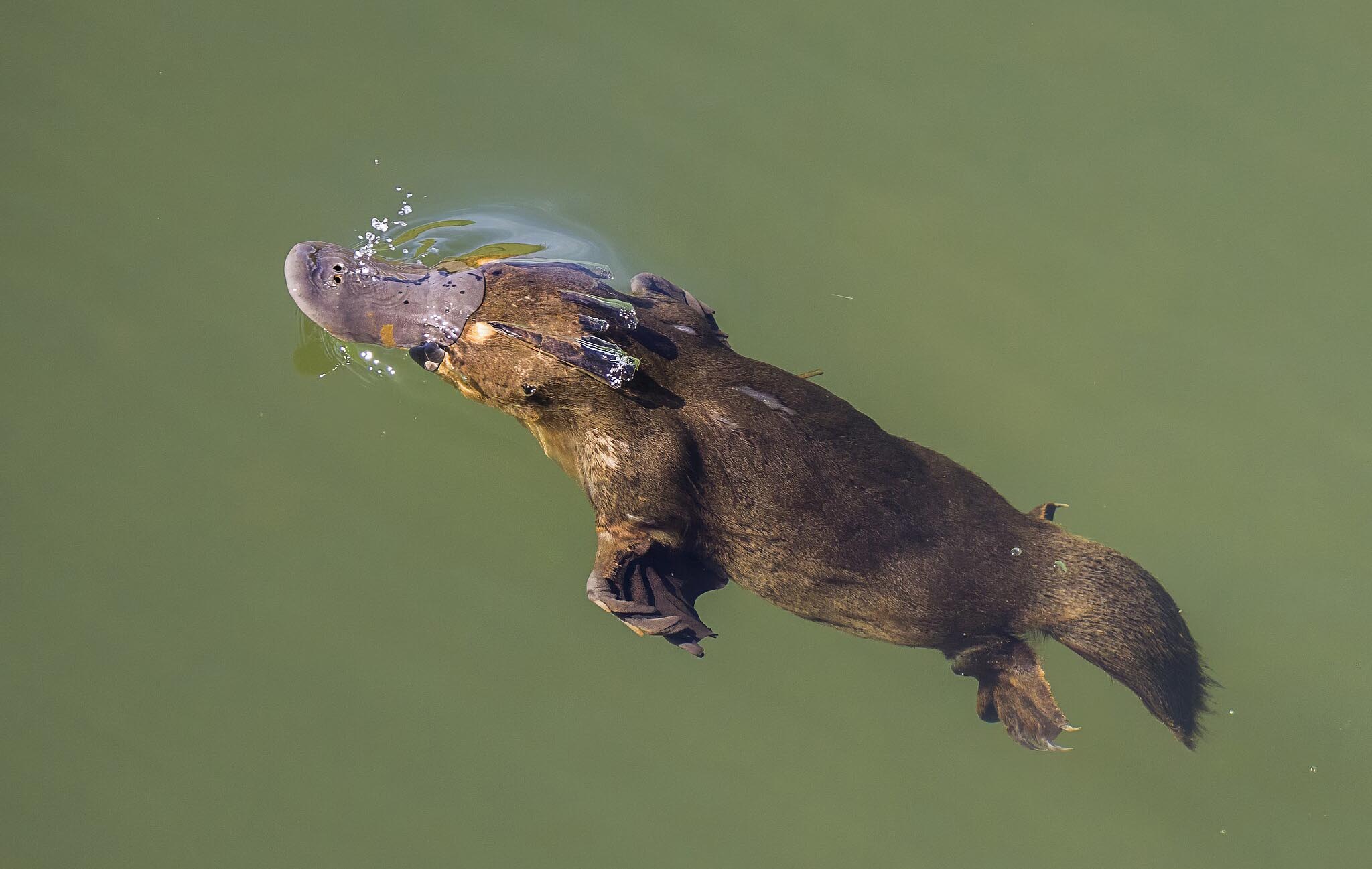
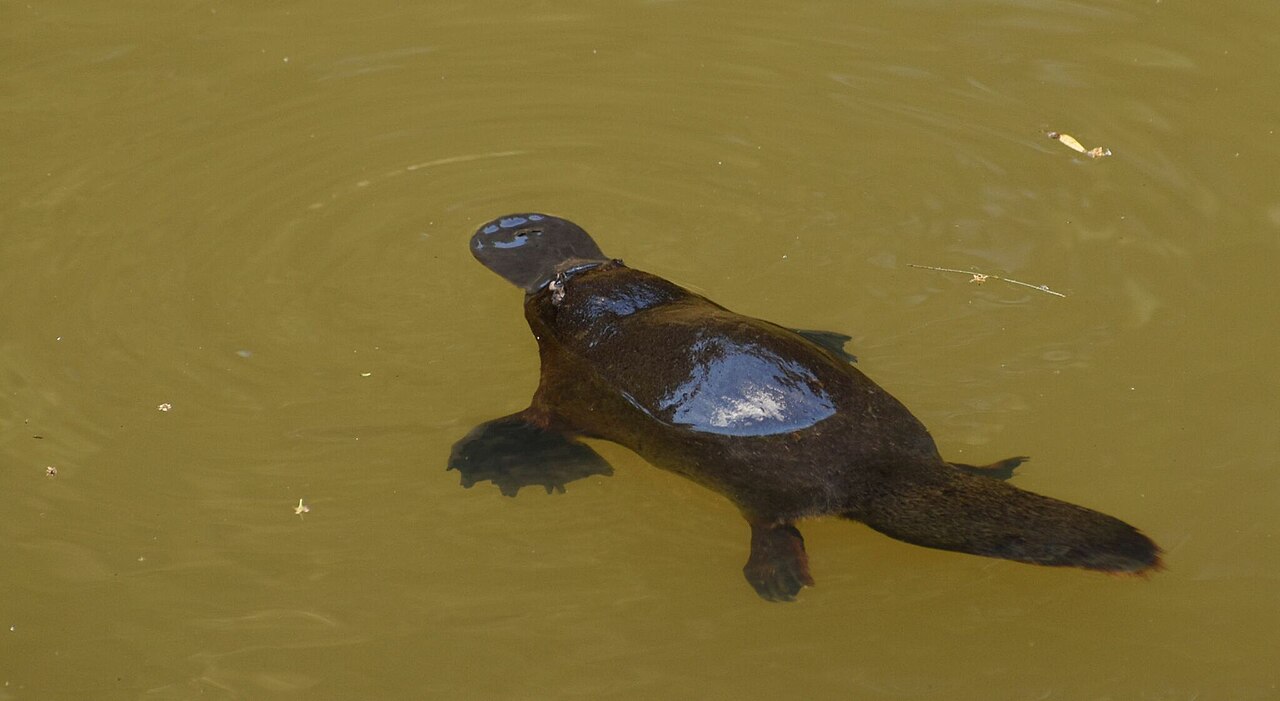
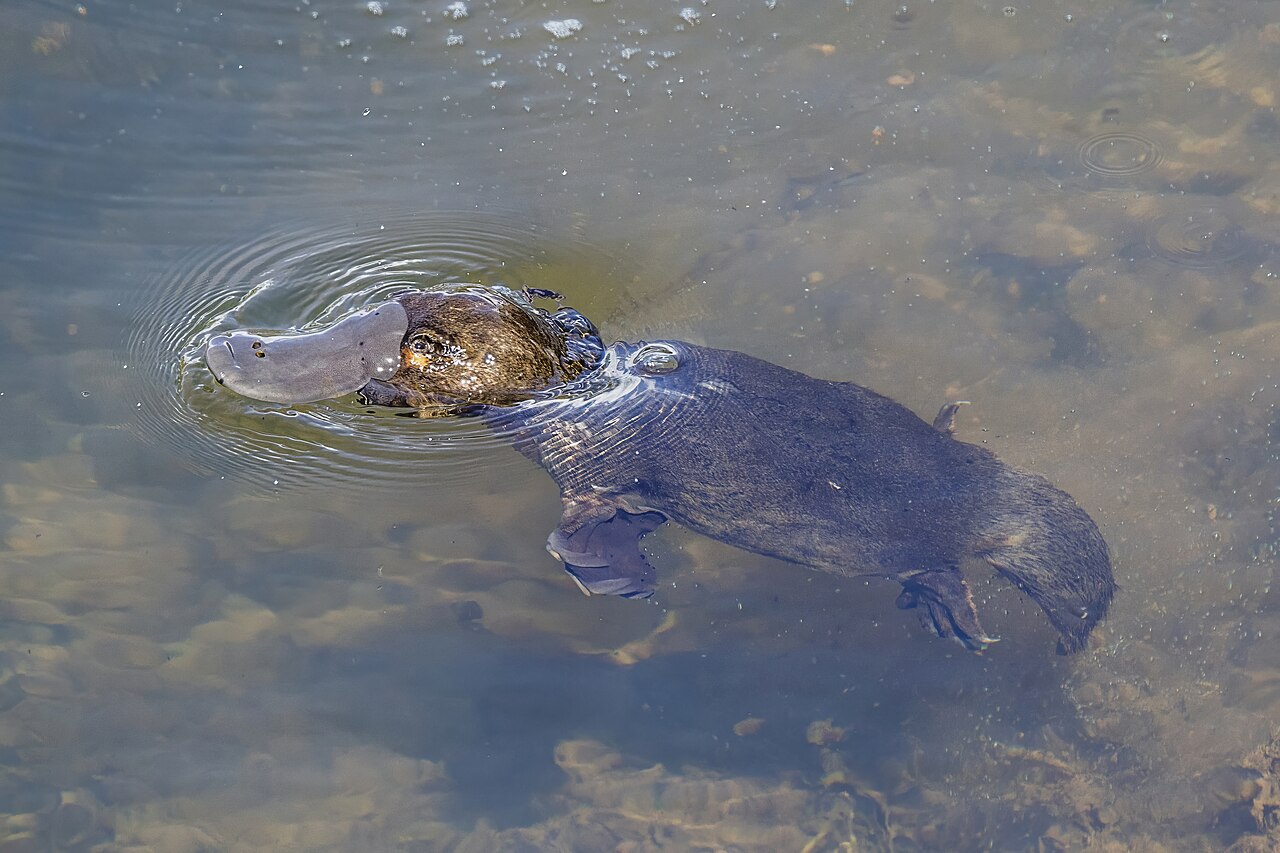
It has thick, waterproofed brown fur; a flat, round, and flexible black snout that looks like a duck’s bill; a flat, rounded, beaver-like tail; and webbed feet.
The male platypus has a venomous spur on his ankle that he uses when he is threatened by predators or other male duck-billed platypuses.
The male attacks with the spur and injects venom into his attacker. The venom is strong enough to kill small predators and cause pain to larger ones.
The platypus uses electricity to locate its food. Its bill detects the small electrical currents put out by creatures swimming in the water. It scoops up its prey from the muddy water, uses its bill to strain out the water, and then stores the food in its cheeks.
The female platypus lays 1-3 leathery eggs. The eggs incubate for 6-10 days. The female cares for the young and produces milk that is secreted through her skin. The young platypuses lick the milk off their mother.
Platypus (Ornithorhynchus anatinus)
The platypus is found in Victoria, Tasmania, South Australia, Queensland, and New South Wales in Australia. IUCN Redlist Status: Near Threatened
Platypus (Ornithorhynchus anatinus)
The platypus swims under water to locate insects, crustaceans, and mollusks. IUCN Redlist Status: Near Threatened
Platypus (Ornithorhynchus anatinus)
The platypus looks like it is made up of pieces of other animals! It has thick, waterproofed brown fur; a flat, round and flexible black snout that looks like a duck’s bill; a flat, rounded, beaver-like tail; and webbed feet. IUCN Redlist Status: Near Threatened