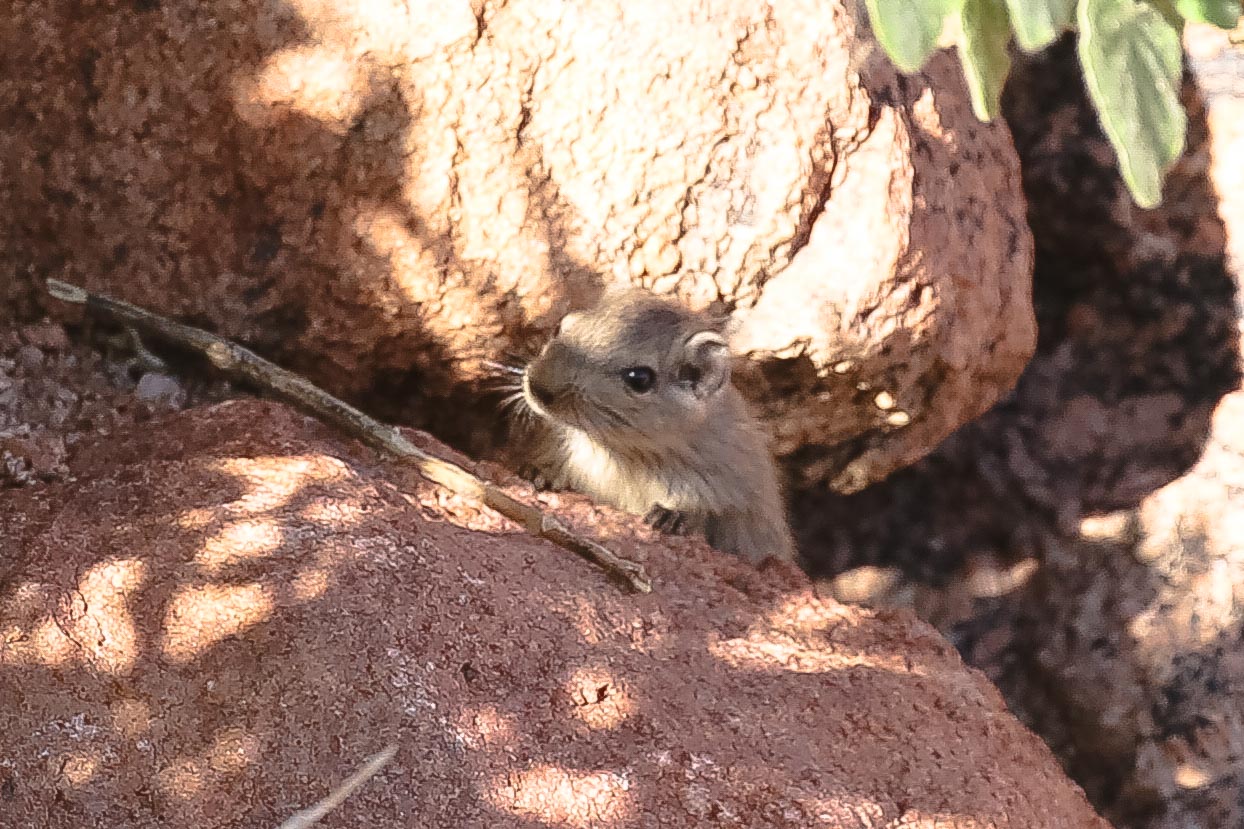
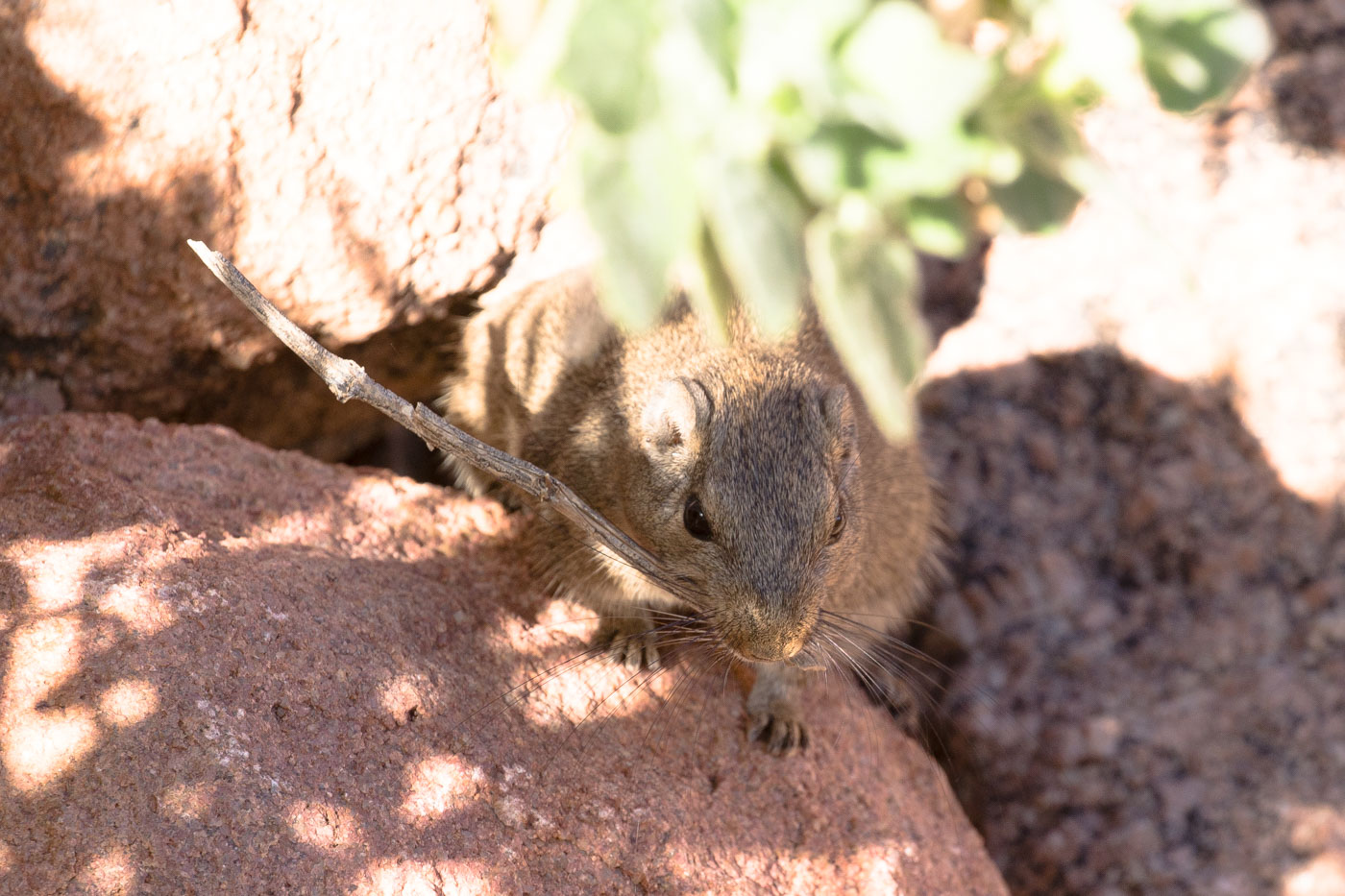
There is one species in this family. The dassie rat (Petromus typicus) is found in arid and semi-arid regions of southwestern Africa in Namibia, Angola, and northwest South Africa.
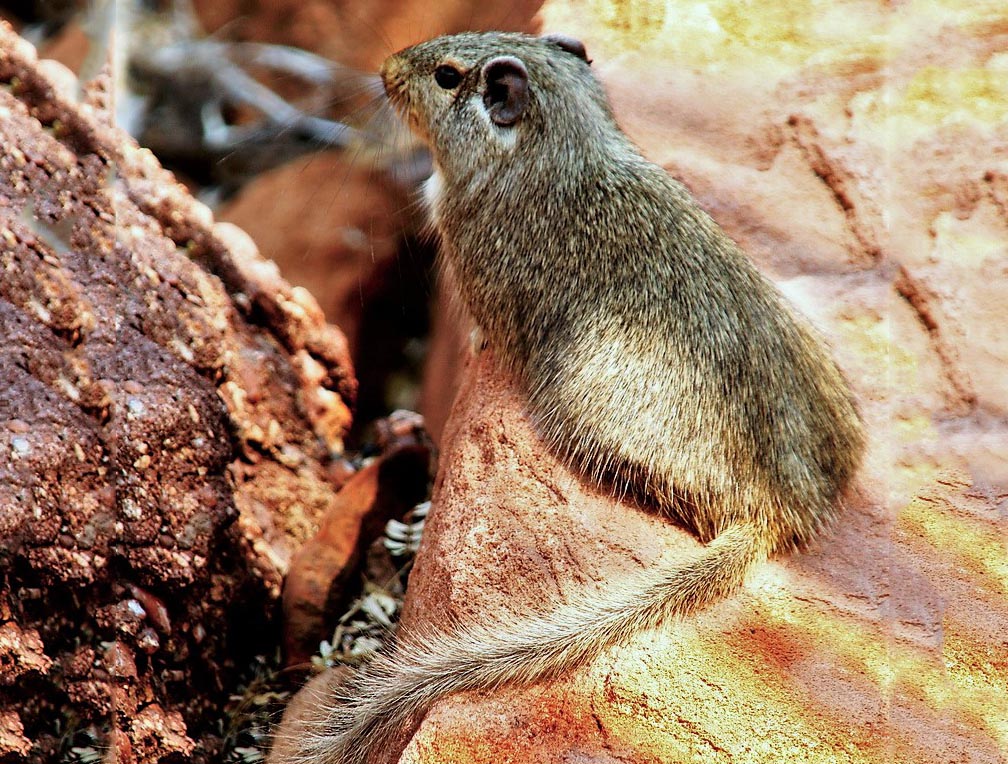
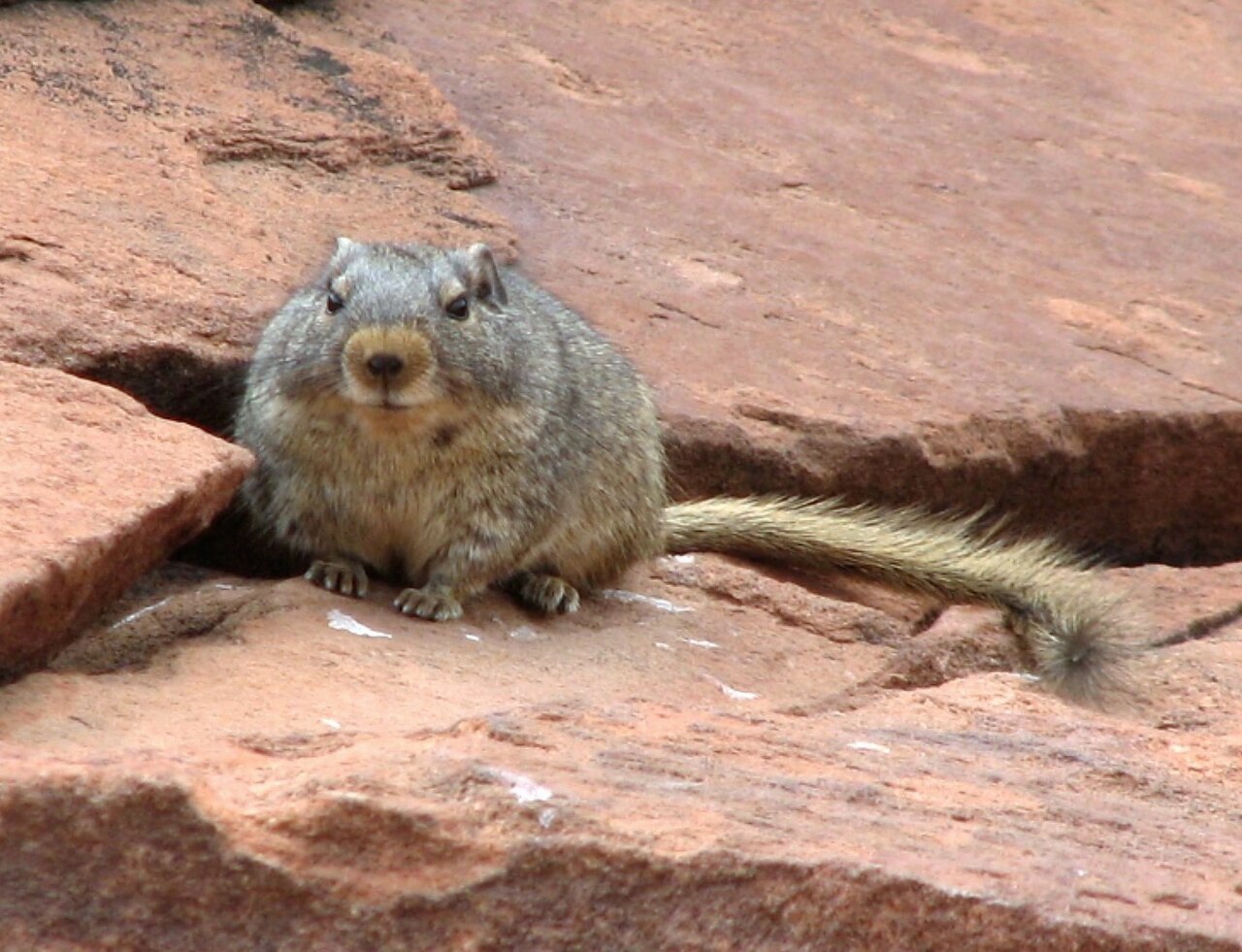
The dassie rat is 10-15 inches in length with a squirrel-like body. It has short, rounded ears; medium-length legs with clawed feet; a yellowish nose with long black whiskers; and a long, furry tail.
The dassie rat lives in rocky outcrops and is sometimes called the rock rat. It has a flattened skull and flexible ribs that make it easy for it to squeeze into tight openings in the rocks.
It lives in small colonies, usually made up of a few individuals.
The female dassie rat gives birth to a litter of 2-3 fur-covered babies once a year, usually in December or January. The dassie rat babies eat solid food when they are around two weeks old.
The dassie rat is an herbivore; it eats grasses, fruit, seeds, and leaves. The dassie rat is diurnal. That means they come out to feed in the morning and the afternoon. They run and jump across the rocks alone or in pairs in search of food.
Dassie Rat (Petromus typicus)
The Dassie rat is found in Angola, Namibia, and South Africa. IUCN Redlist Status: Least Concern
Dassie Rat (Petromus typicus)
The Dassie rat lives in rocky outcrops and is sometimes called the rock rat. IUCN Redlist Status: Least Concern
Dassie Rat (Petromus typicus)
The Dassie rat has a flattened skull and flexible ribs that make it easy for it to squeeze into tight openings in the rocks. IUCN Redlist Status: Least Concern