There are 23 species of diving birds in this family, including three extinct species.
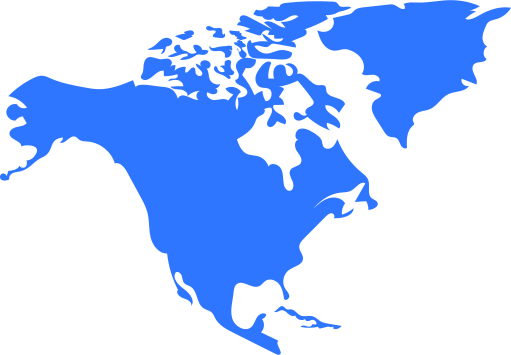
Grebes are found in freshwater lakes, ponds, and rivers around the world, except for in the polar regions. Some species winter along ocean coasts.
Grebes have stocky bodies; thick, waterproof feathers; long, slightly webbed, lobed toes; long necks; small heads; and small tails.
Some species have long, pointed bills; other species have medium-length, conical bills.
Their legs are set back on their bodies, and grebes are clumsy on land. When they walk on land, they stand upright like penguins. Males and females look alike, but males are a little larger.
Grebes are very good divers and swimmers. They often swim with just their heads above the water.
Grebes have to run across the water to take off in flight.
Grebes dive from the surface of the water for fish, crustaceans, and mollusks. Grebes also eat insects and their own feathers.
Grebes nest on floating aquatic vegetation. Both the male and the female care for the chicks and often carry them on their backs.
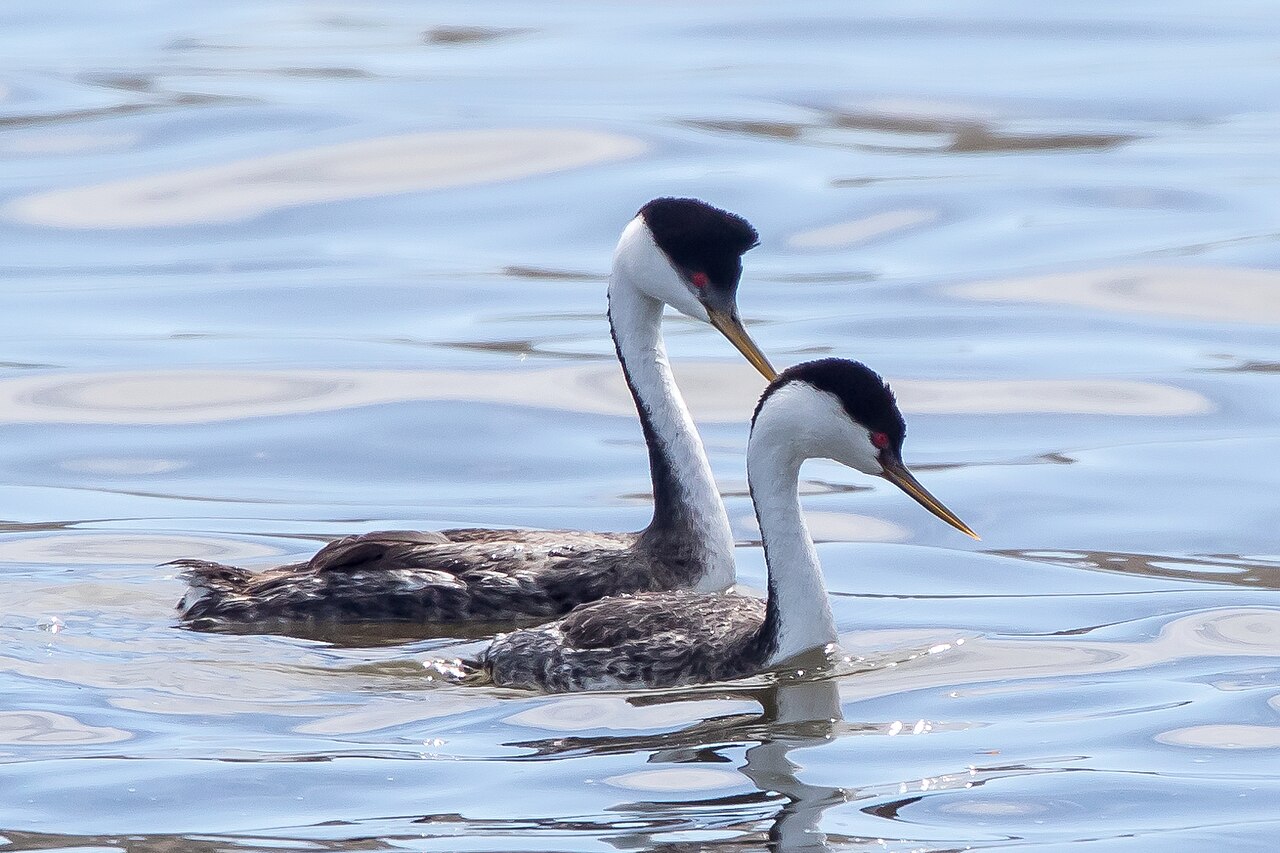
Clark's Grebe (Aechmophorus clarkii)
Clark's grebe breeds on inland lakes and winters on the Pacific Coast. It is found in Canada, Mexico, and the western United States. IUCN Redlist Status: Least Concern
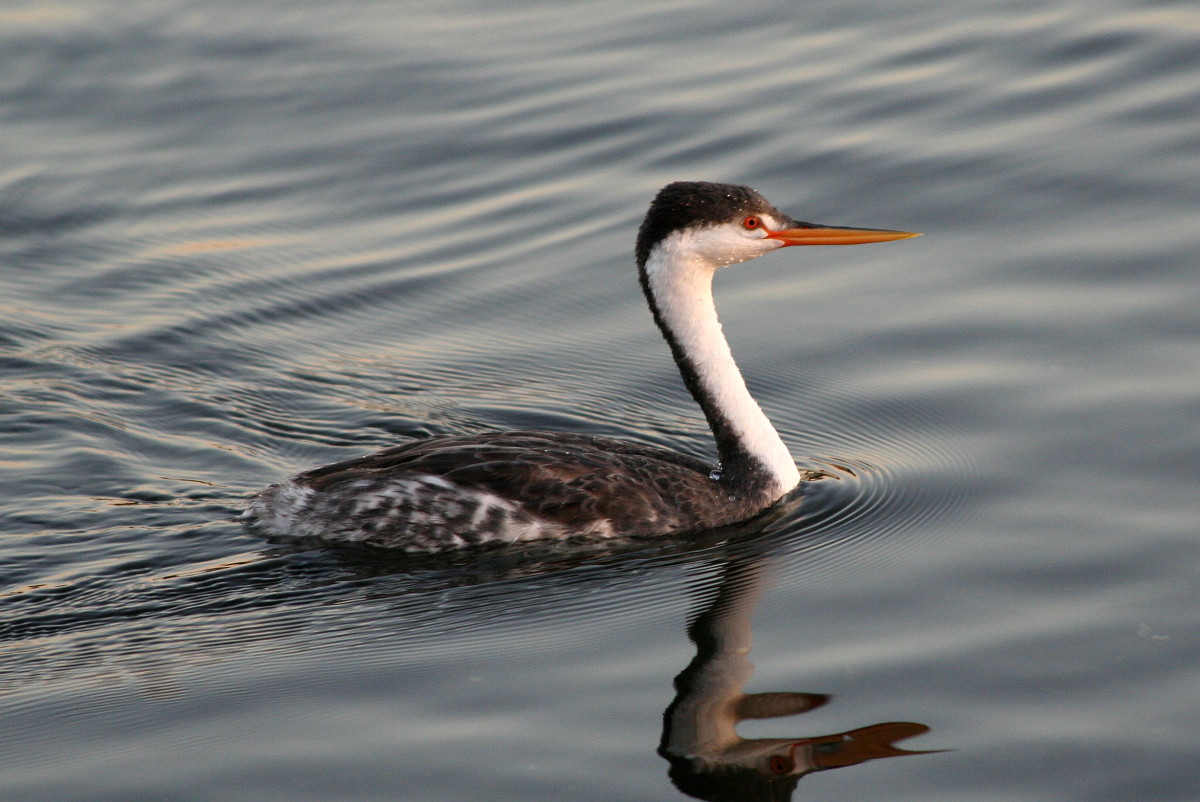
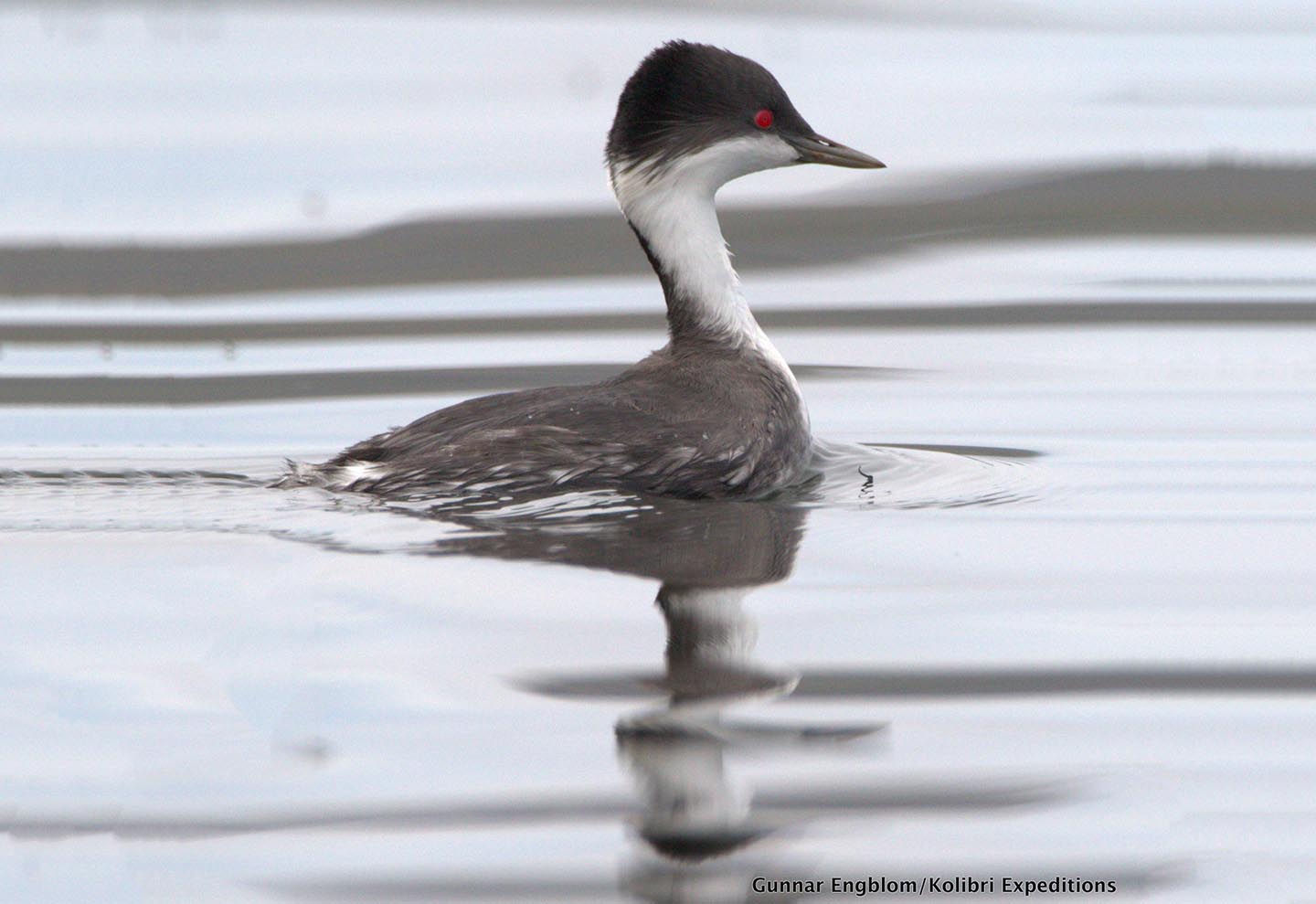
Western Grebe (Aechmophorus occidentalis)
In the winter, western grebes are found on saltwater bays. During breeding season they are found in freshwater habitats. TThe western grebe is found in western North America from British Columbia , Canada east to Manitoba, Canada and south California and Texas. It is also found in Mexico. IUCN Redlist Status: Least Concern
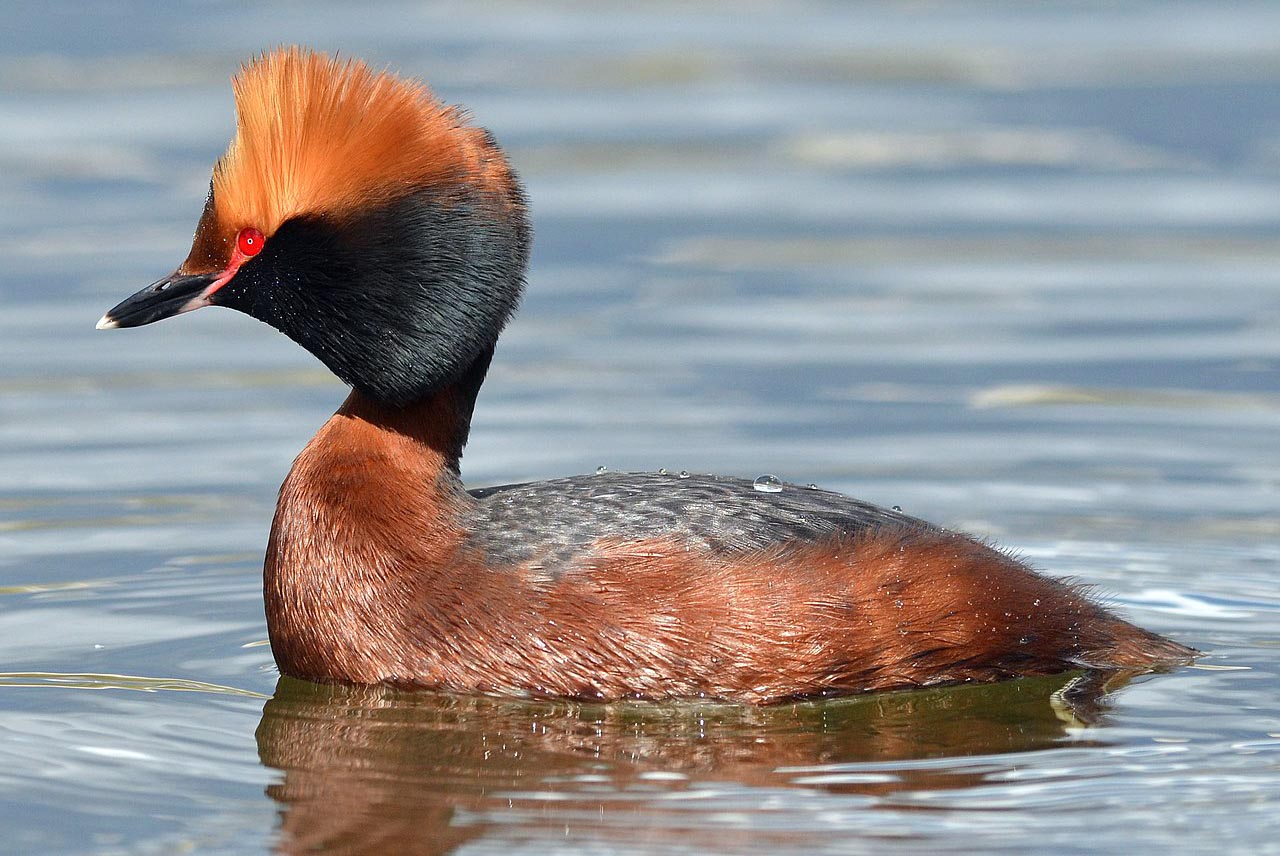
Horned Grebe (Podiceps auritus)
Horned grebes breed from Alaska south to Washington, Montana, South Dakota, and Wisconsin. They winter along the Pacific Coast from Alaska to Mexico and along the Atlantic Coast from Nova Scotia to the Gulf Coast. They are also found in Eurasia. Horned grebes are found in New Hampshire. IUCN Redlist Status: Vulnerable
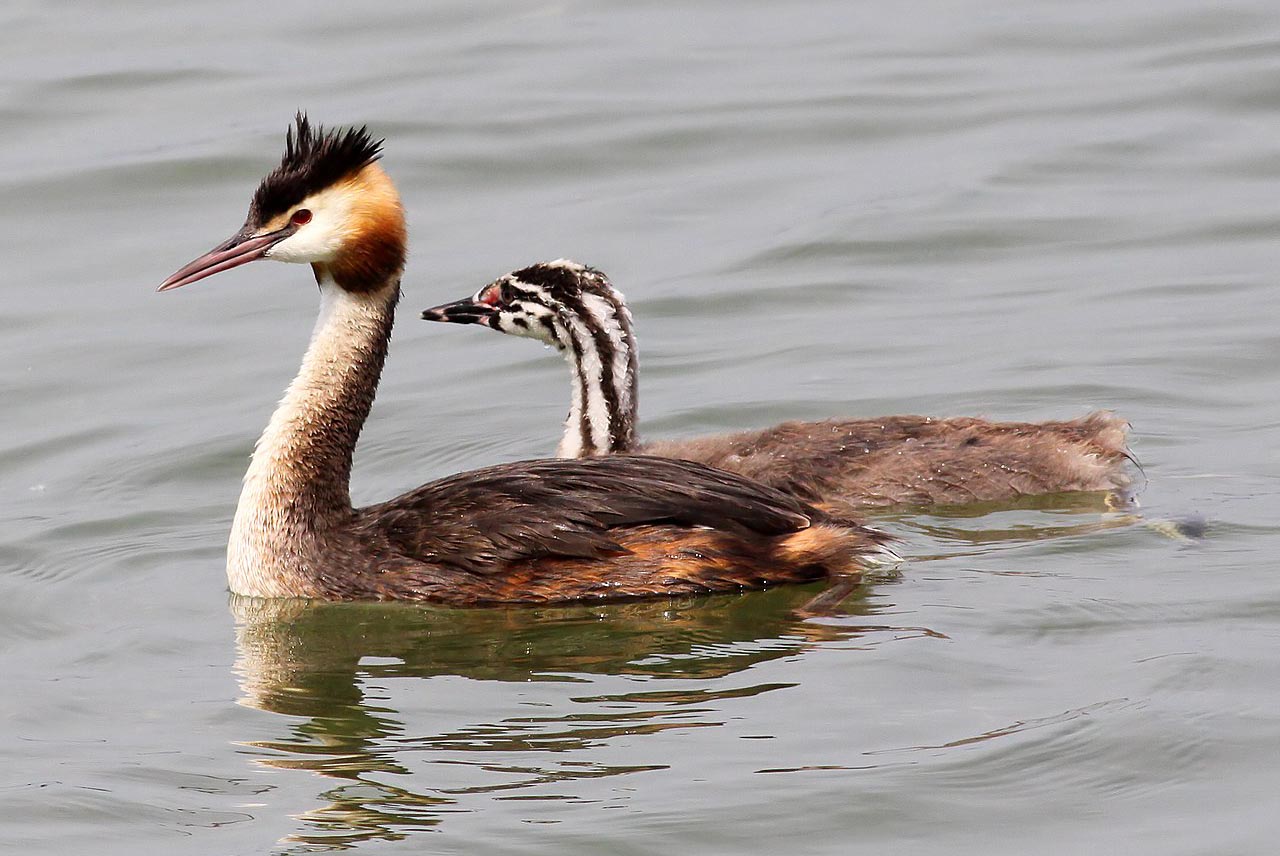
Great Crested Grebe (Podiceps cristatus)
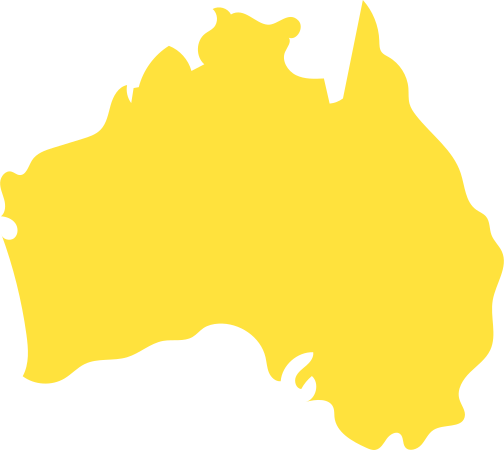
The great crested grebe is found across Europe and Asia. It is also found in parts of Africa and Australia. Great crested grebe chicks have black and white zebra-striped heads. IUCN Redlist Status: Least Concern
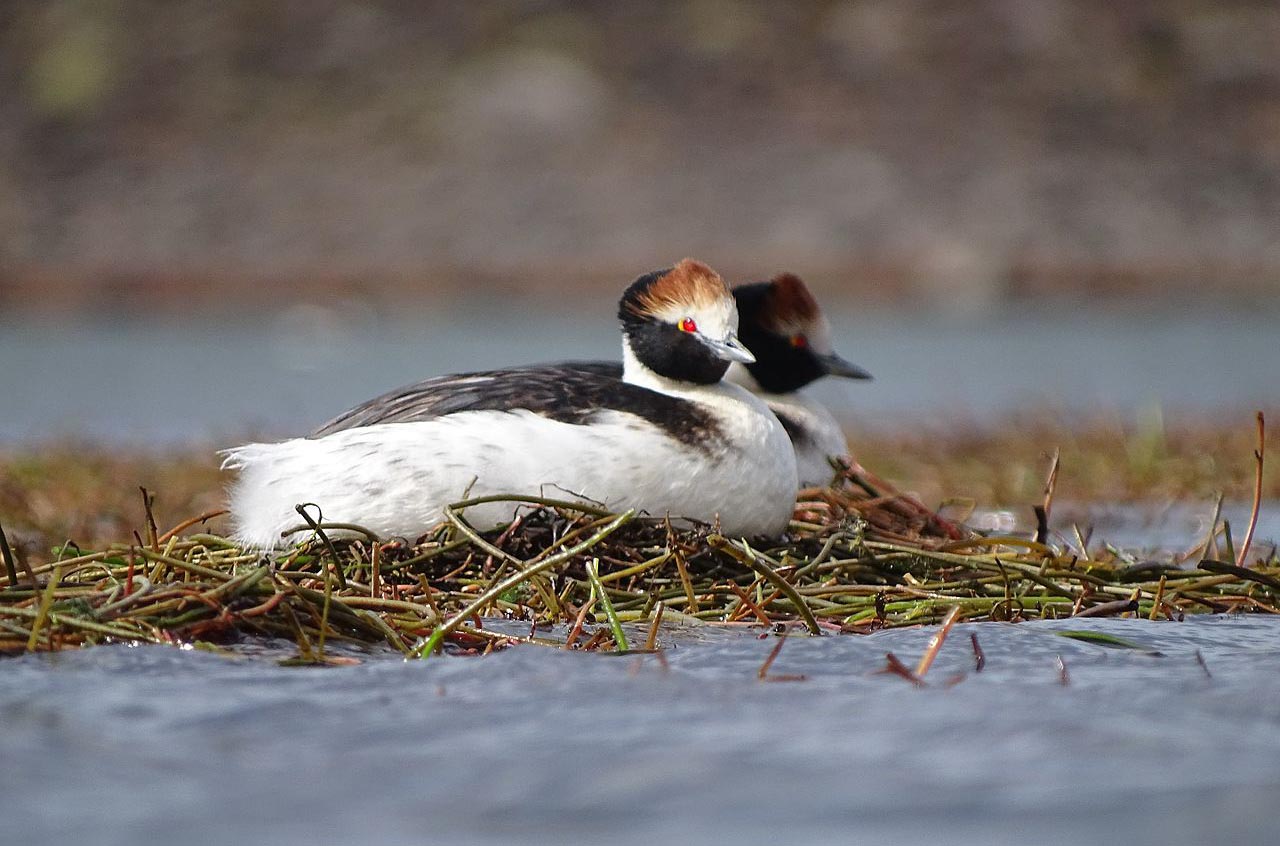
Hooded Grebe (Podiceps gallardoi)
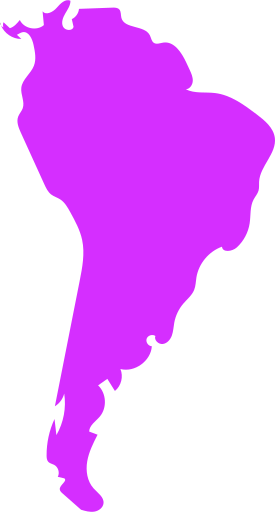
The hooded grebe is found in Argentina and Chile on isolated lakes in the most remote parts of Patagonia. IUCN Redlist Status: Critically Endangered.
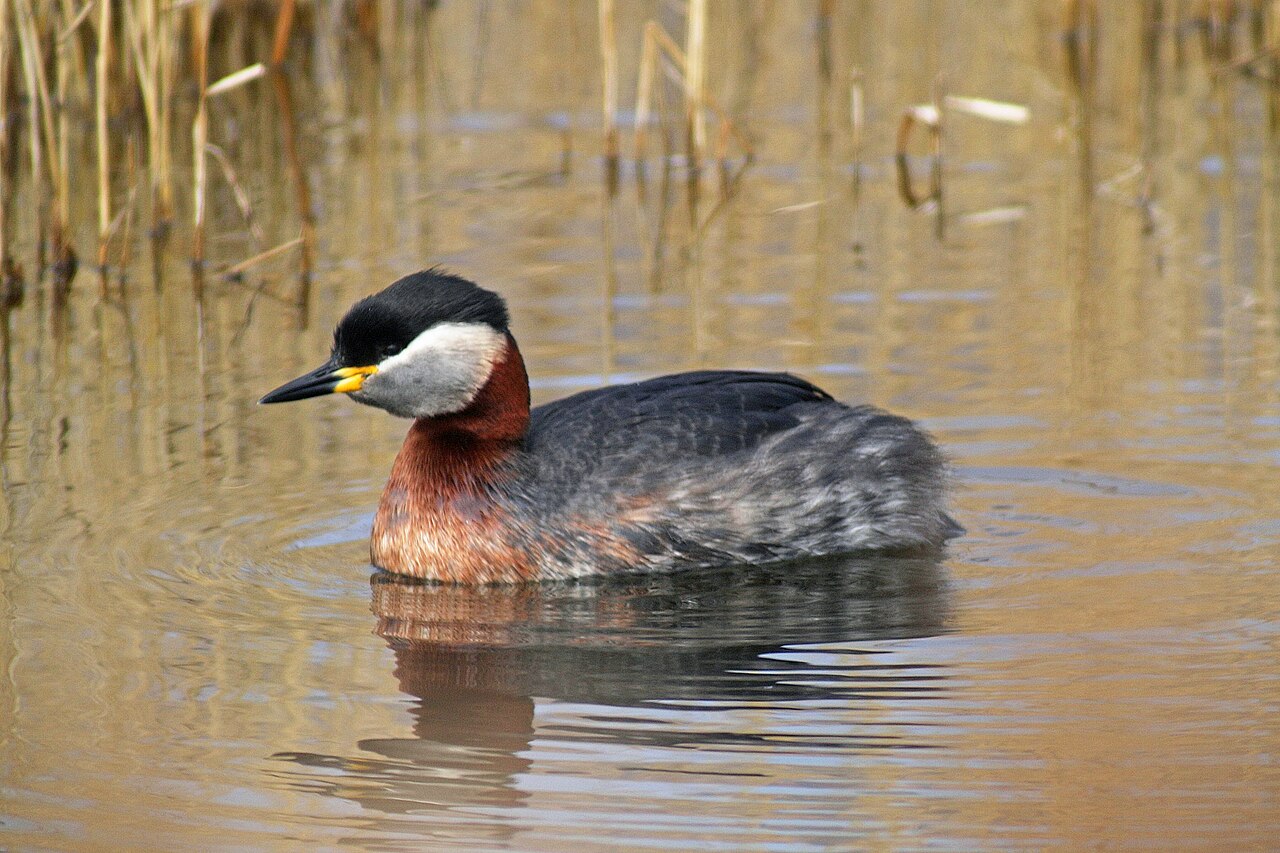
Red-Necked Grebe (Podiceps grisegena)
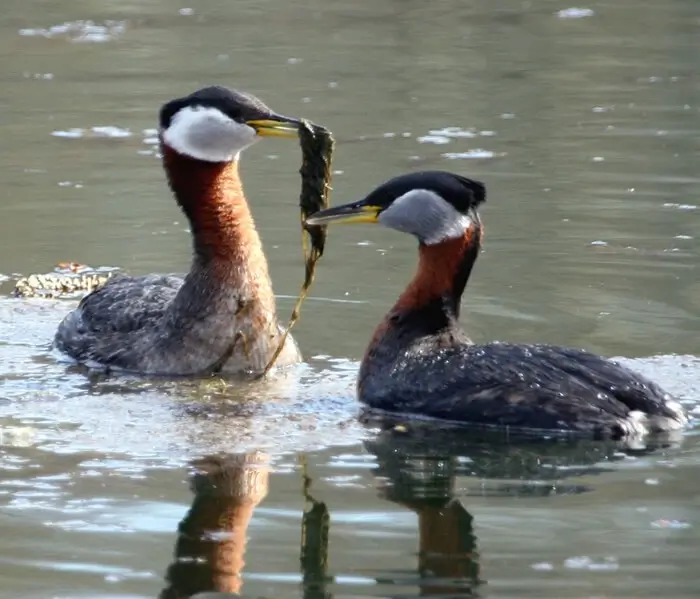
The red-necked grebe has a rusty-red neck during breeding season. In North America, it breeds on small inland lakes in Canada and Alaska. It winters along both coasts of North America. It is also found in Europe and Asia. It is found in New Hampshire. IUCN Redlist Status: Least Concern
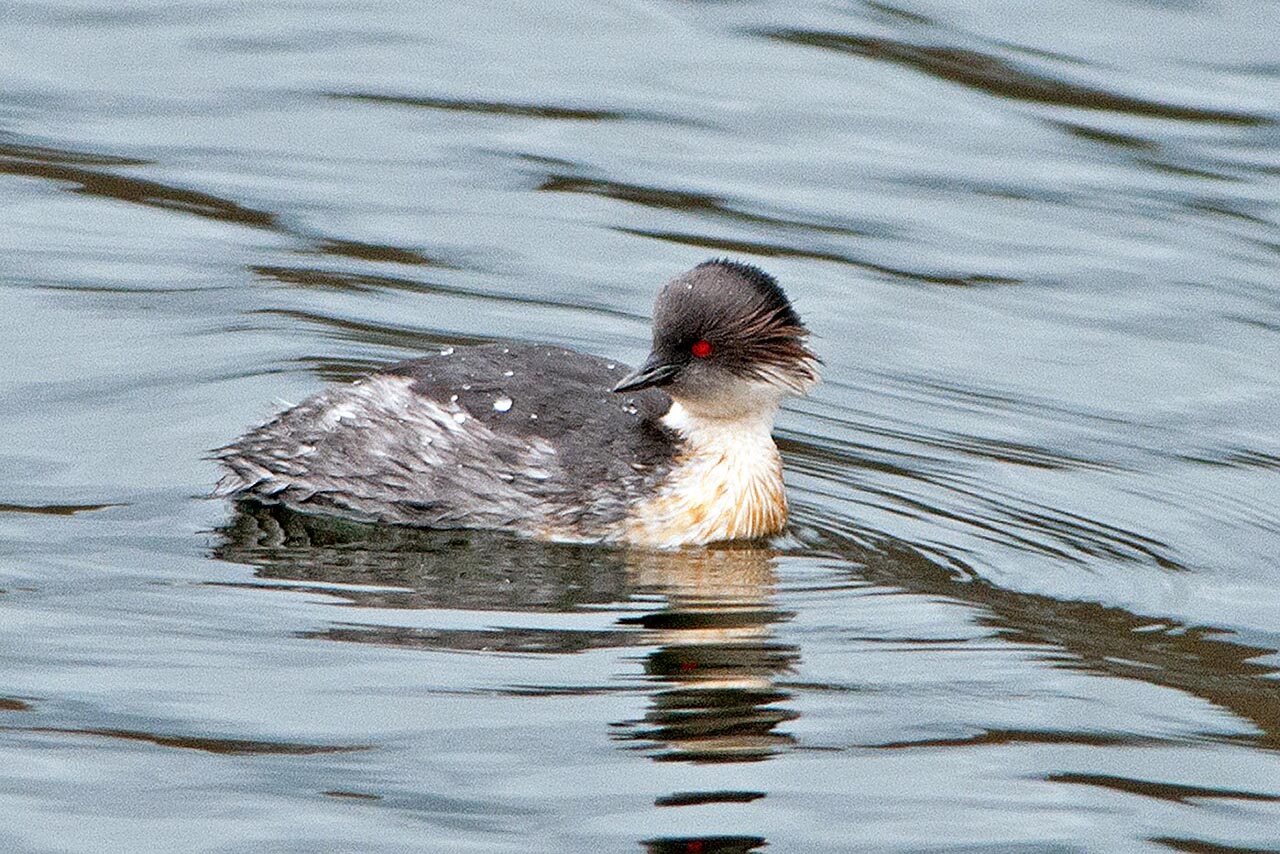
Northern Silvery Grebe (Podiceps juninensis)
The northern silvery grebe is found in Argentina, Bolivia, Chile, Colombia, Ecuador, and Peru. IUCN Redlist Status: Near Threatened
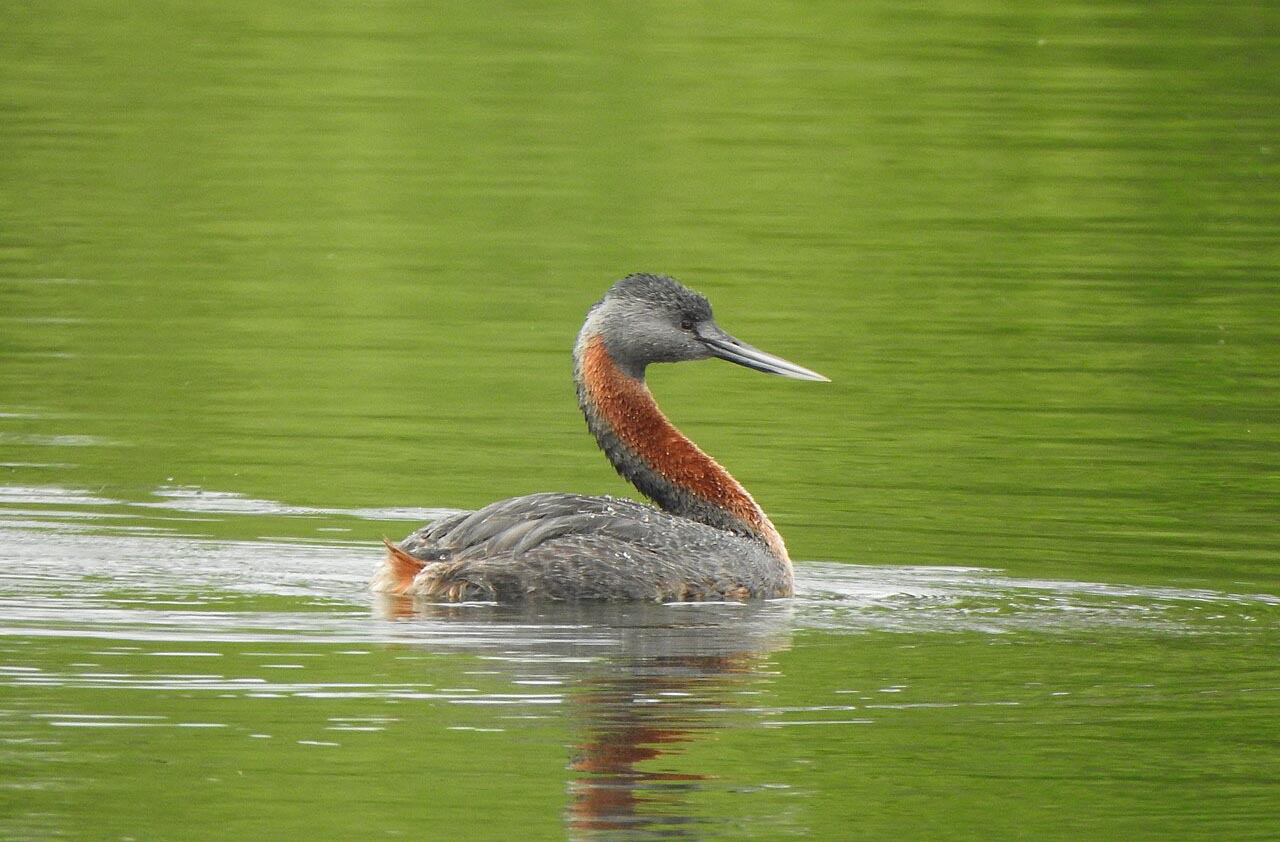
Great Grebe (Podiceps major)
The great grebe is found in Argentina, Brazil, Chile, Falkland Islands, Paraguay, Peru, South Georgia and the South Sandwich Islands, and Uruguay. IUCN Redlist Status: Leas Concern
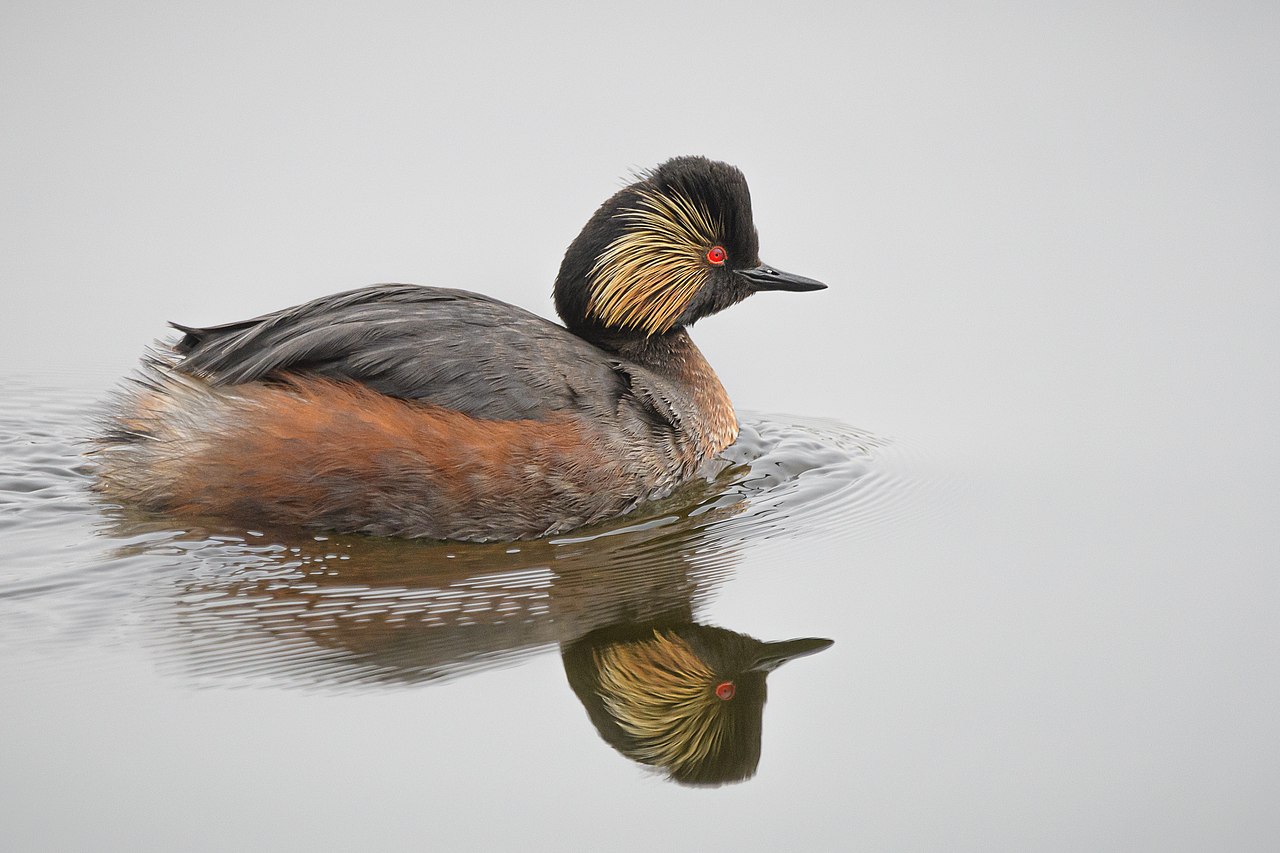
Black-Necked Grebe (Podiceps nigricollis)
The black-necked grebe is found in the central and western regions of the U.S. and Canada as well as in Mexico. It is also found in Europe, Africa, and Asia. IUCN Redlist Status: Least Concern
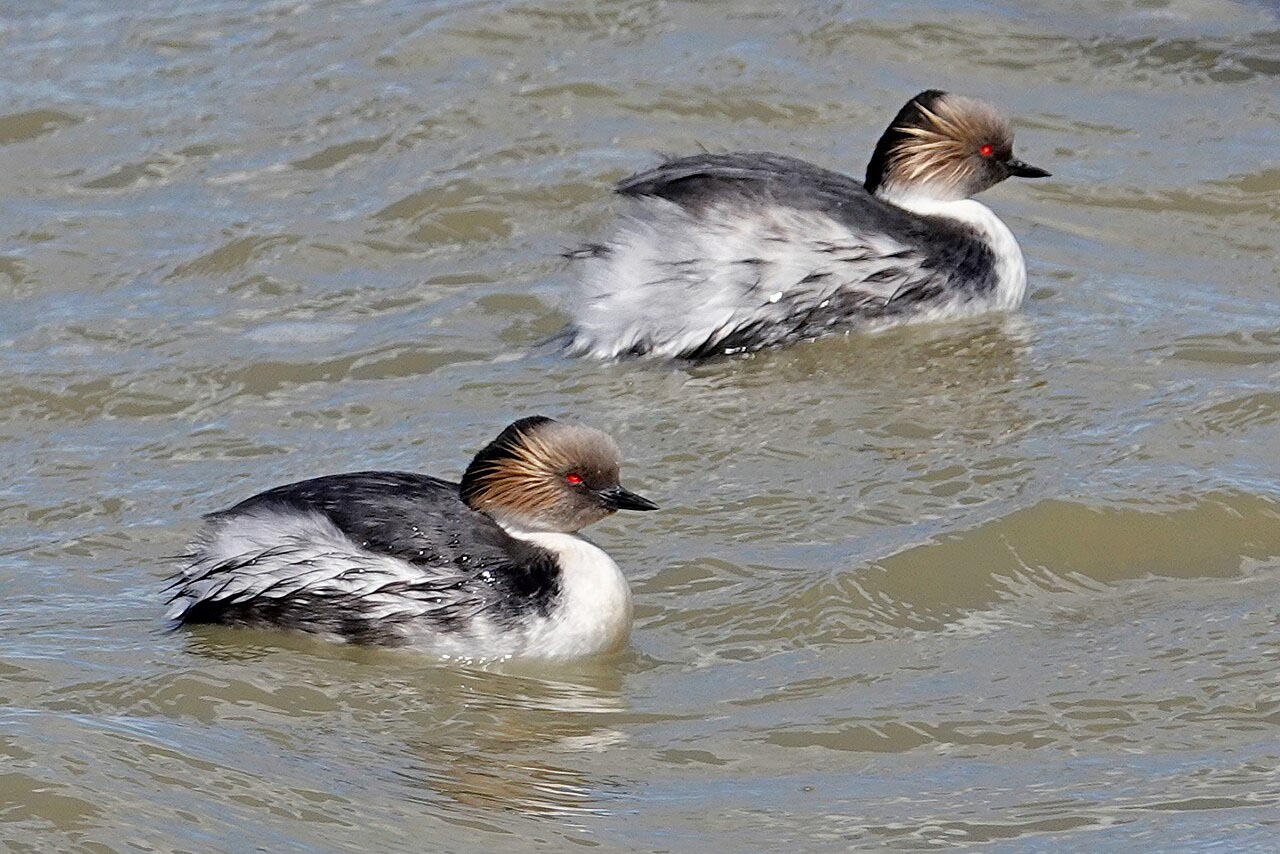
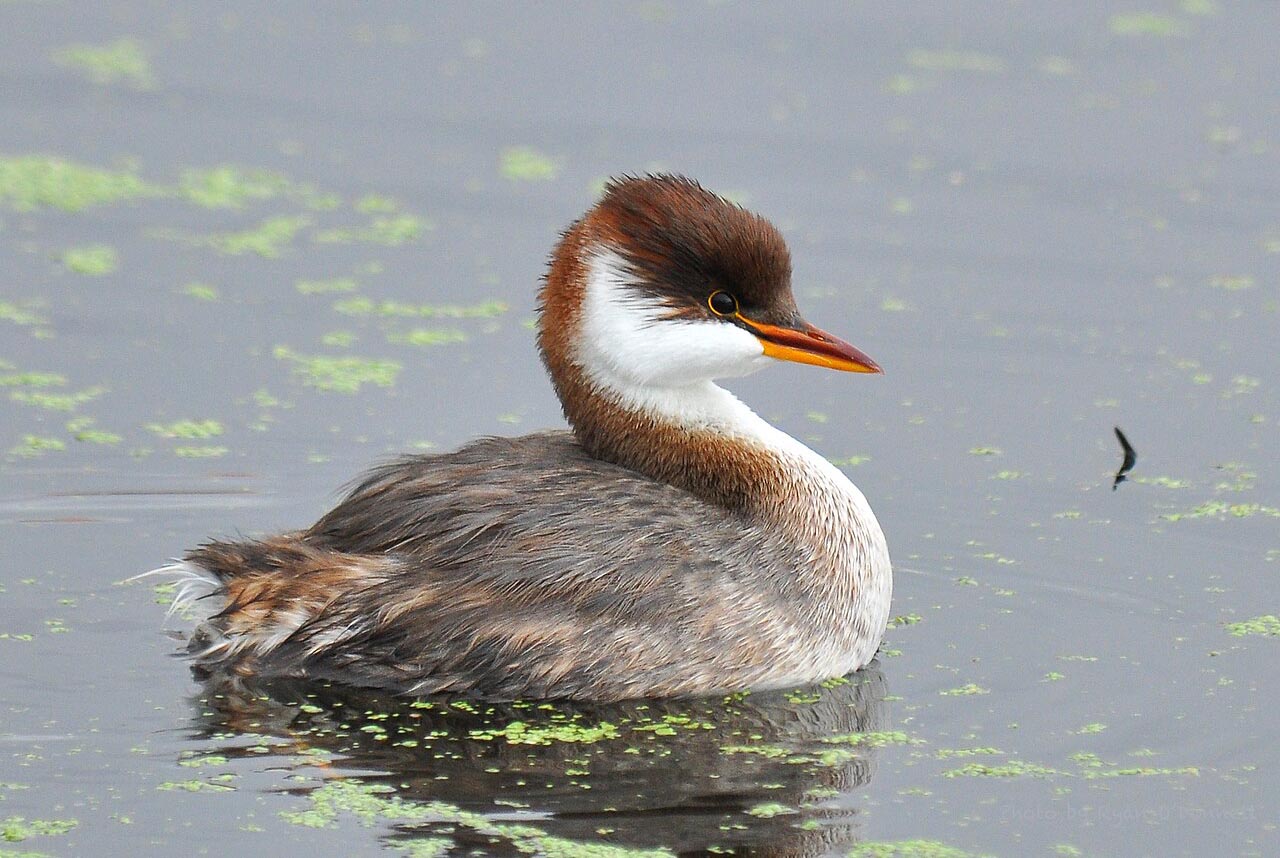
Southern Silvery Grebe (Podiceps occipitalis)
The southern silvery grebe is found in Argentina, Argentina, Chile, Chile, Falkland Islands, Bolivia, and Paraguay. IUCN Redlist Status: Least Concern
Junin Grebe (Podiceps taczanowskii)
The Junin grebe is flightless. It is only found on Lake Junín in the highlands of west-central Peru. IUCN Redlist Status: Endangered
Atitlan Grebe (Podilymbus gigas)
The Atitlan grebe was a flightless grebe found on Lake Atitlán in Guatemala. It was declared extinct in 1990. IUCN Redlist Status: Extinct
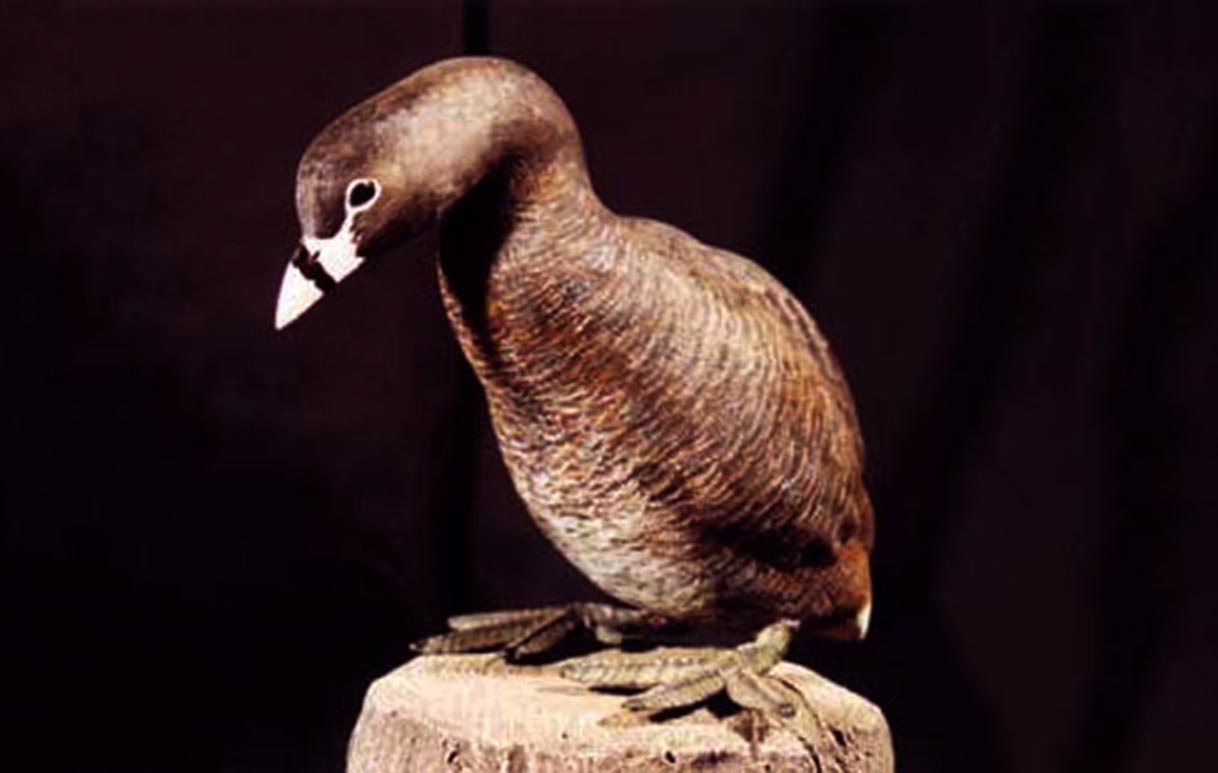
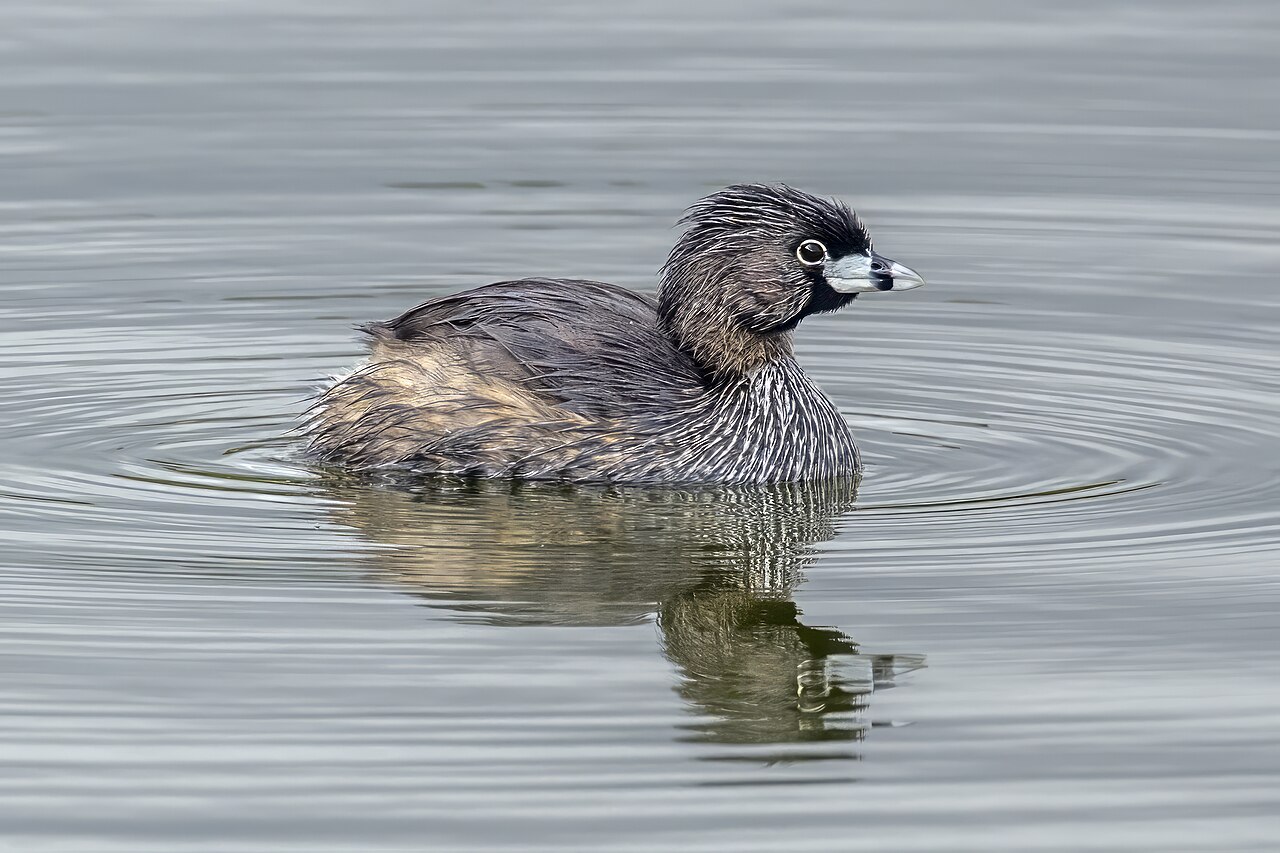
Pied-Billed Grebe (Podilymbus podiceps)
The pied-billed grebe breeds on Alaskan coasts, and throughout Canada and the United States. They also breed in some areas of the Caribbean and in South America. It is found in New Hampshire. IUCN Redlist Status: Least Concern
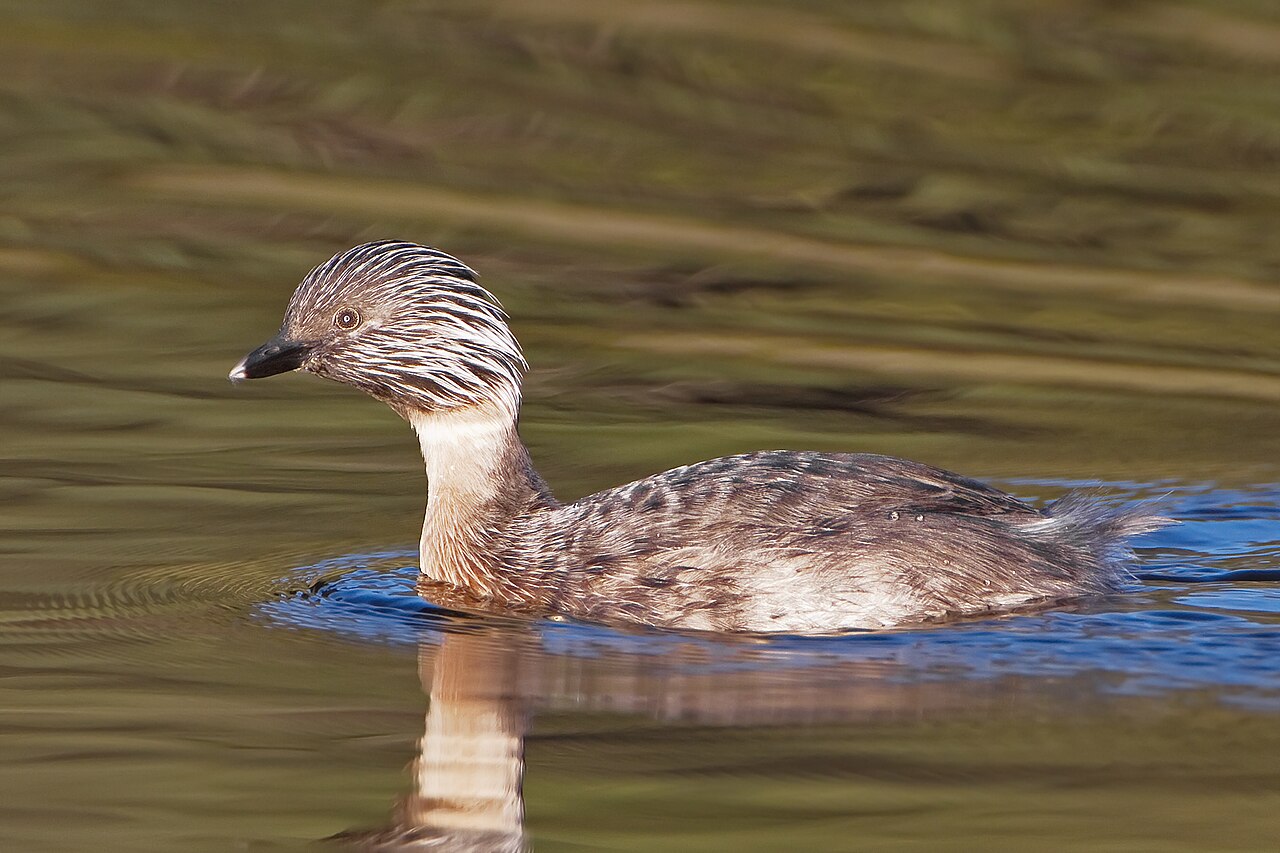
Hoary-Headed Grebe (Poliocephalus poliocephalus)
The hoary-headed grebe is found in Australia and New Zealand. IUCN Redlist Status: Least Concern
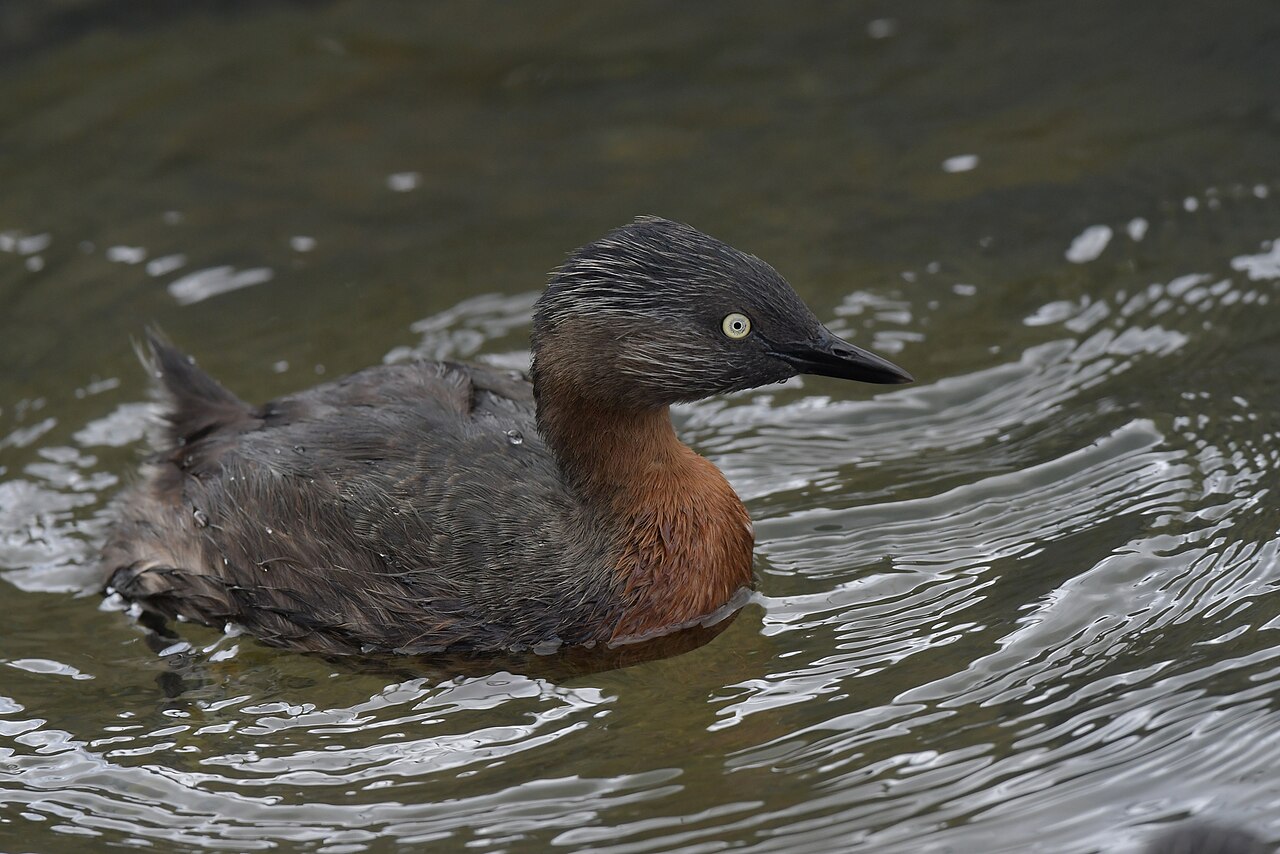
New Zealand Grebe (Poliocephalus rufopectus)
The New Zealand grebe is found in New Zealand. IUCN Redlist Status: Least Concern
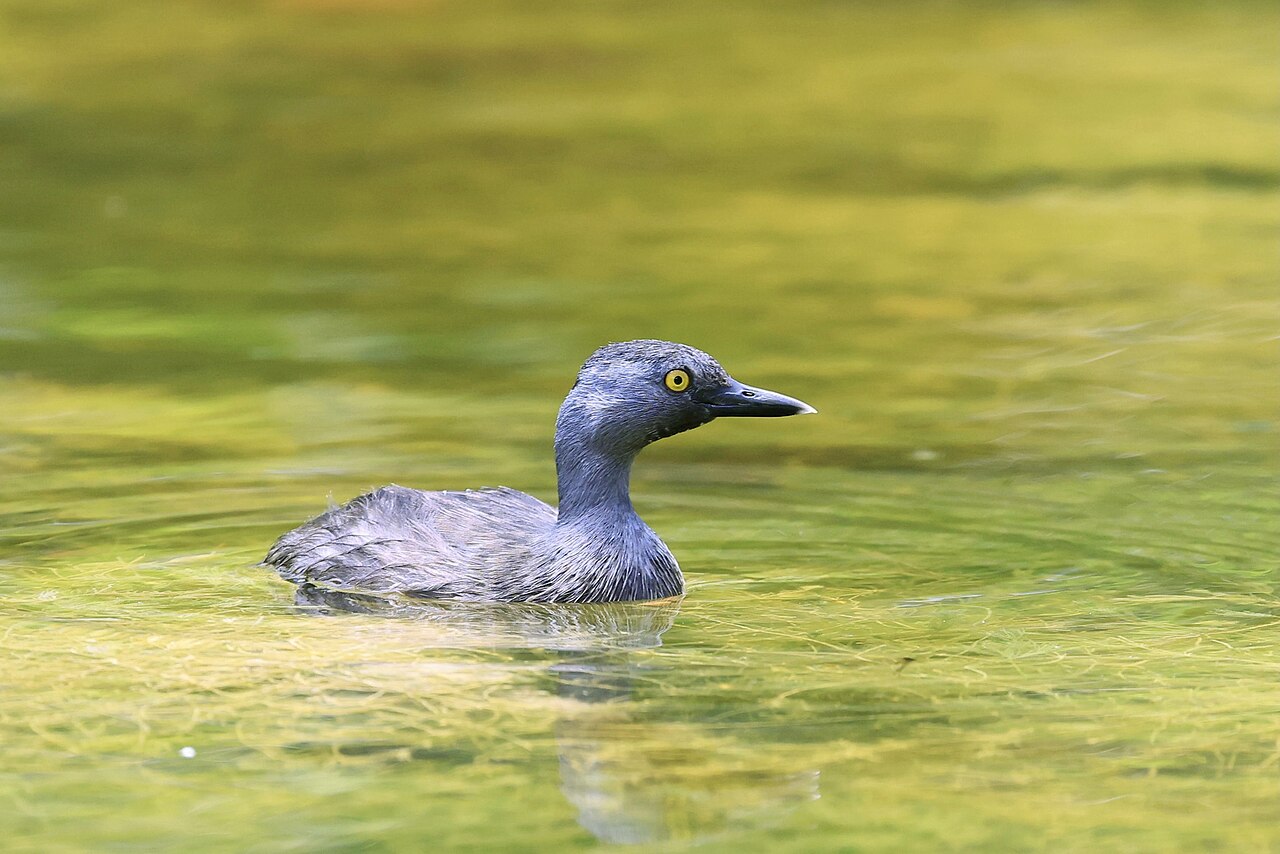
Titicaca Grebe (Rollandia microptera)
The Titicaca grebe is a flightless grebe found in Bolivia and Peru. IUCN Redlist Status: Endangered
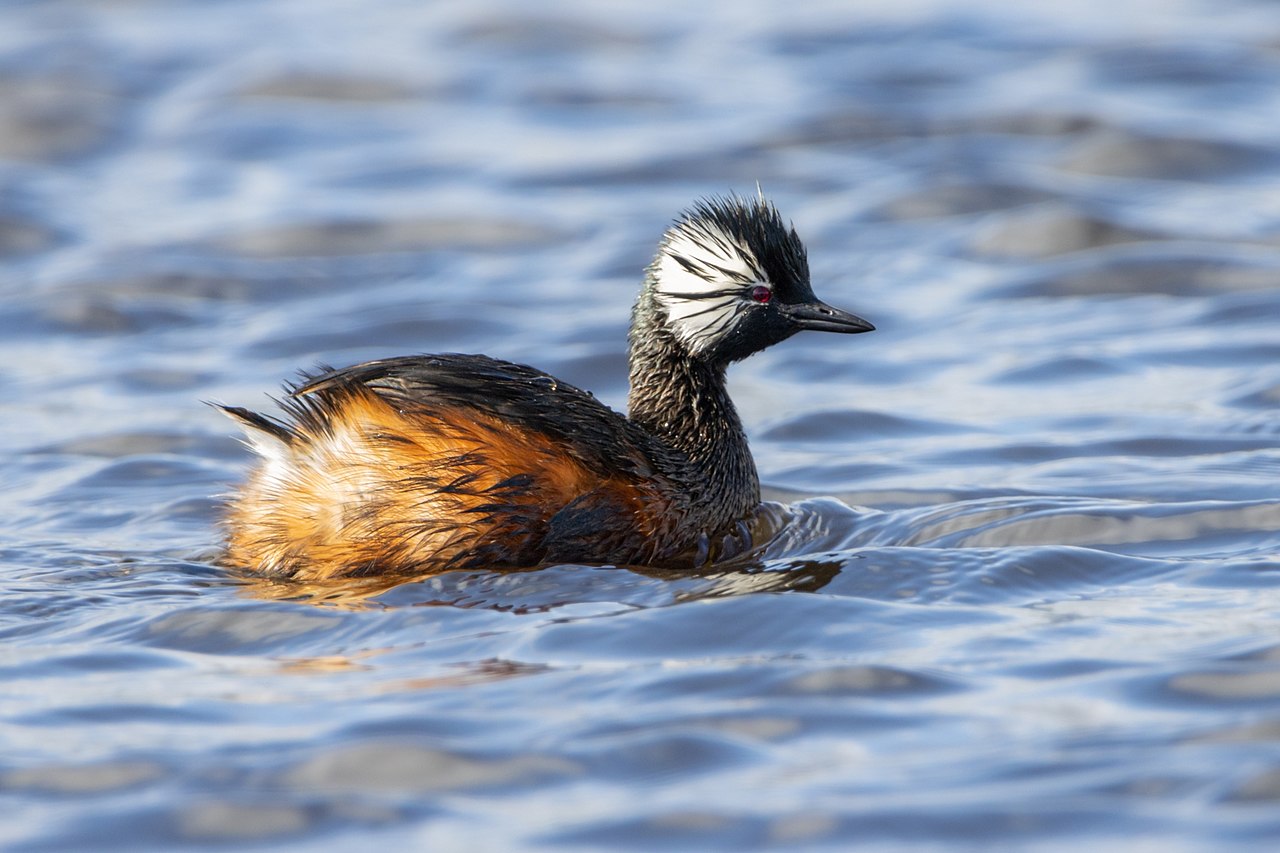
White-Tufted Grebe (Rollandia rolland)
The white-tufted grebe is found in Argentina, Bolivia, Brazil, Chile, the Falkland Islands, Paraguay, Peru, and Uruguay. IUCN Redlist Status: Least Concern
Least Grebe (Tachybaptus dominicus)
The least grebe is found from Texas to Argentina. It is also found in the Caribbean. It is the smallest species of grebe in the Americas. IUCN Redlist Status: Least Concern
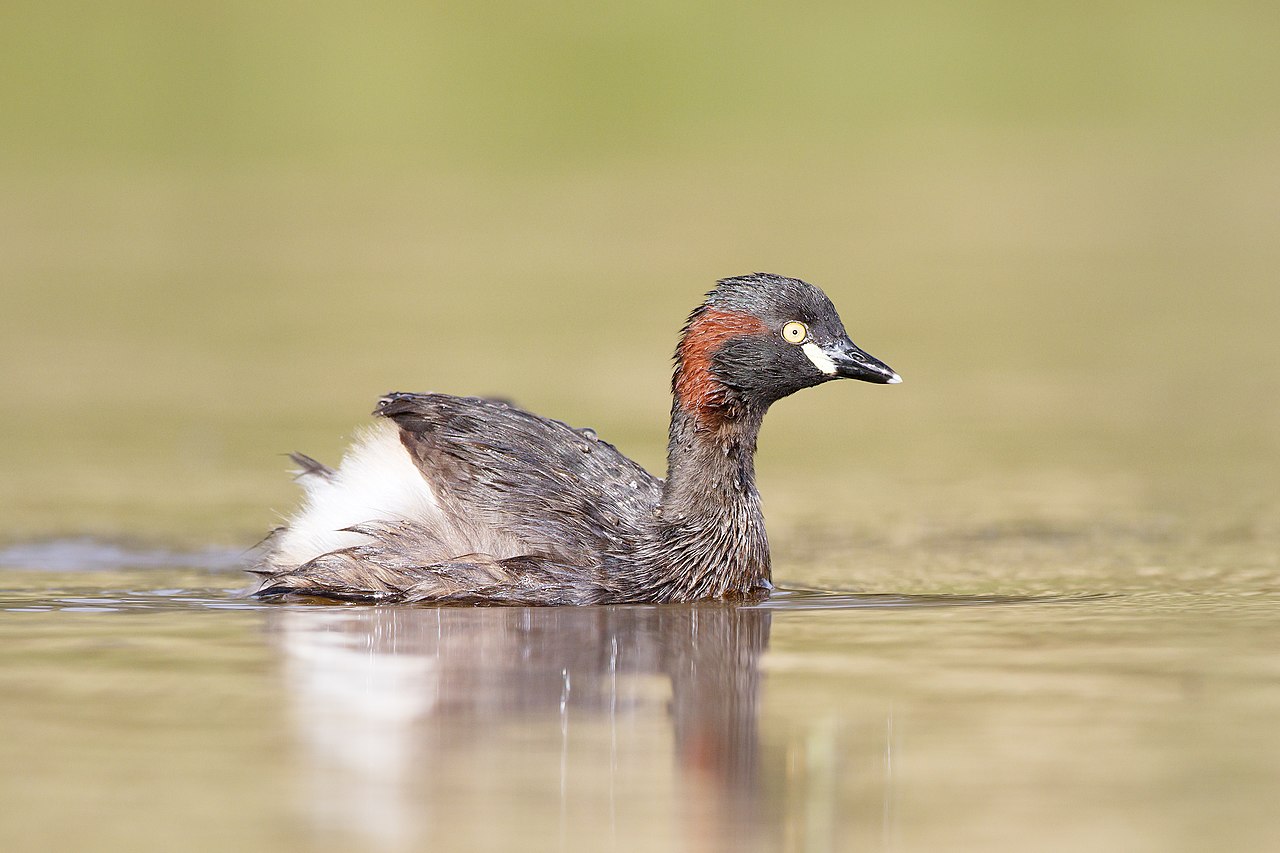
Australasian Grebe (Tachybaptus novaehollandiae)
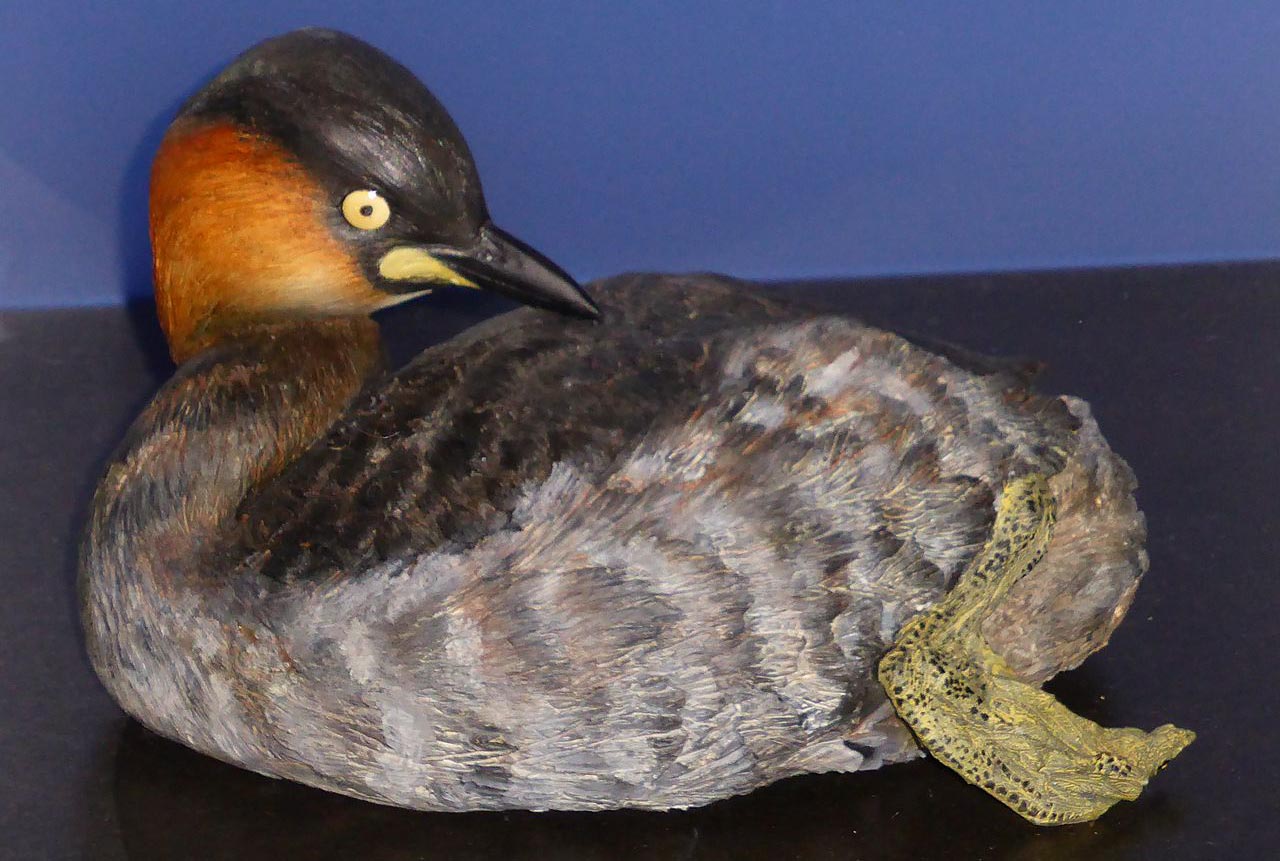
The Australasian grebe is found in Australia, Indonesia, New Caledonia, New Zealand, Papua New Guinea, Solomon Islands, Timor-Leste, and Vanuatu. IUCN Redlist Status: Least Concern
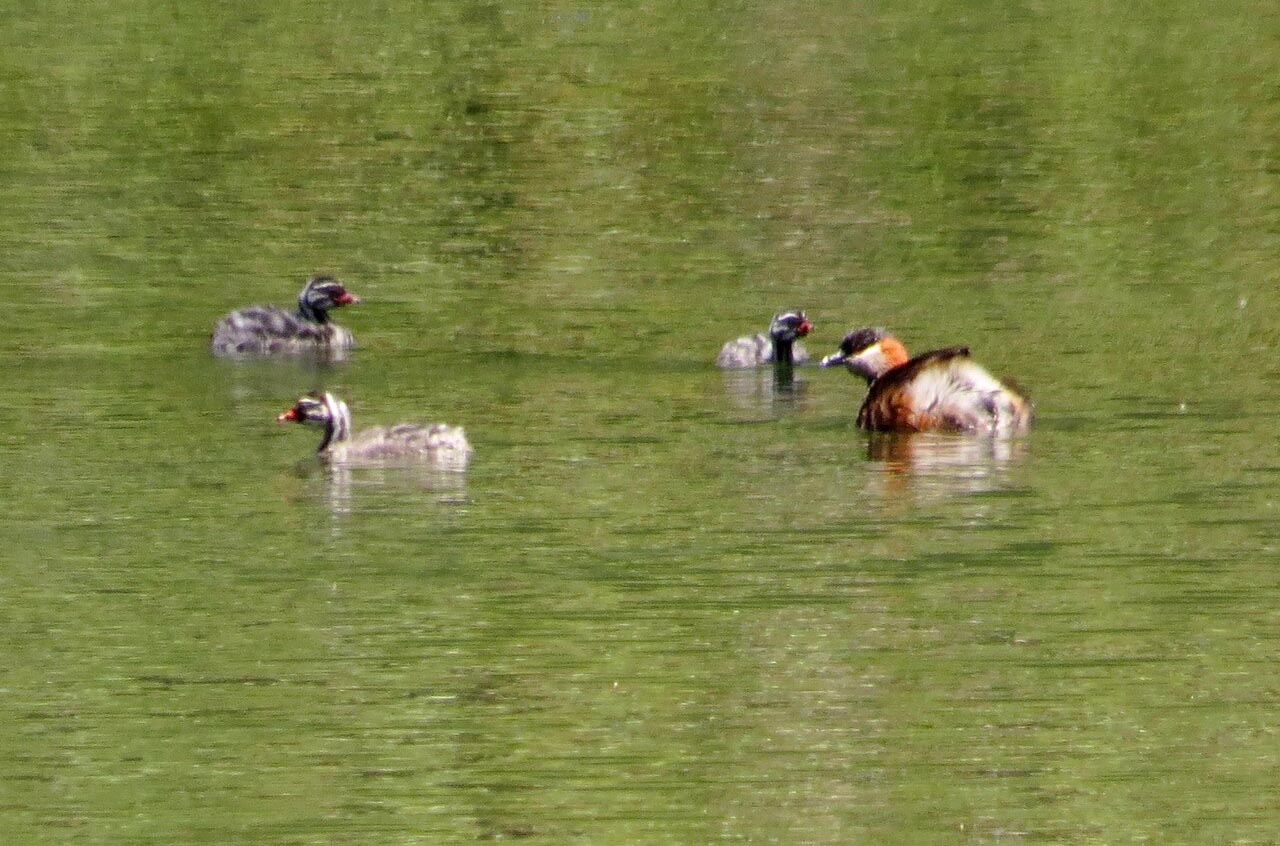
Madagascar Grebe and chicks (Tachybaptus pelzelnii)
The Madagascar grebe is found in Madagascar. IUCN Redlist Status: Endangered
Little Grebe (Tachybaptus ruficollis)
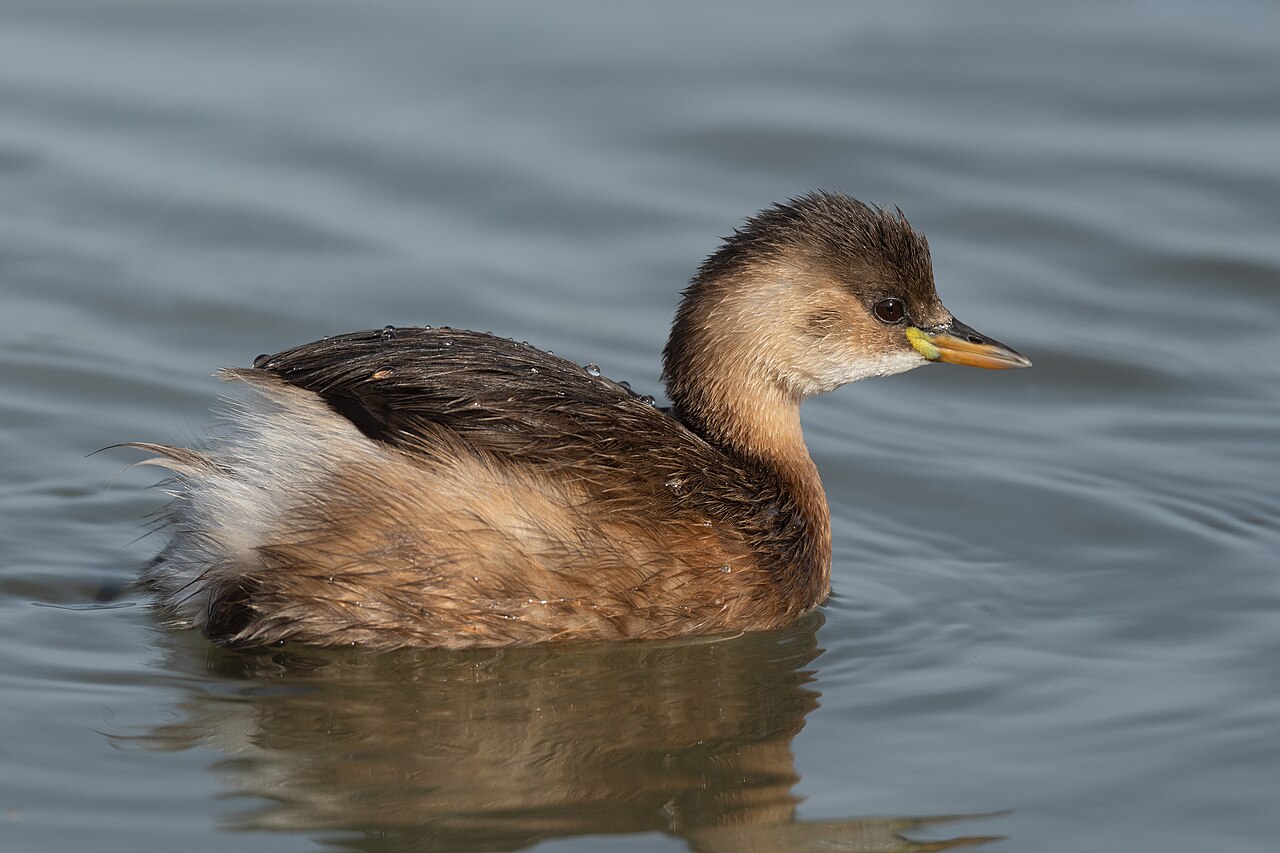
The little grebe is is also known as the dabchick. It is the smallest species of grebe. It is found across southern Europe and Asia as well as in central and southern Africa. IUCN Redlist Status: Least Concern
Alaotra Grebe (Tachybaptus rufolavatus)
The Alaotra grebe was found in Madagascar on Lake Alaotra. The last confirmed sighting of the Alaotra grebe was in 1982. IUCN Redlist Status: Extinct