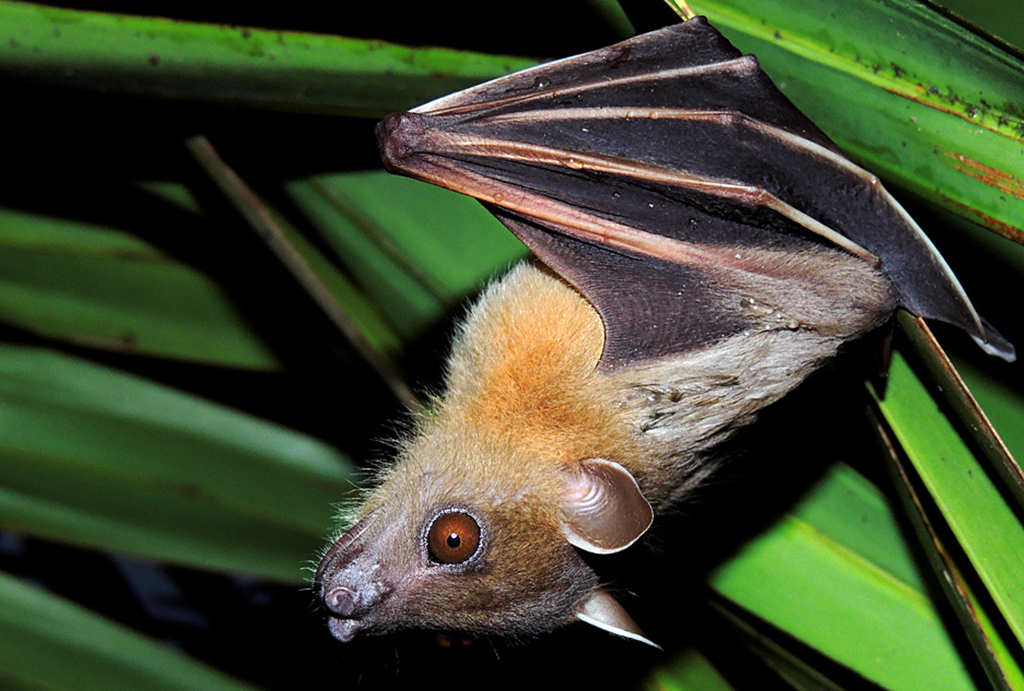
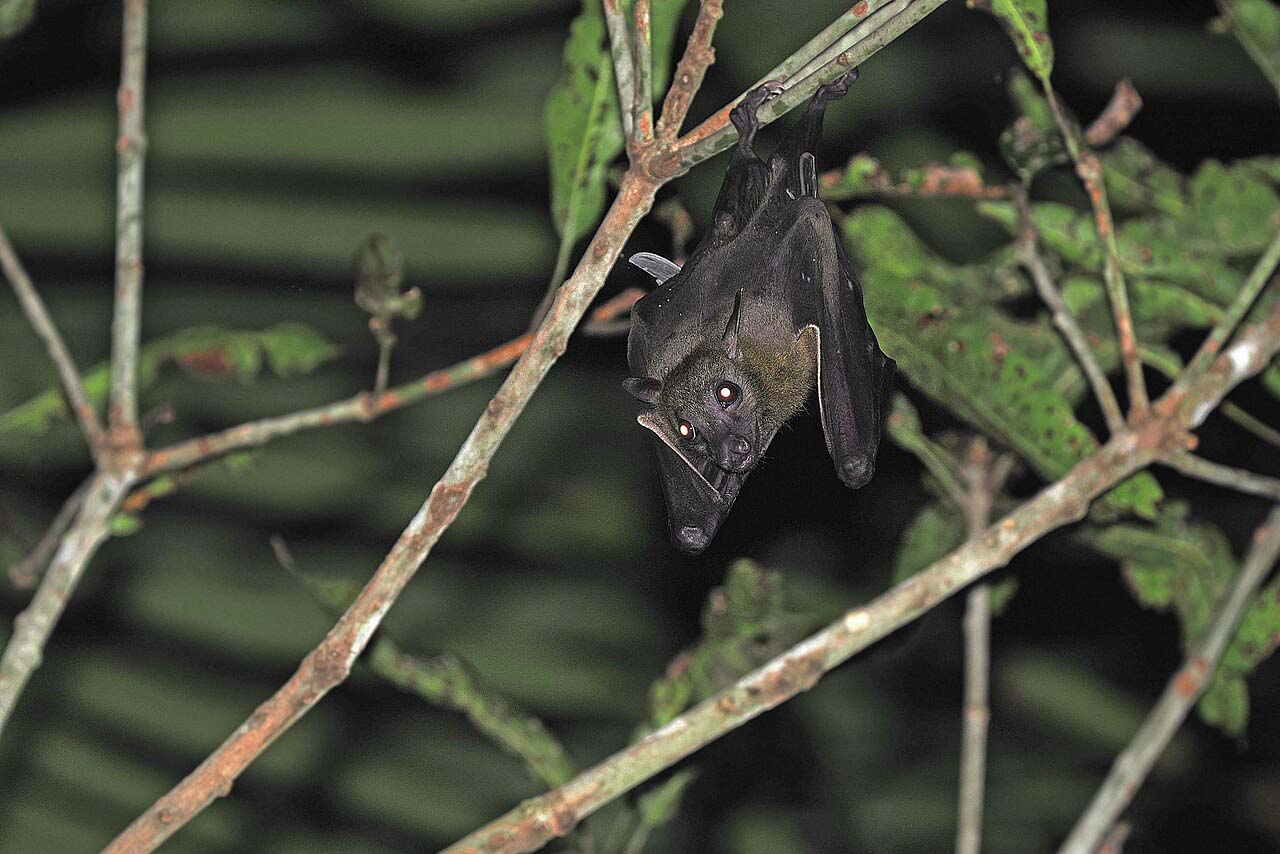
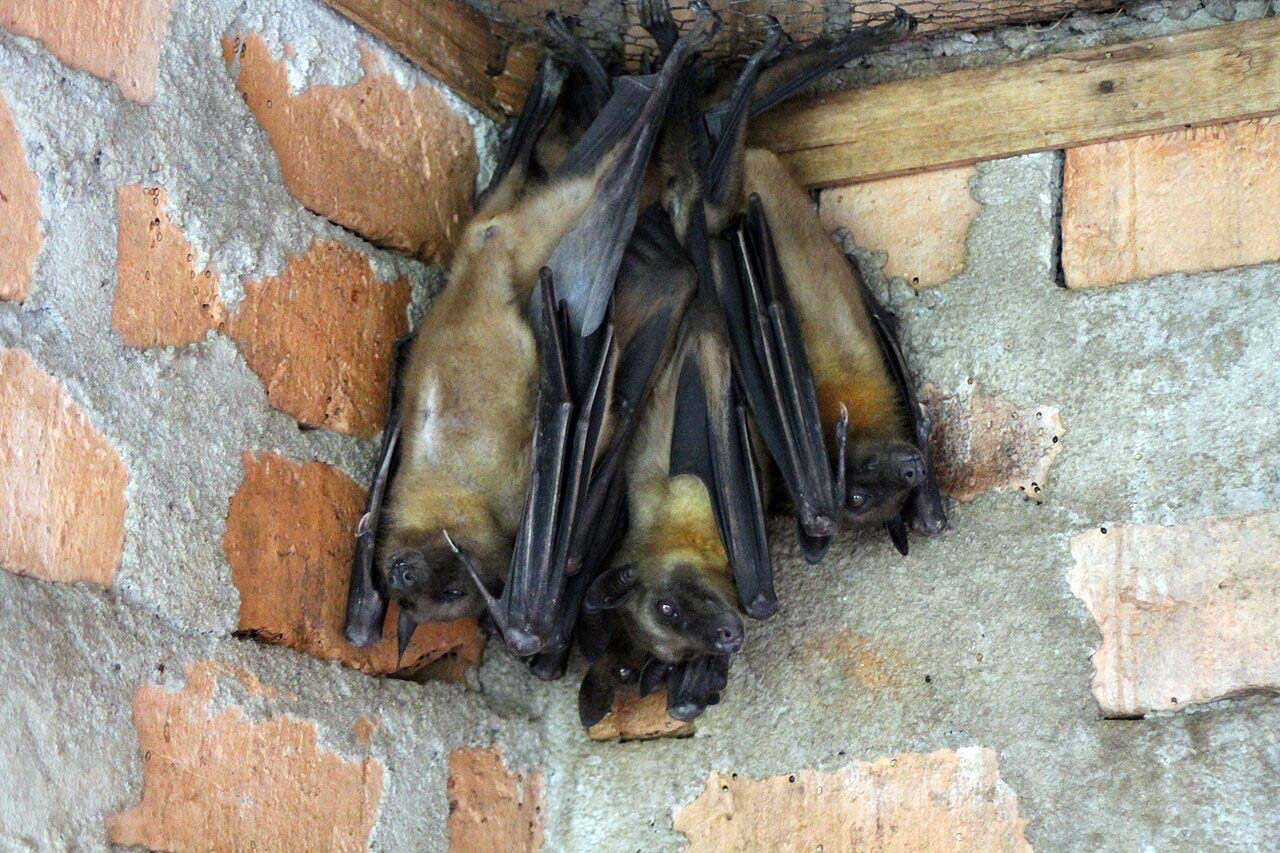
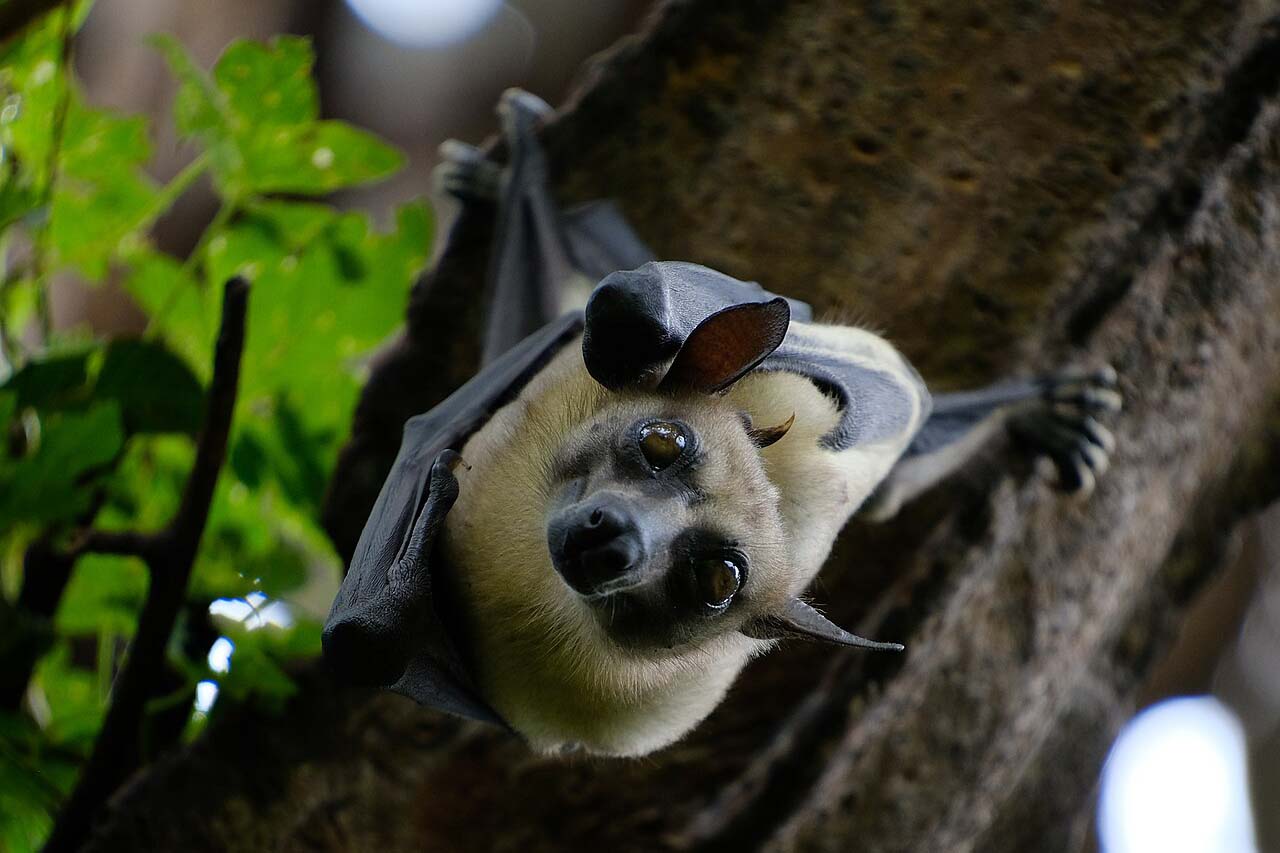
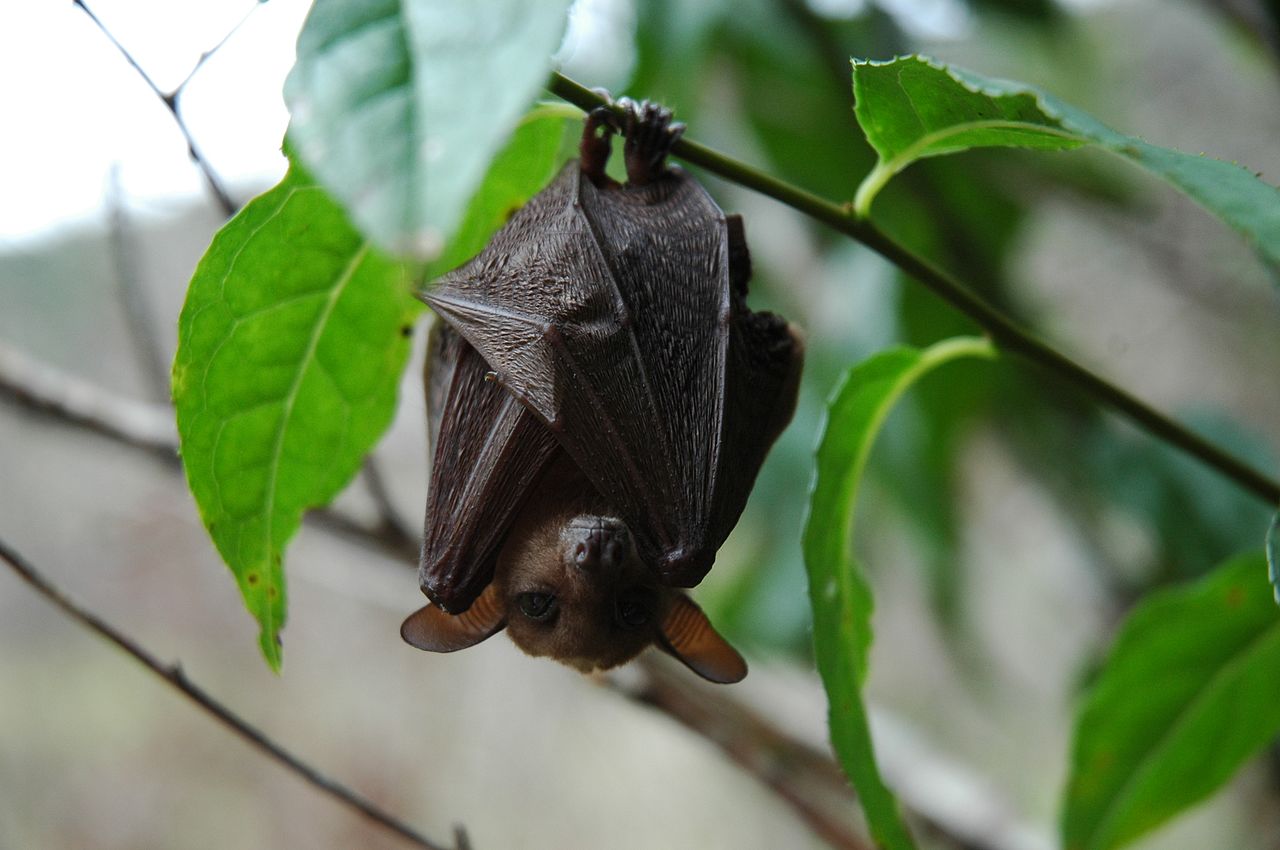
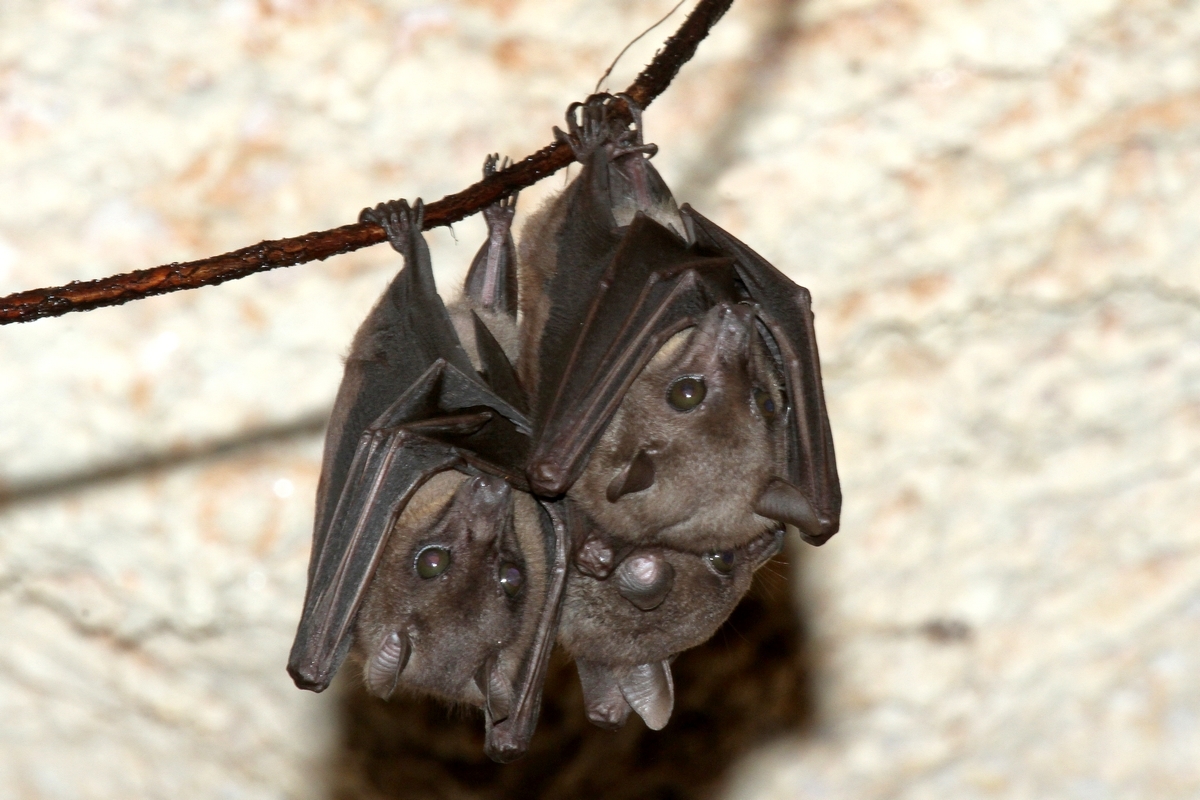
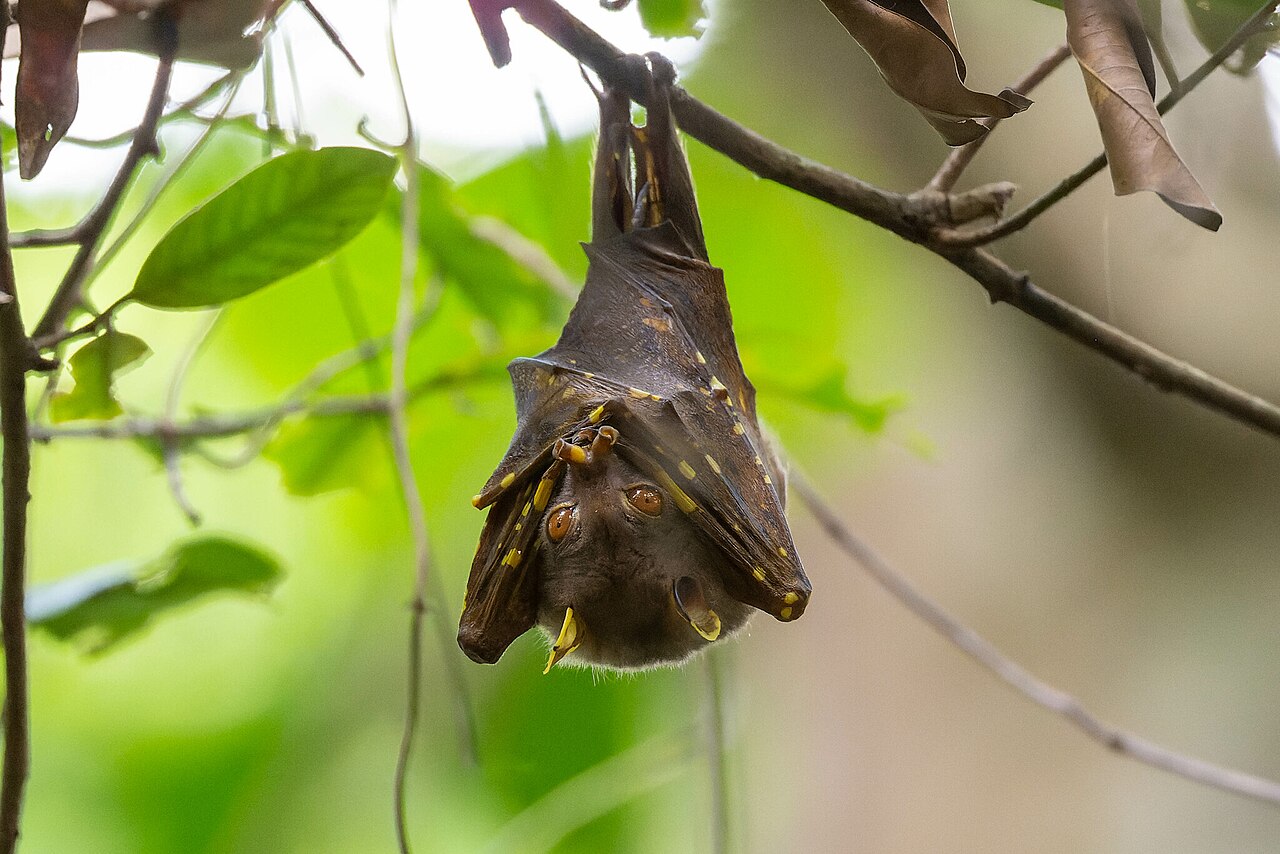
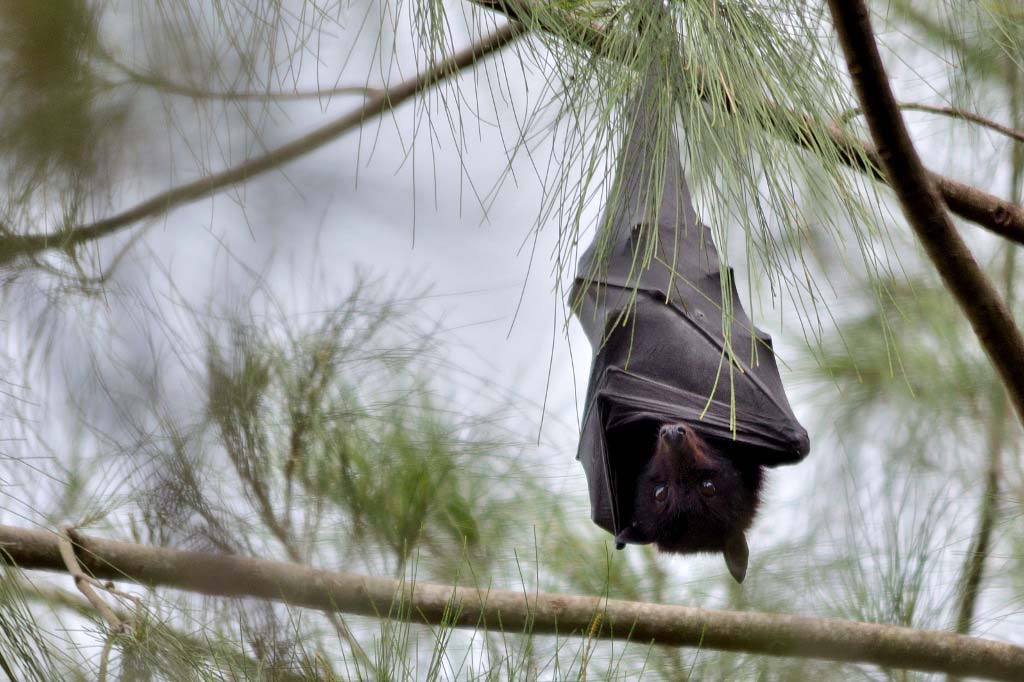
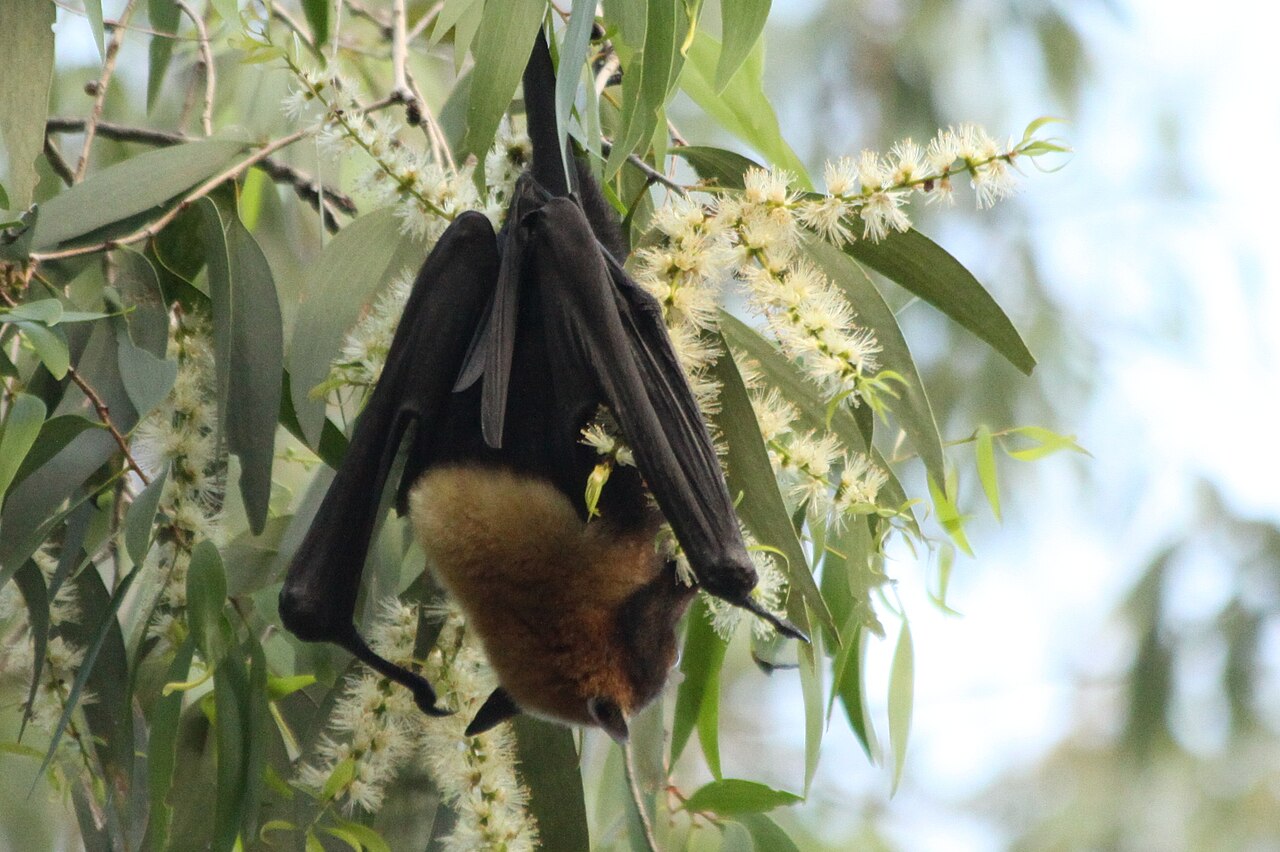
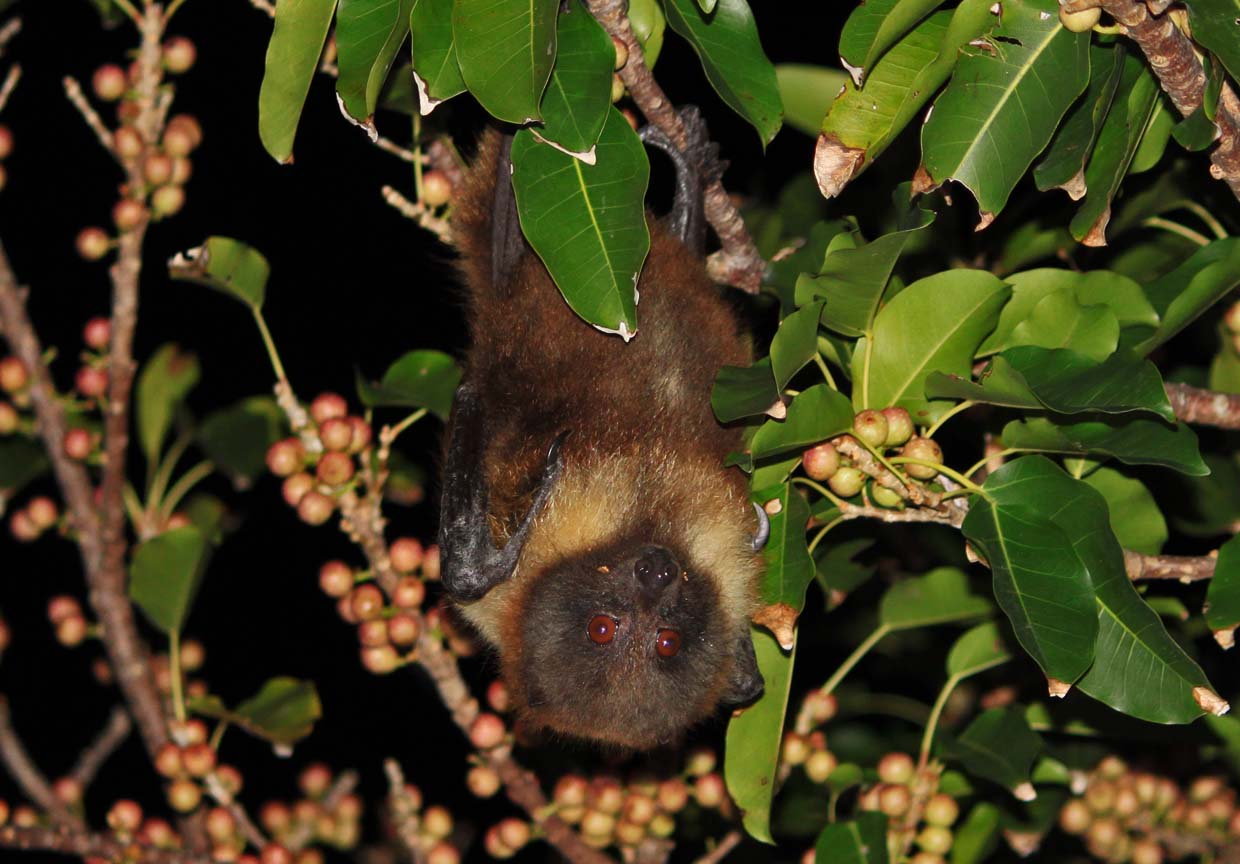
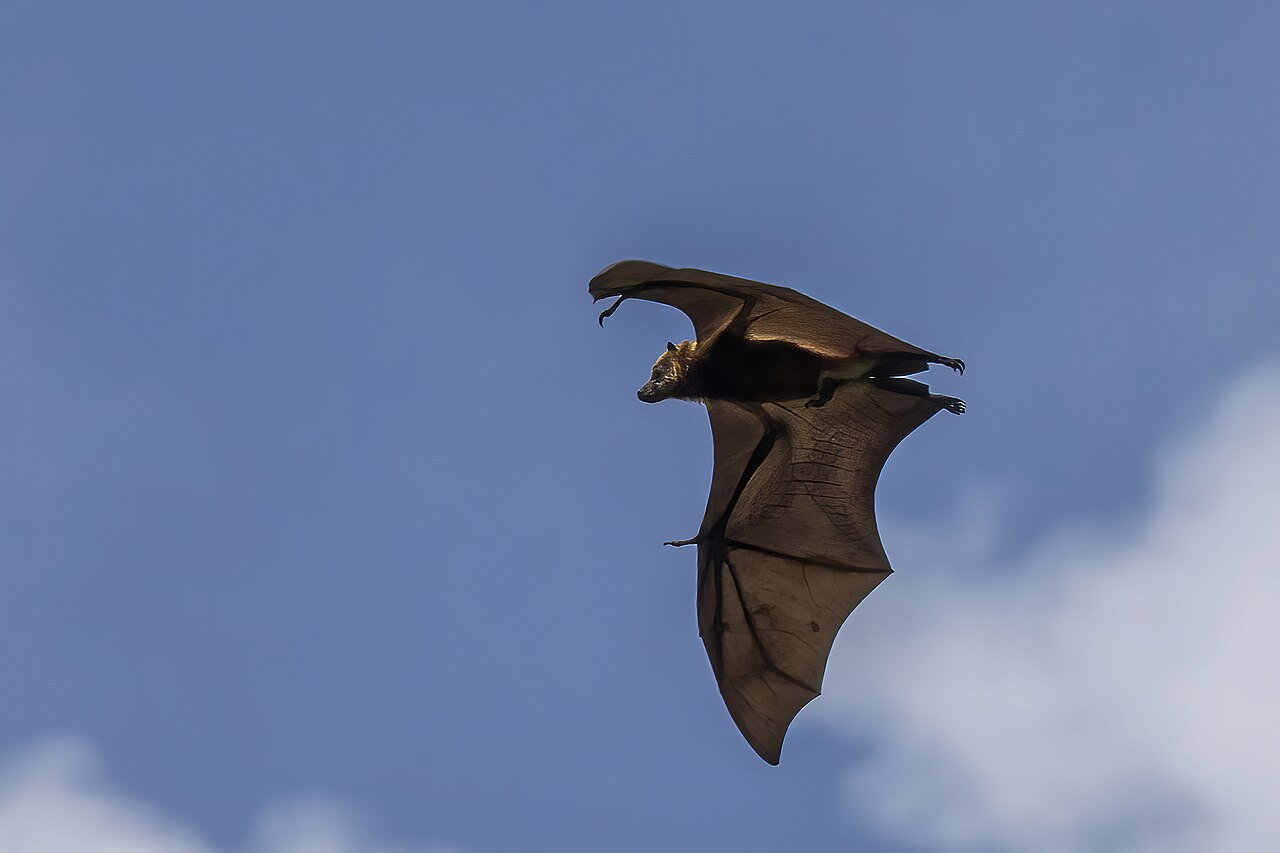
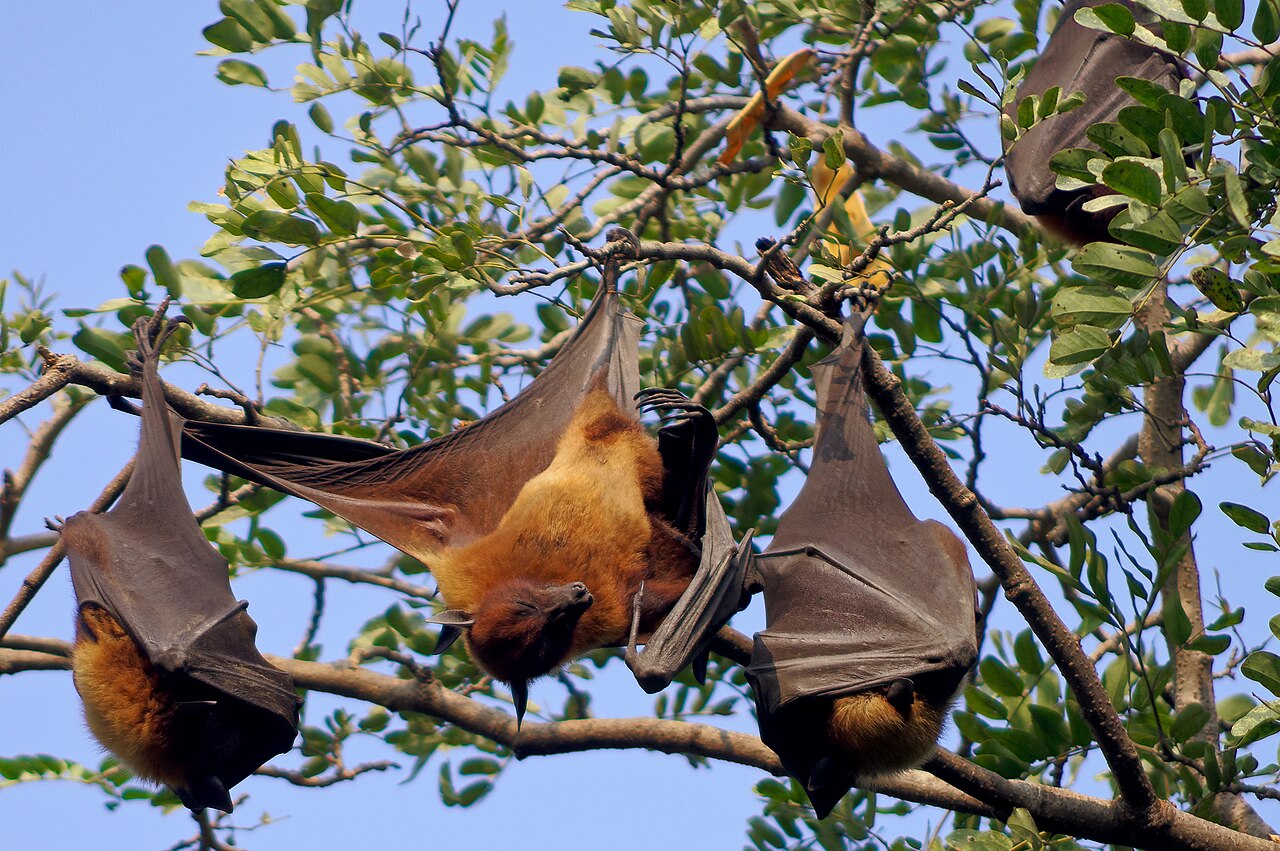
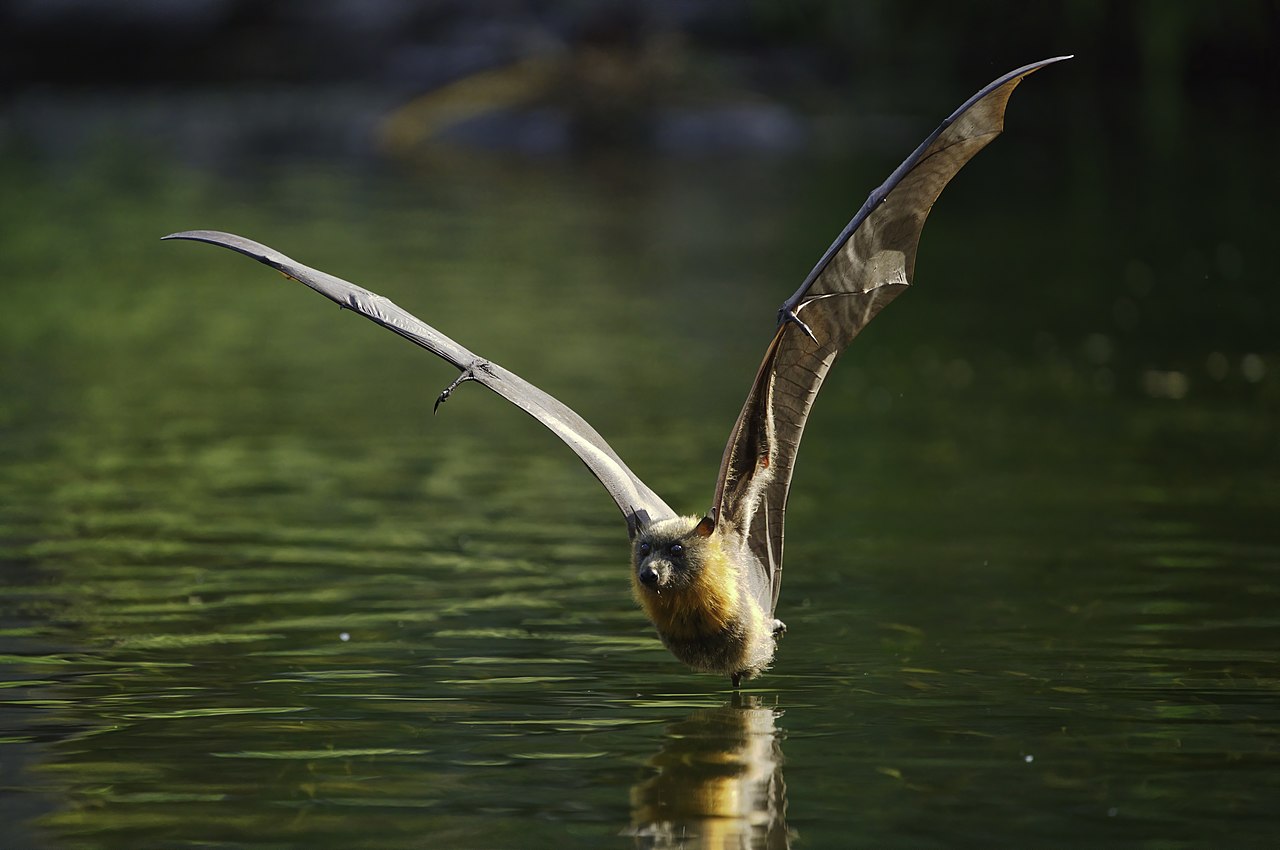
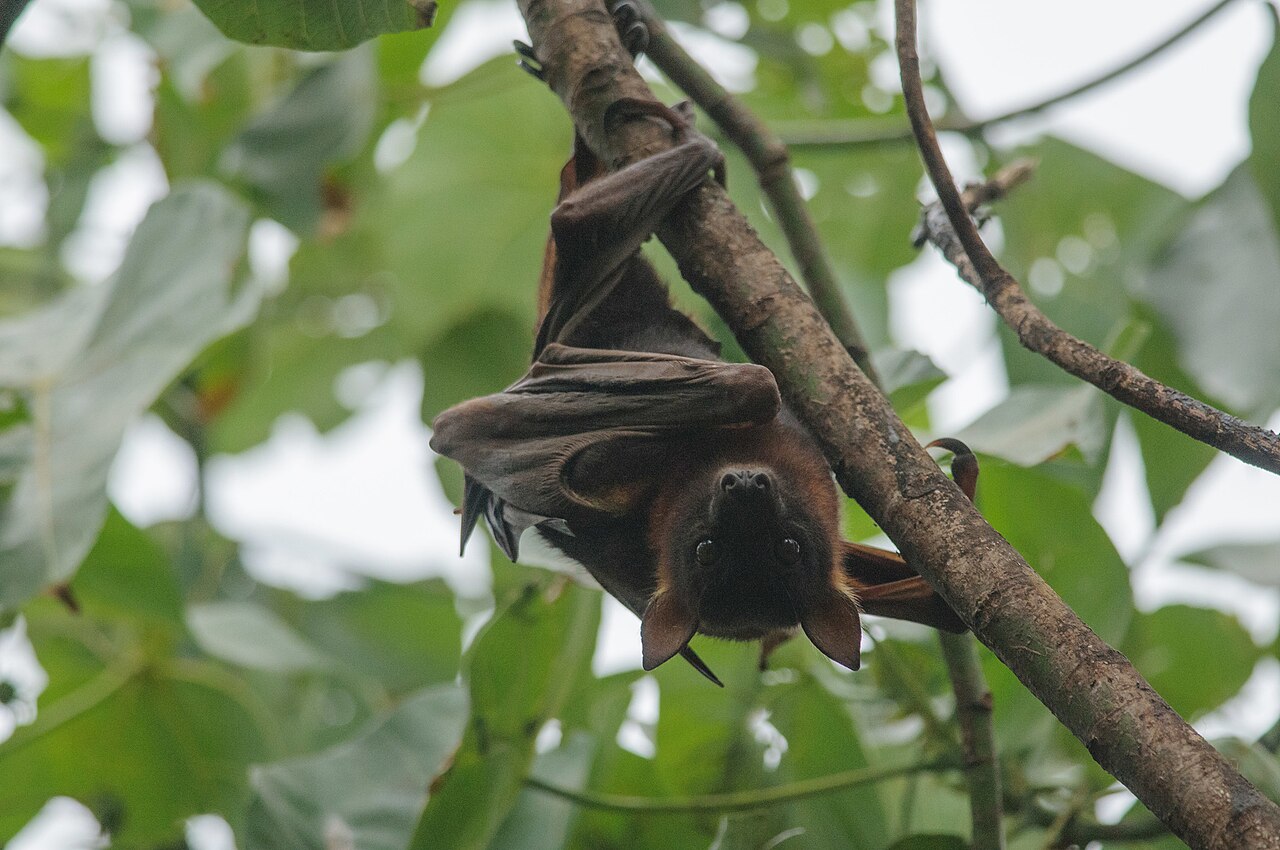
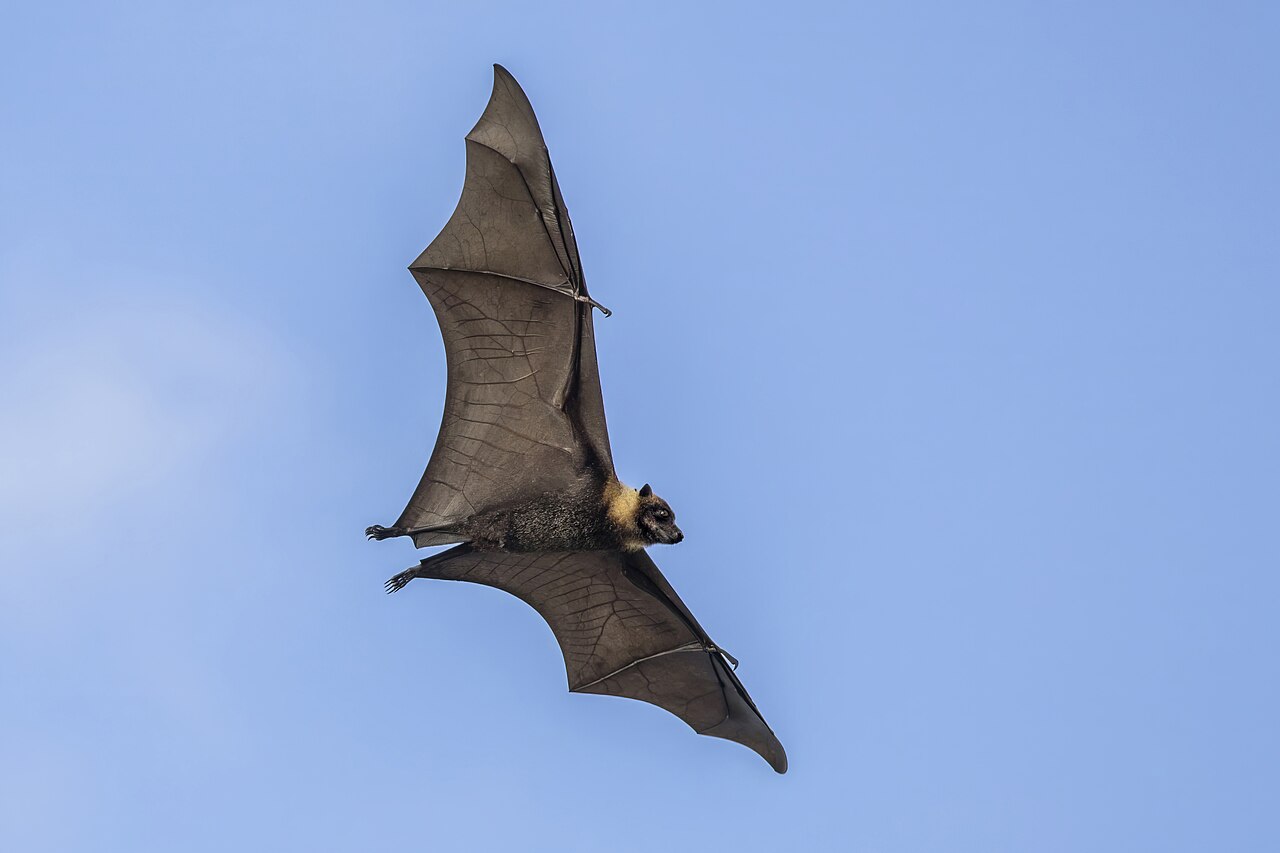
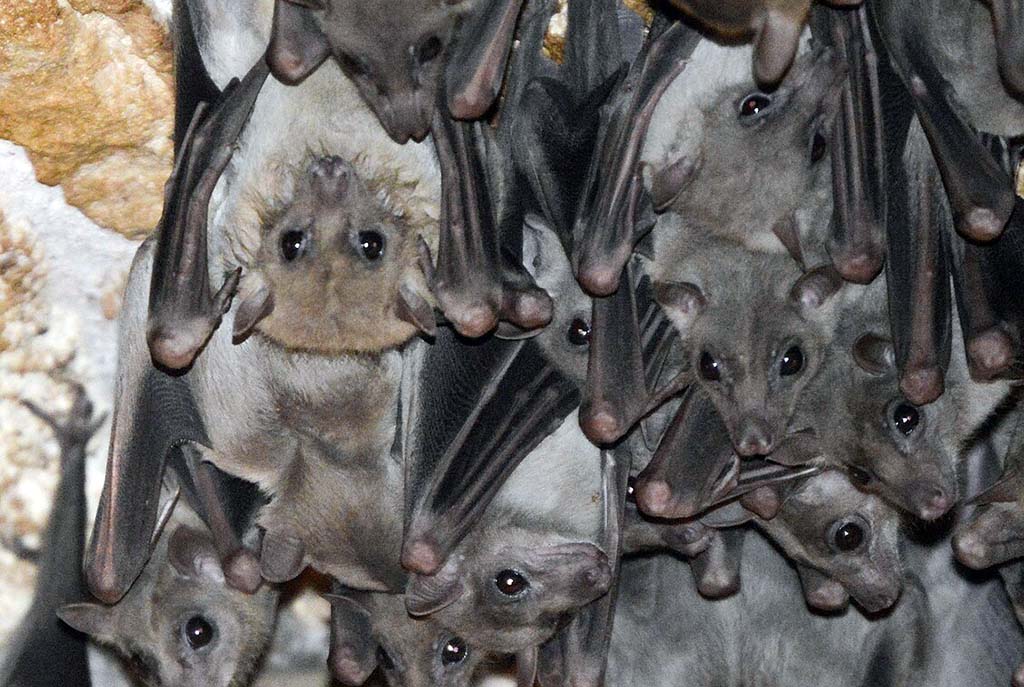
There are around 200 species in this family of large bats. They are found in tropical and subtropical regions of Africa, Asia, and Australia.
They have a long, clawed index finger; small ears; large eyes; and short or no tails.
They are usually large compared to other bats, with some species having wingspans over 5 feet.
The bats in this family do not use echolocation to find food. They rely on their large eyes and keen sense of smell to find fruit and nectar.
Sulawesi Fruit Bat (Acerodon celebensis)
The Sulawesi fruit bat is found in Indonesia. IUCN Redlist Status: Vulnerable
Golden-Capped Fruit Bat (Acerodon jubatus)
The golden-capped fruit bat is found in the Philippines. IUCN Redlist Status: Endangered
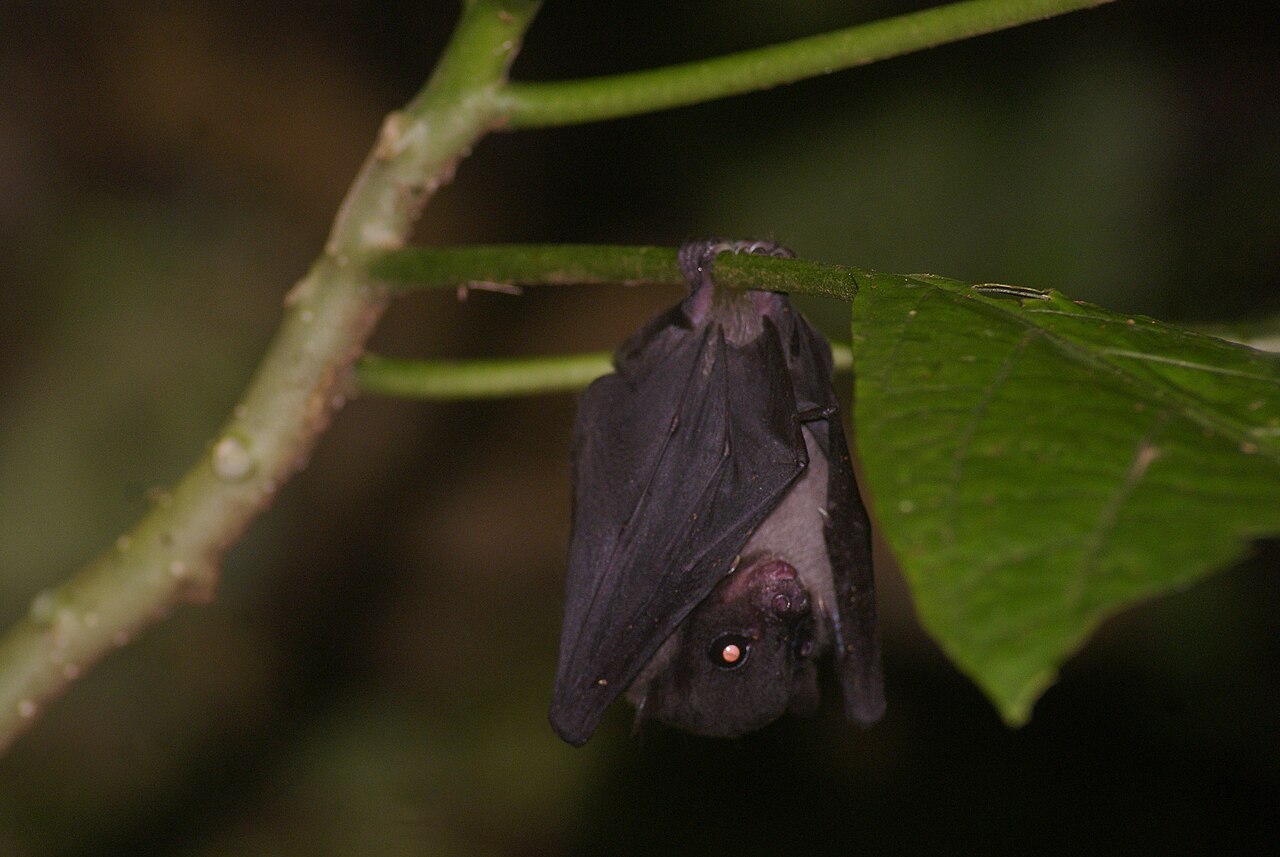
Black-Capped Fruit Bat (Chironax melanocephalus)
The black-capped fruit bat is found in Brunei Darussalam, Indonesia, Malaysia, and Thailand. IUCN Redlist Status: Least Concern
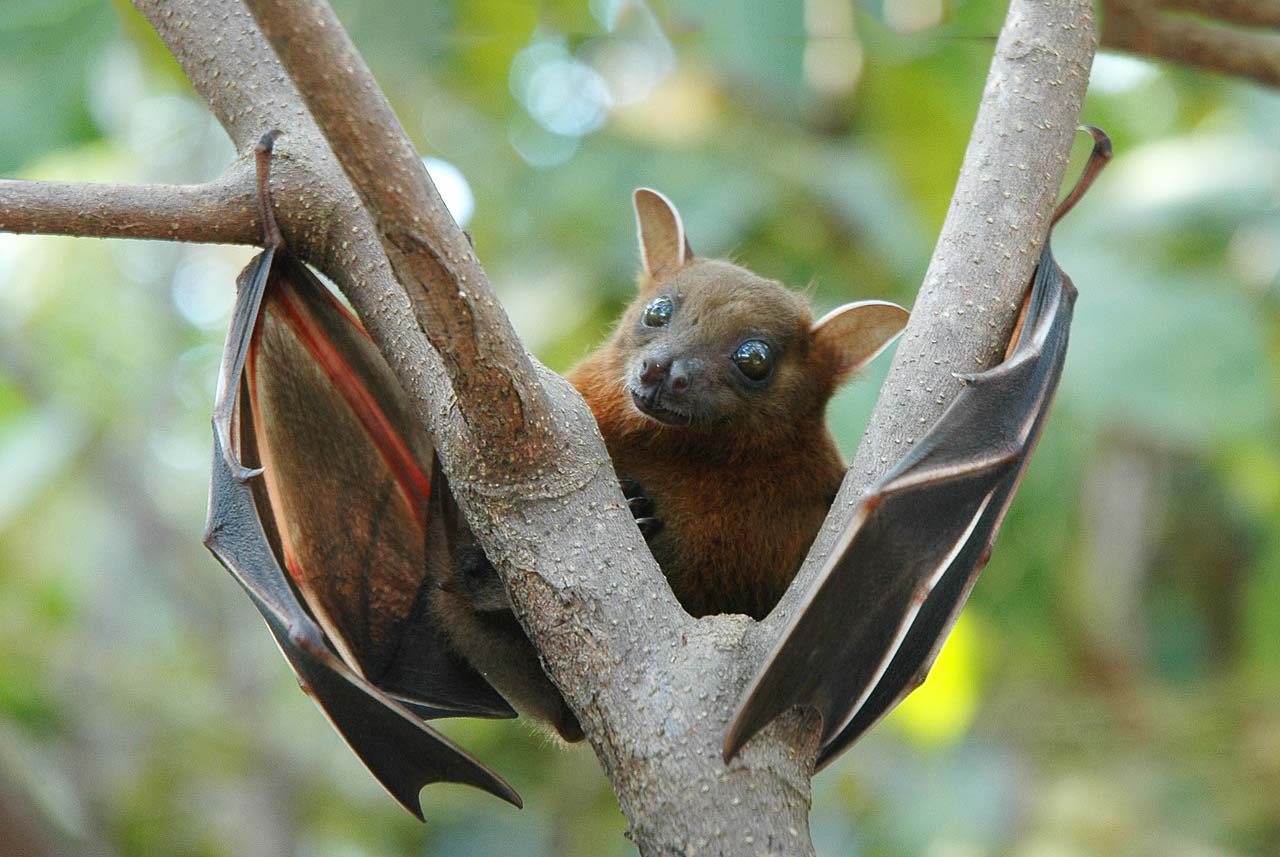
Lesser Dog-Faced Fruit Bat (Cynopterus brachyotis)
The lesser dog-faced fruit bat is found in Cambodia, China, India, Indonesia, Laos, Malaysia, Myanmar, Singapore, Sri Lanka, Thailand, Timor-Leste, and Vietnam. IUCN Redlist Status: Least Concern
Greater Shortnosed Fruit Bat (Cynopterus sphinx)
The greater shortnosed fruit bat is found in Bangladesh, Bhutan, Cambodia, China, Hong Kong, India, Indonesia, Laos, Malaysia, Myanmar, Nepal, Pakistan, Sri Lanka, Thailand, and Vietnam. IUCN Redlist Status: Least Concern
Western Naked-Backed Fruit Bat (Dobsonia peronii)
The western naked-backed fruit bat is found in Indonesia and Timor-Leste. IUCN Redlist Status: Least Concern
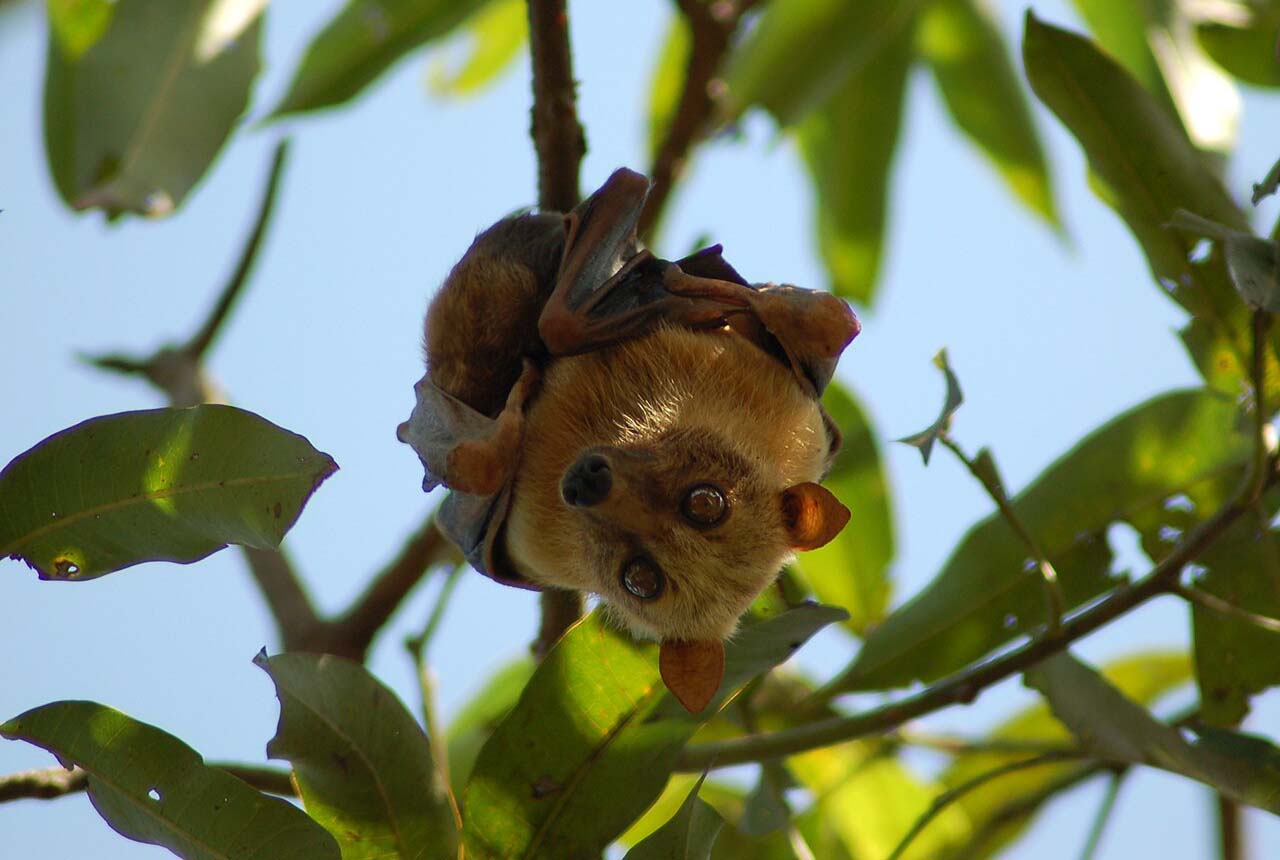
Madagascan Fruit Bat (Eidolon dupreanum)
The Madagascan Fruit Bat is found in Madagascar. IUCN Redlist Status: Vulnerable
African Straw-Colored Fruit-Bat (Eidolon helvum)
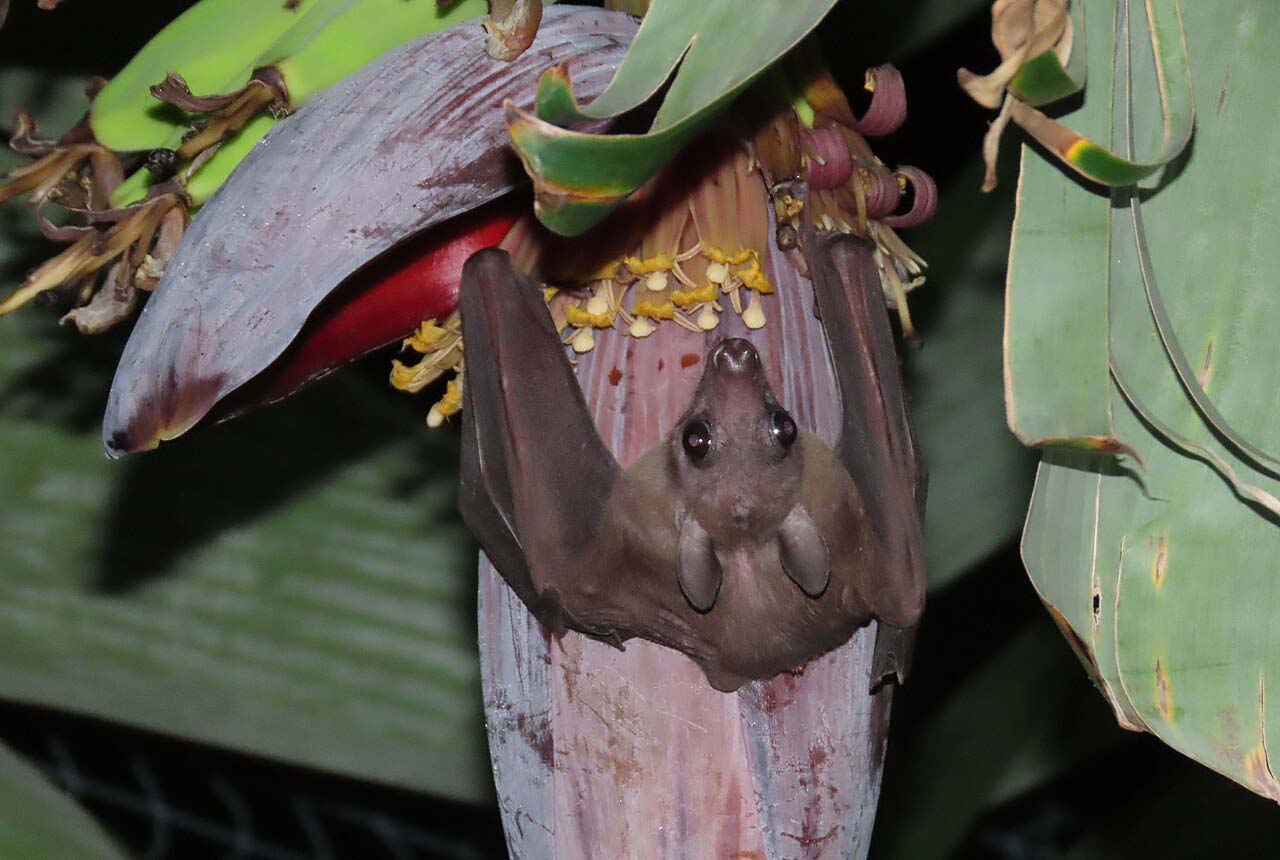
The African straw-colored fruit-bat is found in central and southern Africa.
Dagger-Toothed Long-Nosed Fruit Bat (Macroglossus minimus)
The dagger-toothed long-nosed fruit bat is found in Australia, Brunei Darussalam, Cambodia, Indonesia, Malaysia, Papua New Guinea, the Philippines, Singapore, the Solomon Islands, Thailand, Timor-Leste, and Vietnam. IUCN Redlist Status: Least Concern
Angolan Fruit Bat (Myonycteris angolensis)
The Angolan fruit bat is found in Angola, Burkina Faso, Burundi, Cameroon, Central African Republic, Congo, The Democratic Republic of the Congo, Côte d'Ivoire, Equatorial Guinea, Ethiopia, Gambia, Ghana, Guinea, Guinea-Bissau, Kenya, Liberia, Mozambique, Nigeria, Rwanda, Senegal, Sierra Leone, Sudan, Tanzania, Togo, Uganda, Zambia, and Zimbabwe. IUCN Redlist Status: Least Concern
Eastern Tube-Nosed Bat (Nyctimene robinsoni)
The eastern tube-nosed bat is found in Australia. IUCN Redlist Status: Least Concern
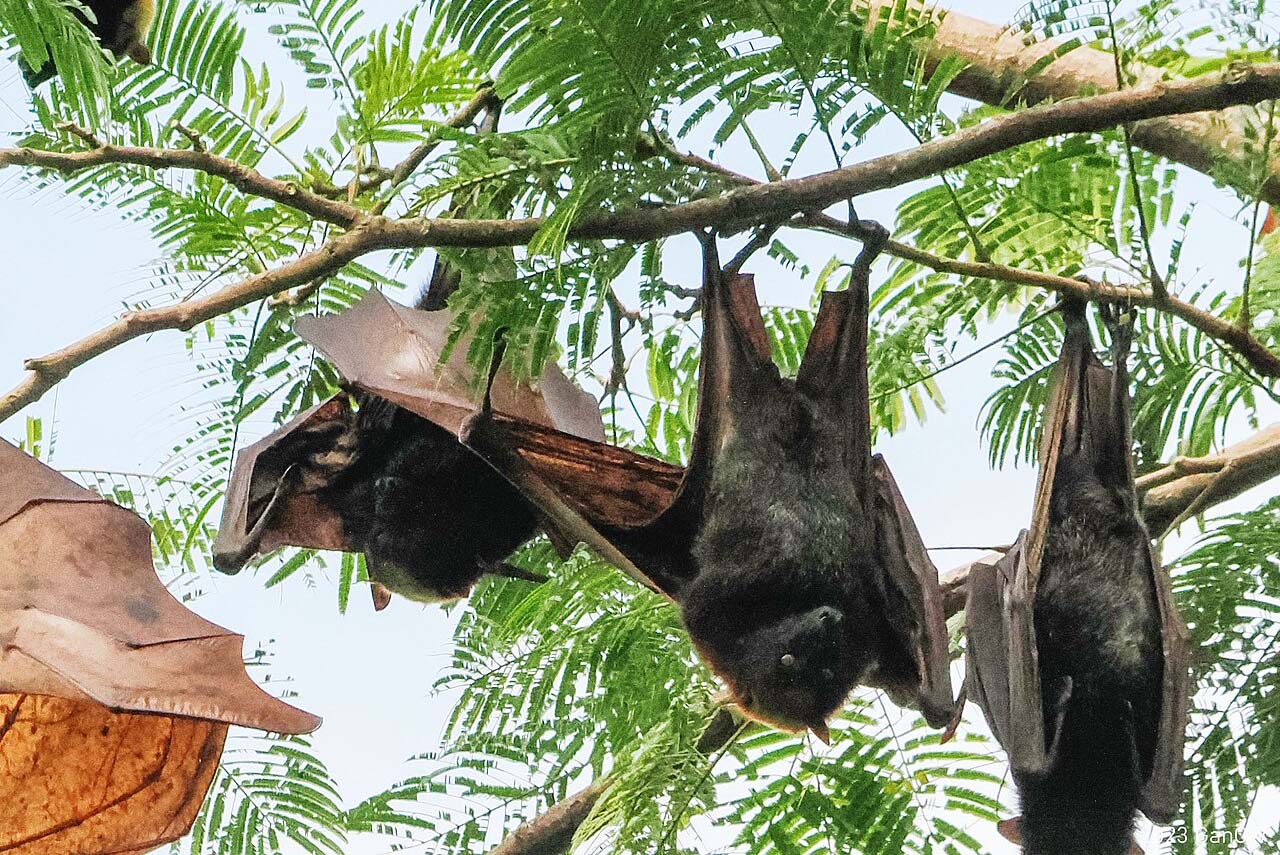
Black Flying Fox (Pteropus alecto)
The black flying fox is found in Australia, Indonesia, and Papua New Guinea. IUCN Redlist Status: Least Concern
Spectacled Flying Fox (Pteropus conspicillatus)
The spectacled flying fox is found in Australia, Indonesia, and Papua New Guinea. IUCN Redlist Status: Endangered
Ryukyu Flying Fox (Pteropus dasymallus)
The Ryukyu flying fox is found in Japan, the Philippines and Taiwan. IUCN Redlist Status: Vulnerable
Greater Mascarene Flying Fox (Pteropus niger)
The greater Mascarene flying fox, also known as the Mauritian flying fox, is found in Mauritius and Réunion. IUCN Redlist Status: Endangered
Indian Flying Fox (Pteropus medius)
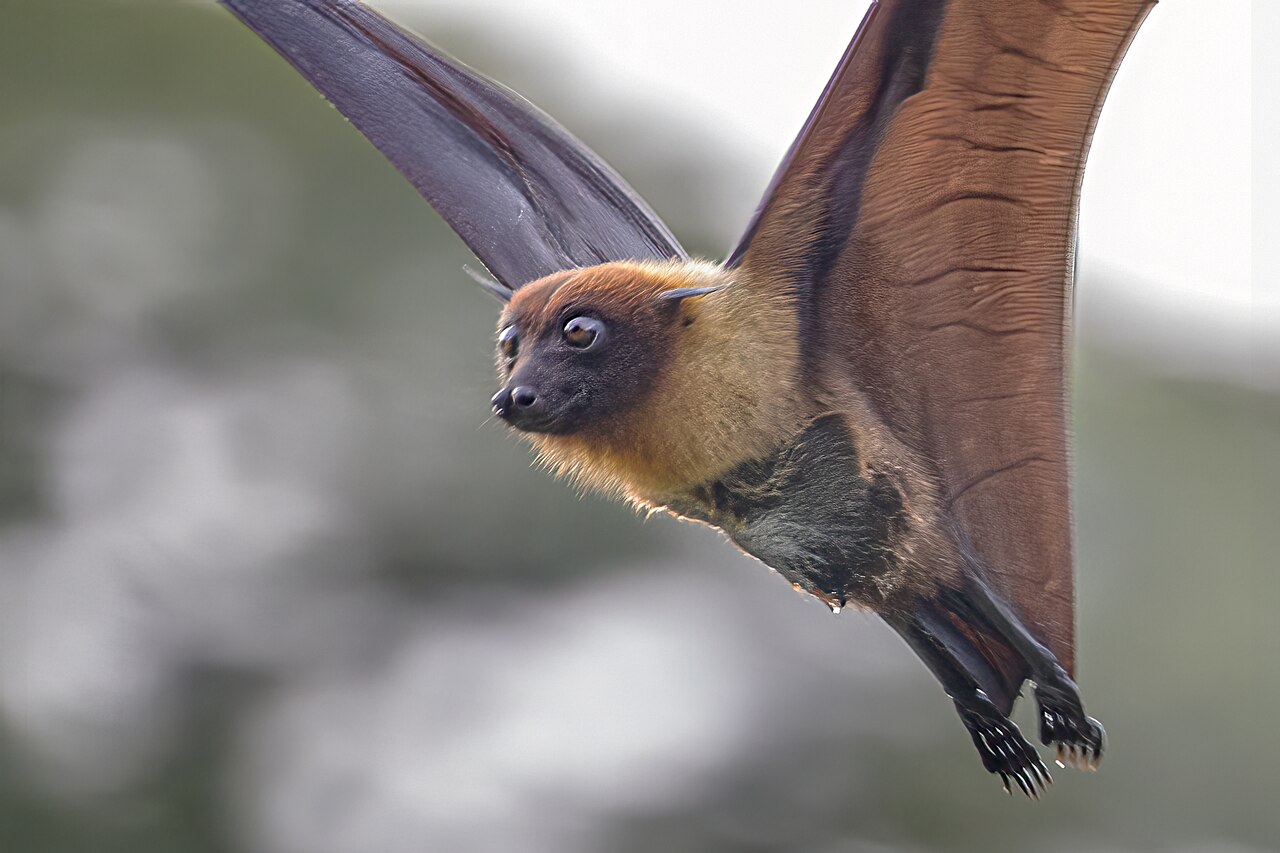
The Indian flying fox is found in Bangladesh, India, Maldives, Myanmar, Nepal, Pakistan, and Sri Lanka. IUCN Redlist Status: Near Threatened
Gray-Headed Flying Fox (Pteropus poliocephalus)
The gray-headed flying fox is found in Australia. IUCN Redlist Status: Vulnerable
Little Red Flying Fox (Pteropus scapulatus)
The little red flying fox is found in Australia. IUCN Redlist Status: Least Concern
Pacific Flying Fox (Pteropus tonganus)
The Pacific flying fox is found in American Samoa, Cook Islands, Fiji, New Caledonia, Niue, Papua New Guinea, Samoa, Solomon Islands, Tonga, Vanuatu, and Wallis and Futuna. IUCN Redlist Status: Least Concern
Egyptian Fruit Bat (Rousettus aegyptiacus)
The Egyptian Fruit Bat is found in the Middle East and Africa. IUCN Redlist Status: Least Concern
Leschenault’s Rousette (Rousettus leschenaultii)
Leschenault’s Rousette is found in Bangladesh, Bhutan, Cambodia, China, India, Indonesia, Laos, Malaysia, Myanmar, Nepal, Pakistan, Sri Lanka, Thailand, and Vietnam. IUCN Redlist Status: Near Threatened
Common Blossom Bat (Syconycteris australis)
The common blossom bat is found in Australia, Indonesia, and Papua New Guinea. IUCN Redlist Status: Least Concern