There are two extinct species of birds in this subfamily. They were once in their own family, but DNA analysis now places them in the Columbidae (doves and pigeons) family.
THE DODO
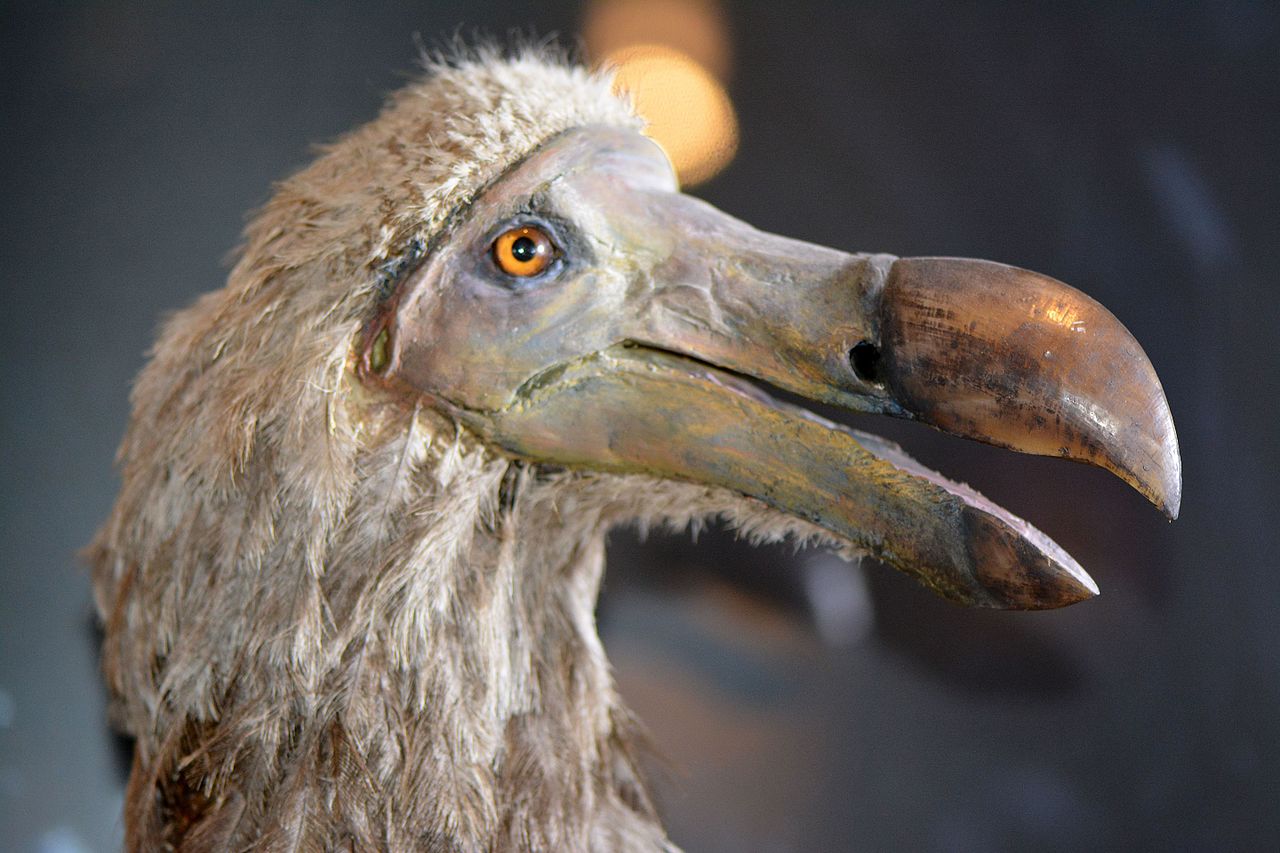
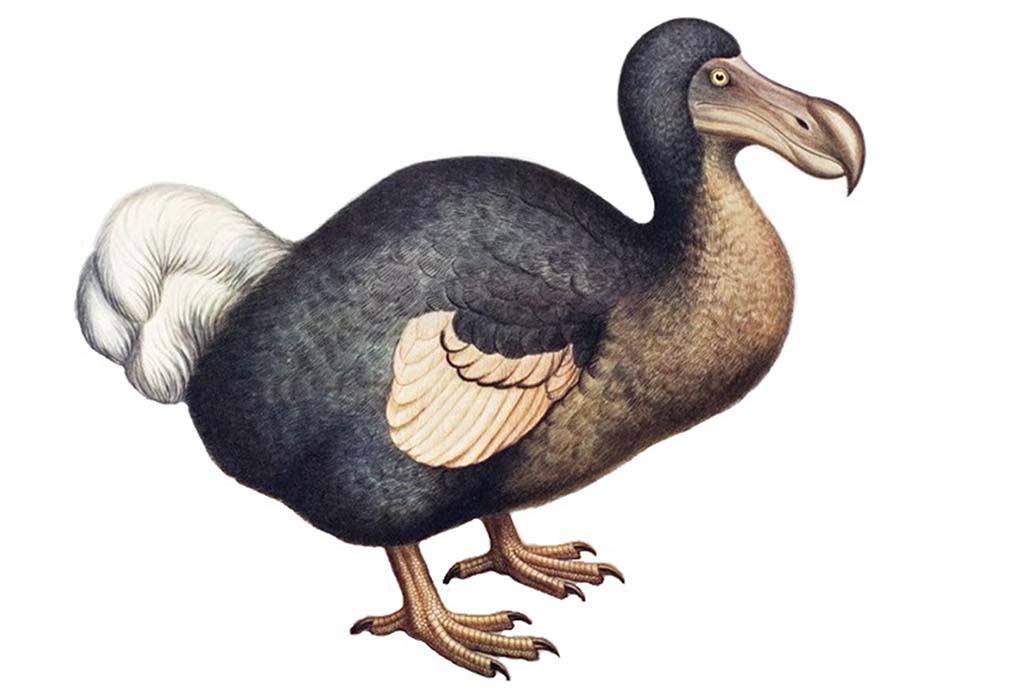
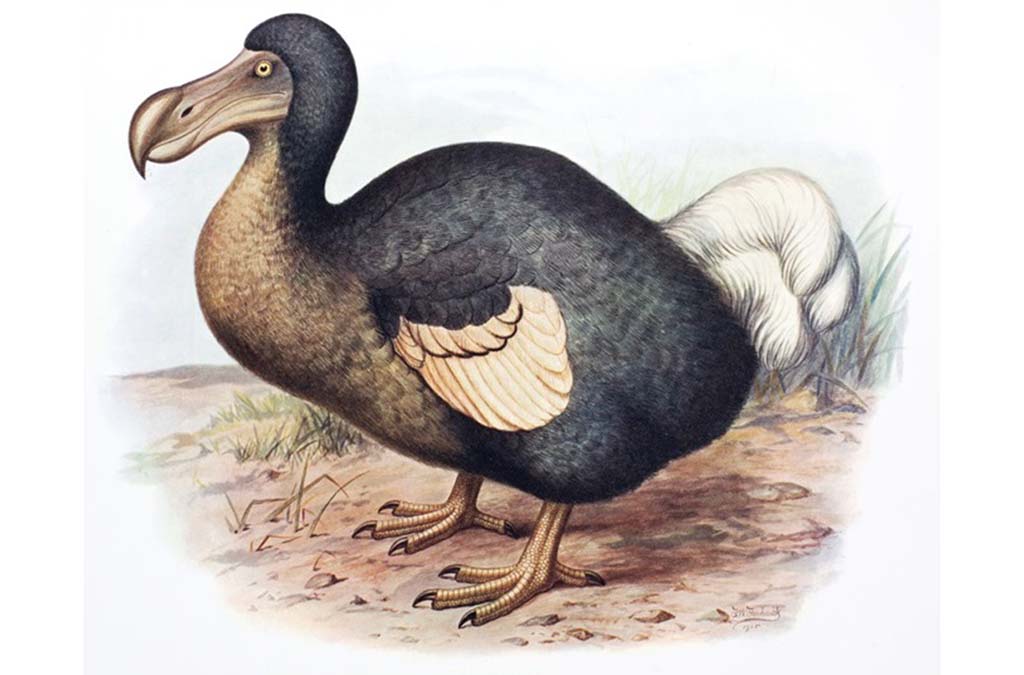
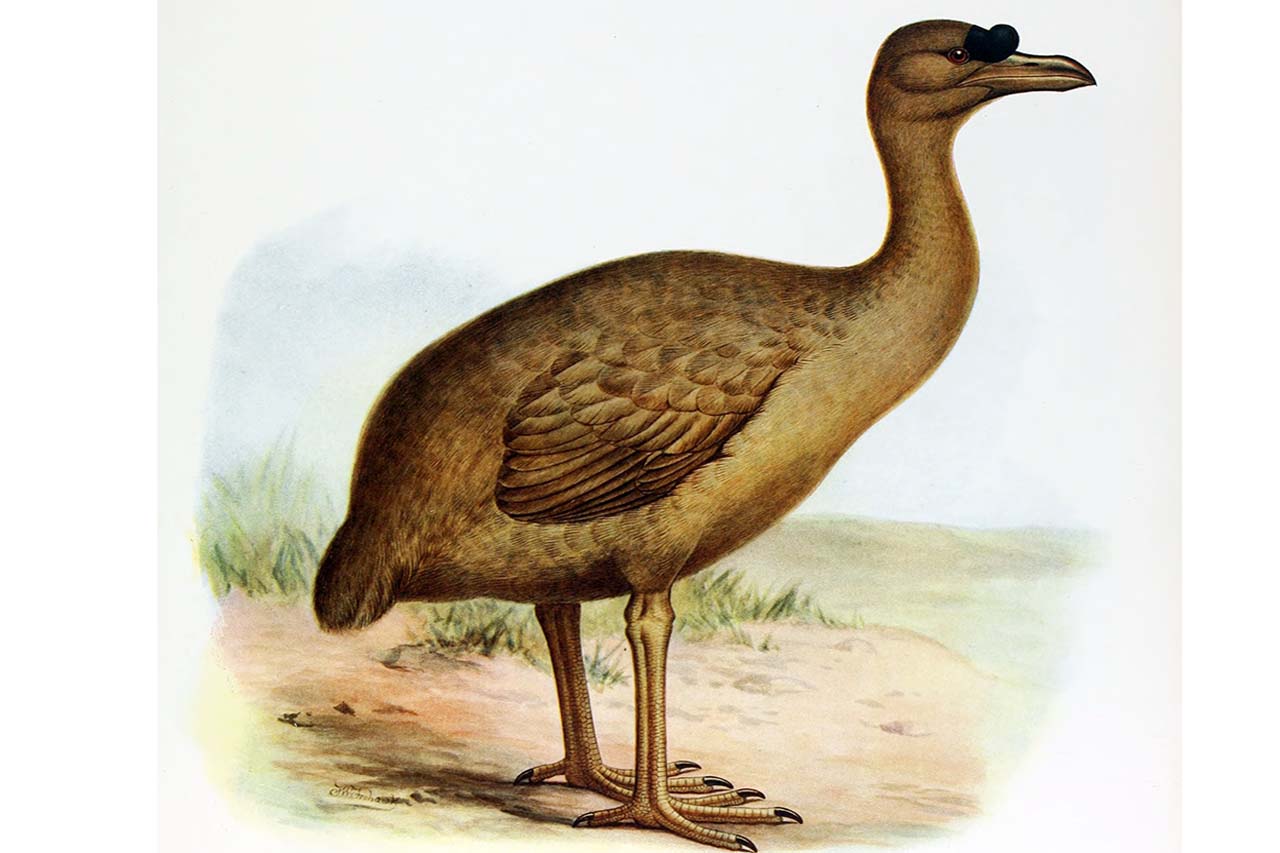
The dodo (Raphus cucullatus) was a flightless bird that lived on the island of Mauritius in the Indian Ocean. It lived in the forest and nested on the ground.
The dodo had short, stubby wings; a large, curved bill; gray feathers; and a stocky body.
There were no natural predators on the island of Mauritius, so the dodo had few defenses. It was not a good runner, it couldn’t fly, and it didn’t know how to hide from threats.
The first recorded sighting of a dodo was in 1598. In the years after first being discovered, dodos were often killed for food by sailors visiting the island. The real decline in the dodo population happened after Dutch colonists settled on the island in 1644.
The colonists killed the dodo for food, but perhaps the most serious damage was done by the cats, dogs, pigs, and other animals that were brought to the island by the colonists. Many of these animals ate the dodo and its eggs. The dodo population couldn’t adjust to these new threats, and the dodo became extinct by 1681.
What we know about dodos today comes from written descriptions from the sailors and colonists who saw the dodo first-hand, from dodo fossils, and from parts of dodo skeletons.
The name dodo probably comes from the Portuguese “doudo“, which means foolish, and the Dutch “doedaars“, which means heavy bottom.
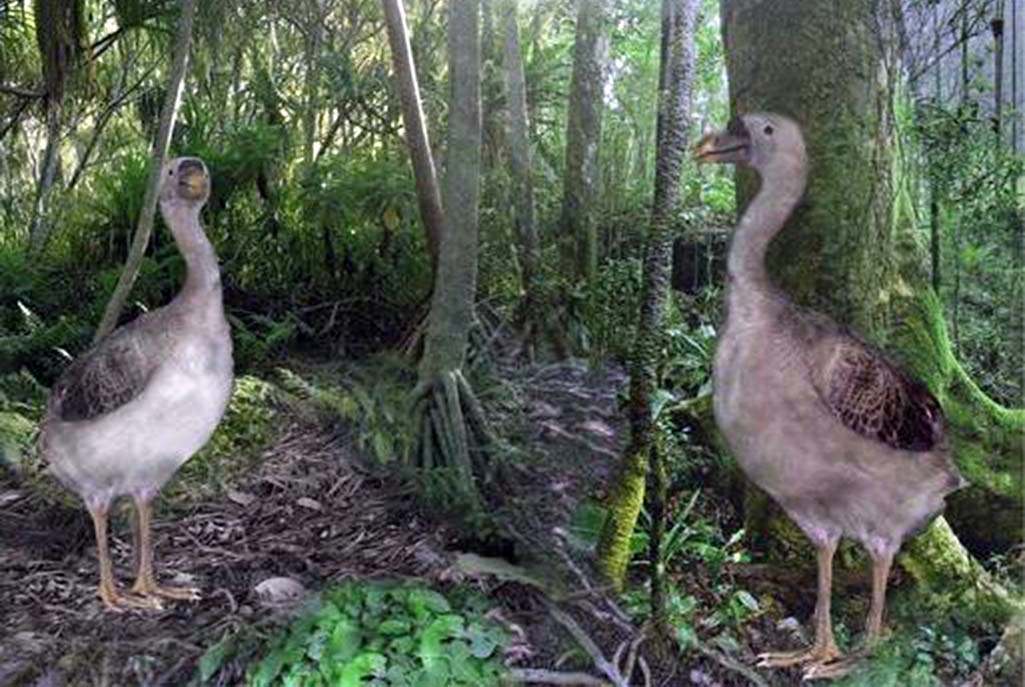
RODRIGUES SOLITAIRE
Rodrigues solitaire (Pezophaps solitaria) was a flightless bird that lived on Rodrigues Island in the Indian Ocean. It was first recorded by François Leguet, who was on the island from 1691 to 1693. He wrote about the bird and its behavior. Other colonists on the island wrote about how good the bird tasted.
As the island was colonized, the solitaire was hunted and preyed on by introduced species like cats and dogs. The Rodrigues solitaire was probably extinct by the 1760s. What we know about the solitaire today is based on written records and bones.