There are only three species in this family. They are small brown or green frogs found in the forests of Argentina and Chile.
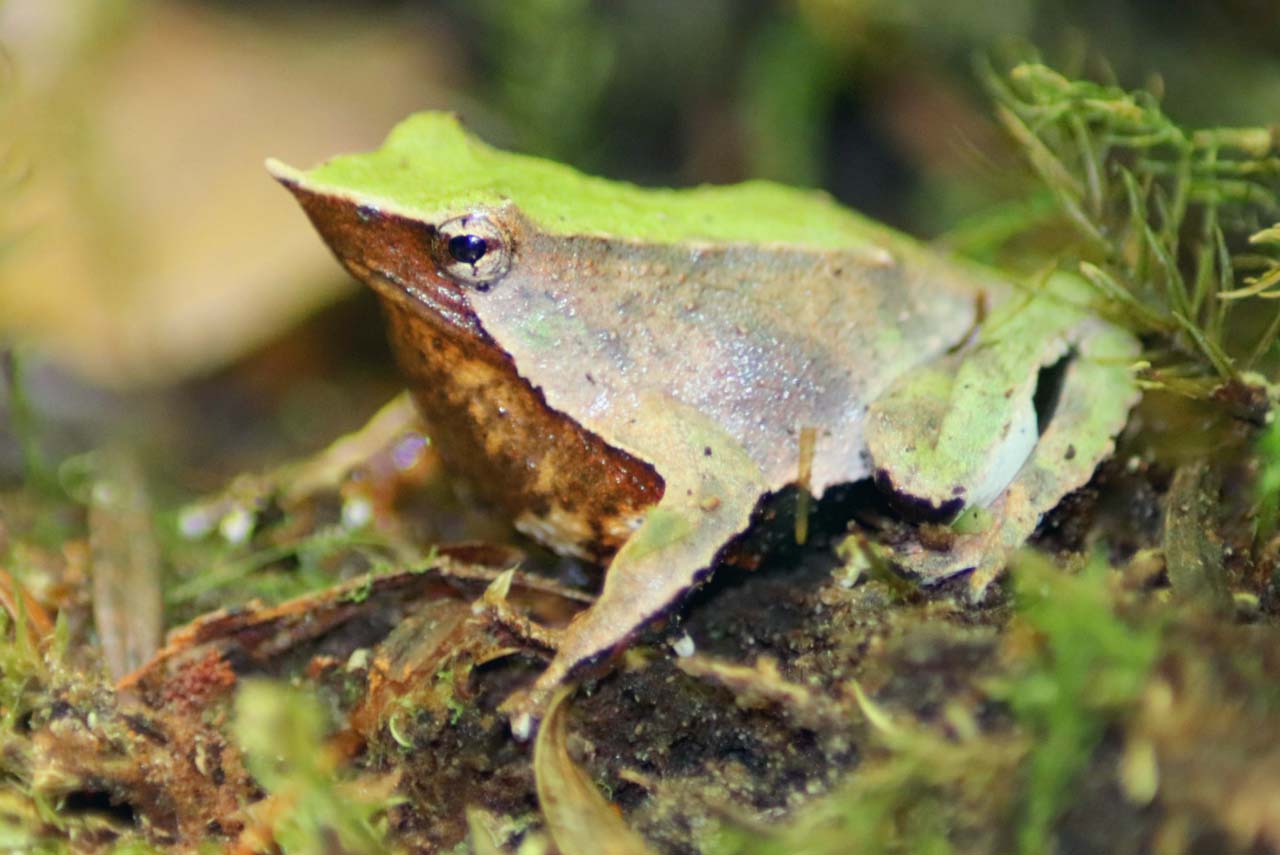
They have triangular heads with a fleshy tip on the end of their snout that looks like a horn. Their pointed snouts help them blend into leaf litter on the forest floor.
Darwin’s frogs live in temperate forests, often near streams or moist areas where they can stay damp.
The frogs in this family have an unusual behavior not seen in any other species of frog. After the female lays her eggs, the male guards them for two weeks. He then puts them in his mouth and carries them around in his vocal pouch. When the froglets are old enough to care for themselves, they hop out of the male’s mouth.
The frogs in this family were first recorded by Charles Darwin. Charles Darwin is famous for developing the theory of evolution.
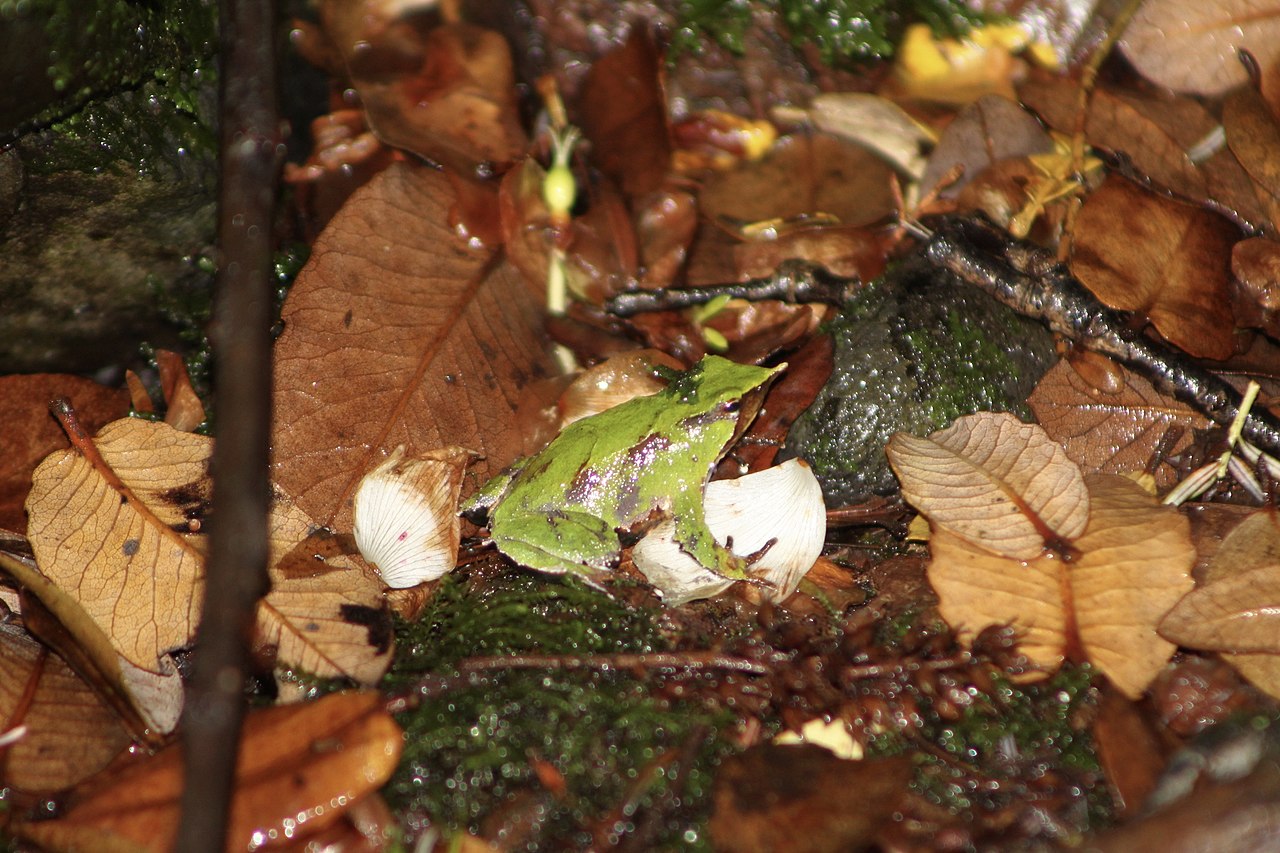
The Chile Darwin’s frog (Rhinoderma rufum), also known as the northern Darwin’s frog, is found in Chile and is critically endangered and may be extinct.
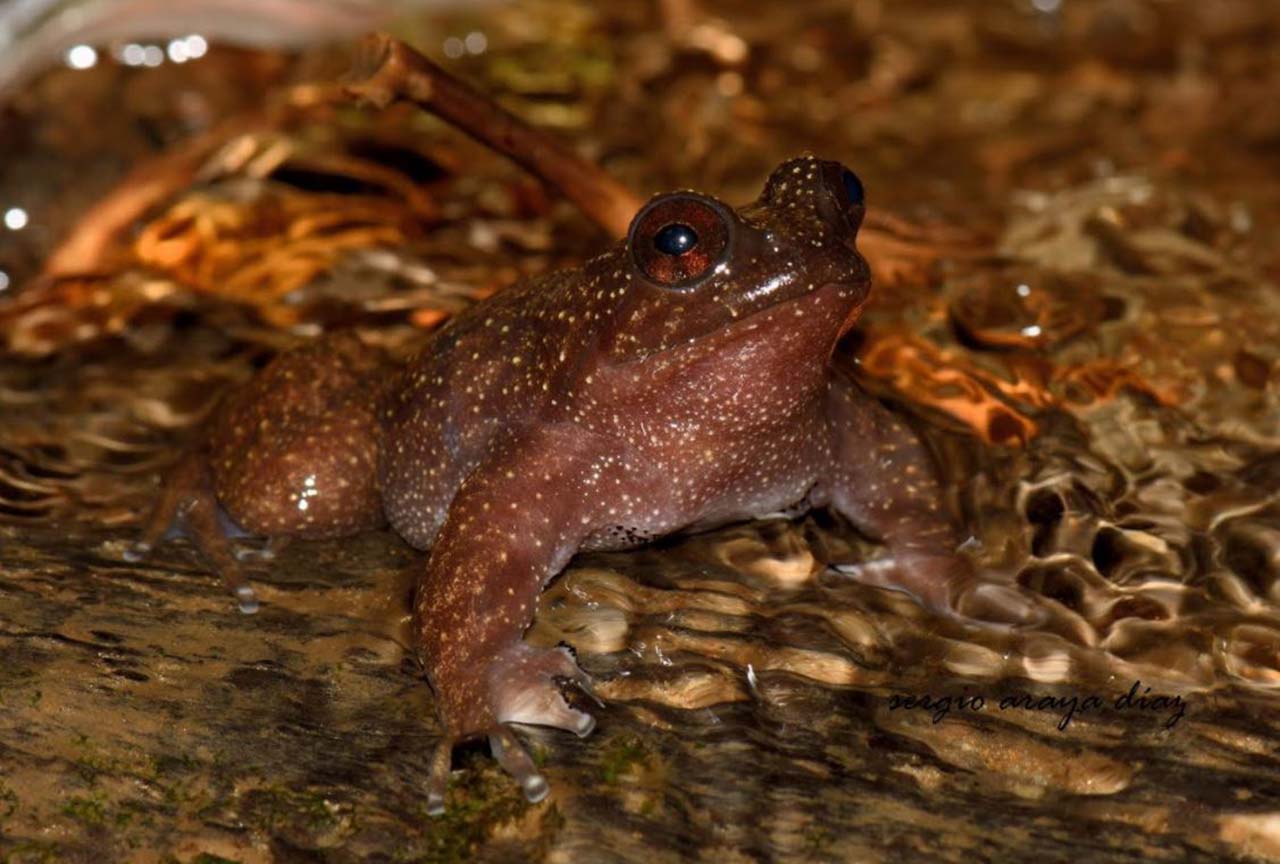
Barrio's Frog (Insuetophrynus acarpicus)
Barrio's frog is found in Chile. IUCN Redlist Status: Endangered
Southern Darwin's Frog (Rhinoderma darwinii)
The southern Darwin's frog is found in Argentina and Chile. IUCN Redlist Status: Endangered