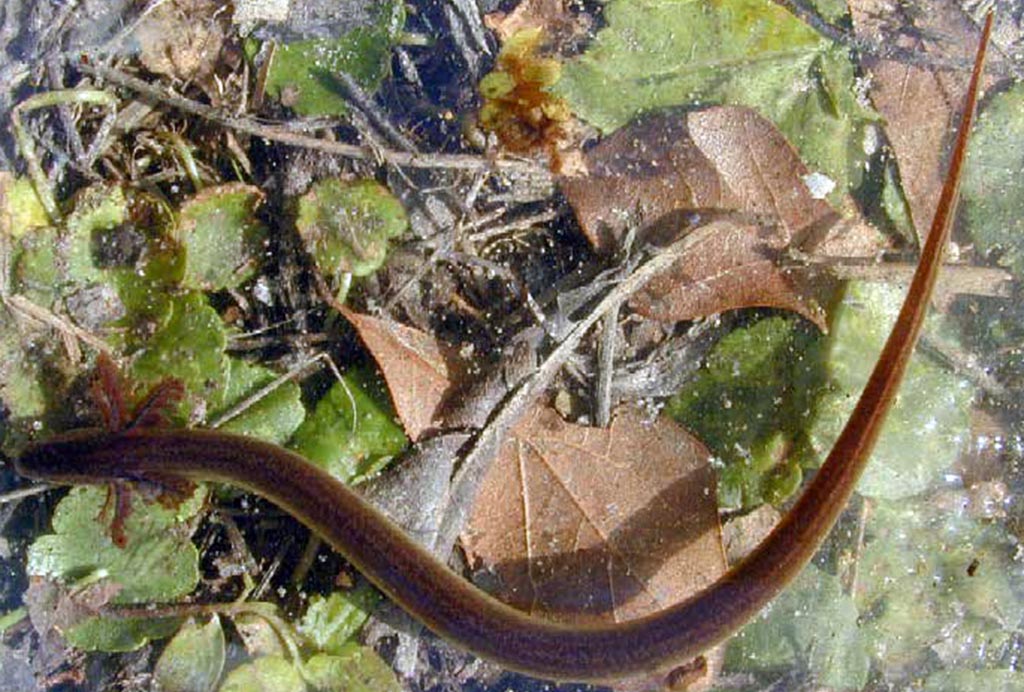
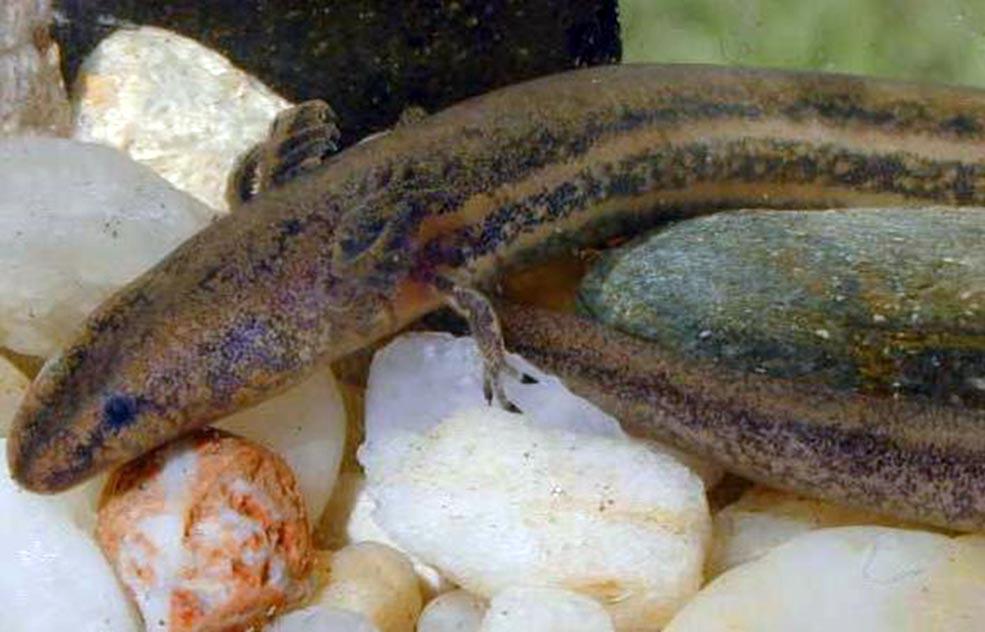
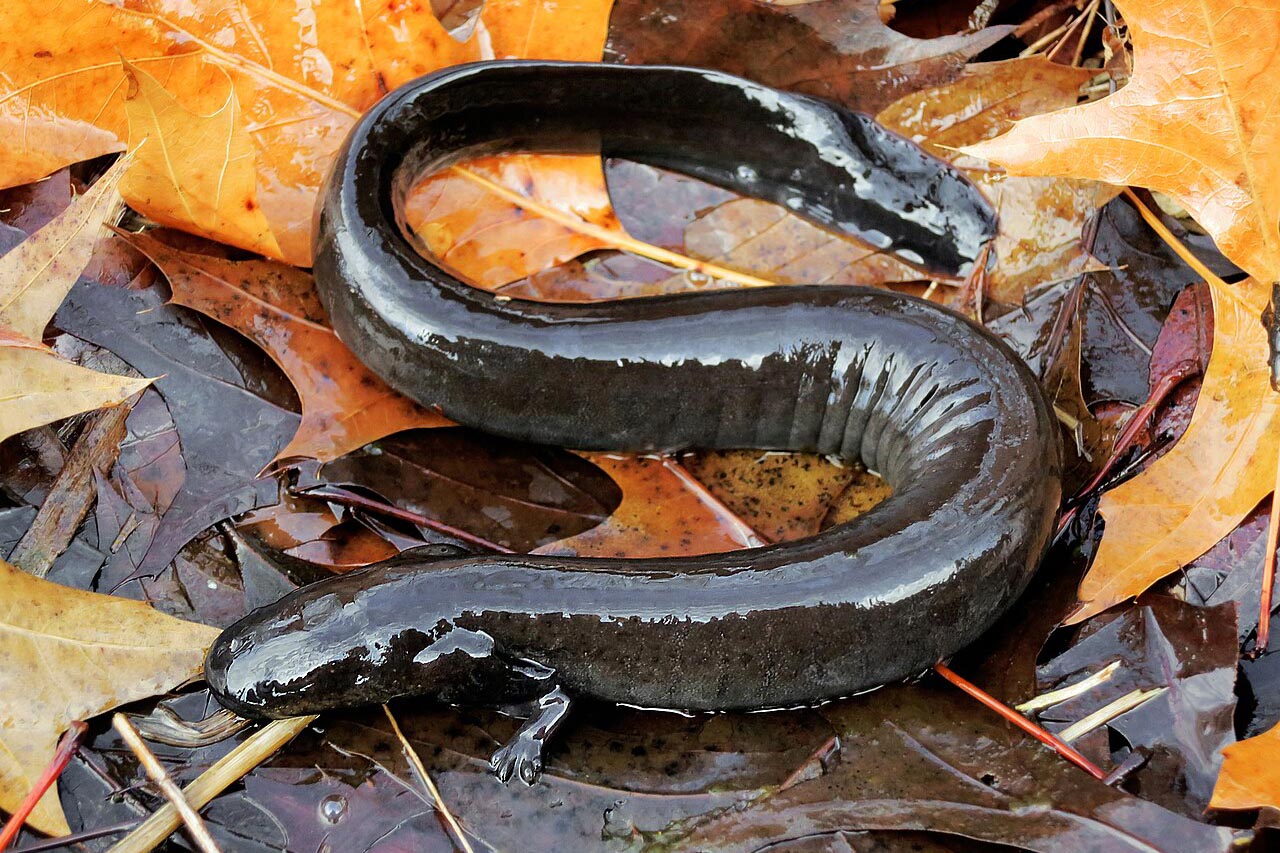
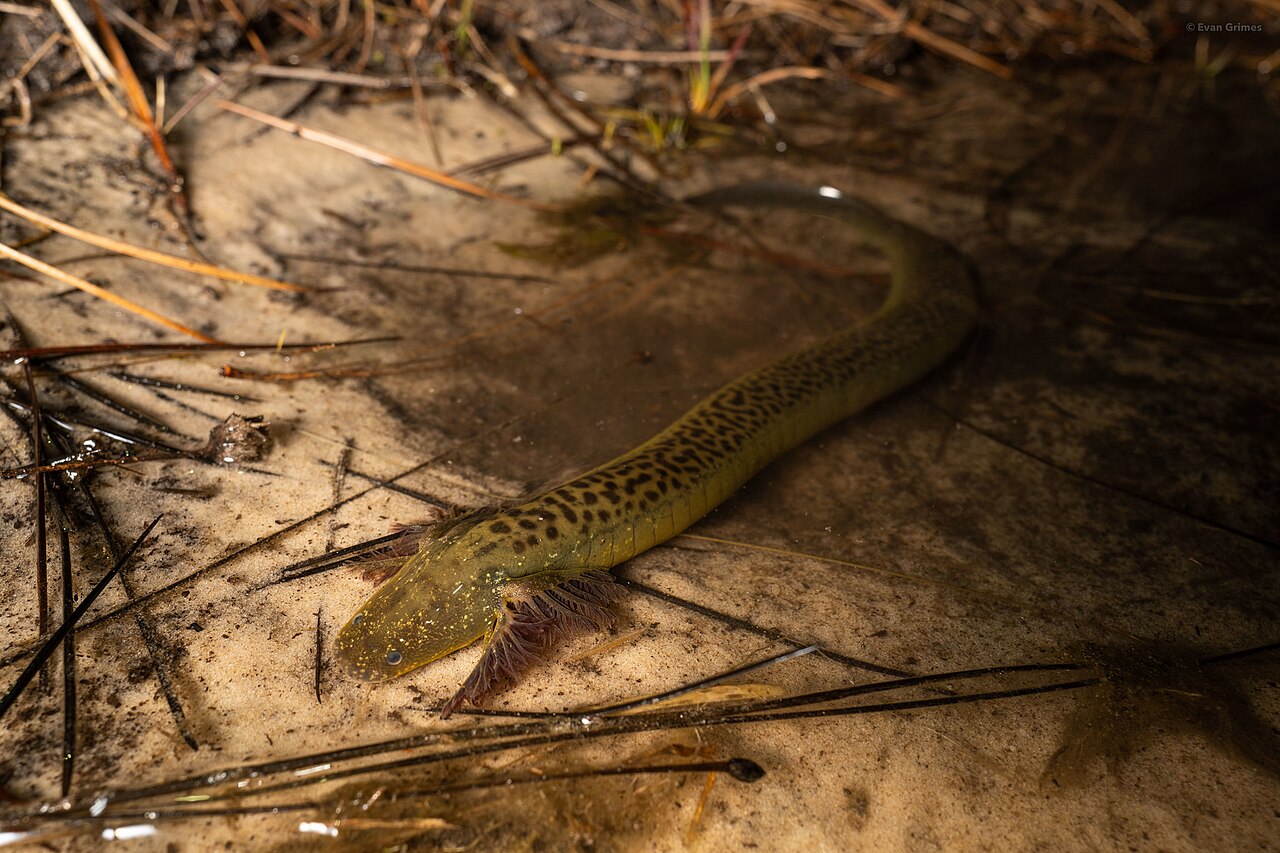
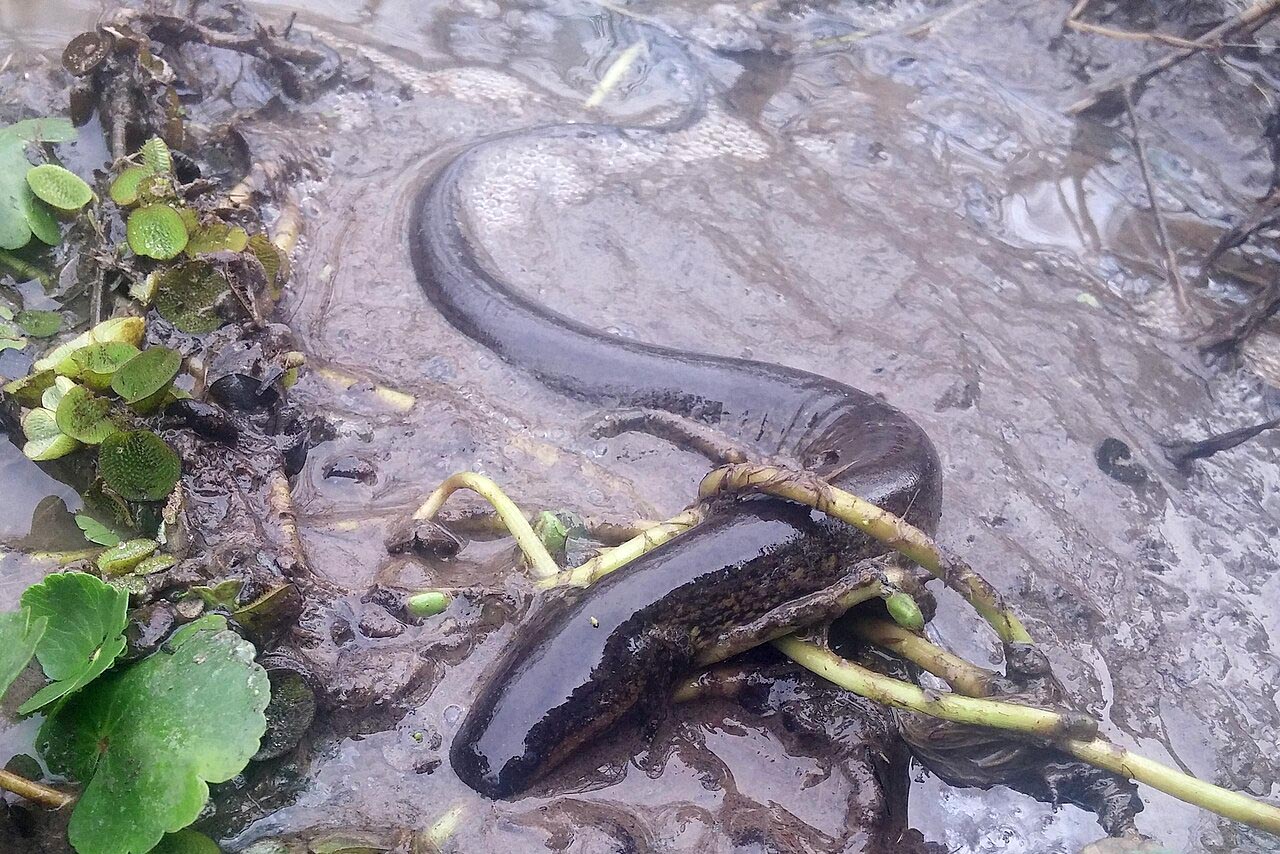
There are only five extant (living) species of eel-like salamanders in this family. They are found in the southeastern United States and in the Mississippi Valley.
The dwarf sirens are about 6 inches in length, and the greater siren can be as long as three feet. The lesser siren is about 11 inches in length.
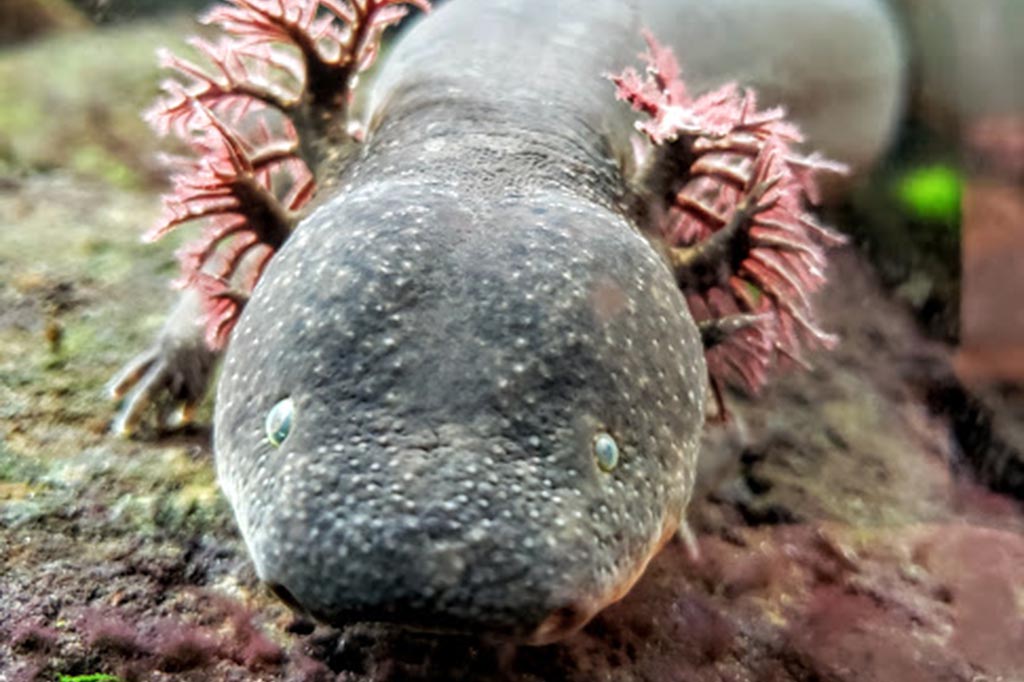
Sirens are neotenic, that means they don’t lose the characteristics they had as larvae when they become adults. They keep their large external gills and gill slits.
Sirens are long and slender and have tiny front legs and no hind legs.
Sirens live in slow-moving shallow water in swamps, lakes, ponds, and ditches. They are nocturnal and spend the day hidden under the mud or in weeds and aquatic vegetation.
They eat invertebrates and plants. Sirens aestivate when there is a drought. They dig into the mud and can live for 1-3 months covered in a cocoon of mucus that keeps them from drying out.
The narrow-striped dwarf siren is found in Florida. IUCN Redlist Status: Least Concern
Northern Dwarf Siren (Pseudobranchus striatus)
The northern dwarf siren is found in Florida, Georgia, and South Carolina. IUCN Redlist Status: Least Concern
Lesser Siren (Siren intermedia)
The lesser siren is found in Texas, Alabama, Arkansas, Florida, Georgia, Illinois, Louisiana, Missouri, Oklahoma, South Carolina, Mississippi, North Carolina, Michigan, Kentucky, Indiana, Tennessee, and Mexico. IUCN Redlist Status: Least Concern
Greater Siren (Siren lacertina)
The greater siren is found i The greater siren is found in Alabama, Florida, Georgia, North Carolina, South Carolina, and Virginia. IUCN Redlist Status: Least Concern
Reticulated Siren (Siren reticulata)
The reticulated siren is found in Florida and Alabama. IUCN Redlist Status: Vulnerable