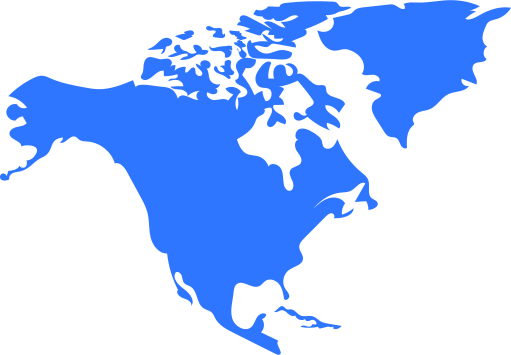
There are three species in this family, two extant (living species): the Hispaniolan solenodon (Solenodon paradoxus) and the Cuban solenodon (Atopogale cubana), and one extinct species: Marcano’s solenodon (Solenodon marcanoi). They are found in Haiti and Cuba.
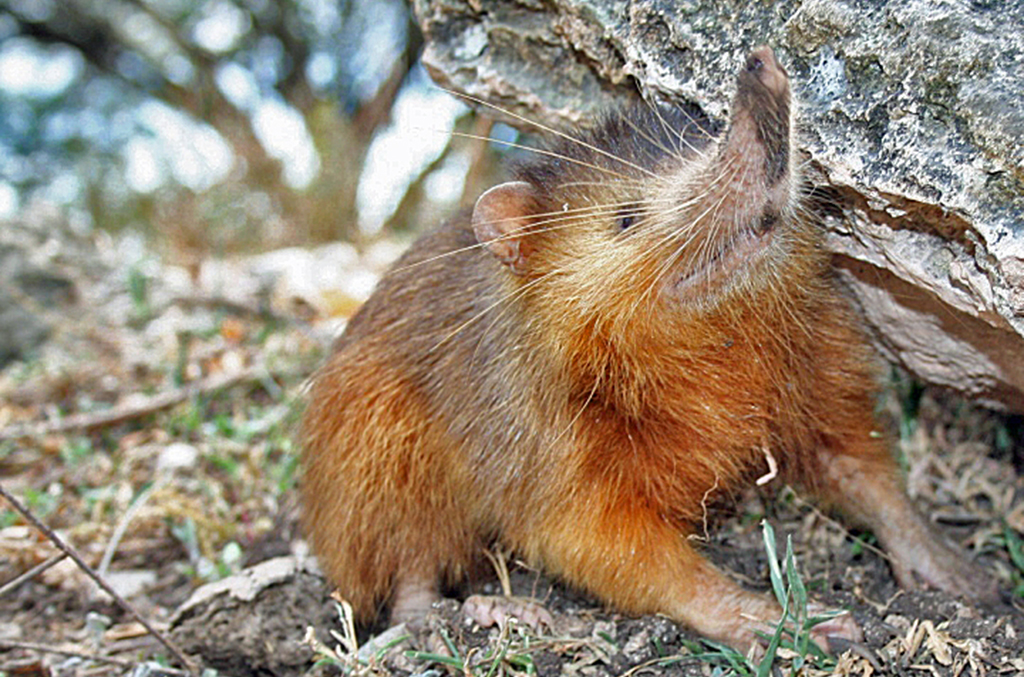
Solendons are about a foot long with stout bodies, a large head, long, pointed snouts with bristles at the base, tiny eyes, thick legs, and large, clawed feet.
They have yellowish-brown fur and a long, hairless tail.
Solenodons live in forests and woody areas and eat insects, worms, small reptiles, and plants.
The solenodon has a poisonous bite. It has venom glands at the base of its lower second incisors. When a solenodon bites its prey, it injects it with venom.