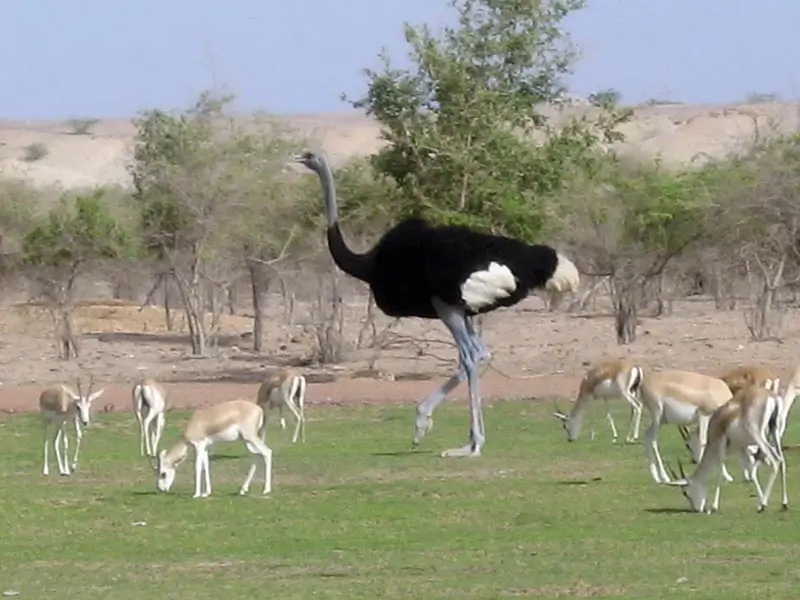
There are two species in this family, the common ostrich and the Somali ostrich. They are found in grasslands in Africa.
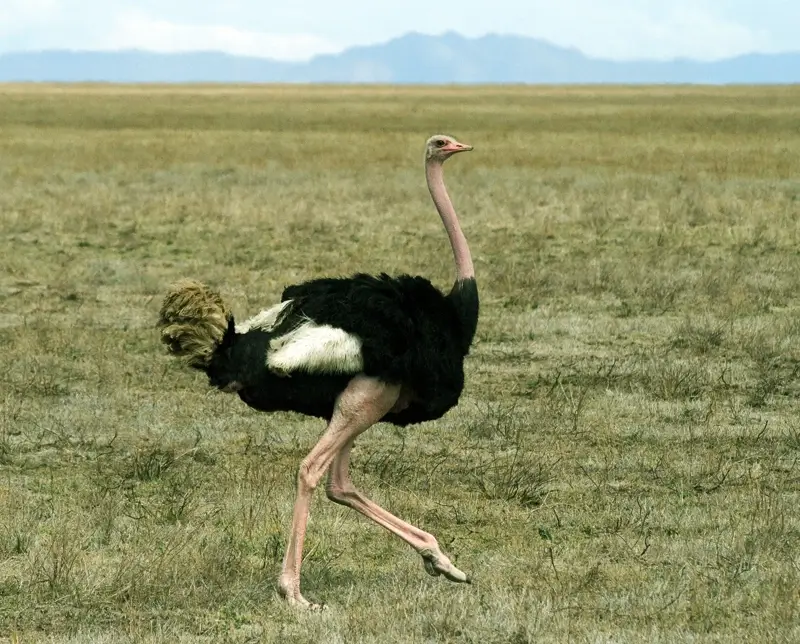
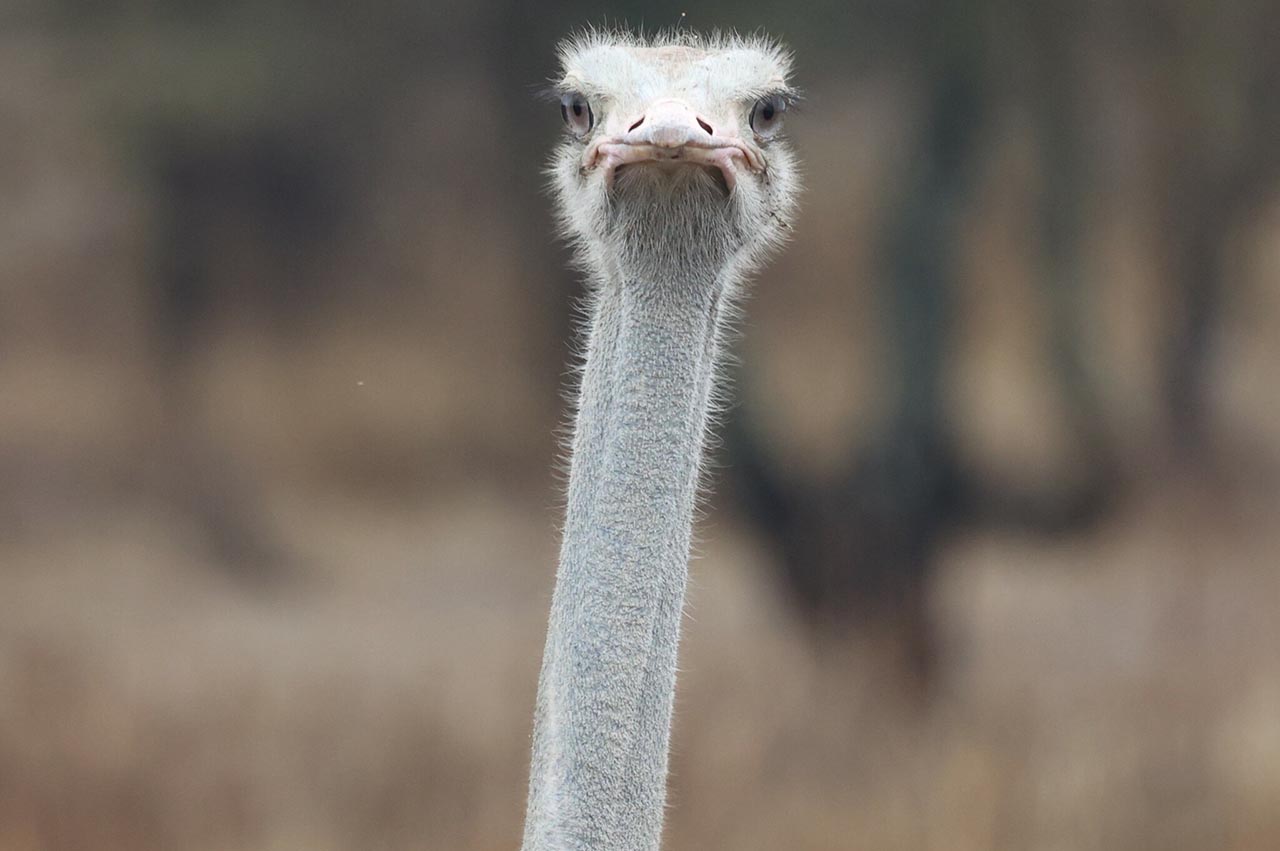
The ostrich is the largest living bird in the world. It is up to 8 feet tall and weighs up to 280 pounds. Ostriches have long necks, small heads, and long, powerful legs with two toes.
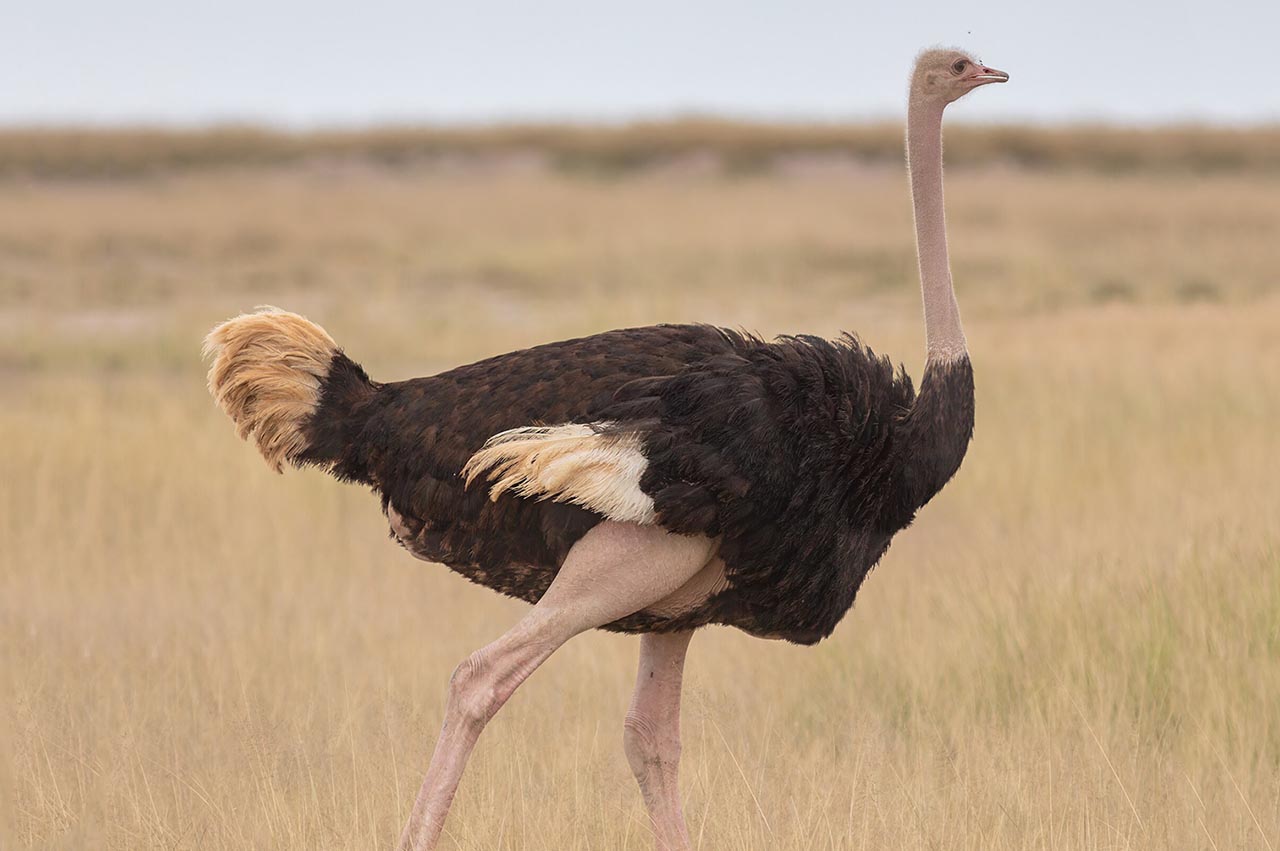
Ostriches can not fly, but they can run at speeds of up to 40 miles per hour. They use their wings to help them keep their balance when they are running.
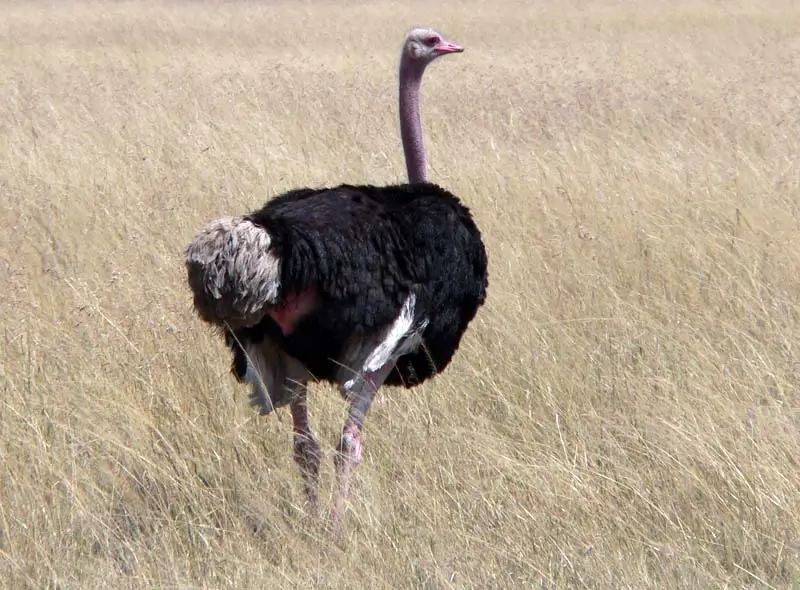
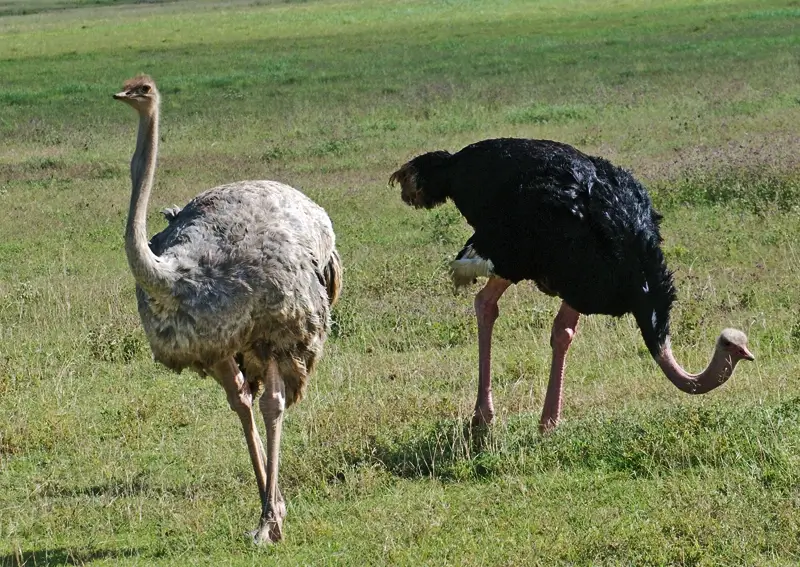
Ostriches use their speed to escape from predators. They also use their powerful legs to kick predators. Males have soft, shaggy black feathers; females have soft, shaggy grayish-brown feathers.
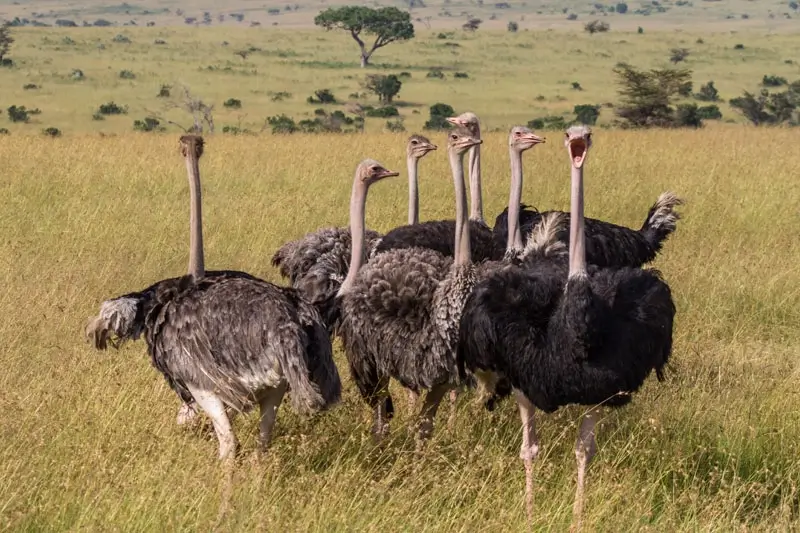
Ostriches live in groups of up to 100 individuals, although most groups have around 10 birds. Males mate with 3-5 females, including one dominant female.
All of the females lay their large eggs in a group nest. The nest is a scrape on the ground. The male incubates the eggs at night, and the dominant female incubates the eggs during the day. A single nest may have as many as 25 eggs.
The eggs hatch in around 25 days. The male and the dominant female care for the chicks and protect them from predators. The chicks leave their parents when they are about a year old.
Ostriches are nomadic and wander from place to place in search of food like leaves, seeds, grasses, roots, insects, and small reptiles and amphibians.
Common Ostrich (Struthio camelus)
The common ostrich is found in Algeria, Angola, Botswana, Burkina Faso, Cameroon, Central African Republic, Chad, Djibouti, Egypt, Eritrea, Ethiopia, Kenya, Mali, Mauritania, Mozambique, Namibia, Niger, Nigeria, Senegal, South Africa, South Sudan, Sudan, Tanzania, Uganda, Zambia, and Zimbabwe. IUCN Redlist Status: Least Concern
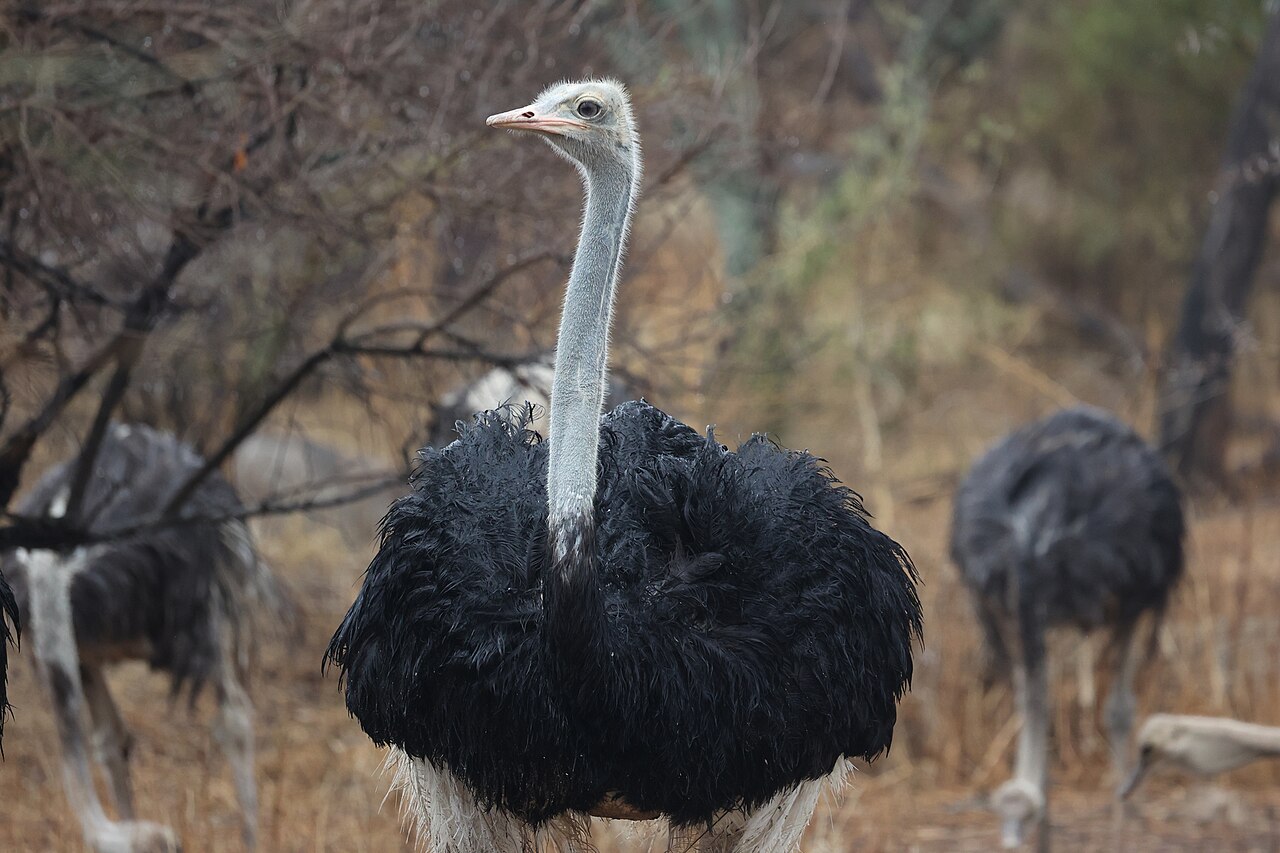
Somali Ostrich (Struthio molybdophanes)
The Somali ostrich is found in Djibouti, Ethiopia, Kenya, and Somalia. IUCN Redlist Status: Vulnerable
Common Ostrich (Struthio camelus)
The ostrich is the world's largest living bird. It is up to 8 feet tall and weighs as much as 280 pounds. IUCN Redlist Status: Least Concern
Common Ostrich (Struthio camelus)
Ostriches live in groups of up to 100 individuals, although most groups have around 10 birds. IUCN Redlist Status: Least Concern
Common Ostrich (Struthio camelus)
Ostriches cannot fly, but they can run at speeds of up to 40 miles per hour. IUCN Redlist Status: Least Concern
Common Ostrich (Struthio camelus)
Male ostriches have soft, shaggy black feathers; females have soft, shaggy grayish-brown feathers. IUCN Redlist Status: Least Concern
Common Ostrich (Struthio camelus)
Ostriches are nomadic and wander for place to place in search of food like leaves, seeds, grasses, roots, insects, and small reptiles and amphibians. IUCN Redlist Status: Least Concern