There are four species in this family. They are found in Australia, Papua New Guinea, and Indonesia.
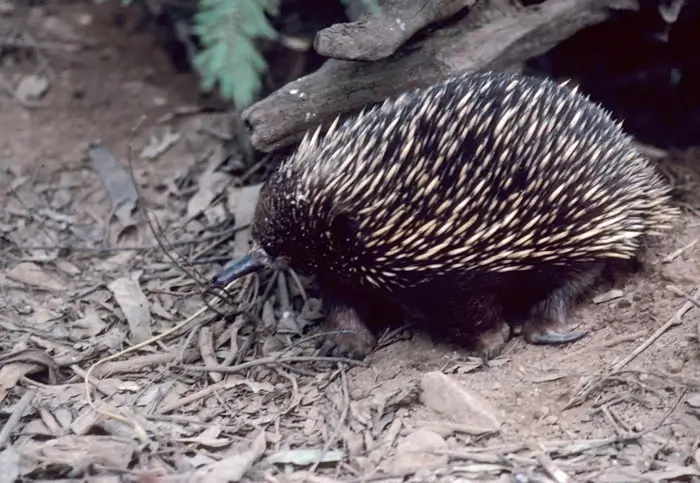
Echidnas (pronounced ih-KID-na) are also called spiny anteaters because of the spines covering their bodies.
They have short legs and sharp claws that they use to dig in the dirt for termites, worms, larvae, and ants. Their long, cylindrical snouts can detect the small electrical currents put out by their prey. They then use their long, sticky tongues to capture the ants and termites. When echidnas are threatened, they curl up into a tight ball.
Female echidnas lay eggs! The female lays a single leathery egg in her pouch. The egg hatches in 7 to 10 days. The young echidna, or puggle, stays in the pouch for 6-8 weeks until it develops spines. The female echidna does not have teats. She secretes milk through her skin.