Teacher’s Guide: Episode 2

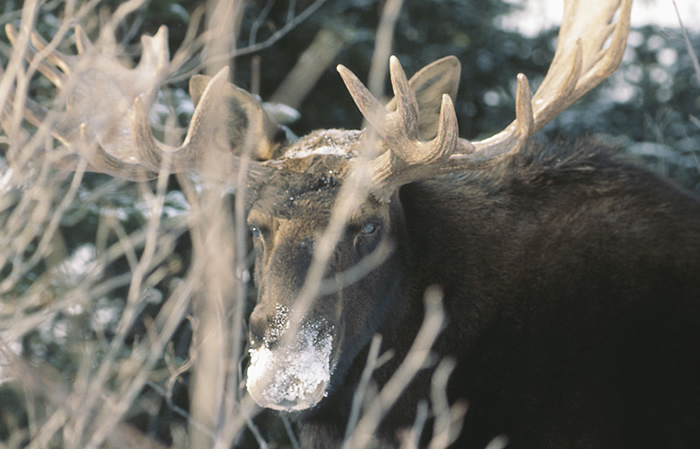
Image Caption: The largest populations of moose in New Hampshire are found in the Great North Woods.

Moose Roundup

Using helicopters and net-guns, moose wranglers capture and radio-collar moose to collect data for a four-year moose study. Note: Some of the techniques used to track and tag moose may be disturbing to younger viewers, please preview the video before using it with students. Length: 7:32 minutes


Students will:

  1. Explain why scientists are using net-guns and helicopters to capture moose.
  2. Explain why tracking and monitoring wildlife is important for keeping wildlife populations healthy.
  3. Describe the types of data scientists gather when they tag an animal.

Ask the students to list the ways scientists learn about wildlife.

  1. Discuss why net-gunning was used to capture moose. Did the technique bother any students? If so, why? This might lead to a broader discussion of wildlife studies and how animals might be temporarily traumatized for a greater good.
  2. Media Literacy: Discuss how music was used in this segment to enhance the drama.

Vocabulary

General Vocabulary

  • Projectile
  • Peripherally
  • Feint of heart
  • Hobble
  • Unscathed

Science Vocabulary

  • Radio collaring
  • Net gunning
  • Muggers
  • Respiration
  • Ttranquilizing
  • Fecal samples
  • Parasites
  • Global positioning system
  • Vocalizing

Support for NatureWorks Redesign is provided by: