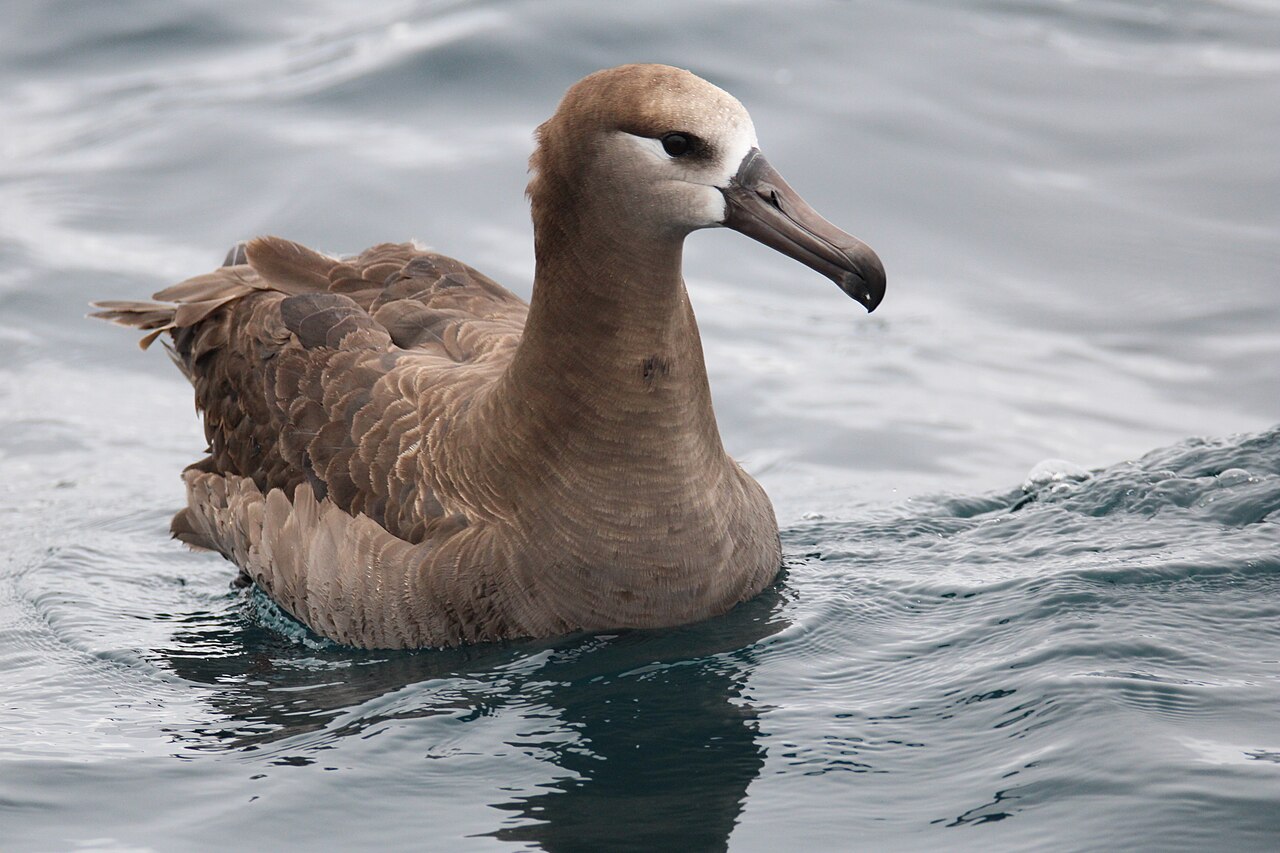
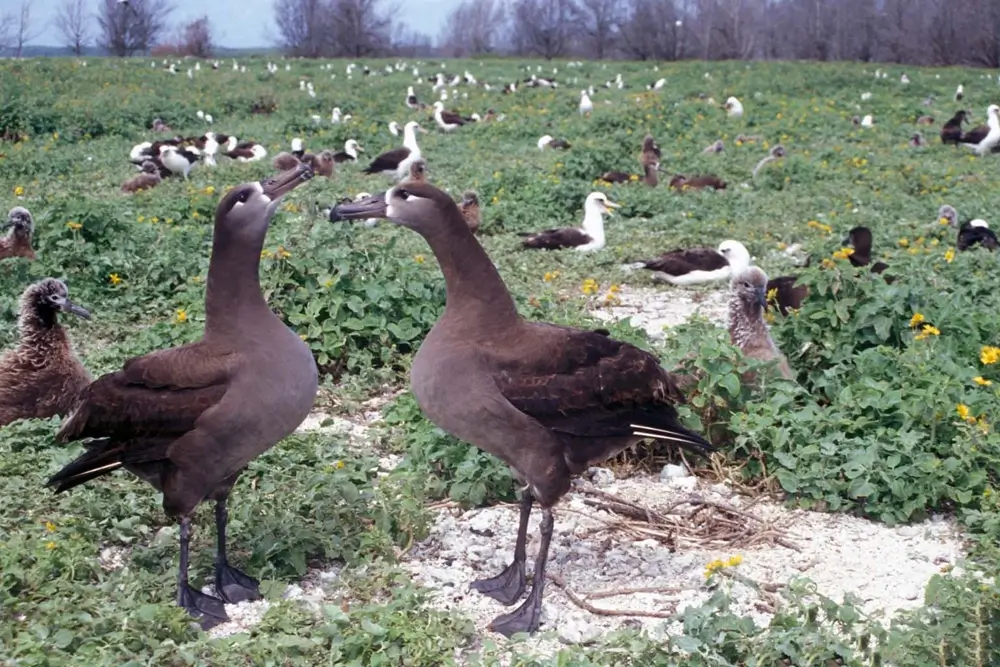
The black-footed albatross is 25.2-29.1 inches (64-73.9 cm) in length with a wingspan of 6-7 feet (1.8-2.1 m).
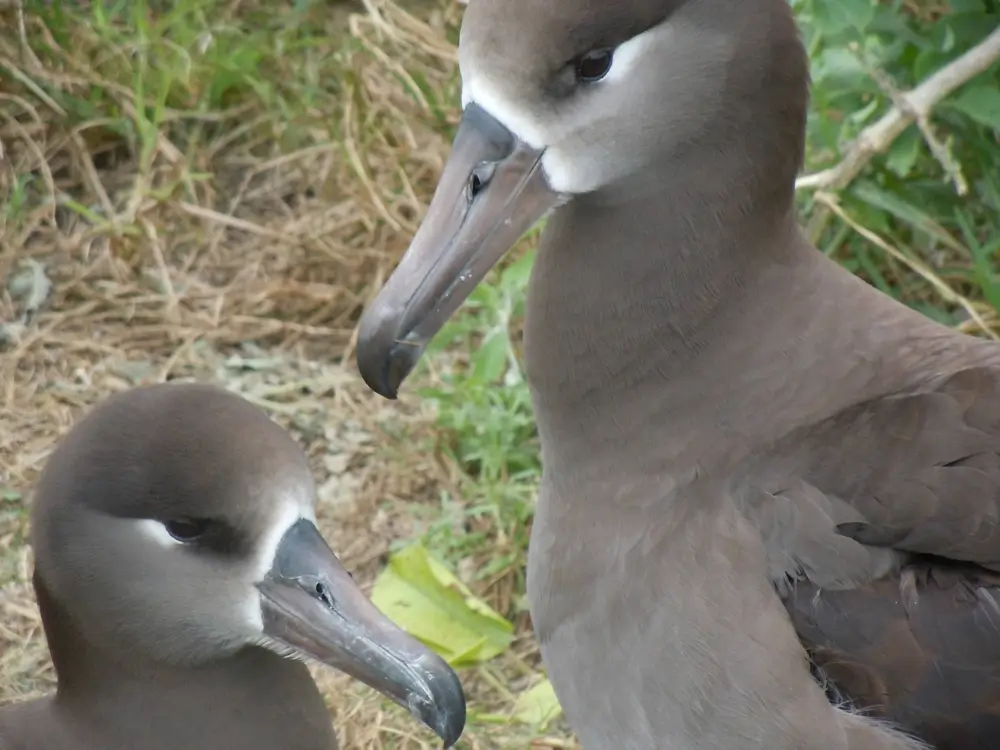
It has brown-to-black feathers with white around its eyes and bill. It has a large brown bill with a curved tip and black feet.
Males are larger than females.
Habitat
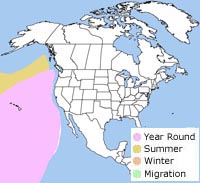
The black-footed albatross is found on open ocean waters and ocean islands.
Diet
In the summer, the black-footed albatross often follows fishing boats to feed on the waste. Its diet is mostly fish, fish eggs, and squid.
It scoops up its food from the surface of the ocean and catches most of its food at night.
Life Cycle
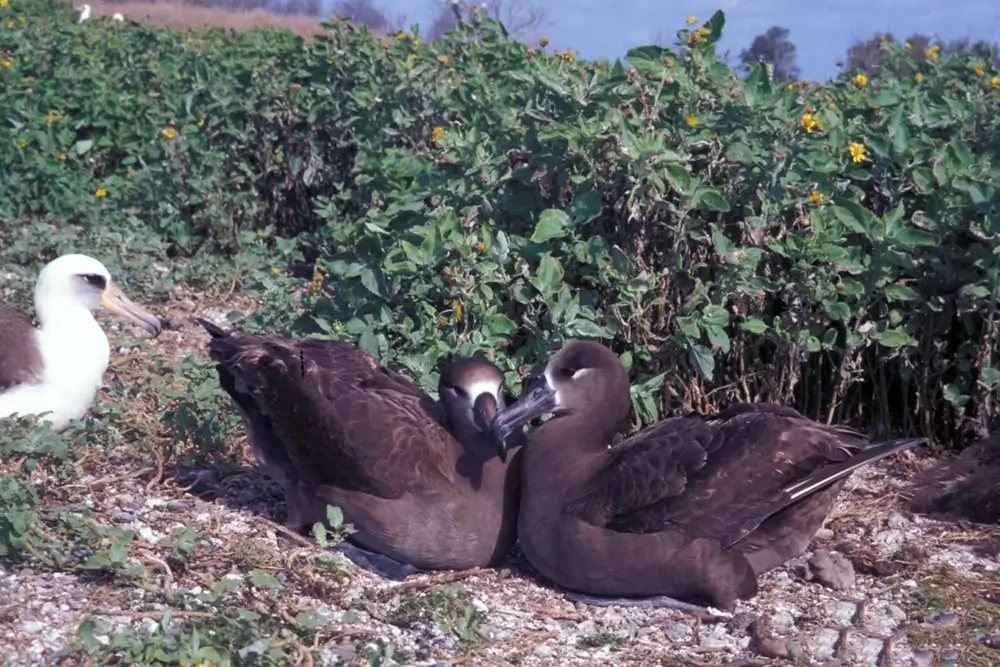
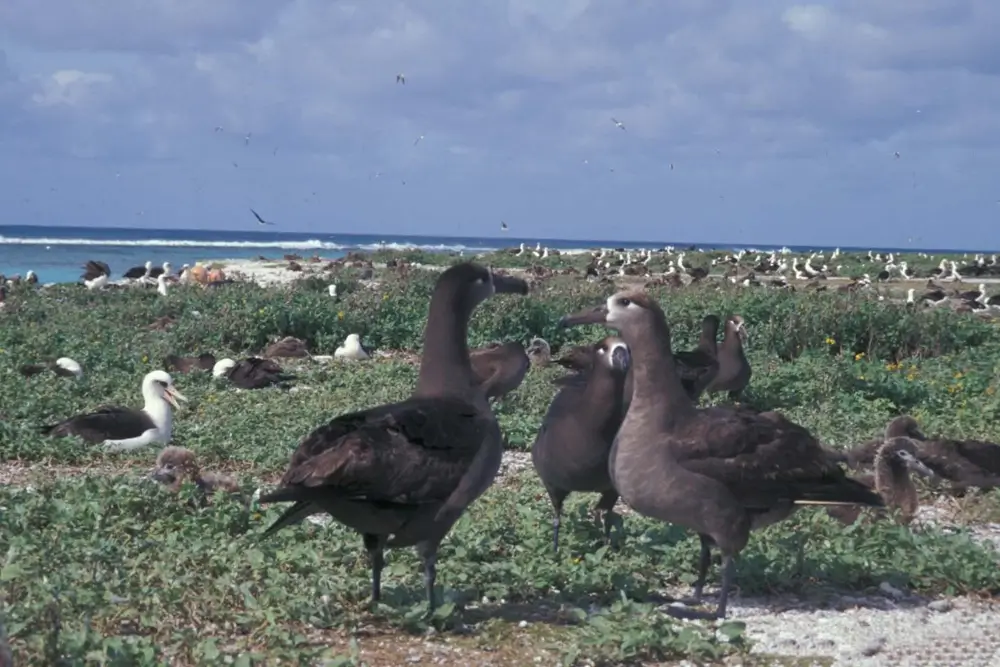
The black-footed albatross nests in colonies on islands. Mating season runs from November to February. Females and males do a mating ritual that involves twining their necks together and flapping their wings.
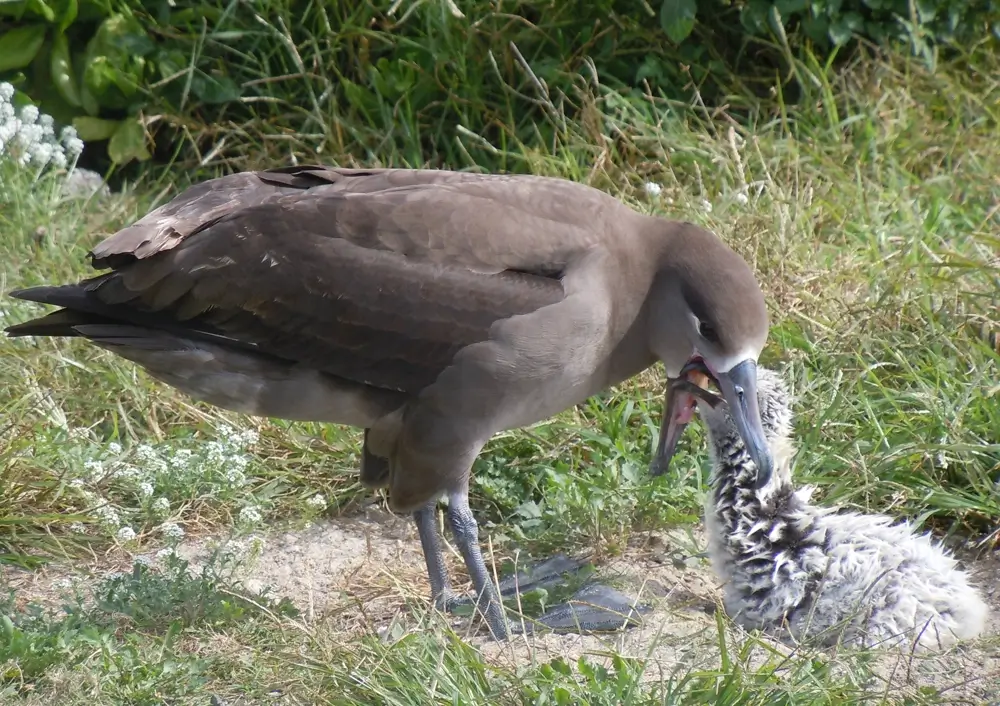
Females lay one egg in a shallow depression in the ground. Both the male and the female incubate the egg and feed the chick regurgitated (swallowed and brought back up) food.
Once a chick leaves the nest, it won’t return to the breeding island for five or six years, when it is fully mature.
The black-footed albatross mates for life. It has a lifespan of up to 40 years in the wild.
Behavior
The black-footed albatross chases other predators away from its food by spreading its wings and screaming at them.