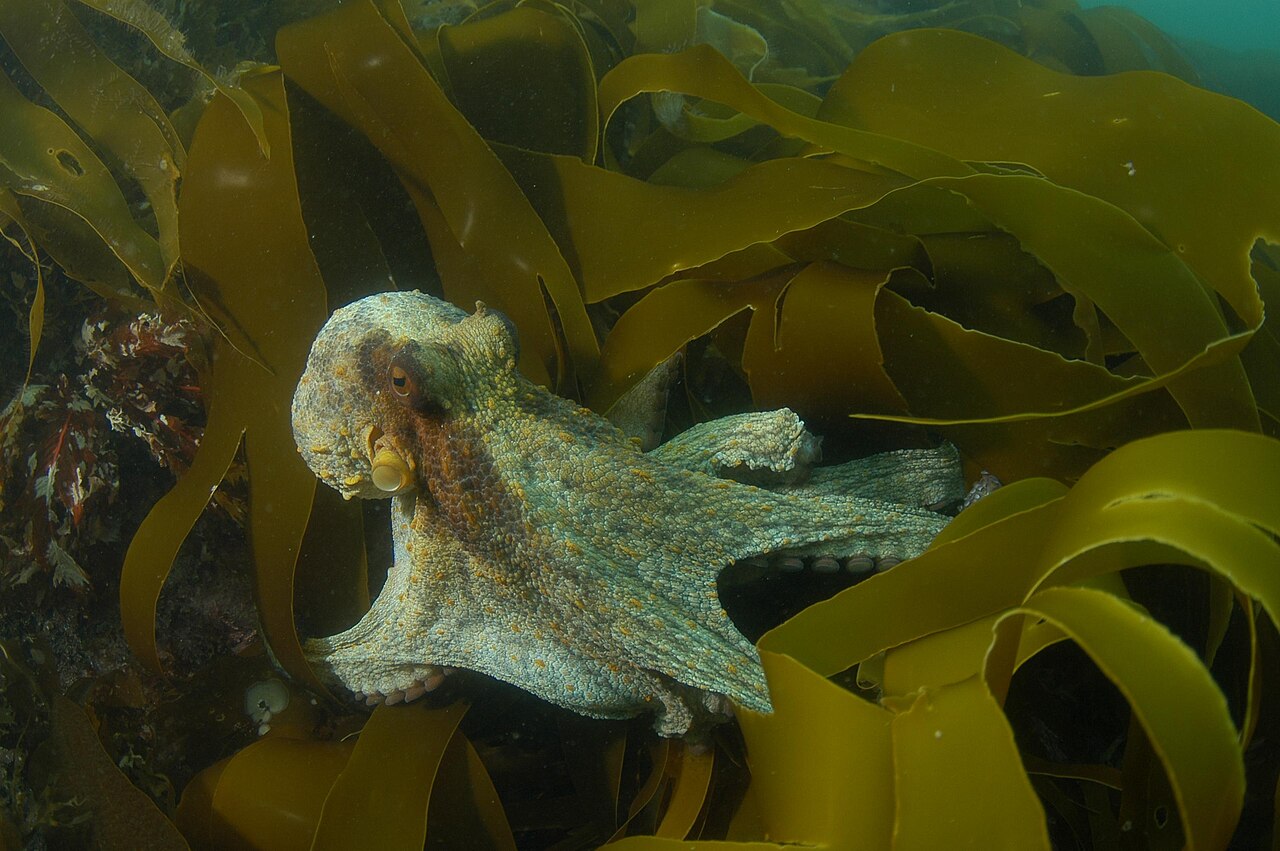
Scientists have identified about 800–900 living species of cephalopods, grouped into roughly 40–50 families, depending on how they are classified.
Cephalopods live only in saltwater environments. They are found in oceans all over the world, from warm tropical seas to cold polar waters. Some species live in shallow coastal habitats such as coral reefs and tide pools, while others inhabit the open ocean, sometimes far from land.
Some species live in the deep sea, where sunlight cannot reach.
Many cephalopods can change both color and skin texture to blend into their surroundings or communicate with one another. Most move using jet propulsion, squirting water out of their bodies to achieve quick bursts of speed.
Cephalopods—especially octopuses—are known for their intelligence. They can solve problems, open containers, and learn from experience.
All cephalopods are predators. They use their arms and tentacles to capture prey such as fish, crabs, and shrimp. Many species can also release a cloud of ink to confuse predators and escape.
The name Cephalopoda means “head-foot,” because their arms or tentacles are attached directly to their head.