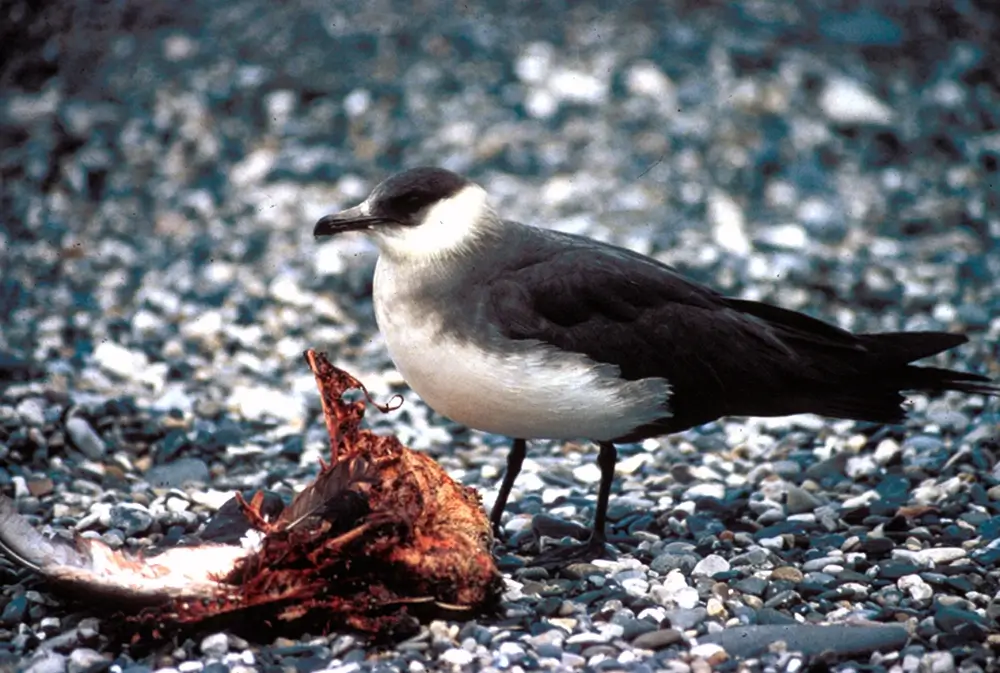
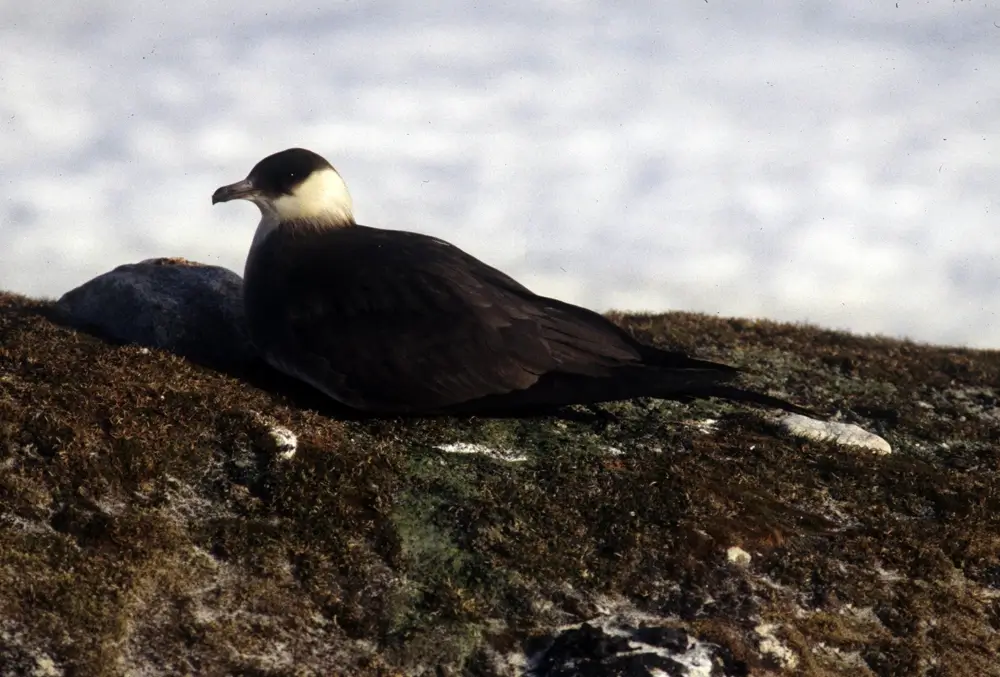
The parasitic jaeger is 14.6-20.9 inches (37-53 cm) in length with a wingspan of 42.5-46.5 inches (108-118 cm).
It has a hooked bill, webbed feet, a white patch on the underside of its wings, and pointed central tail feathers that stick out beyond its other tail feathers. During the non-breeding season, it loses its central tail feathers. Males and females look alike.
The parasitic jaeger has two different color patterns or morphs. Morphs are variations in a bird species’ plumage. In its light morph, it is brown on its uppersides, dark brown on the cap of its head, light yellow-brown on its neck and throat, and white on its belly. It may also have a full or partial gray-brown band across its breast. In its dark morph, it is brown on its head and undersides.
Habitat
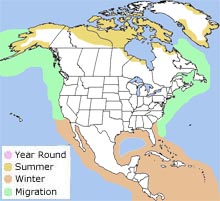
The parasitic jaeger breeds on the tundra and coastal marshes in the Arctic. In the winter, it is usually found on the open ocean close to the shoreline.
Diet
The parasitic jaeger is a very fast and agile flyer. It uses its flying skills to get food. The parasitic jaeger waits for a gull or a tern to catch a fish. It then quickly swoops in and chases the other bird until it drops its catch. The parasitic jaeger then swoops down and snatches up the dropped prey. This is called kleptoparasitism, and it is where the parasitic jaeger gets its name. Klepto comes from the Greek word kléptēs, which means“thief.”
It also forages on the ground for food and will eat insects, berries, small mammals, bird eggs, and young birds.
Life Cycle
The parasitic jaeger nests in colonies. The male chooses a nesting site, and the female builds the nest. The nest is a shallow depression in the ground or in rocks. The nest is usually lined with grass, moss, or lichen.
The female lays two eggs, and both parents share incubation duties for 26–28 days. After hatching, the chicks leave the nest within a few days, but they continue to be fed and cared for by their parents until they fledge (develop their flight feathers) at 25–30 days old.
Parasitic jaegers usually live about 12 years, but some can reach 20. The oldest one ever recorded lived 31 years.
Behavior
The parasitic jaeger aggressively protects its nesting territory and flies at and pecks the head of intruders.
Did You Know?
The parasitic jaeger is also sometimes known as the arctic skua or the arctic jaeger.
Support for NatureWorks is provided by:
The Parasitic Jaeger in NH
The parasitic jaeger may be spotted in New Hampshire during its fall and spring migration.