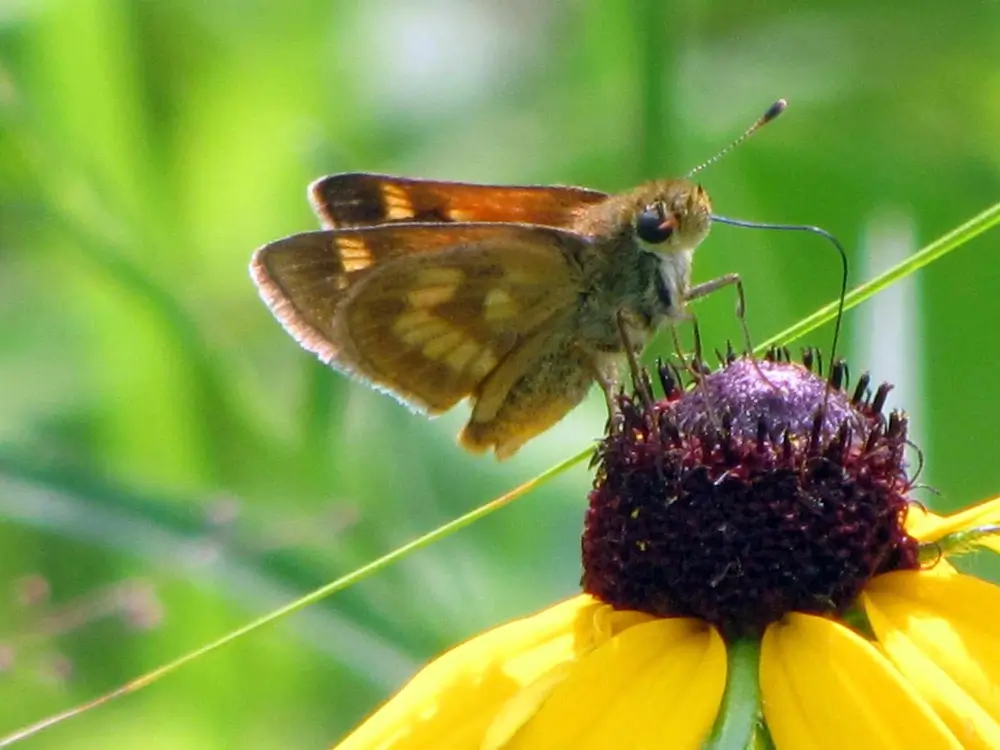
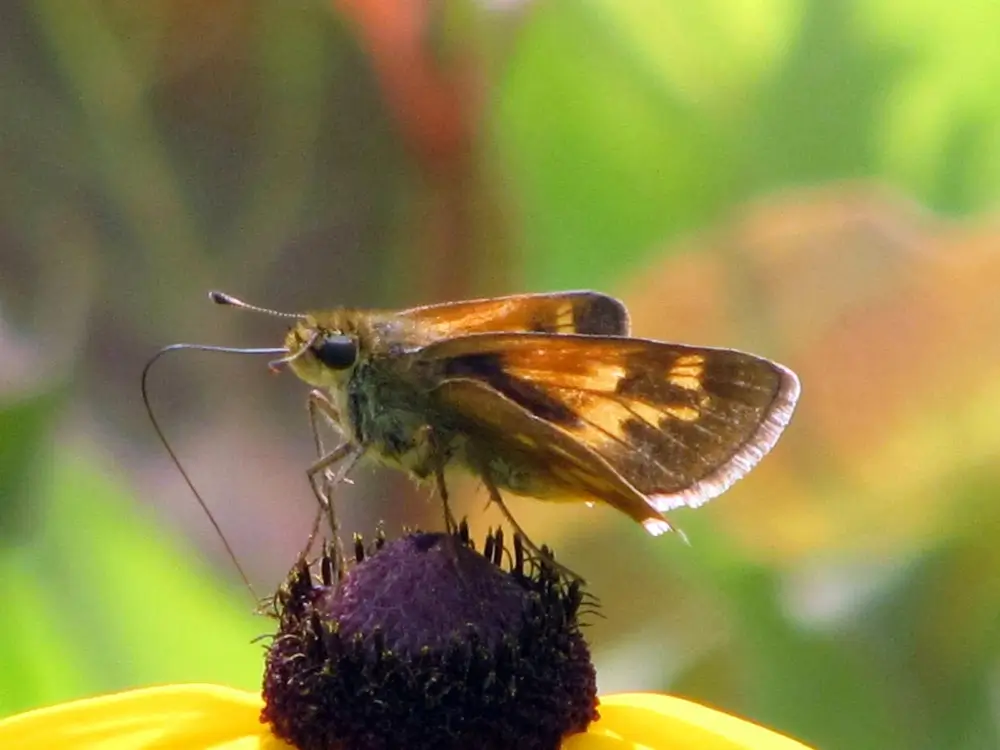
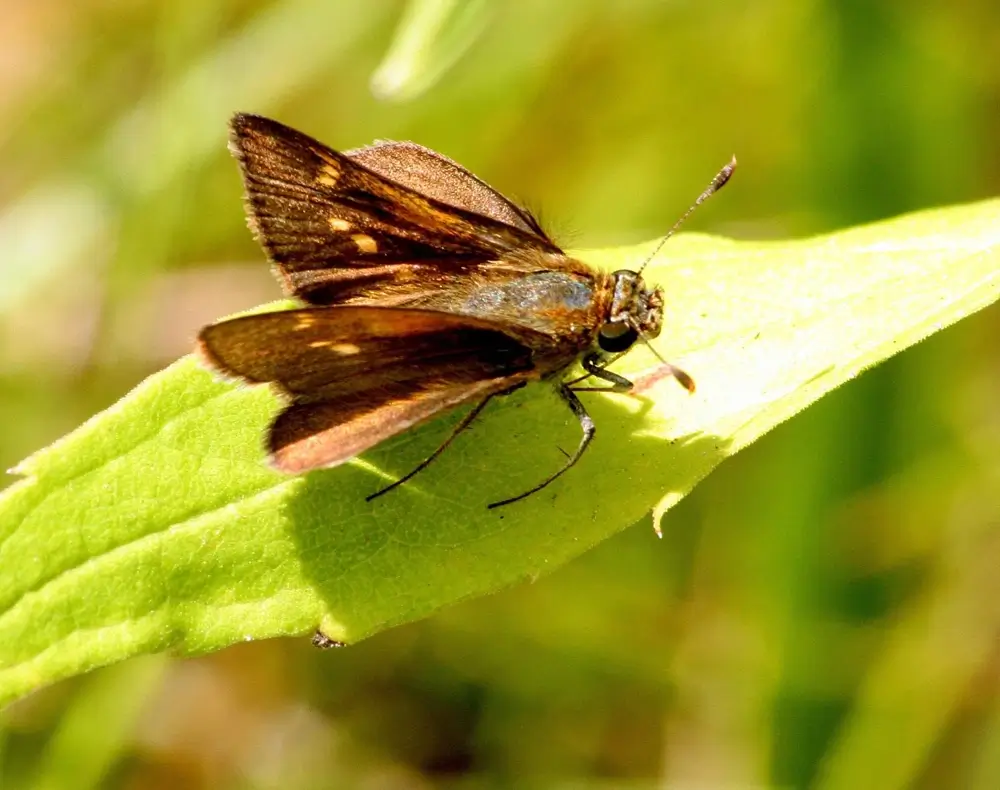
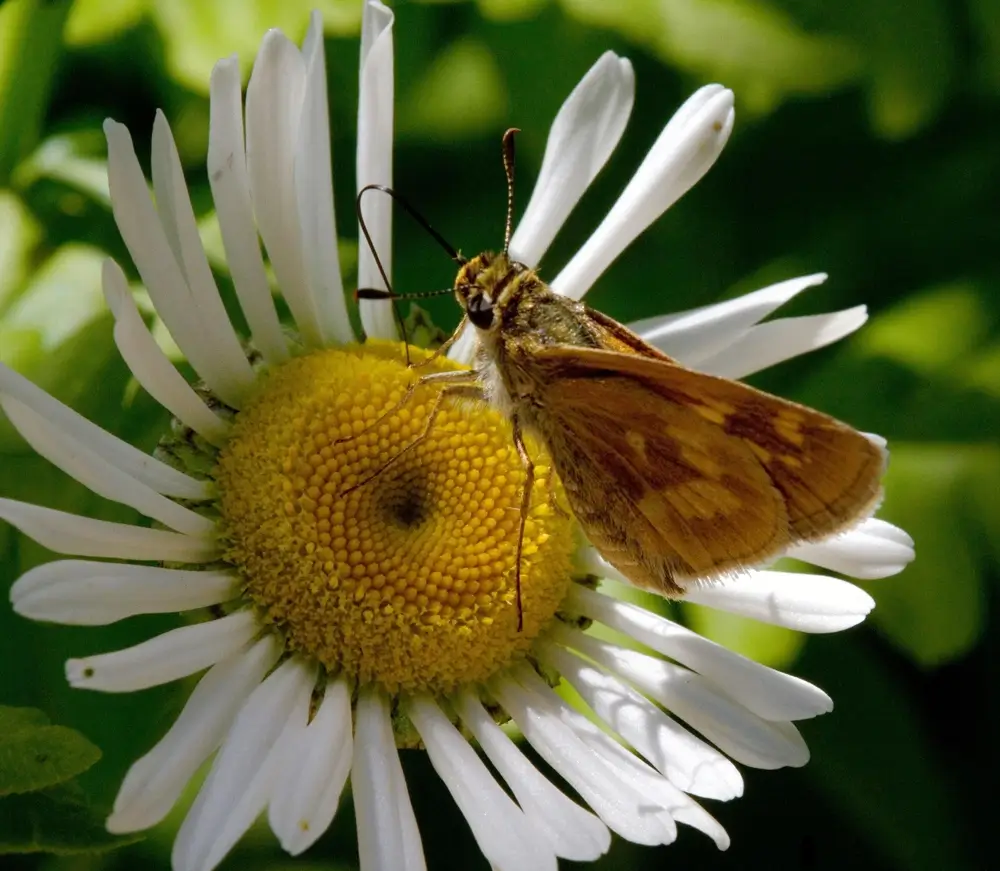
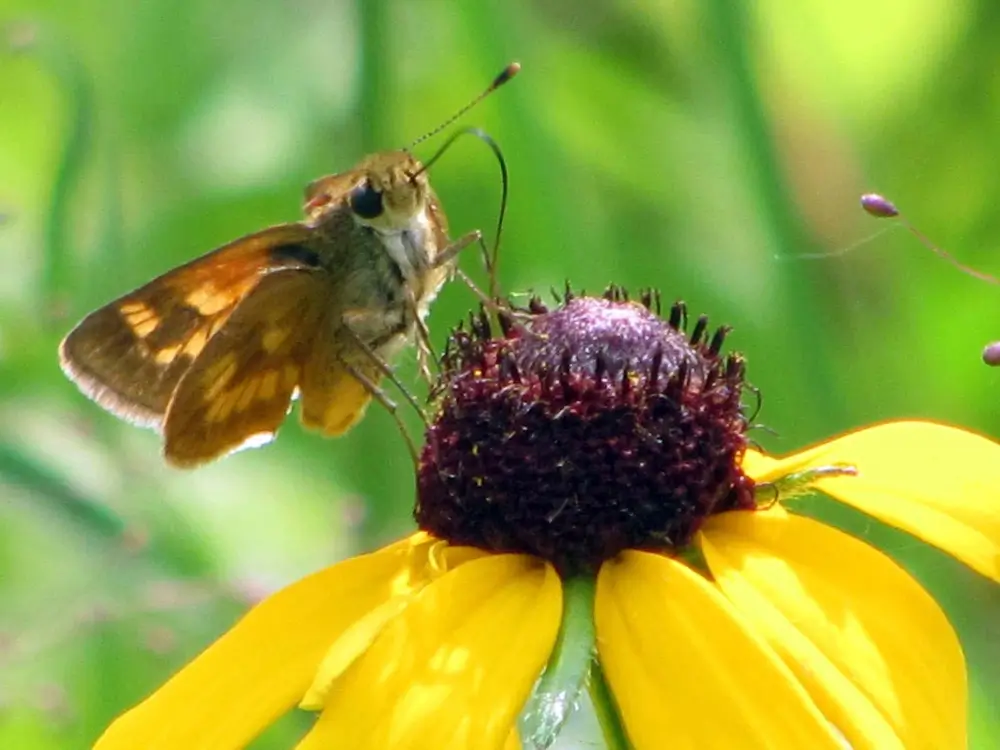
The long dash has a wingspan of 1-1.5 (2.5-3.2 cm) inches.
The male long dash’s upperside is a bright orange-brown with a brown border around its forewings and hindwings. He has a diagonal brown dash across his forewings. The female’s upperside is brown with dull orange or gold shading at the edge of the forewings.
Both the male and female have a rusty-yellow underside with a band of yellow spots along the edge of their hindwings.
Habitat
The long dash is found in open, wet areas like meadows, marshes, streamsides, and wood edges.
Diet
The long dash caterpillar eats bluegrass and sedges*.
The adult eats nectar from the flowers of milkweed, mountain laurel, and tick trefoil.
*Sedges are plants that look like grass and usually grow in clumps in wet areas. Unlike most plants, which have round stems, sedges have stems shaped like triangles. They also have silica in their leaves. Silica is the same material used to make glass, so sedge leaves can be very sharp! A handy way to remember the difference between sedges and grasses is: “Sedges have edges.”
Life Cycle
Mating occurs from May to August. The male long dash perches in low grassy areas or stream beds and waits for a female.
The female lays one egg at a time on the leaves of a host plant. The caterpillar is brown with short black hair.
Behavior
Males spend the day perched in low areas of meadows and along grassy streams, waiting for females to pass by.
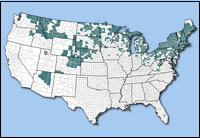
The long dash is found from southern British Columbia east to Nova Scotia in Canada and throughout the northern United States as well as in Colorado and New Mexico.