

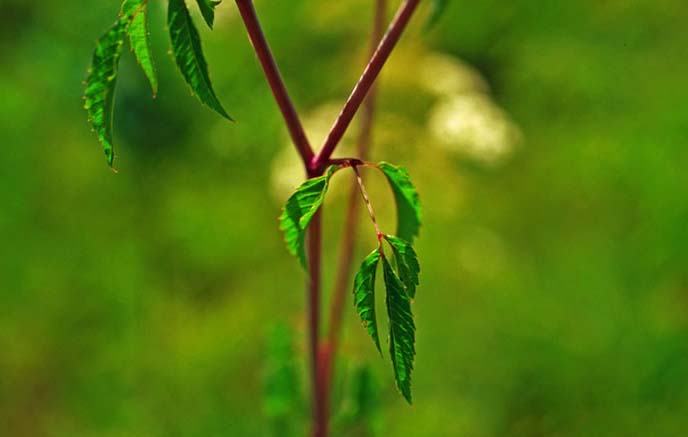
Poison hemlock is found on roadsides, at the edges of fields, along stream banks, along hiking trails, and in ditches.
Poison hemlock is an exotic species in North America. It is native to Europe and Asia. It was introduced to North America in the 1800s as an ornamental plant. It is found throughout the United States except in desert regions and in Alaska and Hawaii.
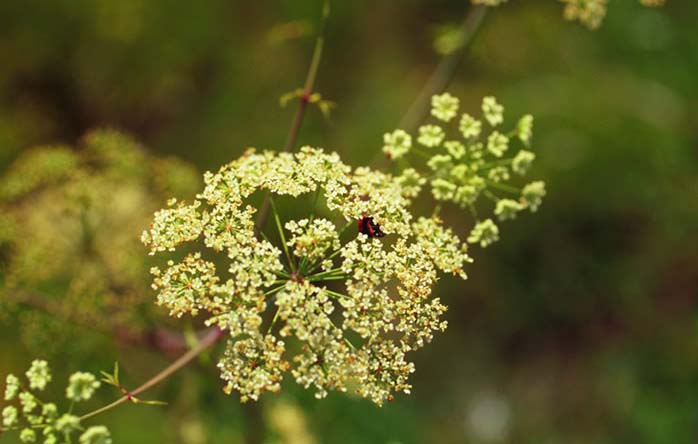
John D. Byrd, Mississippi State University, Bugwood.org
Poison hemlock is sometimes mistaken for fennel, parsley, Queen Anne’s lace, or wild carrot. The whole plant is poisonous and can kill animals and even humans if enough is eaten. Poison hemlock contains the neurotixin coniine which can cause the central nervous system to shut down. Poison hemlock was used to execute political prisoners in ancient Greece. The Greek philosopher Socrates is said to have committed suicide by drinking a potion made with poison hemlock.
