

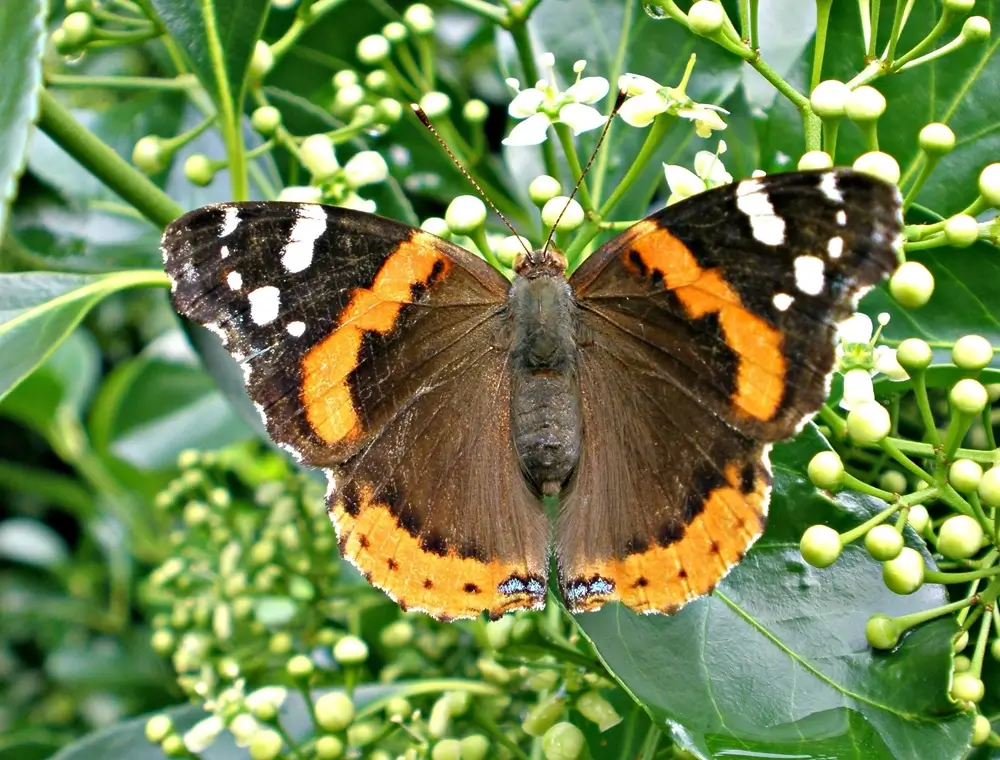
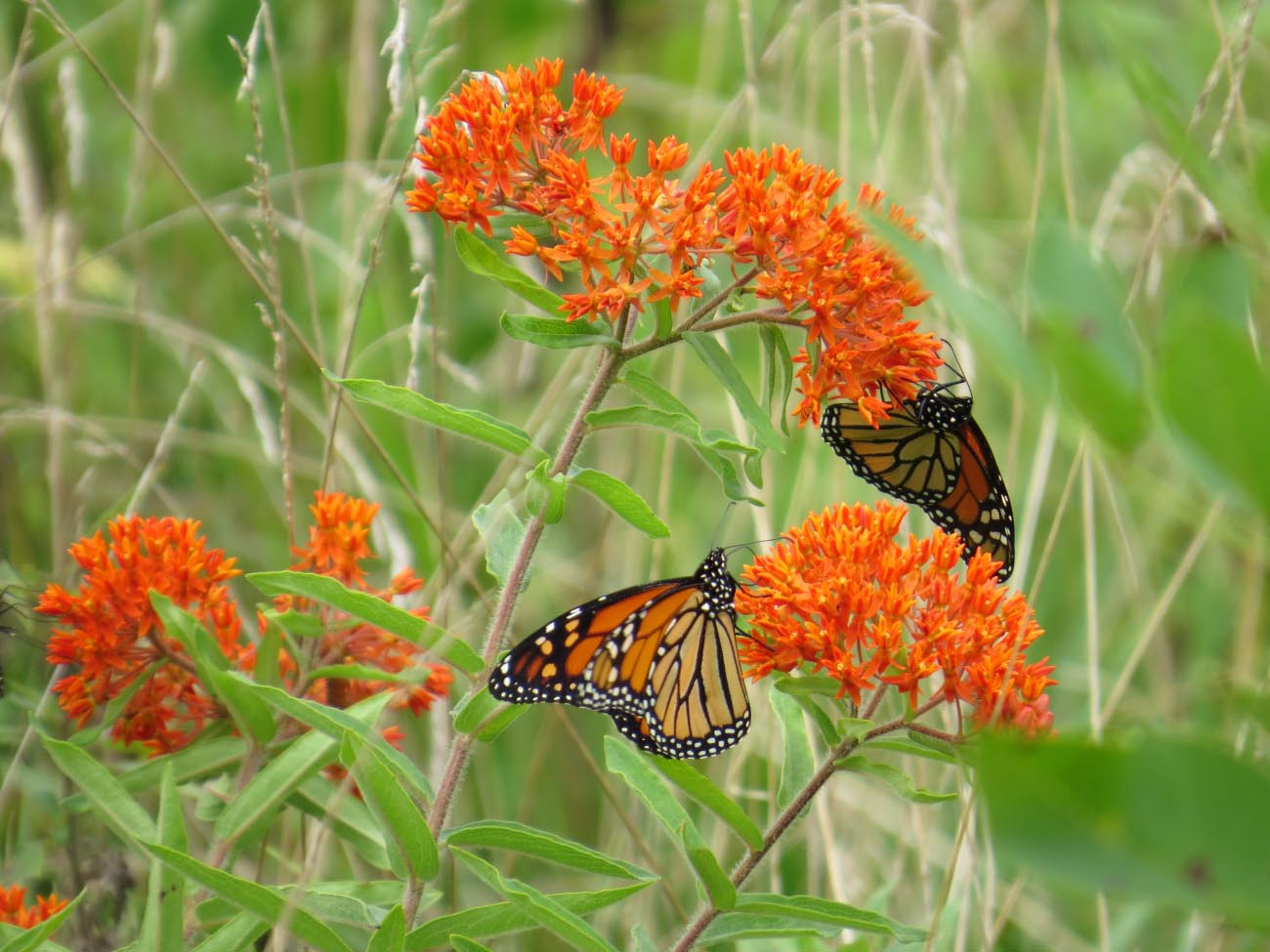
Monarchs feeding on butterfly weed.
Dill, parsley, fennel, and foxglove are all plants that attract caterpillars. These plants are important because they serve as host plants, which means butterflies lay their eggs on them. When the eggs hatch, the caterpillars eat the leaves to grow and develop.
Coneflower, bee balm, butterfly weed, red valerian, heliotrope, nasturtium, and butterfly bush are plants that provide nectar for adult butterflies. Nectar is a sweet liquid found in flowers that butterflies drink for energy.
To support butterflies throughout their life cycle, it’s important to have both types of plants in a garden: host plants for caterpillars and nectar plants for adult butterflies. This helps butterflies grow, survive, and reproduce.
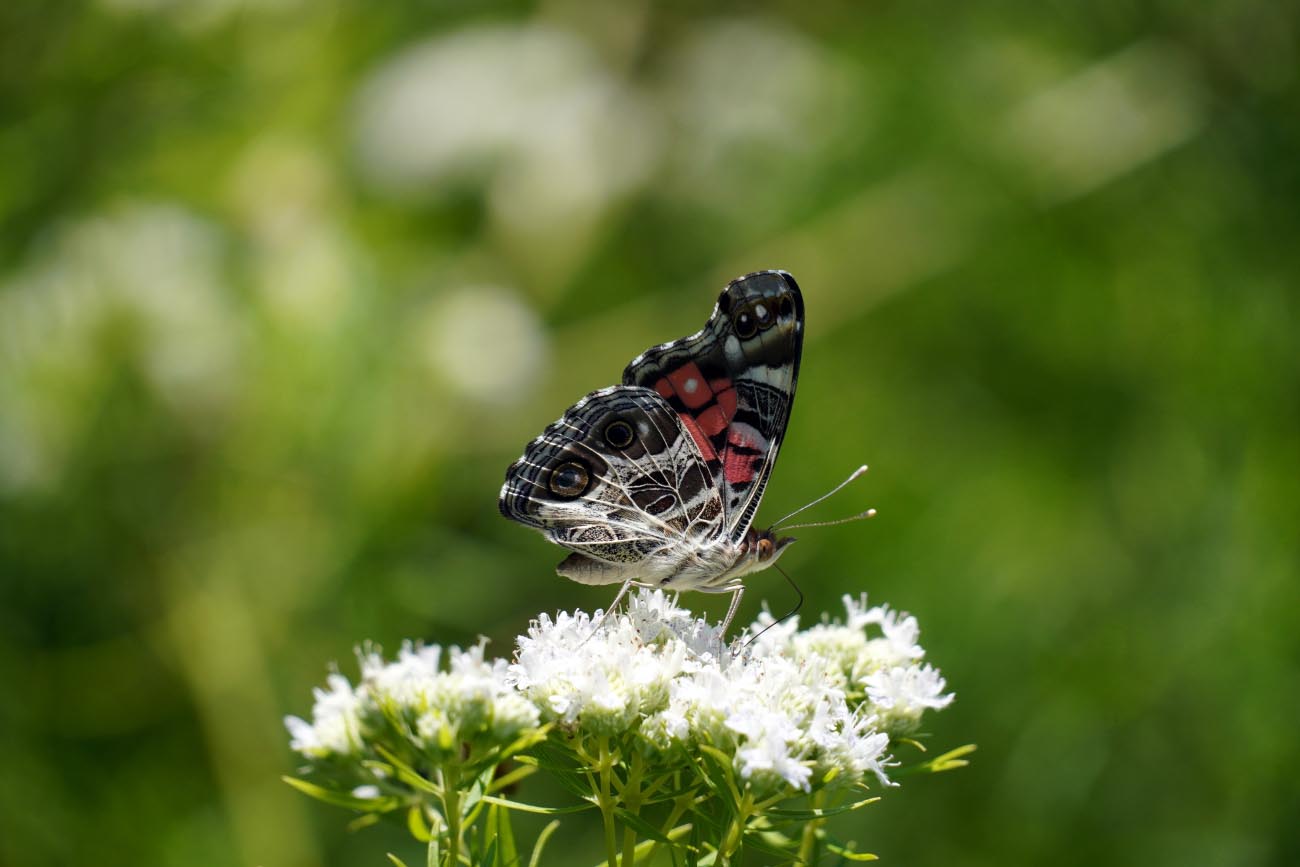
An American lady sips nectar from narrowleaf mountain mint in a butterfly garden.
When planting a butterfly garden, don’t mix different plants; instead, plant them in groups. You will attract more butterflies that way. Select plants that bloom at different times during the growing season, so you always have plants to attract butterflies.
You also want to provide your butterflies with water and places to sun themselves. Bury bowls in the garden, fill them with water, and place some sticks and stones in the water so the butterflies have a place to perch. You can also place some flat stones around your garden so the butterflies have a place to perch and sun themselves.
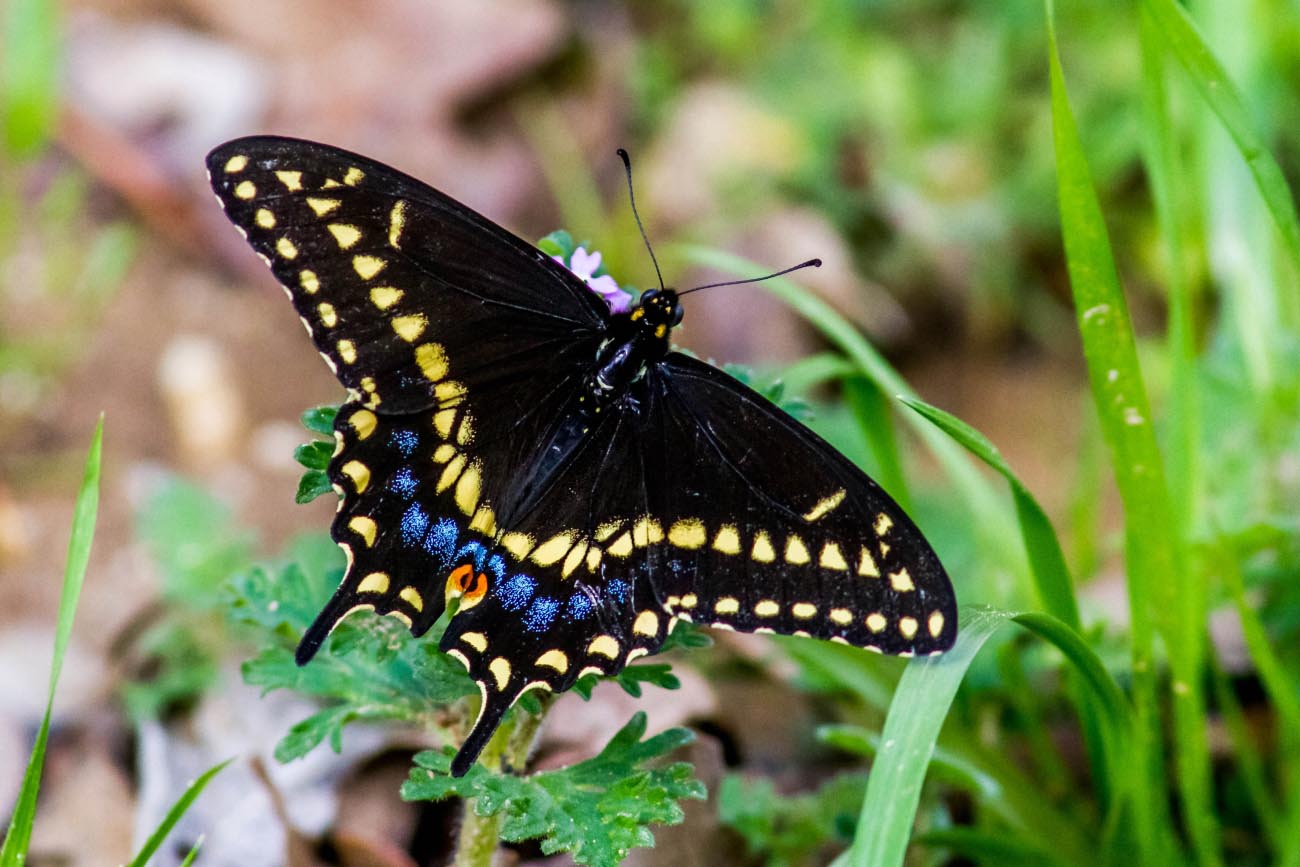
The black swallowtail butterfly eats red clover, milkweed, and thistles.
Different species of butterflies are attracted to different plants. Here is a list of some butterflies found in New Hampshire and the plants they like.
