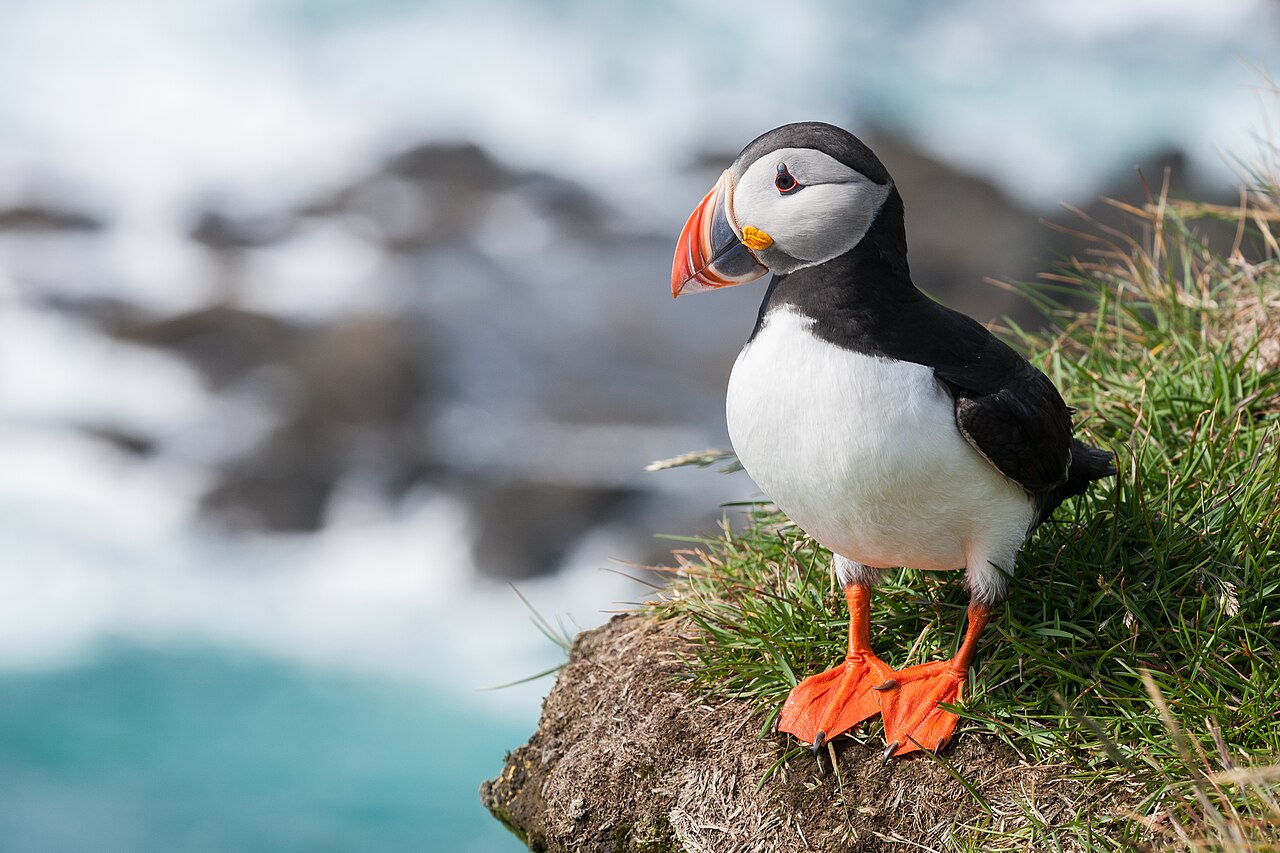
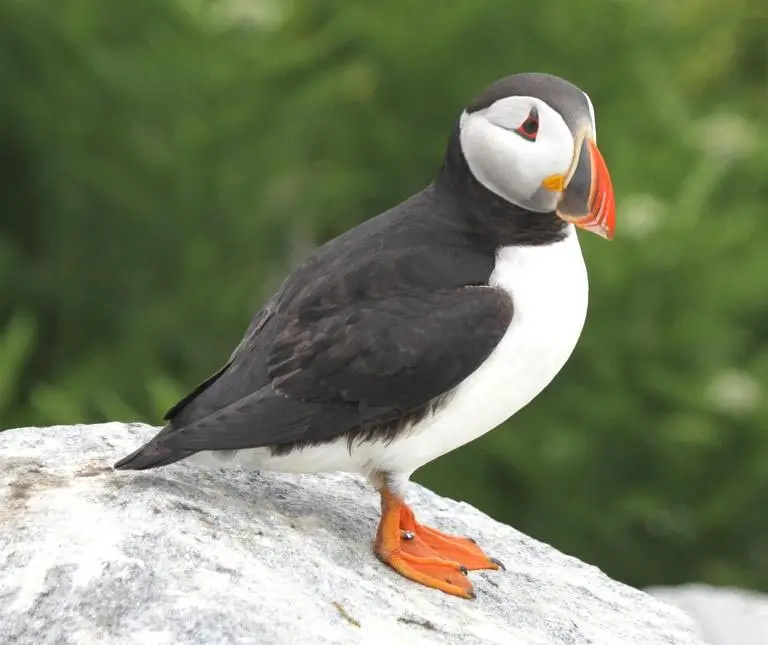
The Atlantic puffin was once known as the common puffin. It is a short and stocky diving sea bird. It is 10.2-11.4 inches (26-29 cm) in length with a wingspan of 20.9 inches (53 cm).
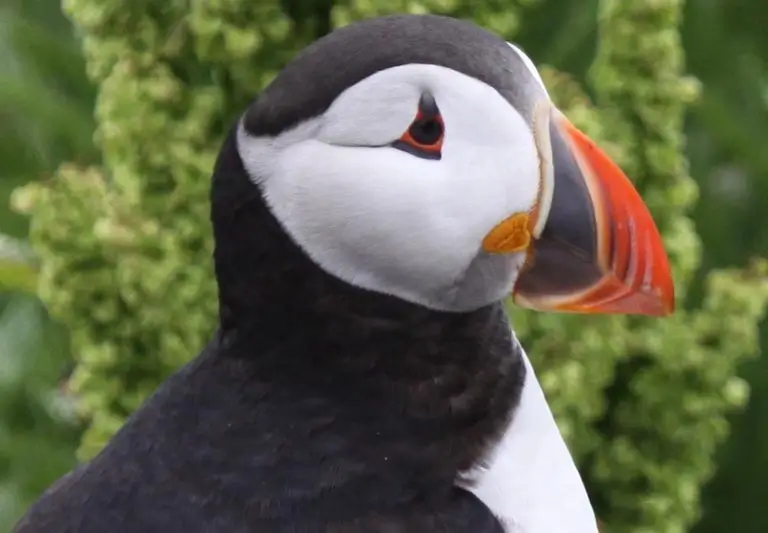
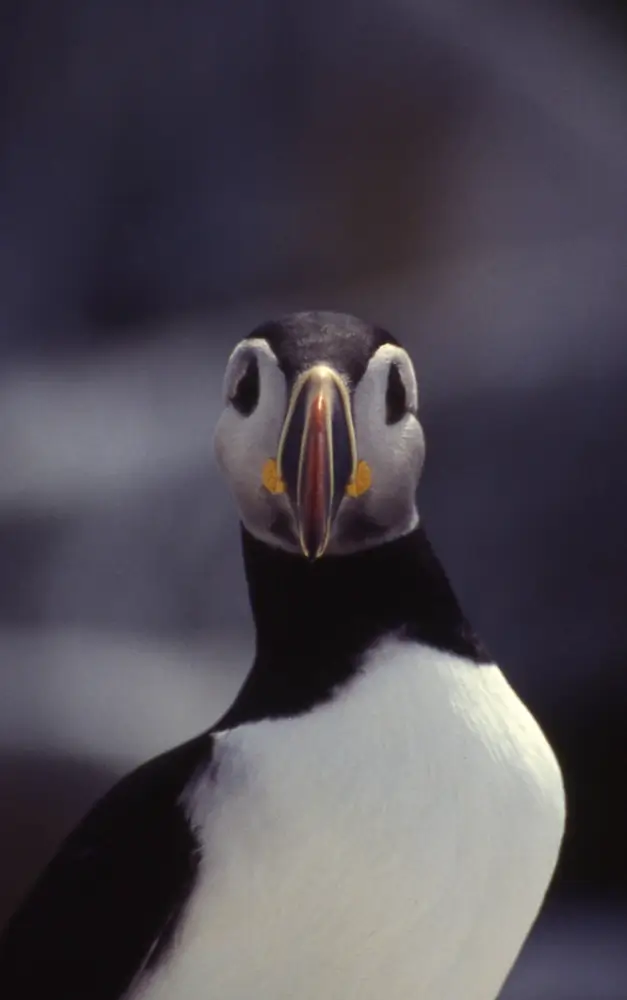
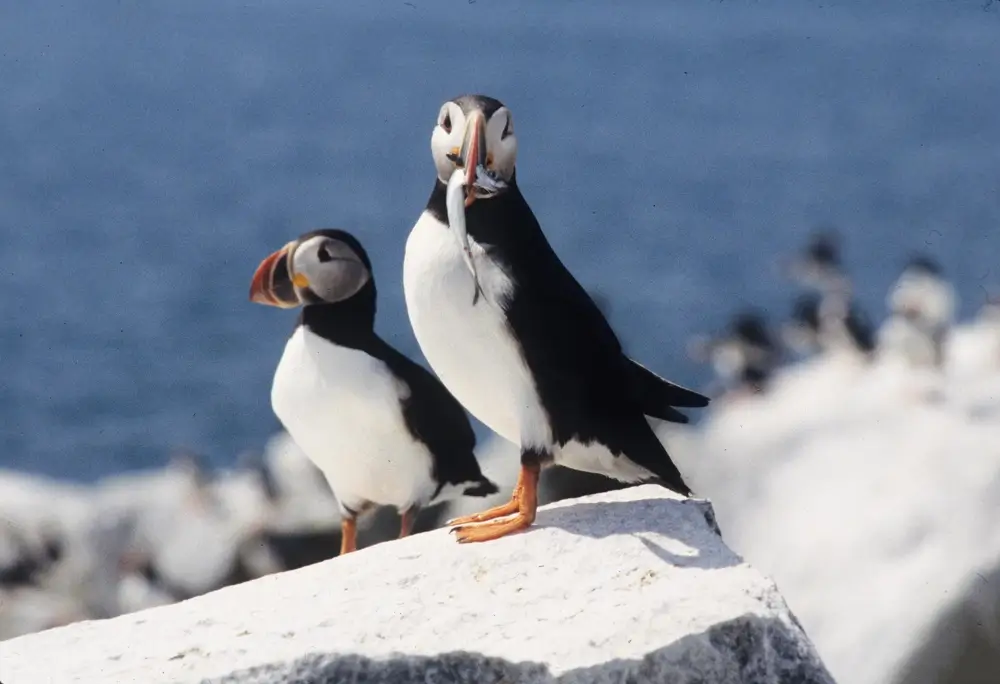
It is black on its uppersides and white on its chest and belly. It has bright orange webbed feet; a white face and cheeks; and a large, triangular parrot-like bill that is bright red and yellow.
After the breeding season, some of the bill’s outer horny plates fall off, and the bill is smaller and duller. The puffin’s white face also becomes darker after the breeding season.
The puffin looks so different during breeding and non-breeding seasons that it was once thought to be two separate bird species. Males and females look alike.
Habitat
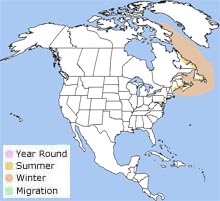
The Atlantic puffin is found on rocky coasts in the Northern Atlantic Ocean during the breeding season and on the open ocean in the non-breeding season.
Diet
The Atlantic puffin dives for its food and uses its wings to swim underwater. It dives both from the air and from the surface of the water and can dive hundreds of feet under the water in pursuit of prey. It catches small fish, crustaceans, and mollusks and usually swallows them underwater.
Life Cycle
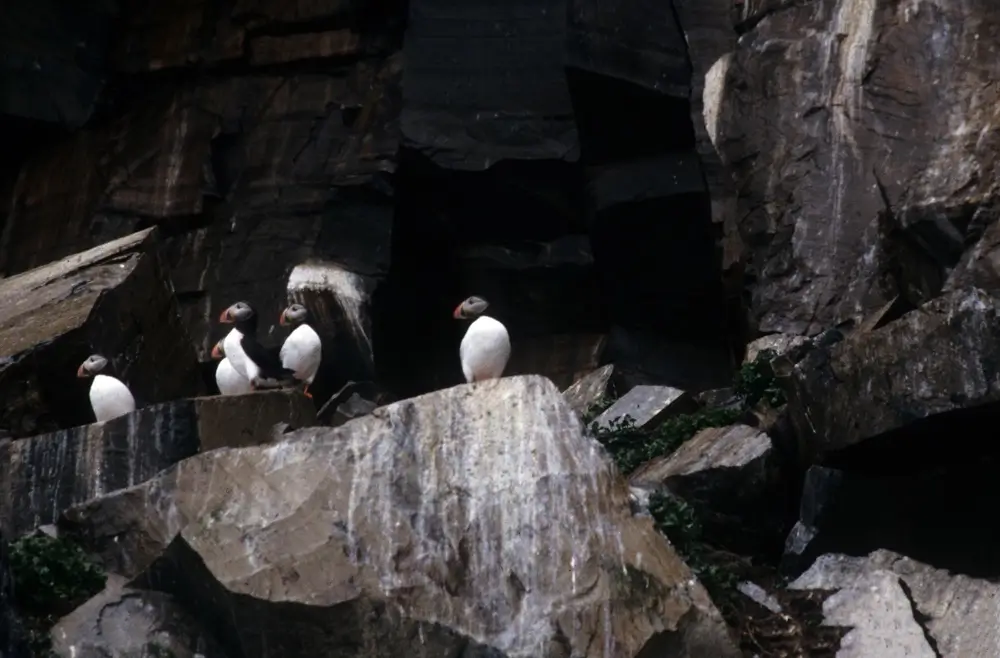
The Atlantic puffin nests in small colonies. The male uses his bill and feet to dig a nesting burrow on an ocean cliff or island. The nest is lined with grass. The nest may also be made in a rocky crevice.
The female lays a single egg, and both parents incubate the egg by tucking it under a wing and leaning against it. The egg hatches in about 40 days, and both parents feed the chick for another 40 days.
The adult Atlantic puffin can carry as many as 30 small fish in its bill to feed to its chick. Male and female pairs may mate for more than one season.
The Atlantic puffin has a lifespan of 20-30 years in the wild.
Behavior
The Atlantic puffin is well adapted for life in the water. It is an excellent diver and swimmer. Its compact body, strong wings, and webbed feet help it dive and maneuver under the water.
While the puffin is agile in the water, it is not as graceful in the air and on land. It often crash-lands both on the water and on land.
Did You Know?
The Atlantic puffin is one of four species of puffins and is the only puffin that lives in the North Atlantic Ocean.
It is sometimes known as the “sea parrot” or the “clown of the sea” because of its colorful and comical appearance.
Support for NatureWorks is provided by:
The Atlantic Puffin in NH
The Atlantic puffin does not breed in New Hampshire, but it is sometimes spotted in the state’s coastal waters, especially near the Isles of Shoals.