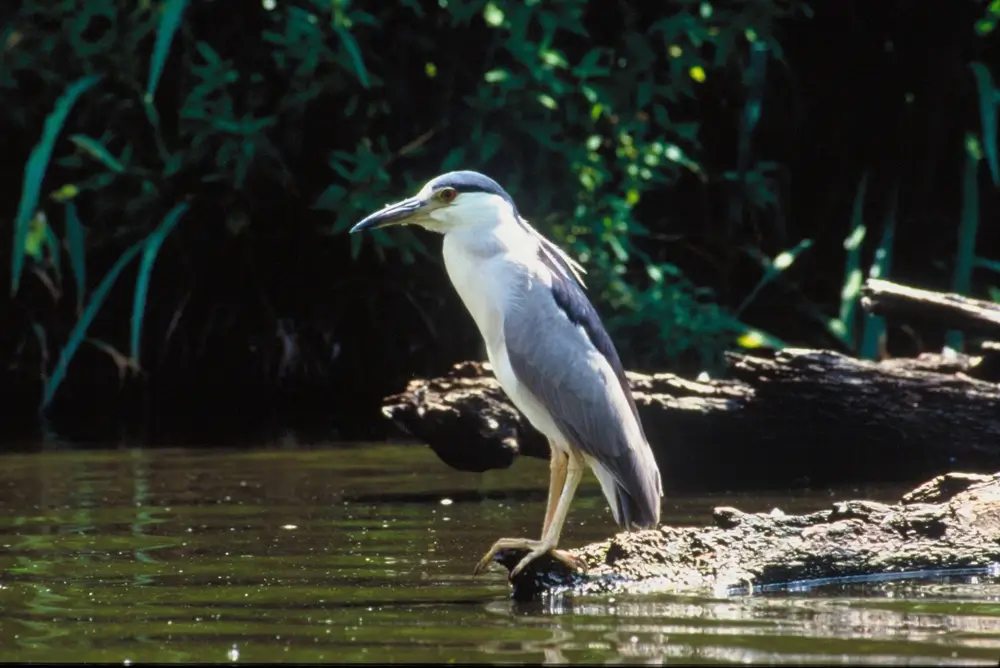
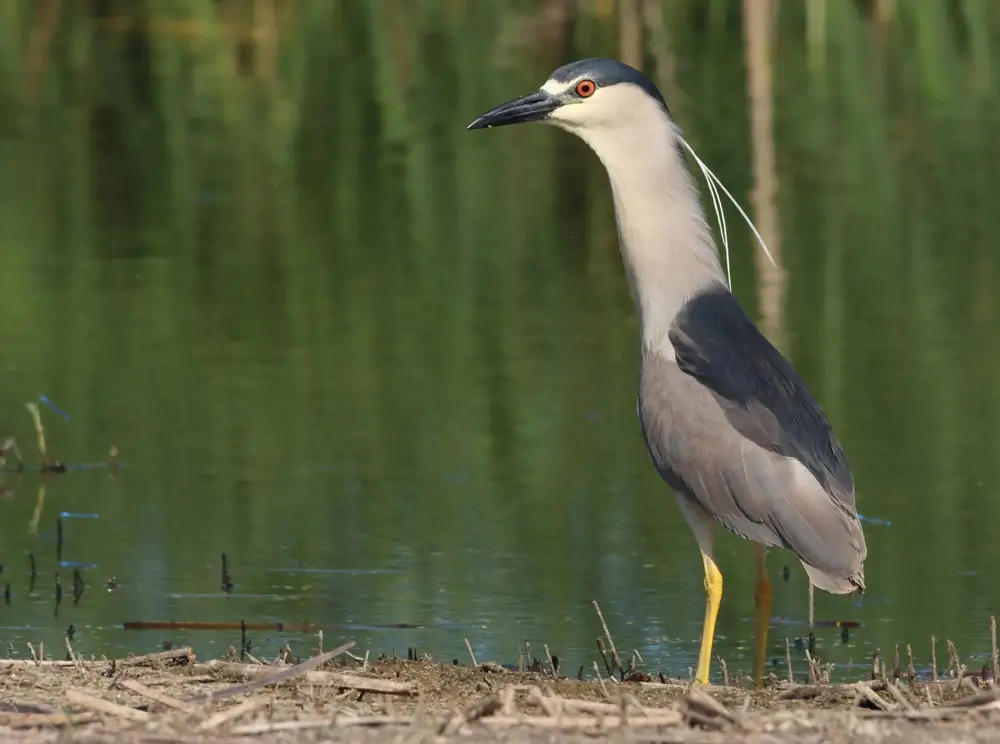
The black-crowned night heron is 22.8-26.0 inches (58-66 cm) tall. It has a wingspan of almost four feet (1.2 m).
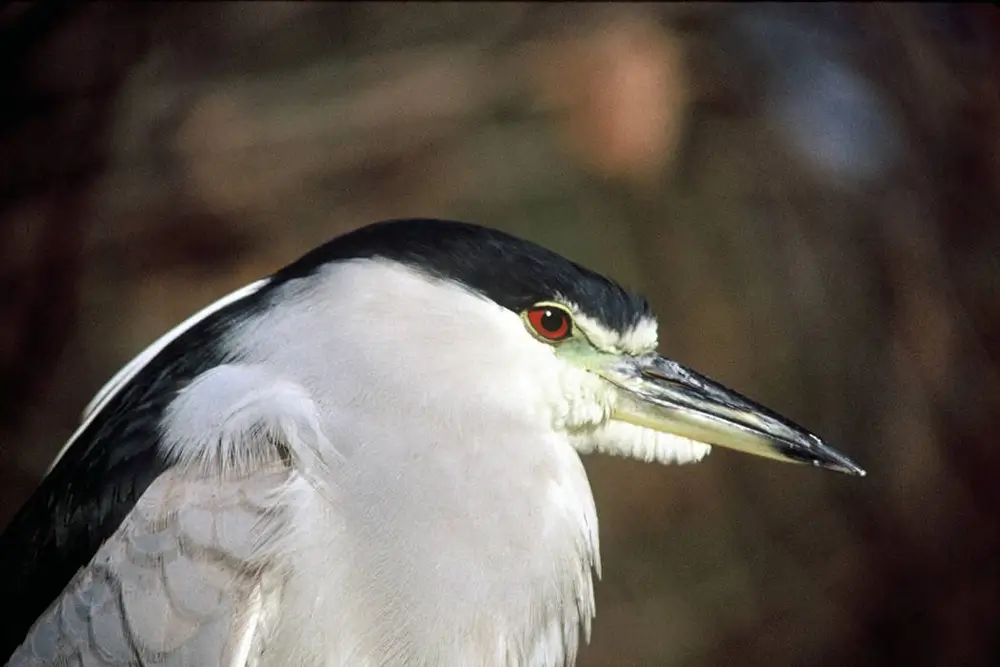
It has a stocky body, short legs, and a short neck. It has a black crown and back, gray wings, and a white underside. Adults have red eyes and yellow legs and feet.
During the breeding season, adults have two long white plumes on their heads. Females and males look alike, but females are a little smaller.
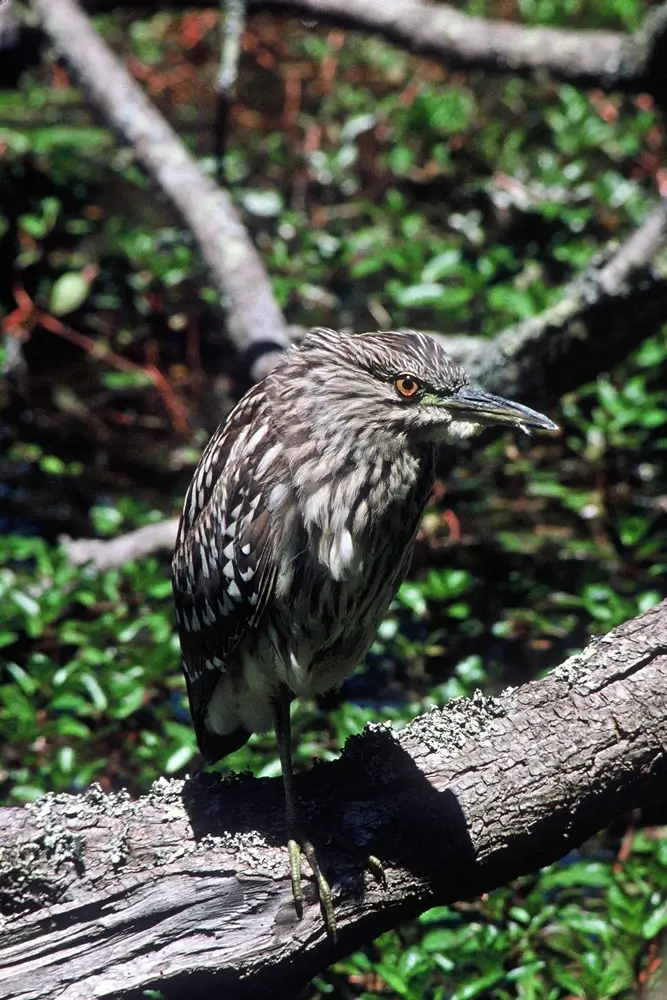
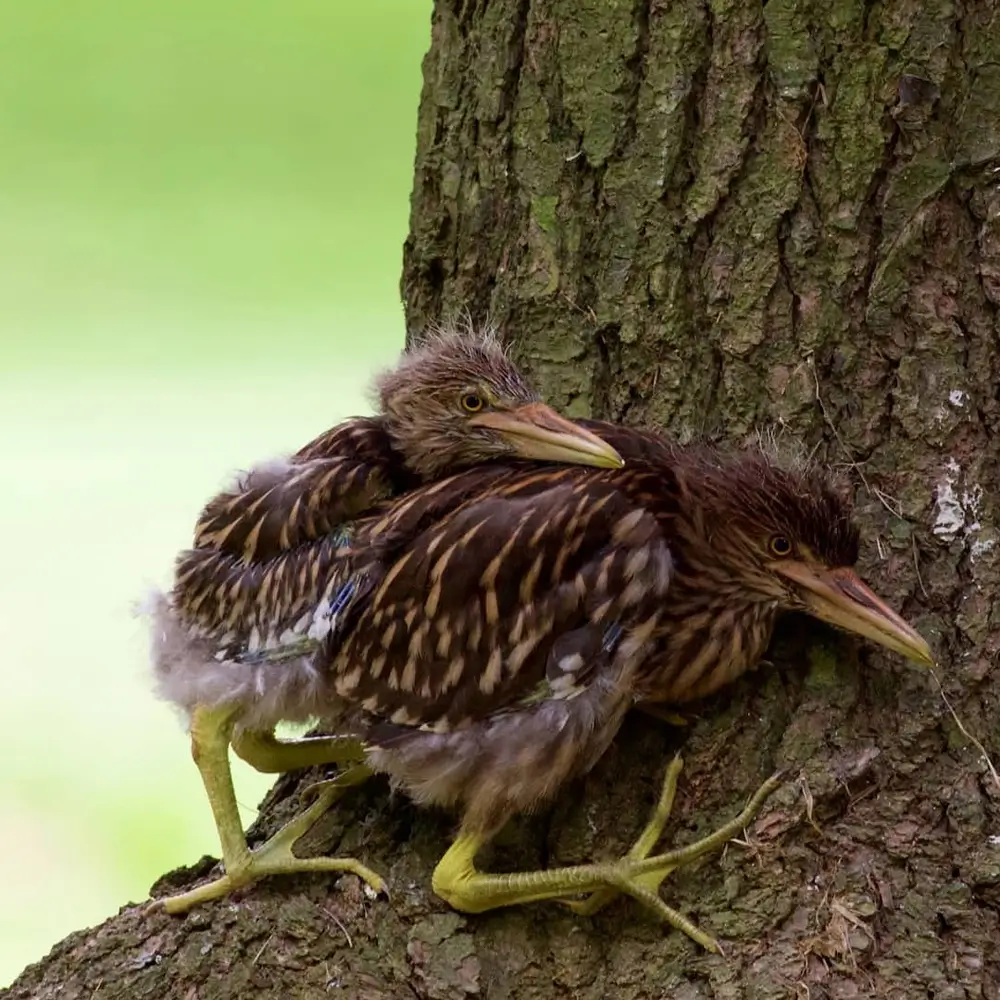
Immature night herons have a gray-brown head, chest, and belly streaked with white. Their eyes are yellow, and they have gray legs.
Black-crowned night herons don’t have adult plumage until they are about three years old.
Habitat
The black-crowned night heron lives in fresh and saltwater marshes, swamps, lakes, and wooded streams.
Diet
The black-crowned night heron hunts for food in the early morning hours and at dusk. It stands and waits for prey like frogs and fish to pass by and then snatches them up with its bill.
It sometimes raids the nests of other herons and birds and steals their chicks. It also eats amphibians, crustaceans, insects, and small mammals.
Life Cycle
The female black-crowned night heron lays three to five eggs in a nest in reeds, in a thicket, or occasionally, in a tree. The nest is made of sticks and twigs. The chicks hatch in 24 to 26 days.
Both parents incubate the eggs and feed the chicks regurgitated food.
Black-crowned night herons nest in colonies and often nest with other birds like ibises and other herons. The chicks fledge in 42-49 days.
Black-crowned night herons have a lifespan of 10-15 years in the wild.
Behavior
Male black-crowned night herons use their nests to attract a mate. The same nest may be used for many years.
Did You Know?
Support for NatureWorks is provided by:
The Black-Crowned Night Heron in NH
The black-crowned night heron is found in wetlands in New Hampshire. It breeds in the state.
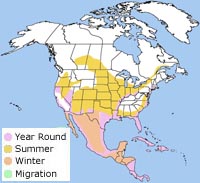
In North America, the black-crowned night heron breeds from Washington; Saskatchewan, Canada; Minnesota; and New Brunswick, Canada south to southern South America. It is not found in the Rocky Mountain region.
It winters in the southern United States. Migration happens in large flocks and almost always at night.
It is also found in South America, Africa, Asia, and Europe.