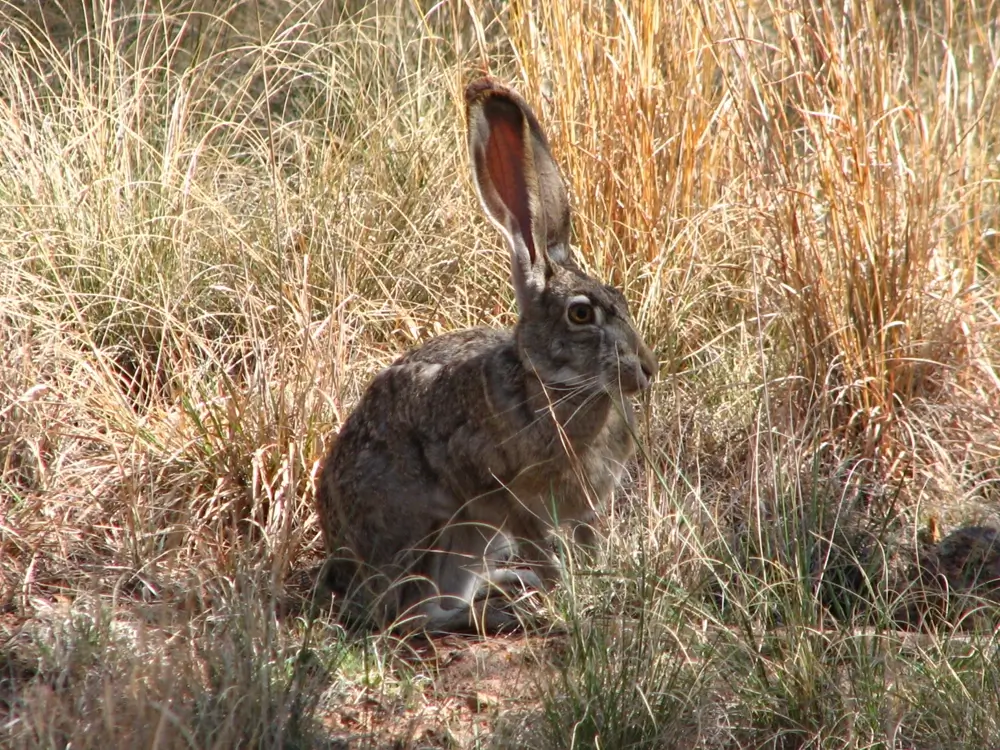
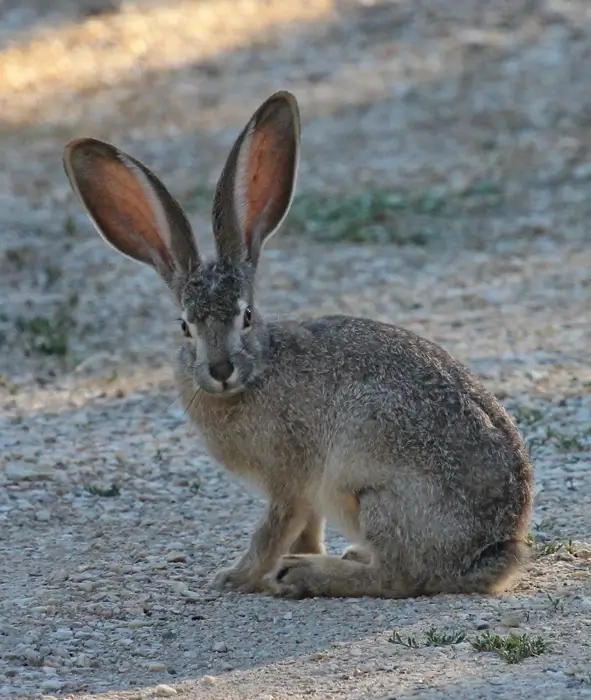
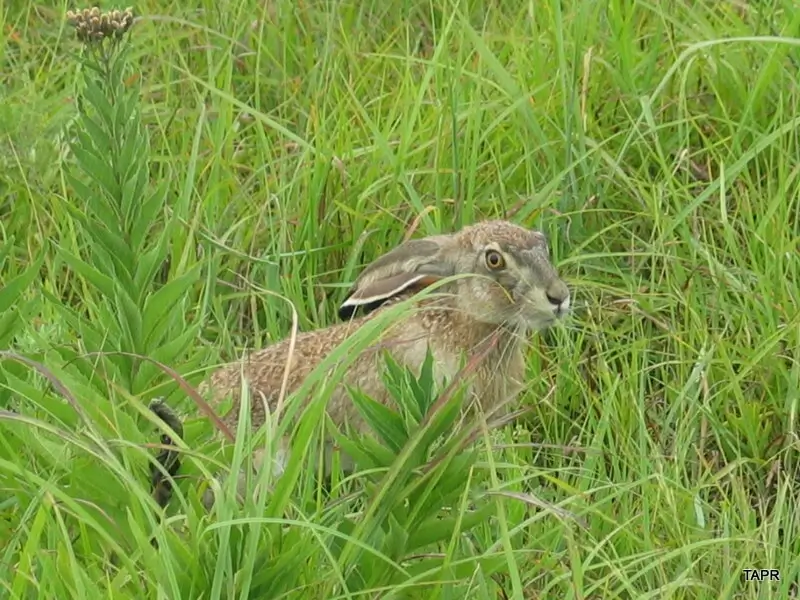
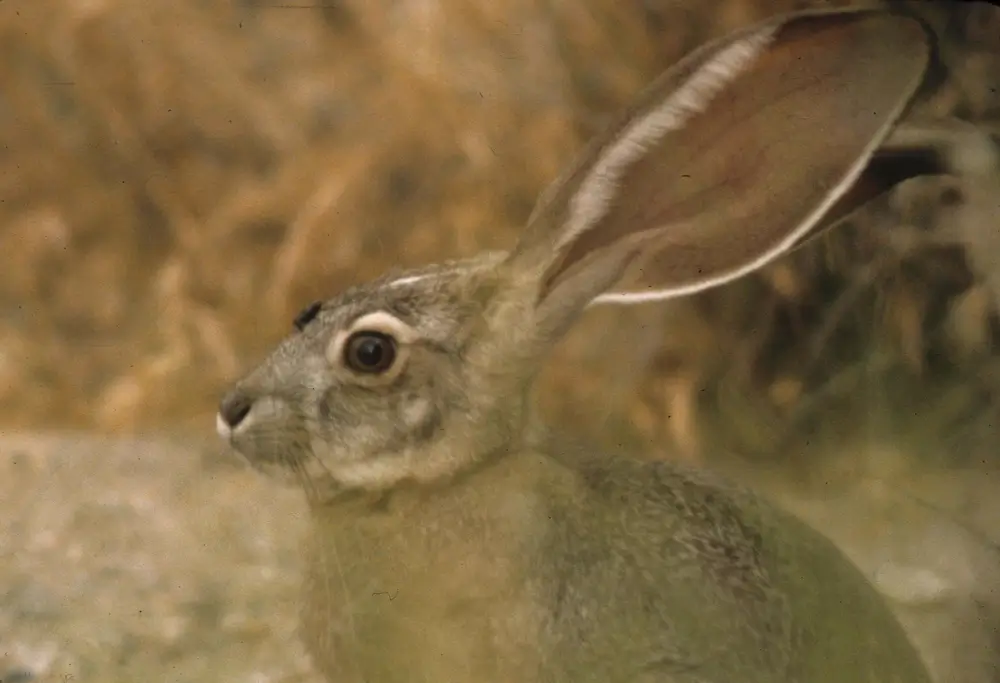
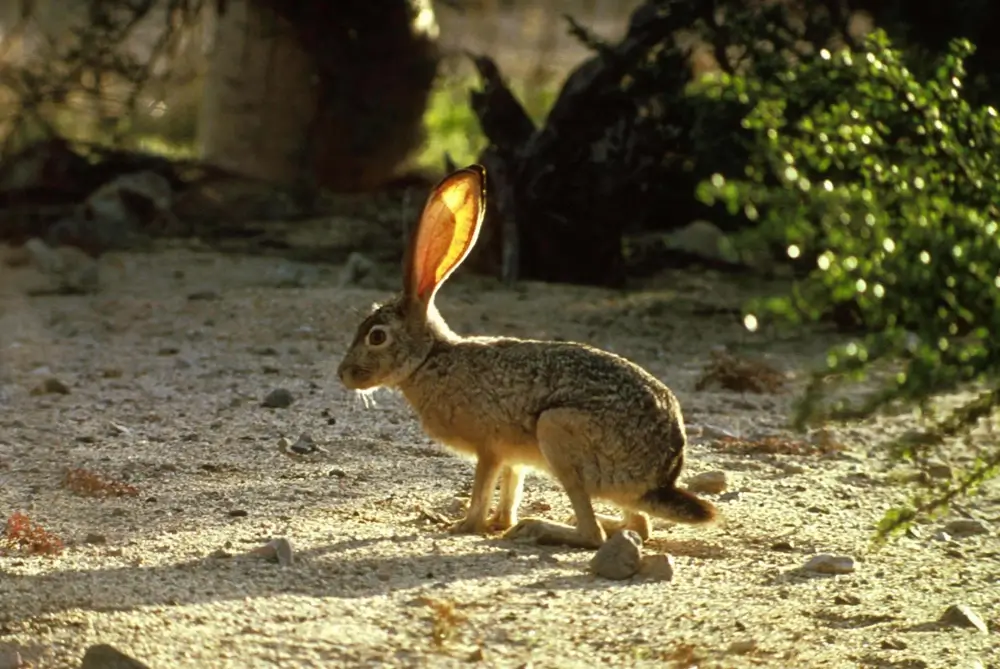
The black-tailed jackrabbit has long ears with black tips and very long front and rear legs. It is about 18-24 inches (46-61 cm) in length and weighs 4-8 pounds (1.8-3.6 kg).
It has peppery brown fur and a black stripe that runs down its back. Males and females look alike, but females are usually larger.
Habitat
The black-tailed jackrabbit lives in meadows, prairies, desert scrubland, and farmland.
Diet
The black-tailed jackrabbit rests during the day and feeds in the late afternoon and the night. In the summer, it eats a variety of green plants.
A favorite food of the black-tailed jackrabbit is alfalfa. In the winter, it eats dried and woody plants. The black-tailed jackrabbit gets most of the water it needs from the plants it eats.
Life Cycle
The black-tailed jackrabbit mates year-round. Males and females leap after and chase each other during mating season. The female black-tailed jackrabbit has as many as four litters a year. The young are born in a fur-lined depression. Most litters have between 3-4 young. Baby black-tailed jackrabbits are called leverets.
The female moves the leverets to separate locations to make them less vulnerable to predators. The leverets nurse for 3-4 days and are independent by the time they are a month old. Black-tailed jackrabbits have a lifespan in the wild of around 1-5 years.
Behavior
The black-tailed jackrabbit runs at speeds of up to 30 miles an hour (48 kph), and it can jump a distance of about 20 feet (6 m).
When it is trying to evade predators like coyotes, foxes, bobcats, badgers, and weasels, it moves in a zig-zag pattern. It flashes the white underside of its tail when threatened by a predator. This warns other jackrabbits of danger and can also confuse the predator.
It also swims by dog-paddling with all four of its feet. It is most active at night. It usually spends the day resting in a scraped-out hollow in the shade.
Did You Know?
The black-tailed jackrabbit is not really a rabbit; it is a hare because its young are born with fur and with their eyes open.
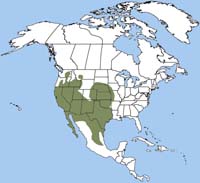
The black-tailed jackrabbit is found in the western United States from Washington south to California and east to Nebraska and Texas. It is an introduced species in Kentucky and New Jersey.