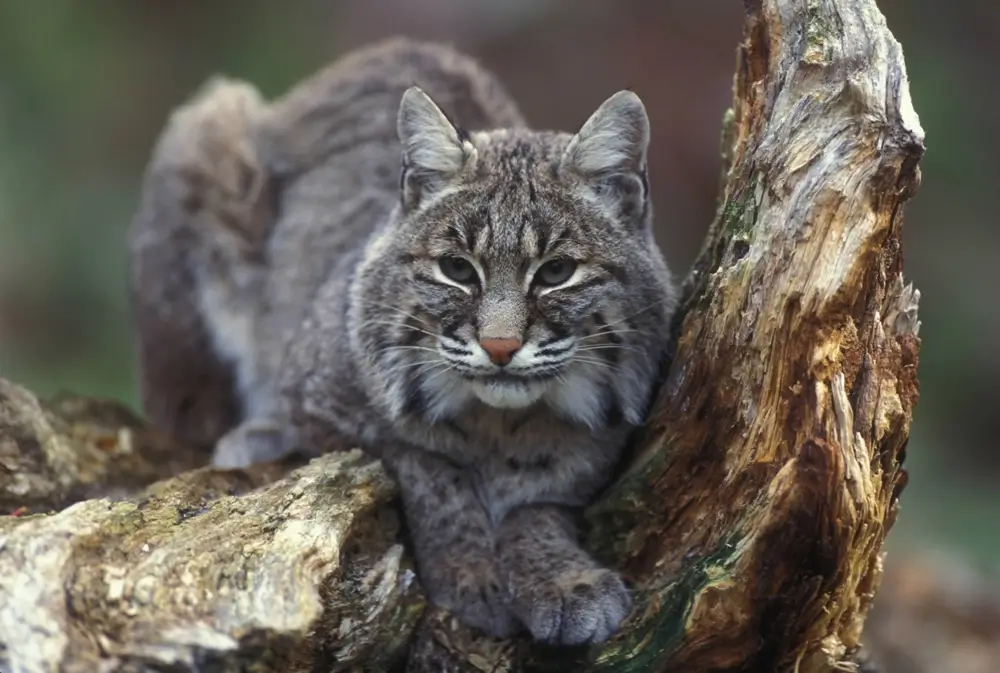
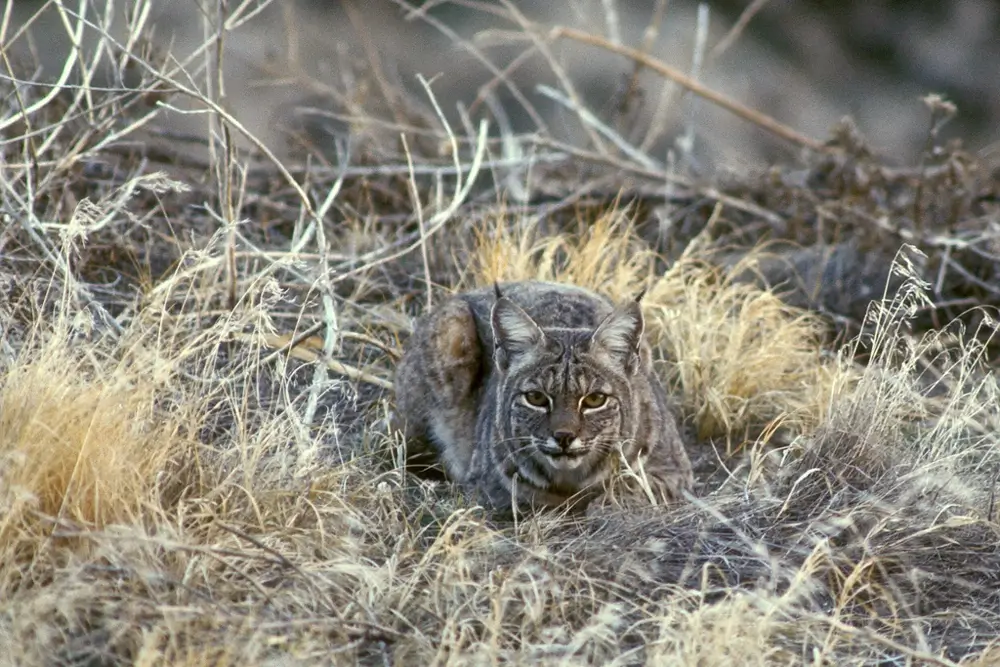
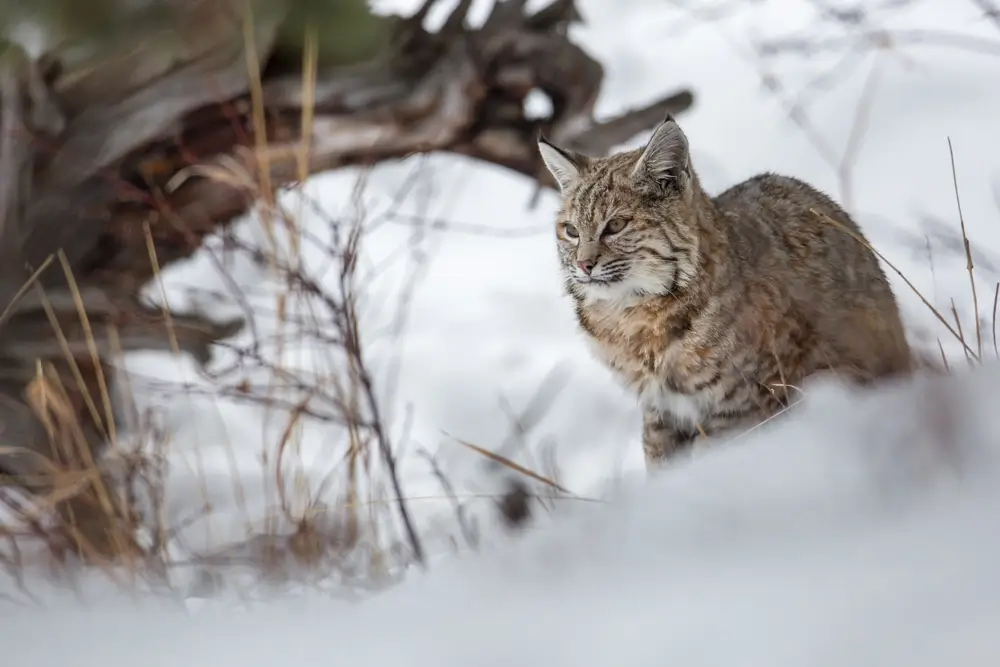
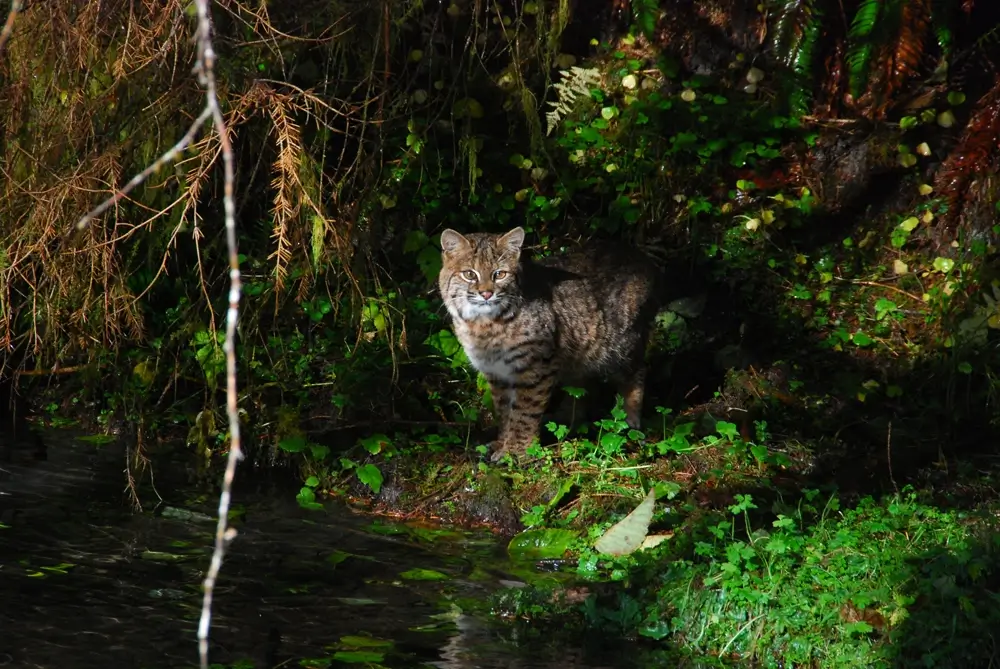
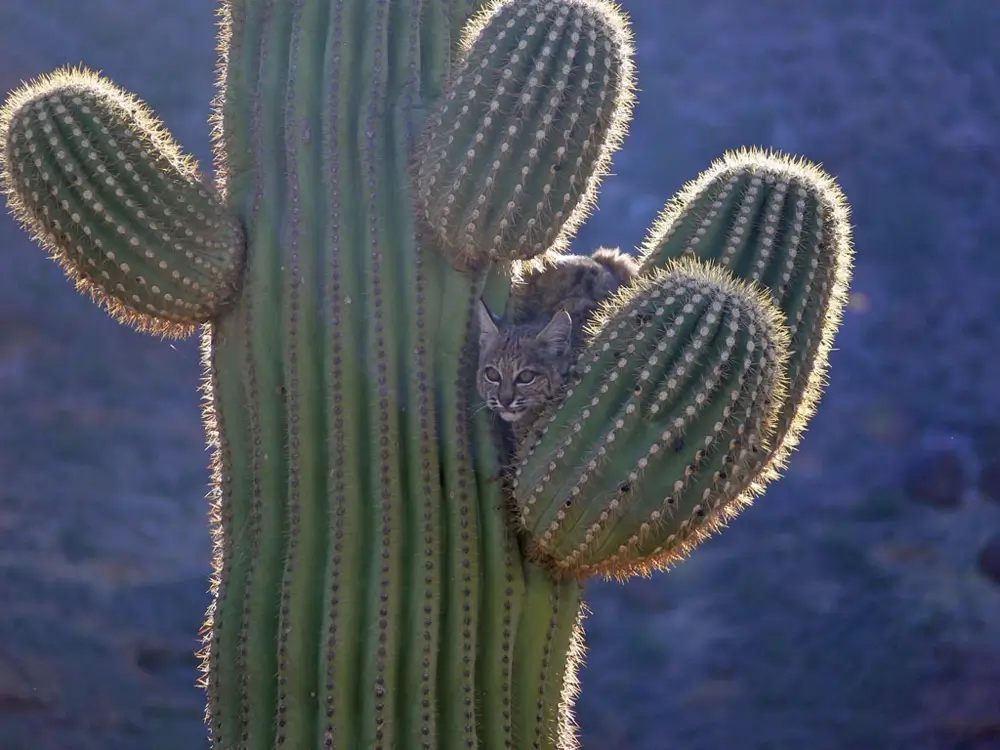
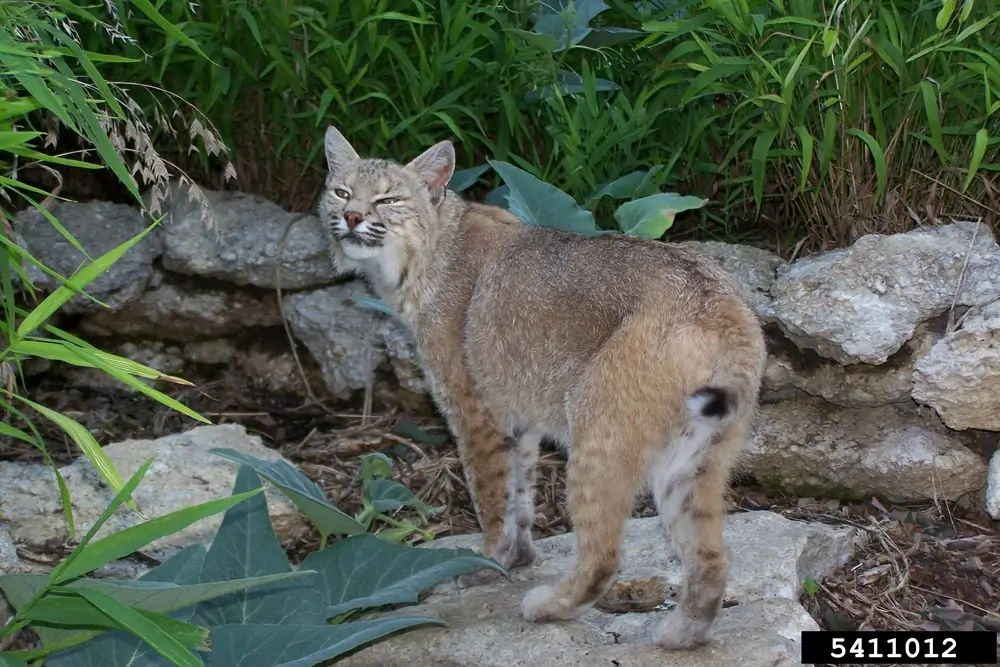
The bobcat is brown with black spots. Its fur may be grayer in winter. It has large ears with slight tufts of hair at the tips. It has a striped ruff of fur on its cheeks and a short tail with a black tip.
The bobcat is about two feet (0.61 m) tall from its shoulders to its feet and 2.3 to 3.9 feet (.71-1.2 m) long from the tip of its nose to the end os its tail. It weighs 15-35 pounds (9-13.6 kg). The bobcat gets its name from its short or bobbed tail, which is 4 to 8 inches (10-20 cm) long.
Habitat
The bobcat lives in a wide variety of habitats, including forests, deserts, mountains, swamps, and farmland. It lives in dens in a rock or tree crevice.
Diet
The bobcat is primarily nocturnal and has excellent eyesight and hearing. It does most of its hunting at night.
The bobcat is a carnivore and eats a wide variety of small mammals like woodchucks, rabbits, skunks, raccoons, moles, and squirrels. It also eats birds and reptiles. One of the most common prey of the bobcat is the cotton-tail rabbit. Occasionally, the bobcat kills larger prey, like white-tailed deer. With small prey, the bobcat waits motionless and then pounces.
The bobcat stalks midsize prey and then pounces on it, grabbing its neck and cutting its spinal cord. If it hunts large prey like deer, it looks for them while they are bedded down. It eats small animals when it kills them. When it catches larger prey, it eats some and stores the rest to eat later.
Life Cycle
The bobcat mates between February and March. In late April or early May, the female gives birth to a litter of between 1-7 kittens.
Most litters have 2-4 kittens. The kittens are born with their eyes closed. After ten days, their eyes will open. The kittens are weaned after about 10 weeks. The kittens stay with their mother for about a year.
The bobcat has a lifespan of around 7-15 years in the wild. In captivity, it can live to be 25 years old.
Behavior
Bobcats are solitary animals. They mark their territory or home range with urine, feces, scent markings, scratches, and scrapes (piles of dirt and debris marked with scent). A male’s home range may overlap with the home range of a couple of females and often another male. The home ranges of females usually don’t overlap.
Home ranges can vary in size from less than a square mile (1.6 km 2) to more than 20 square miles (32 km 2), depending on the season of the year and the geographic location.
Bobcats are good swimmers and tree climbers, although they usually don’t spend much time in trees. During the day, they prefer to rest on rocky ledges in a thicket.
Did You Know?
Support for NatureWorks Redesign is provided by:
The Bobcat in NH
In New Hampshire, the bobcat population probably numbers in the hundreds. It is the only large cat species still found in any significant numbers in the state.
The mountain lion was found in New Hampshire until the late 1800s, and the Canada lynx was present in the northern part of the state until the 1950s, although there have been some sightings of the lynx in the White Mountains since then.