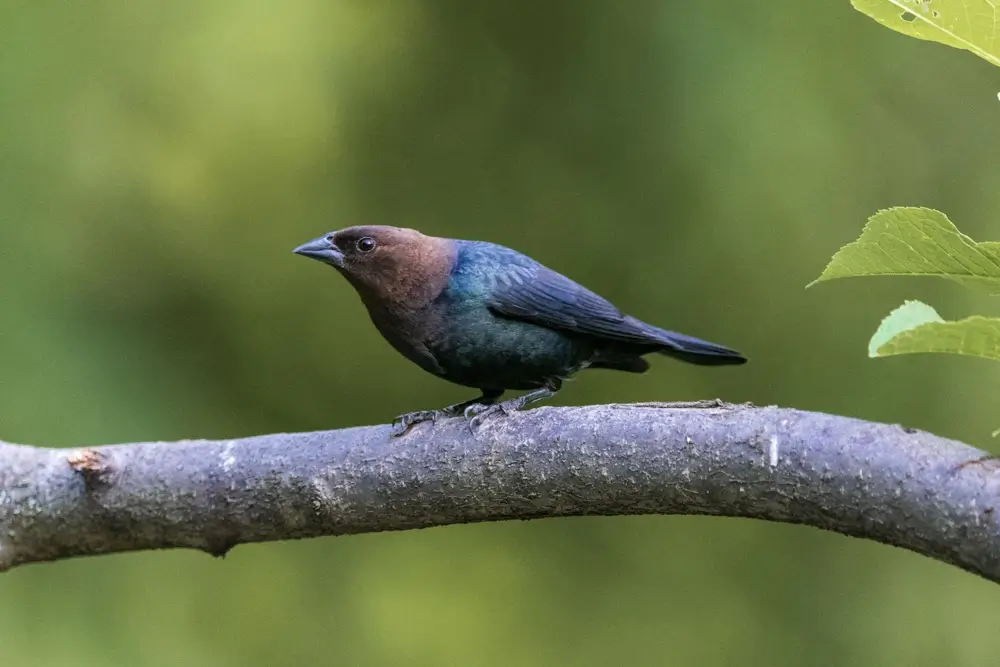
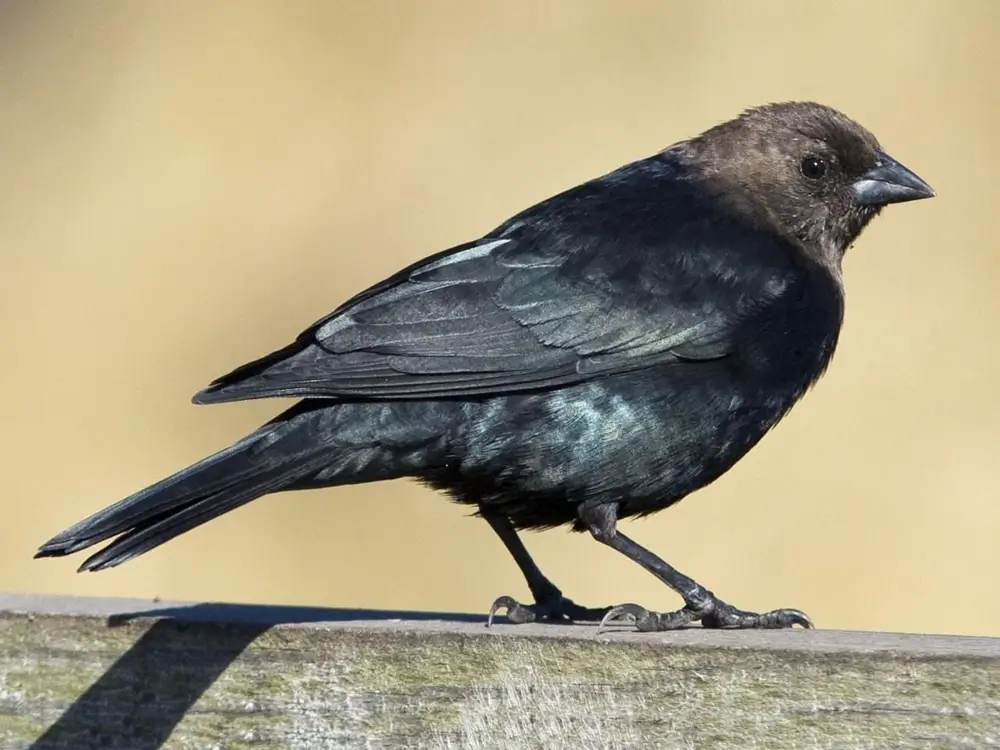
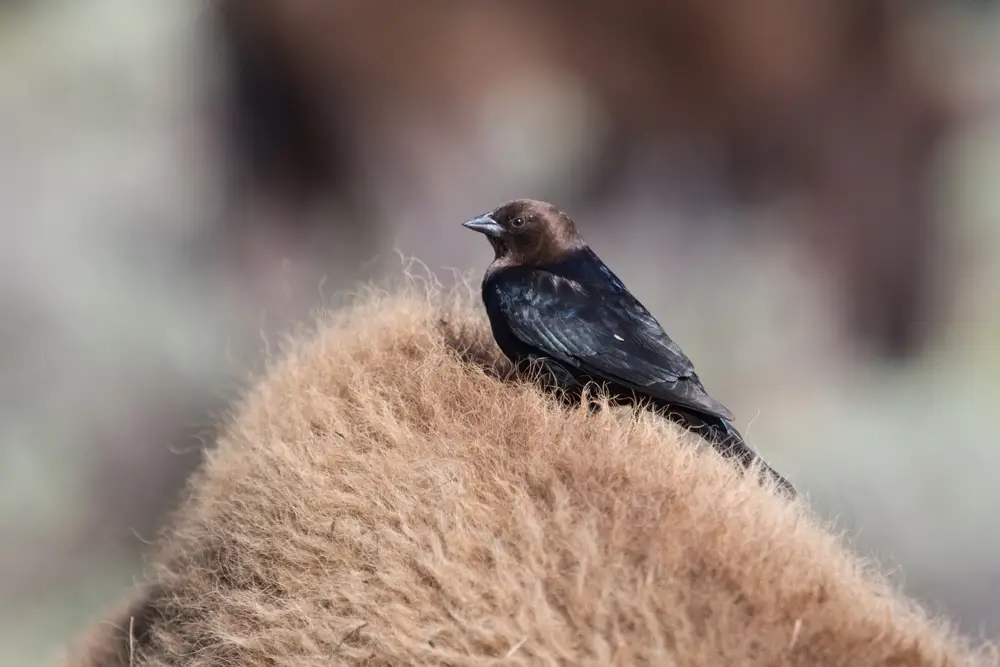
The brown-headed cowbird is a small member of the blackbird family. It is 6.3-8.7 inches (16-22.1 cm) in length and has a wingspan of 12-15 inches (30.5-38.1 cm). Males are slightly larger than females.
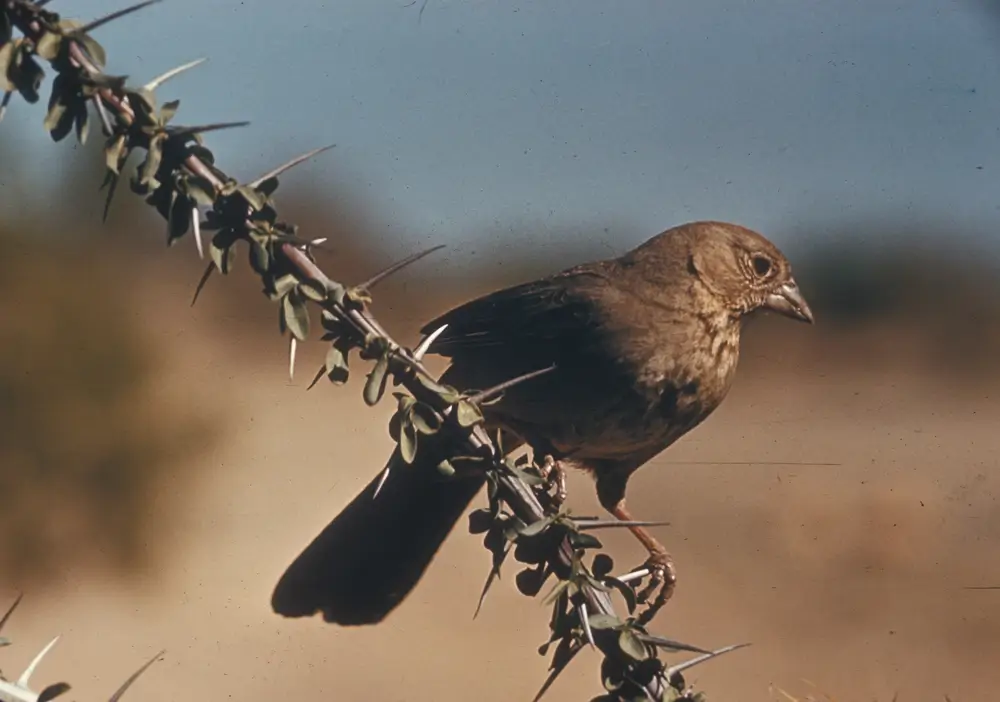
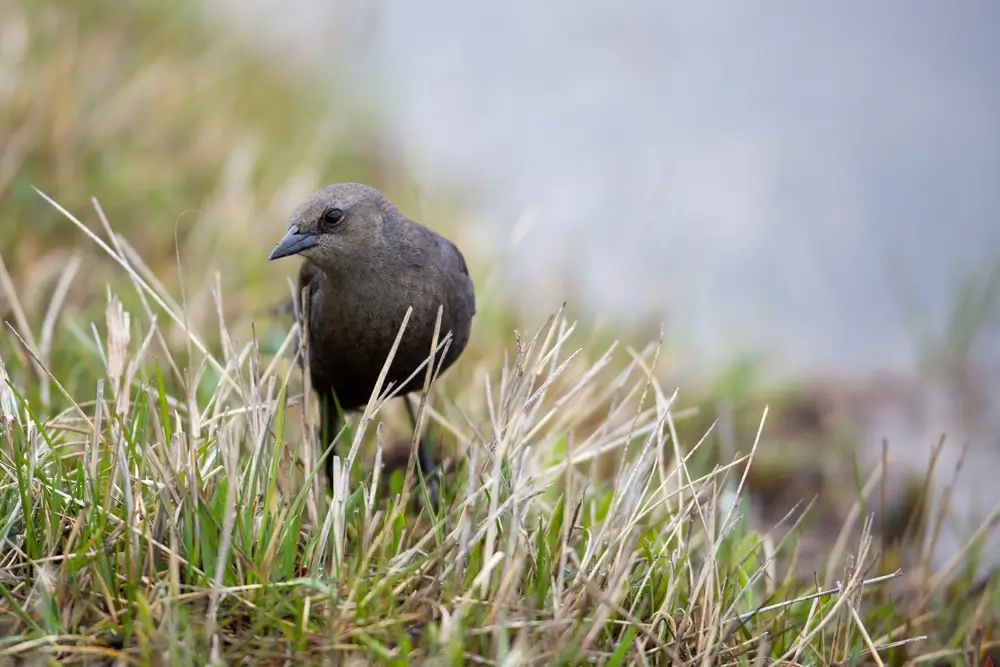
The male brown-headed cowbird has a shiny black body and a brown head. The female is entirely brown.
Habitat
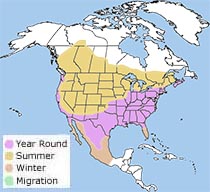
The brown-headed cowbird was once found in grassland habitats, but its range expanded as more people settled in North America. It is now found in a variety of habitats, including grasslands with low trees, woodland edges, brushy thickets*, prairies, fields, pastures, orchards, and residential neighborhoods.
In the winter, the brown-headed cowbird roosts in large numbers with other species of blackbirds.
*A thicket is a dense group of bushes, shrubs, or small trees that grow very close together.
Diet
The brown-headed cowbird feeds on seeds from grasses and weeds. It also eats grasshoppers, beetles, and other insects.
To get enough calcium to produce eggs, the female eats snail shells and eggshells from the nests it invades.
Life Cycle
The brown-headed cowbird is a brood parasite, which means it does not build its own nest. Instead, it lays its eggs in the nests of other bird species and leaves the host birds to raise its young.
Research shows that brown-headed cowbirds often choose nests where the eggs are smaller than their own, which may increase the chances that their chicks will survive.
Cowbirds have been observed laying eggs in the nests of more than 200 different bird species. Common host birds include the yellow warbler, red-winged blackbird, and red-eyed vireo.
Because female cowbirds do not spend time building nests or raising chicks, they can produce many eggs. In one breeding season, a female cowbird may lay up to three dozen eggs, placing them in different host nests.
Cowbird eggs usually hatch slightly earlier than the eggs of the host birds. This gives cowbird chicks an advantage when competing for food. The chicks also grow quickly and may push other eggs out of the nest or outcompete the other nestlings for food.
Some birds, such as the yellow warbler, can recognize cowbird eggs. However, they are often too small to remove them. Instead, a yellow warbler may build a new nest on top of the old one, covering the eggs and preventing the cowbird chick from surviving in that nest.
Behavior
Brown-headed cowbirds usually forage on the ground for insects and seeds. They are often found with flocks of other birds like blackbirds and starlings.
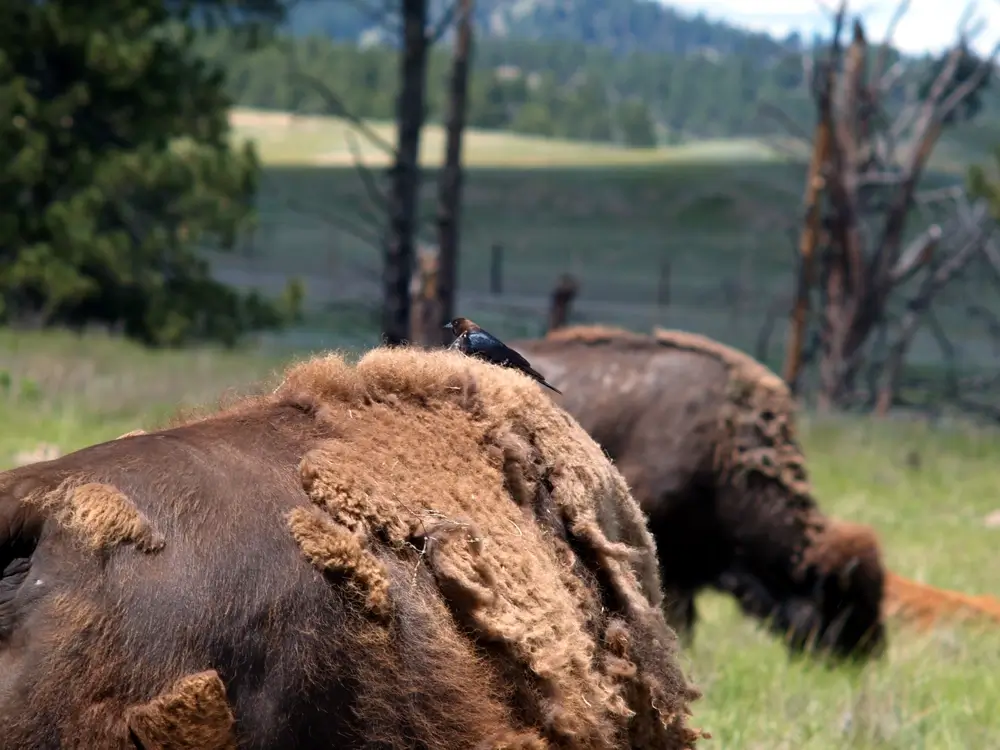
The cowbird gets its name because it is often found feeding around herds of cows, eating the insects they disturb.
Did You Know?
Because brown cowbird chicks sometimes destroy the eggs and outcompete the other chicks in the nest for food, they may be responsible for the decline of several endangered species, such as Kirtland’s warbler and black-capped vireo.
Support for NatureWorks is provided by:
The Brown-Headed Cowbird in NH
The brown-headed cowbird breeds across New Hampshire.
It is a year-round resident in the southern part of the state.