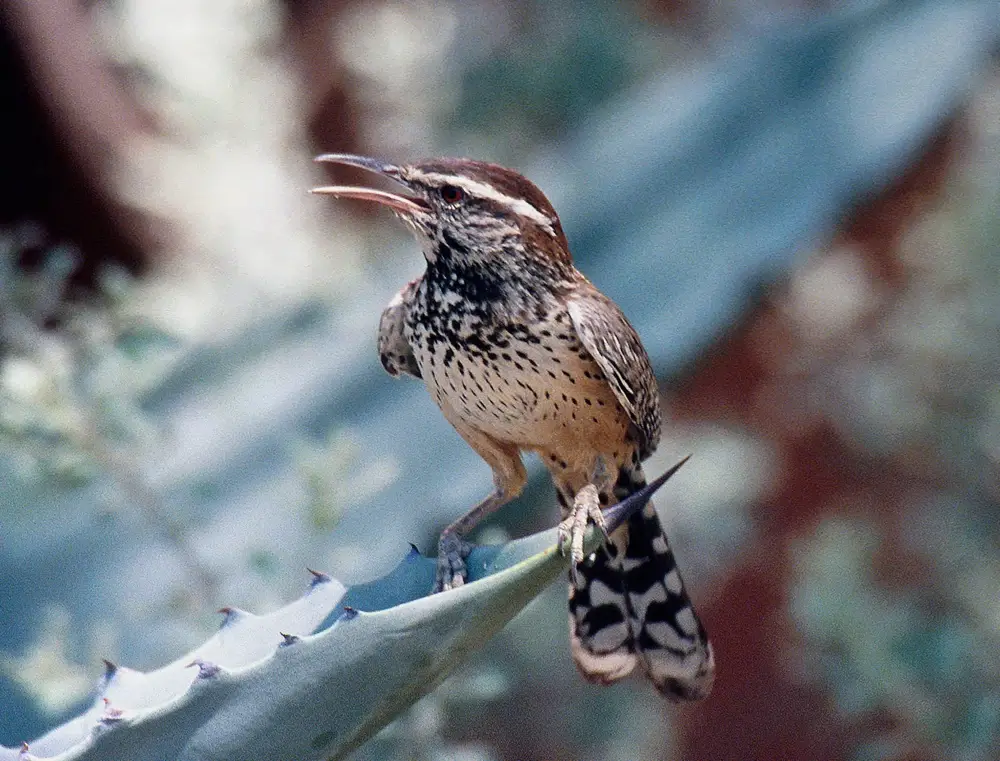
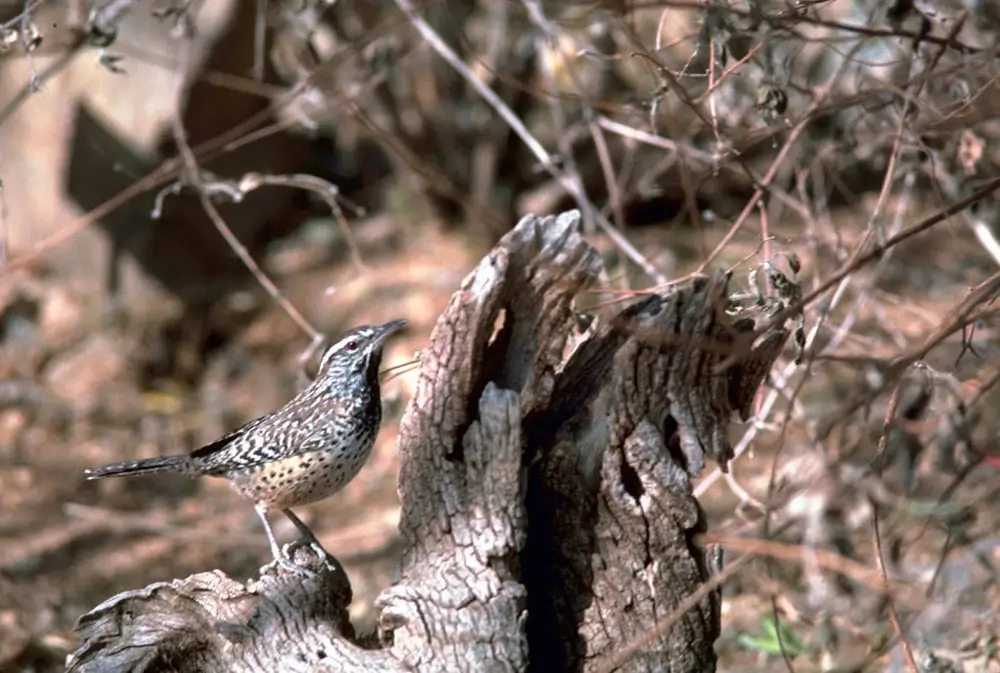
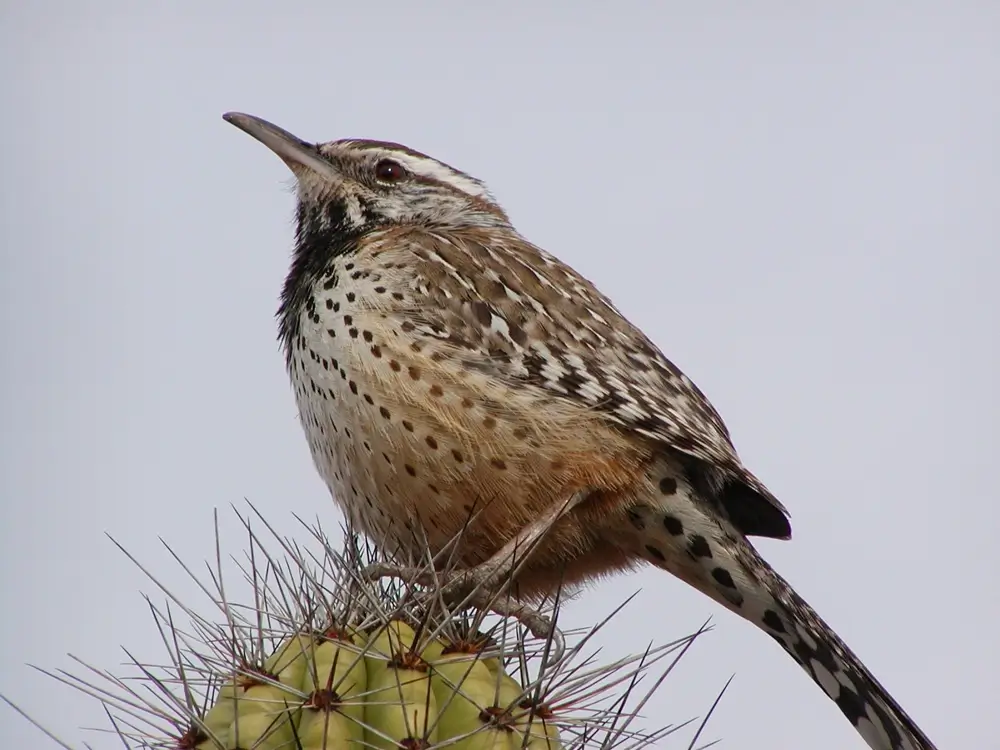
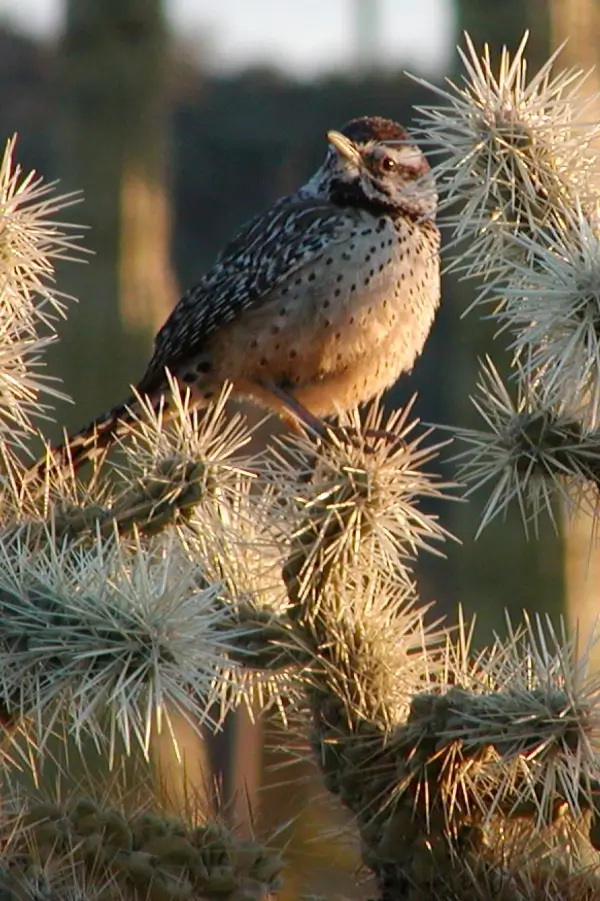
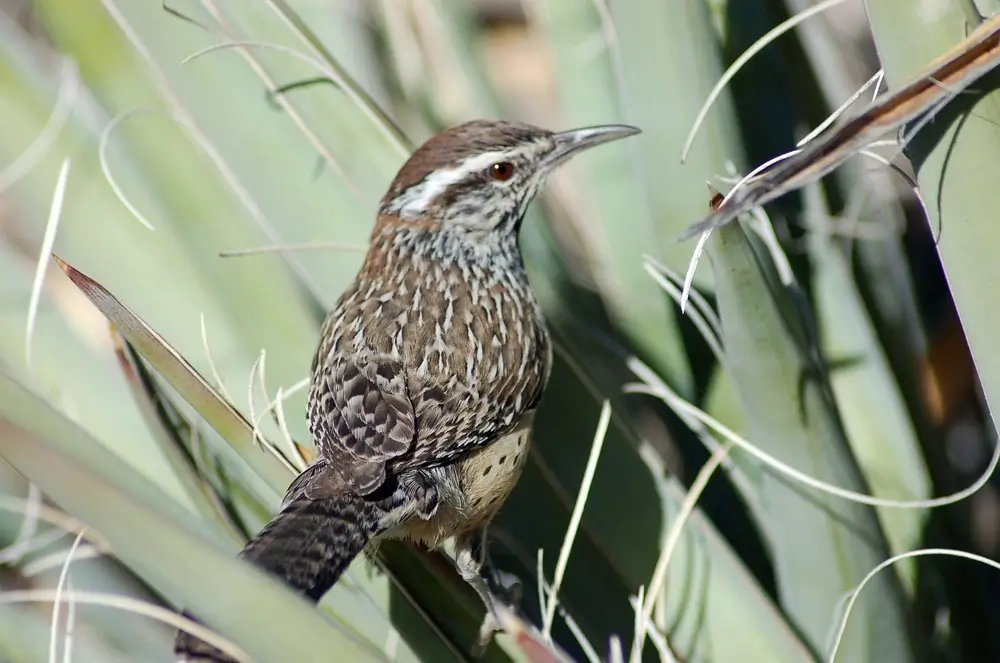
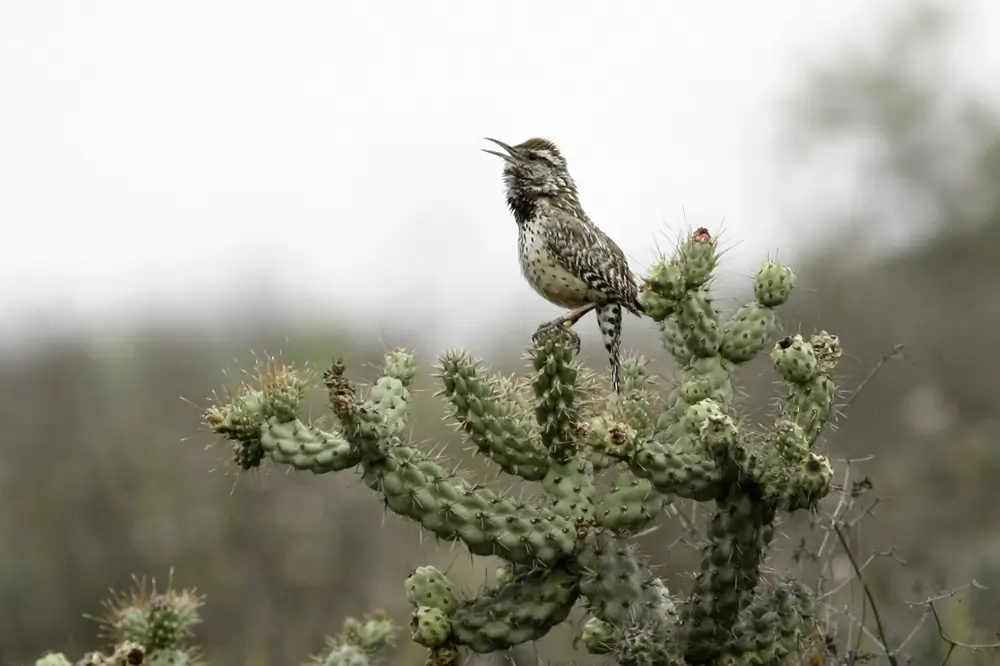
The cactus wren is 7.1-8.7 inches (18-22 cm) in length with a wingspan of 10.6 to 11 inches (27 to 28 cm).
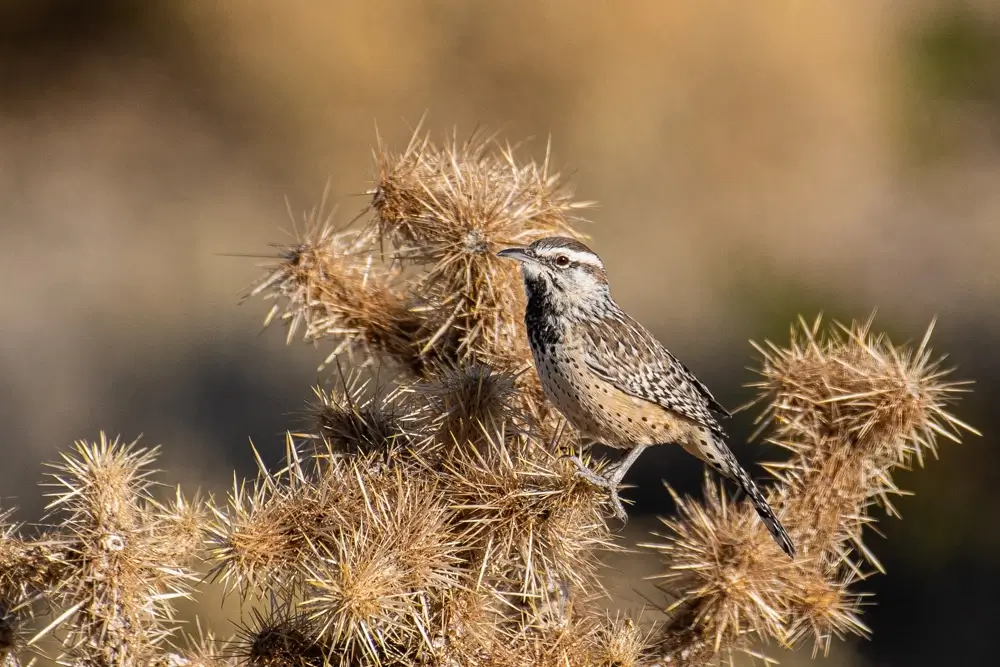
It has a white belly with brown spots, and speckled brown, black, and white feathers on its back, wings, and head. It has black feathers on its throat and a long stripe of white feathers above its eyes that looks like eyebrows.
It has long legs and a long, slightly downcurved, pointed bill.
Habitat
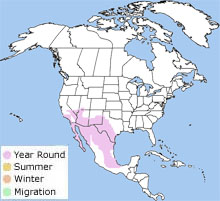
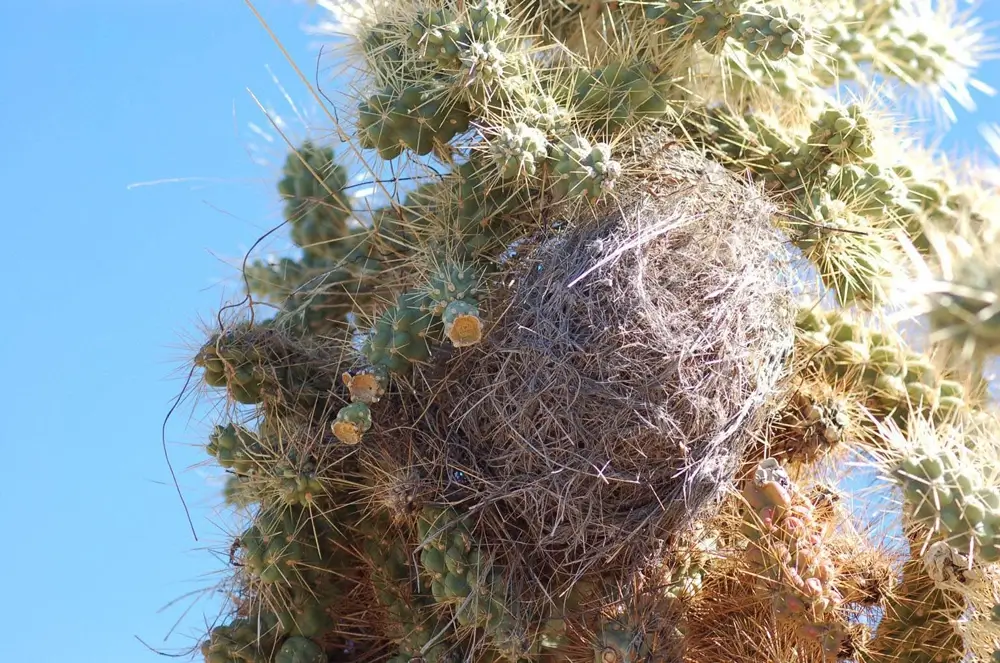
The cactus wren lives in desert thickets and areas with large cactus like the cholla. It needs areas with cactus, thorny plants, or bushes strong enough to hold its large nests.
Diet
The cactus wren forages for food on the ground. It uses its long bill to turn over things on the ground. It eats ants, beetles, grasshoppers, wasps, fruits, and seeds. Sometimes it eats small frogs and lizards.
It is adapted for life in the desert and gets most of the water it needs to survive from the food it eats.
Life Cycle
The cactus wren mates from late February to March. The female cactus wren can have as many as three broods every season. The female picks a nesting place in a large cactus, thick shrub, tree, or thicket. The male helps build the nest.
The nest is made with grass and straw and is lined with feathers. The nest is large and shaped like a football. It has a side entrance that helps protect the fledglings from predators.
The female lays 3-6 eggs. The eggs take a little more than two weeks to hatch. The young wrens leave the nest after about three weeks, but they depend on their parents for food for another month.
Behavior
Cactus wrens build two nests – one for their young and one for roosting.