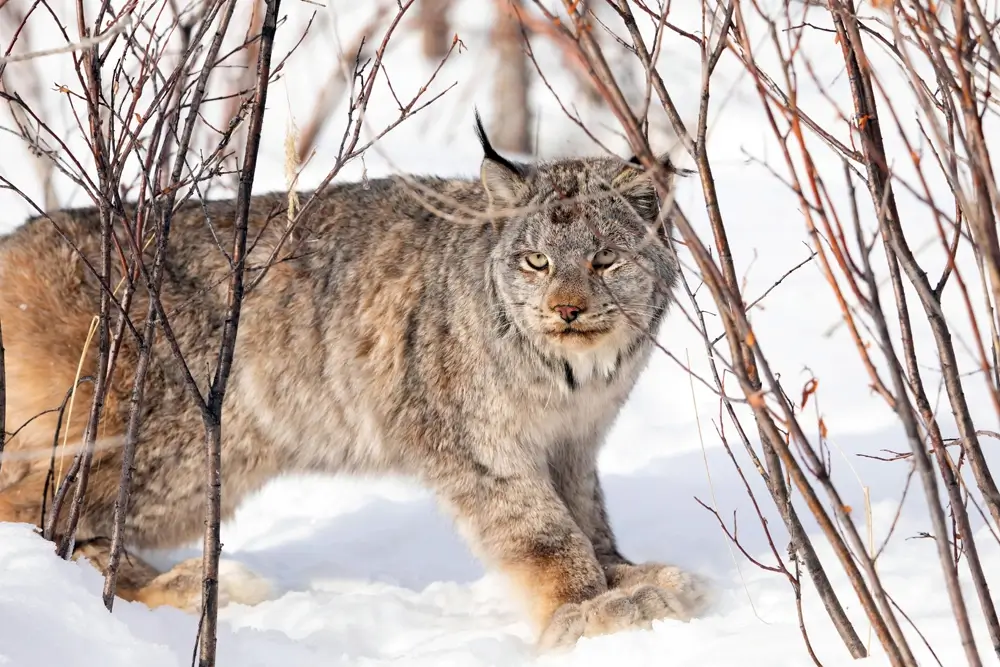
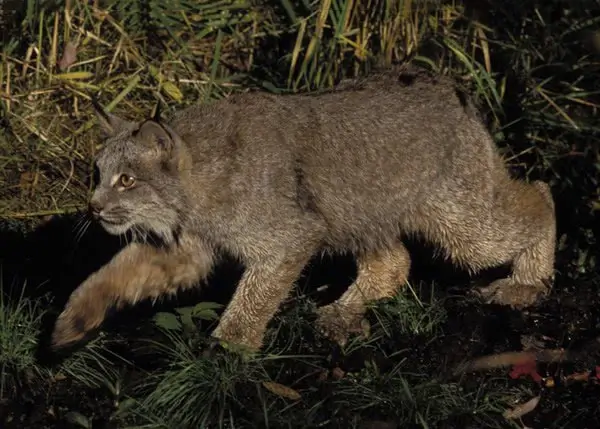
The Canada lynx weighs 11-38 pounds (5-17 kg), and is 19-22 inches (48-56 cm) tall at the shoulder, and is about 3 feet (90 cm) in length. Males are larger than females.
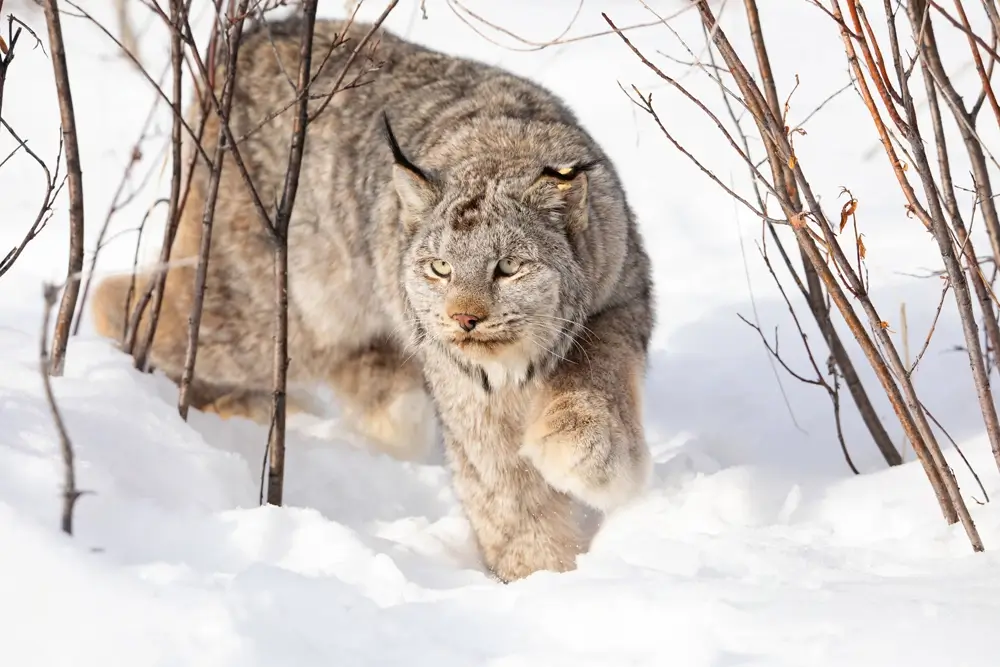
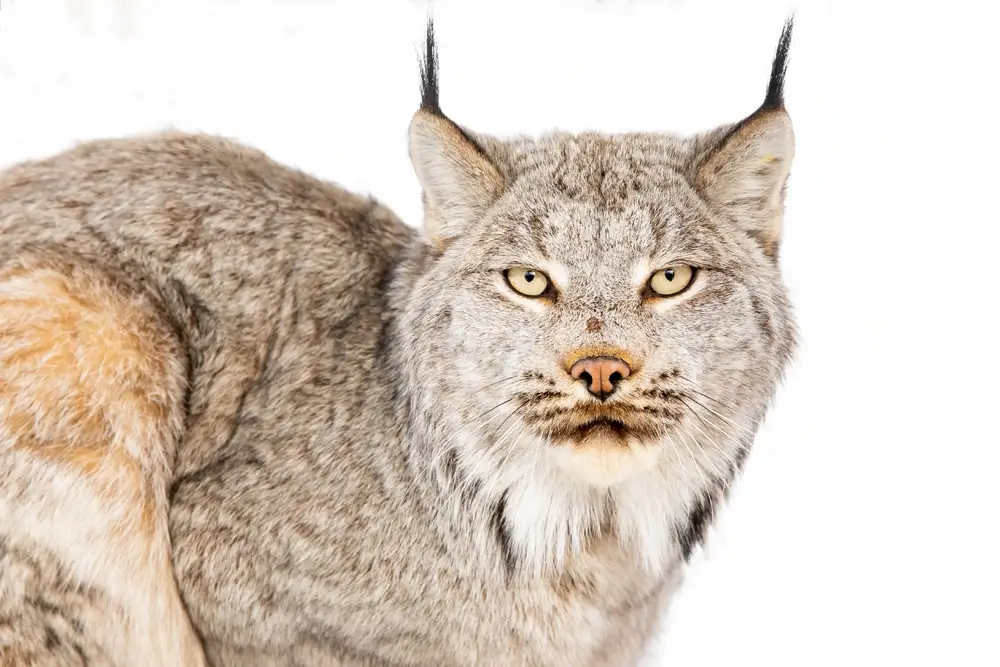
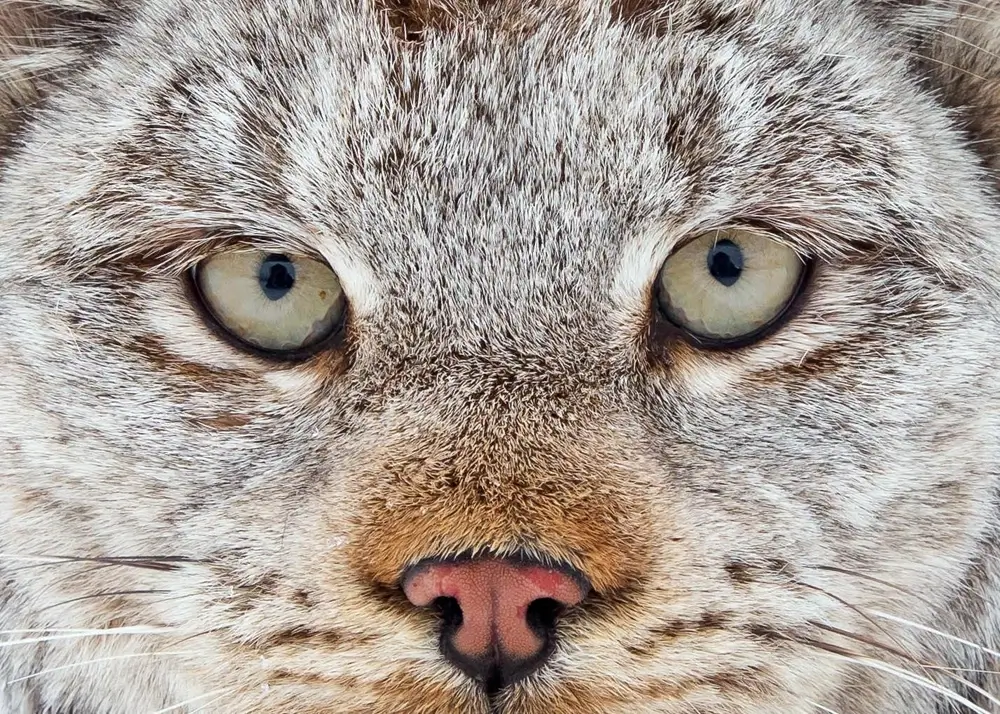
It has very thick, light brown or gray fur with light black spots and large ears with long black tufts at the ends. Its tail is short with a black tip at the end. It has a pointed, beard-like ruff and long legs with big paws.
Its paws work like snowshoes and distribute the lynx’s weight, helping it move in the snow.
Habitat
Canada lynx live deep in coniferous forests near rocky areas, bogs, and swamps.
Diet
About 75% of the Canada lynx’s diet is made up of the snowshoe hare. It also eats birds, meadow voles, carrion, and sometimes larger animals like deer and caribou.
Adult Canada lynx are solitary hunters, although a mother and her young often hunt together. It usually hunts at night and stalks its prey before pouncing on it.
The Canada lynx can climb trees and often waits on a branch for passing prey.
Life Cycle
During mating season, the male follows a female. Canada lynx mate between February and March. Two months after mating, the female gives birth to one to six kittens. The average litter has two to four kittens.
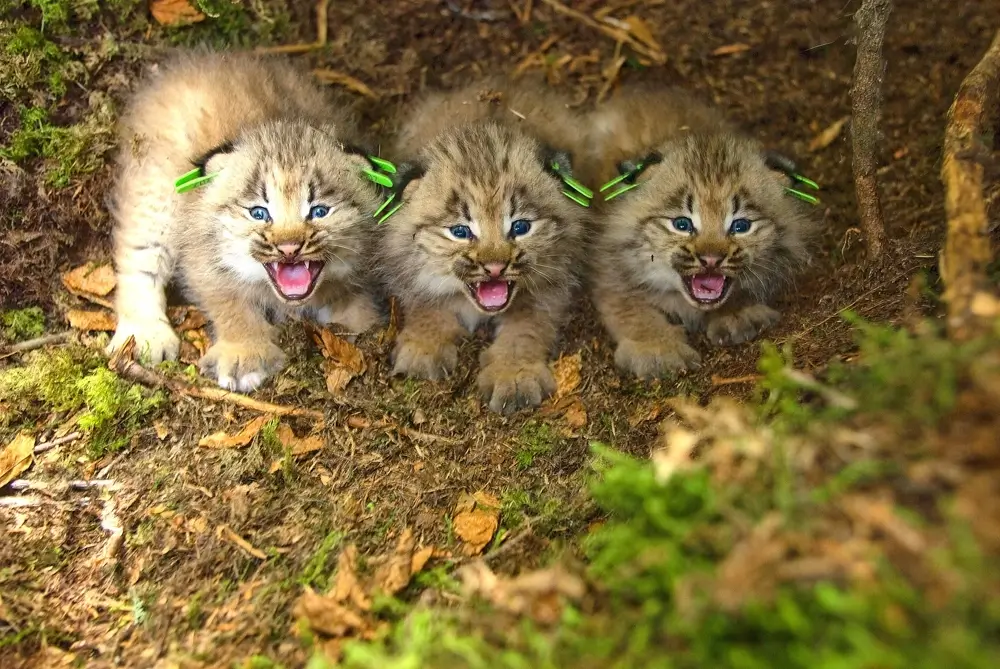
The kittens have soft, streaked, and spotted fur. They are fully weaned at around three months, but start eating meat when they are as young as one month old.
The kittens stay with their mother for their first year. Once they leave their mother, the young lynxes may stay together for a short period of time.
Behavior
Canada lynx are territorial and solitary. The home ranges of females may overlap and a male’s and a female’s range may overlap, but male’s ranges are separate.
Did You Know?
The Canada lynx often stores leftover kill by covering it with snow.
U.S. Fish and Wildlife Service
Support for NatureWorks is provided by:
The Canada Lynx in NH
The Canada lynx is an endangered species in New Hampshire. A breeding population was present in the northern part of the state until the 1950s. Since then, there have been some sightings of the lynx in the White Mountains.
In January 2006, Canada lynx tracks were confirmed in Jefferson, New Hampshire, on U.S. Route 2.
In 2011, four Canada lynx kittens were caught on video in Pittsburg, New Hampshire, indicating that the lynx might be breeding in the state.
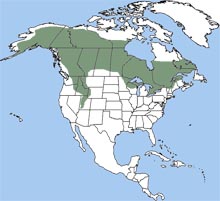
The lynx’s range extends over most of Canada and Alaska, and south into parts of Washington, Oregon, Idaho, and Montana, as well as parts of the northern U.S.