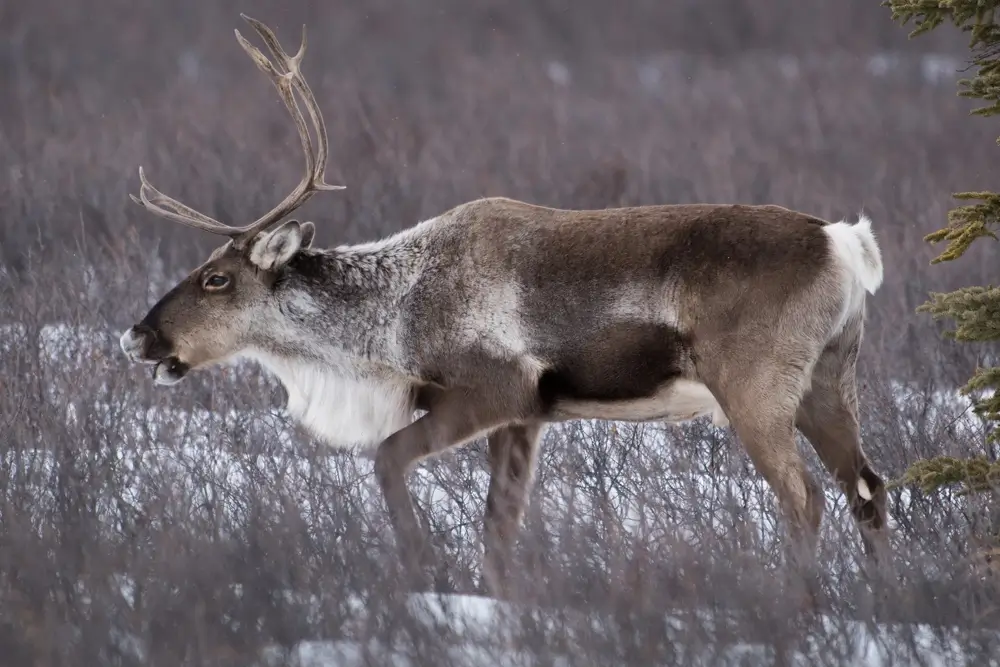
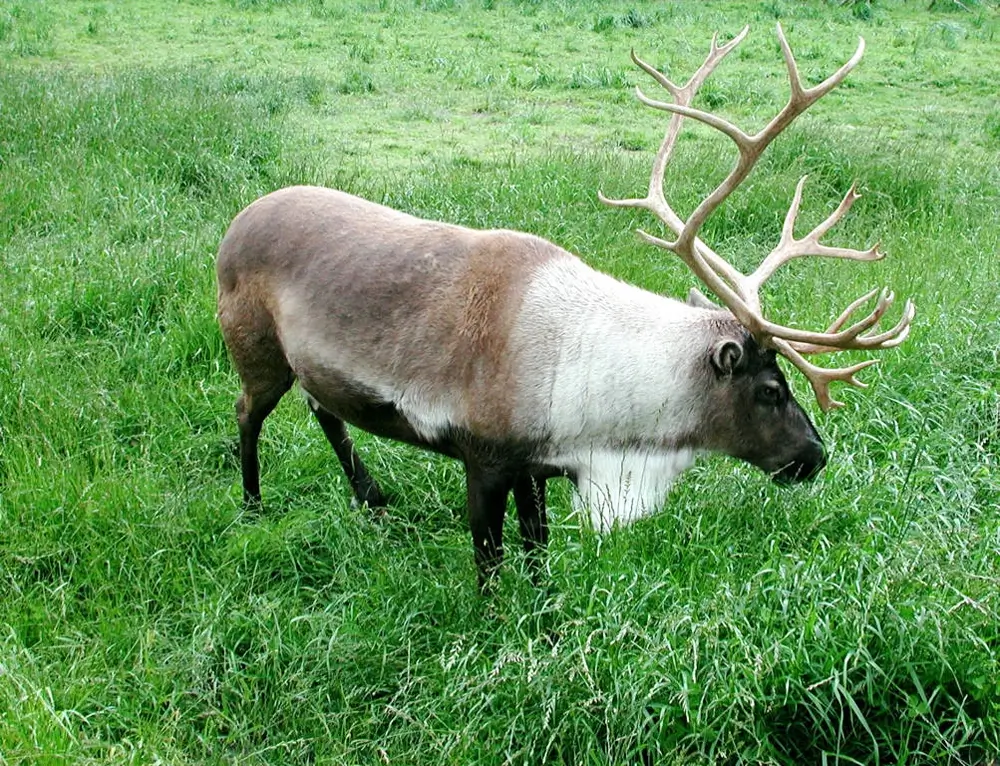
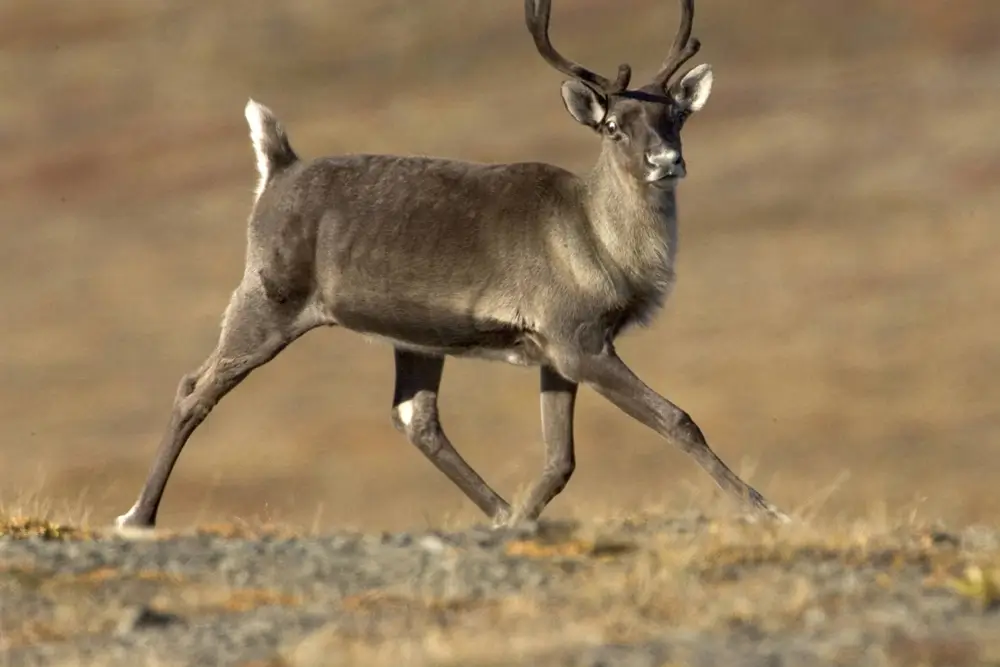
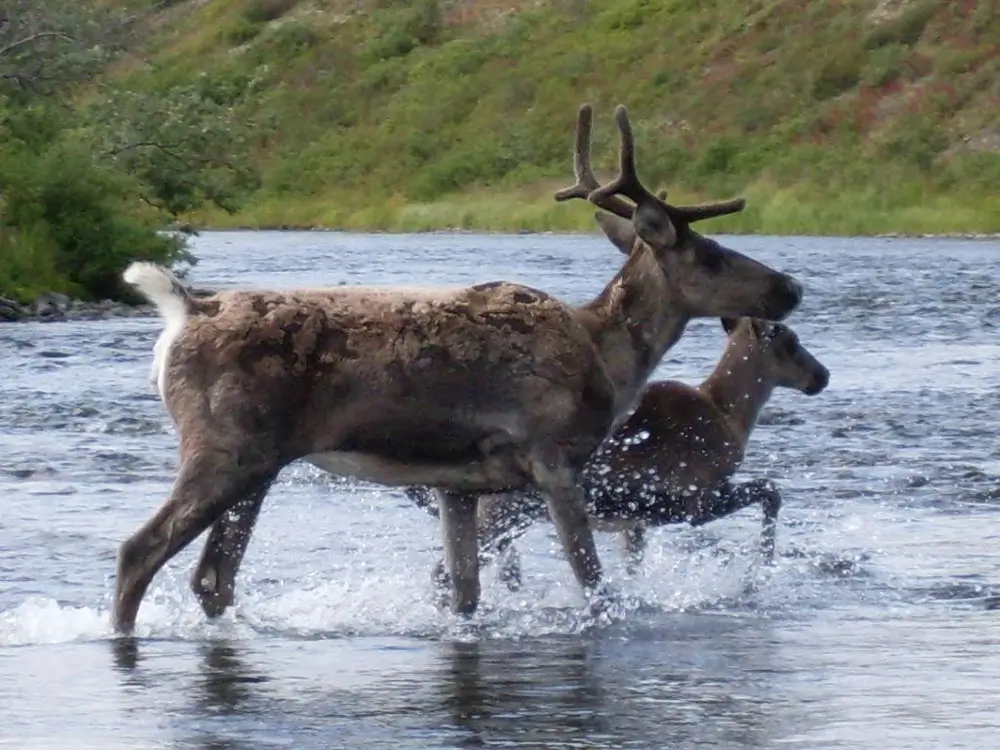
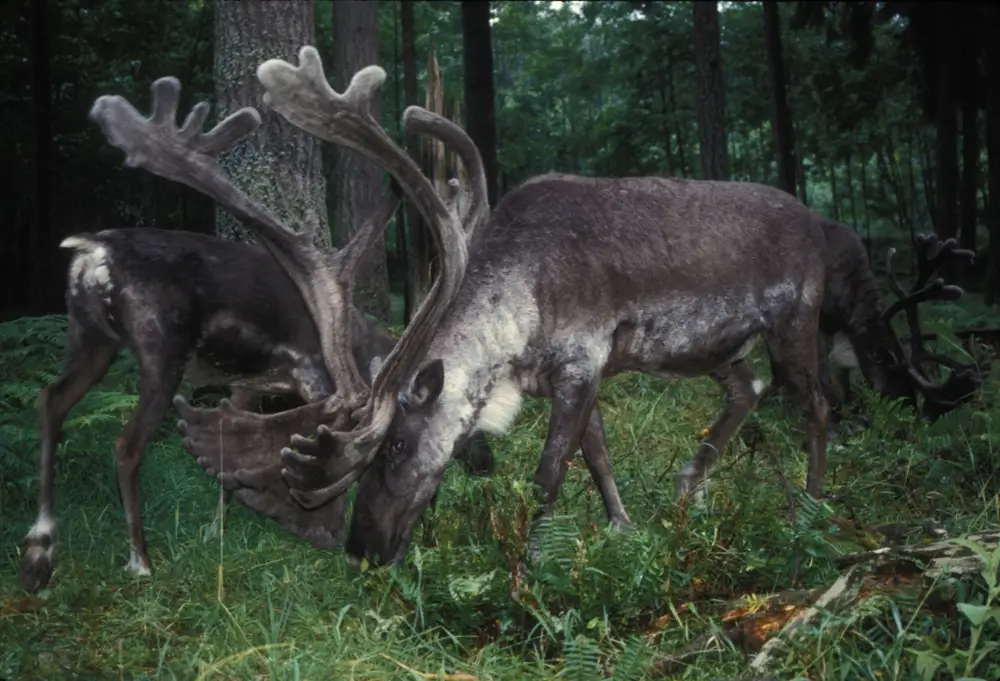
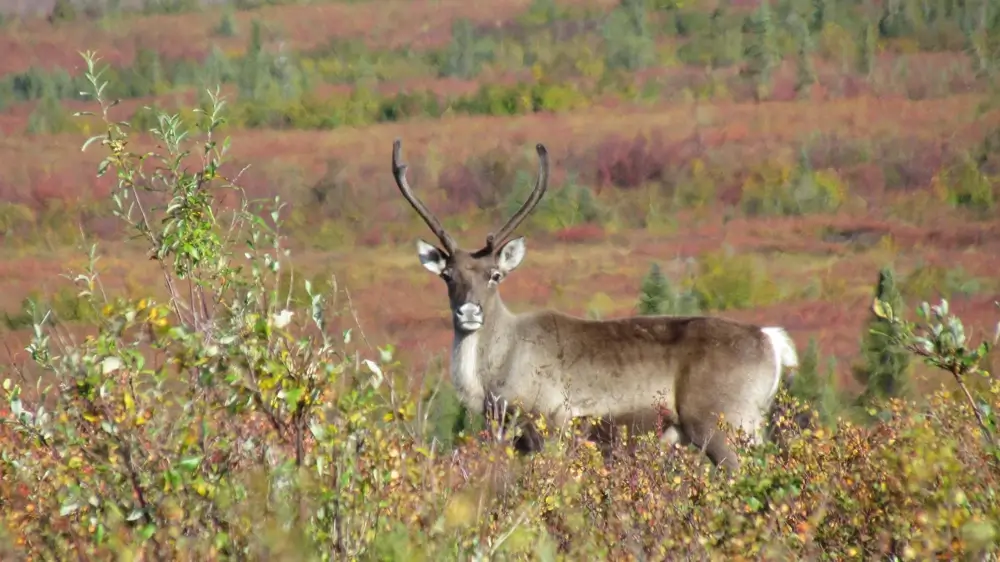
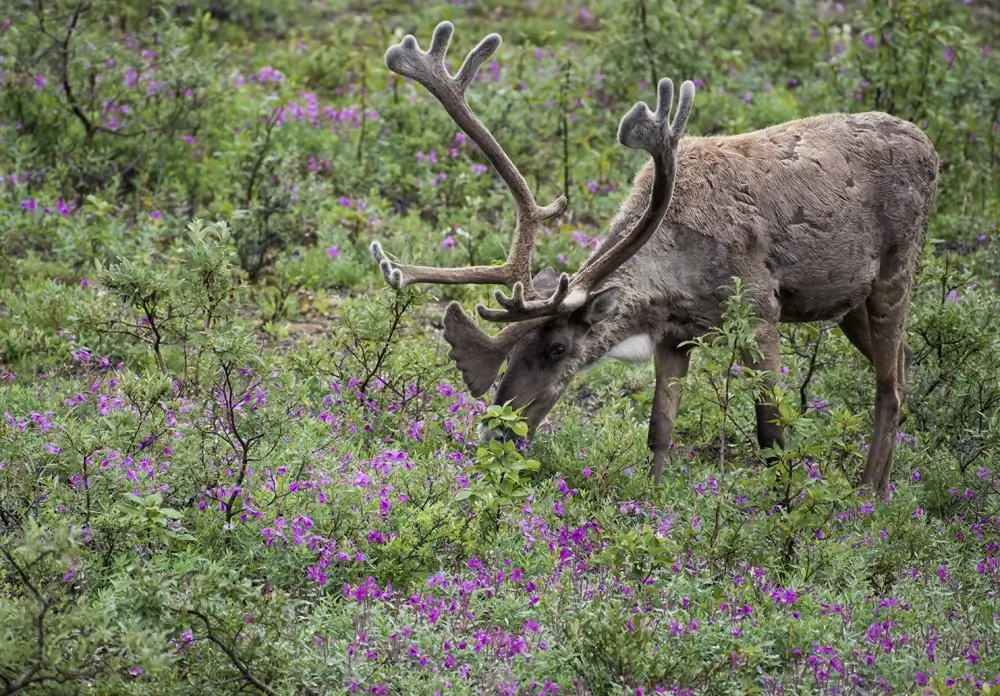
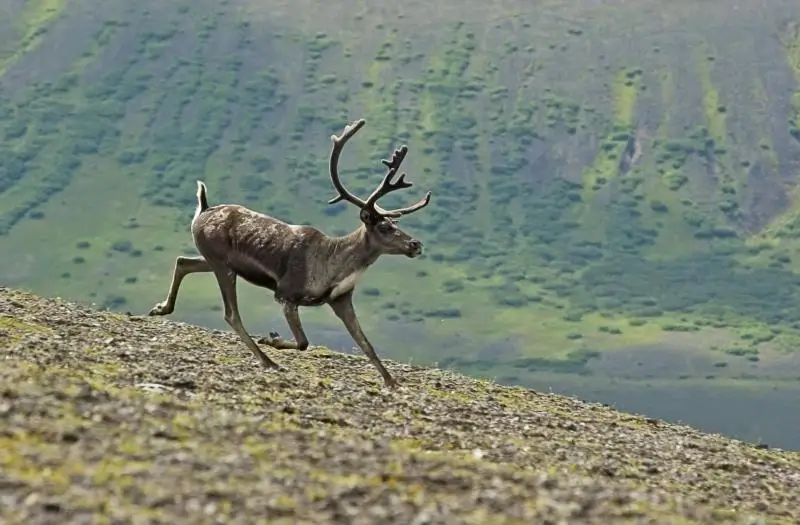
The caribou is a member of the cervid, or deer family. It has brown shaggy fur and a white neck, rump, and belly. In some areas, the caribou can be almost entirely white. The caribou has a long snout, a short tail, and long legs with large, round hooves. The caribou has a dewlap (flap of skin) covered with long white hair on its throat.
The caribou is the only deer species in which both the male and female have antlers. The male’s antlers are large and branch out. The female’s antlers are smaller and straighter.
The caribou has double-layered fur. It has a guard, or outer coat of straight, tubular fur, and a woolly undercoat.
Male caribou weigh 275-660 pounds (125-299 kg); females weigh 50-300 pounds (23-136 kg). The caribou is 4-7 feet (1.2-2.1 m) in length.
The caribou eats lichens, mushrooms, grasses, sedges, flowering tundra plants, the twigs of birches and willows, and fruit.
Life Cycle
Male caribou compete with each other for females and sometimes fight using their antlers. They chase after a female and thrash their antlers in the bushes. A male caribou may have a harem (group) of 5-15 females. Mating season runs from October to November. The female gives birth to one or two calves 7-8 months after mating.
Calves weigh about 10 pounds (3.8 kg) at birth and can stand on their own 30 minutes after they are born. Calves will travel with the herd within a day of birth. They begin to graze when they are a few weeks old, although they may continue to nurse for a month or so. Calves are independent by the fall.
Caribou have a lifespan of 10-15 years in the wild. In captivity, they can live to be around 20 years old.
Behavior
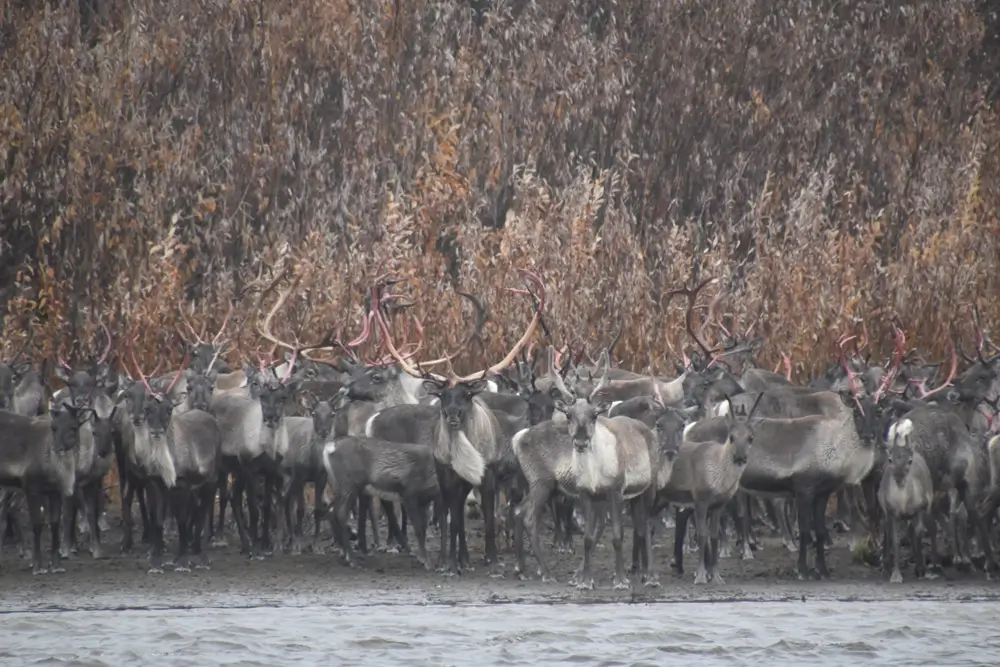
Caribou are nomadic; they are constantly moving in search of food. When they migrate in the spring, they can travel in huge herds of thousands of animals. Caribou can travel thousands of miles every year.
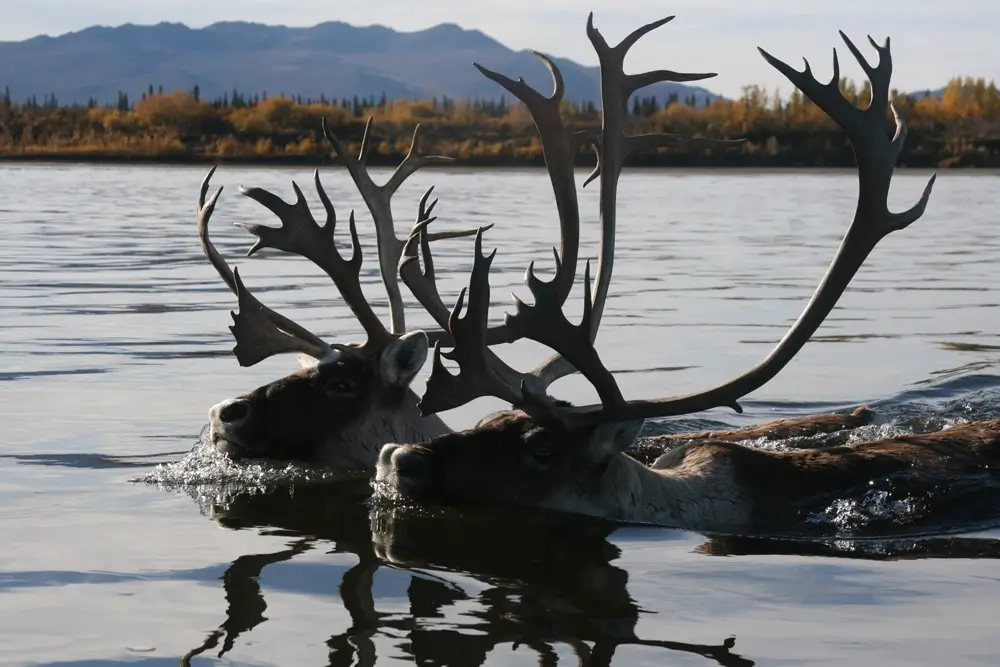
Caribou can run at speeds of up to 50 miles per hour (80 kph). In the summer, their foot pads are soft to help them walk on soggy summer tundra. In the winter, their foot pads shrink, harden, and are covered with fur to help them move on the snow and ice. The caribou is a good swimmer and can swim at speeds of up to 6 miles per hour (9.7 kph).
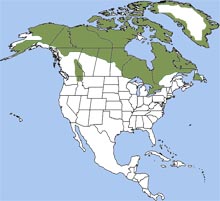
The caribou is found in Alaska and in Canada south through British Columbia to eastern Washington. northern Idaho, and northwestern Montana. It is also found across the northern regions of Europe and Asia, where it is known as the reindeer.
A subspecies, the woodland caribou or the boreal caribou (Rangifer tarandus caribou), is currently listed as endangered in the U.S. The woodland caribou is a subspecies of caribou found in Montana, Idaho, and Washington. It was once found in northern New England.