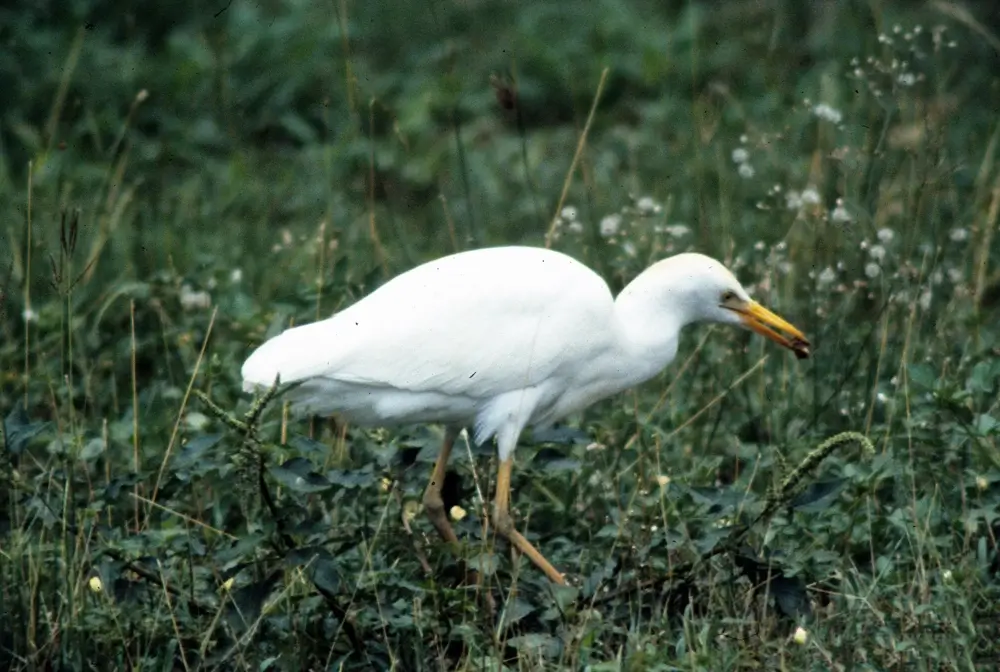
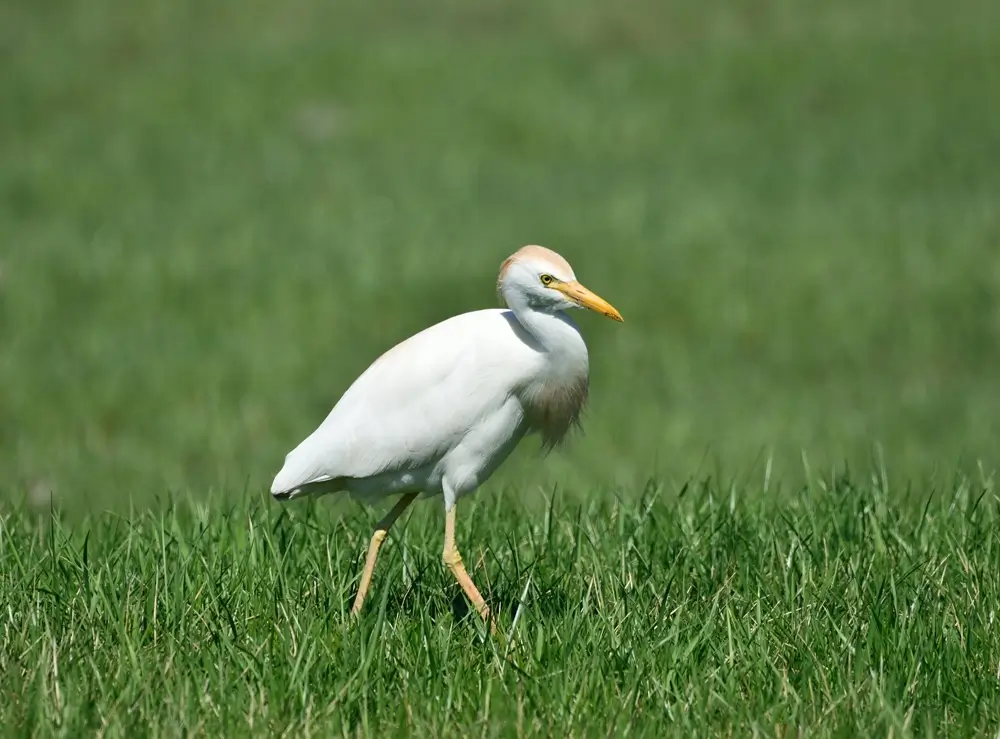
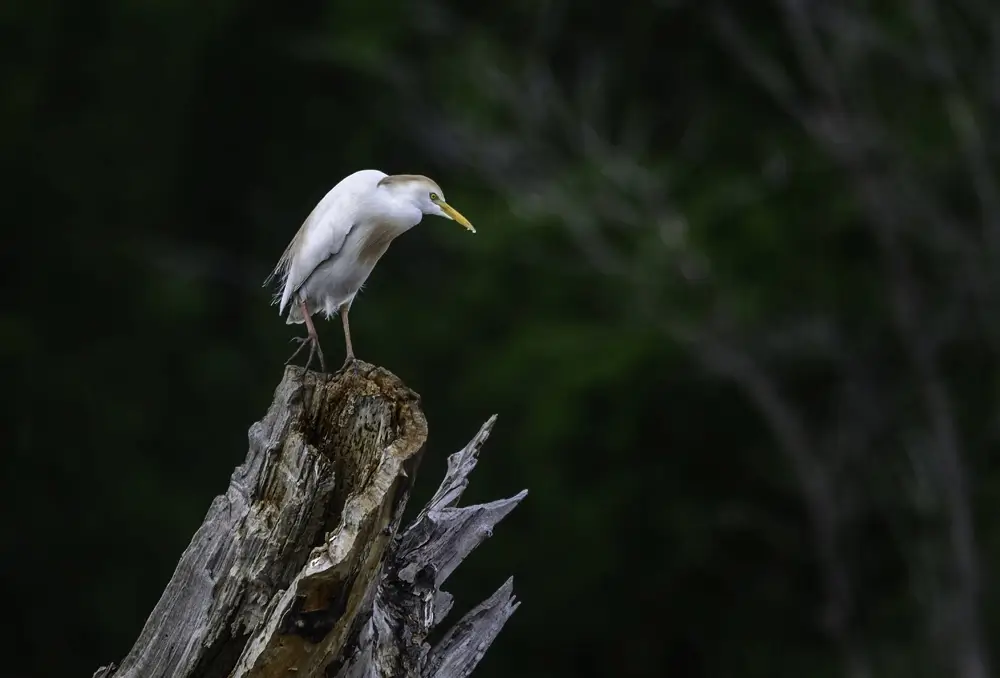
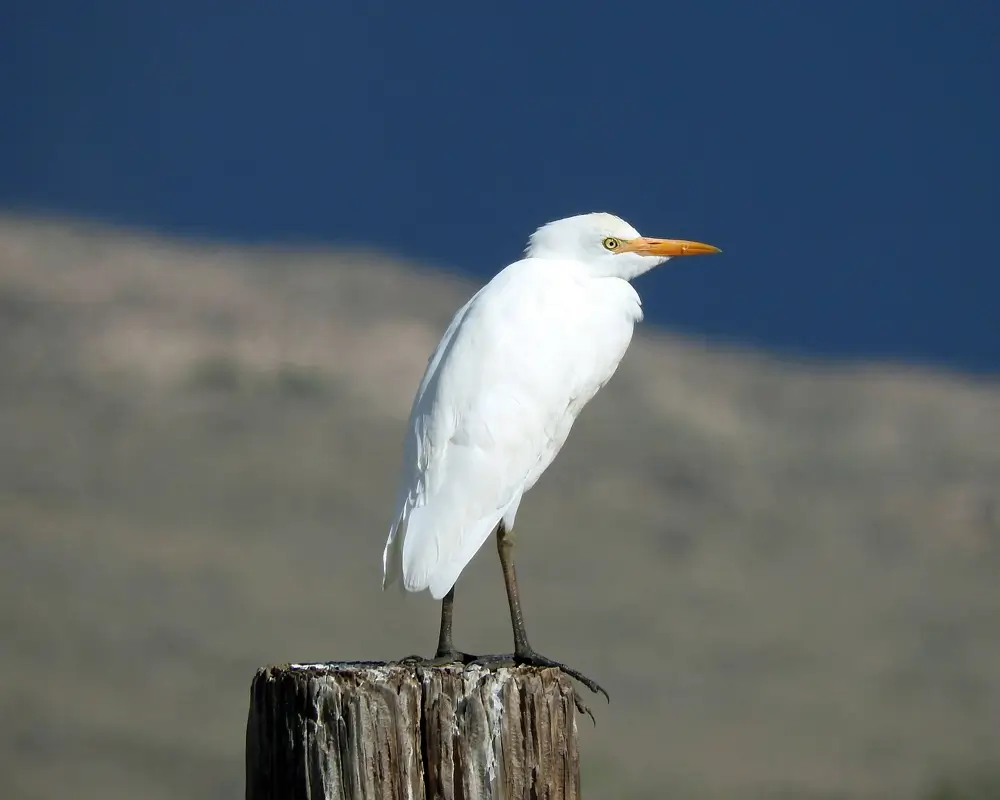
The cattle egret is a small white heron about 18.1-22.1 inches (46-56 cm) in length with a wingspan of 34.6-37.8 inches (88-96 cm).
It often looks like it is hunched over. It has short legs and a thick neck compared to other species of egrets.
Adults have dull yellow or orange bills and dull orange legs. Immature cattle egrets have black legs and bills.
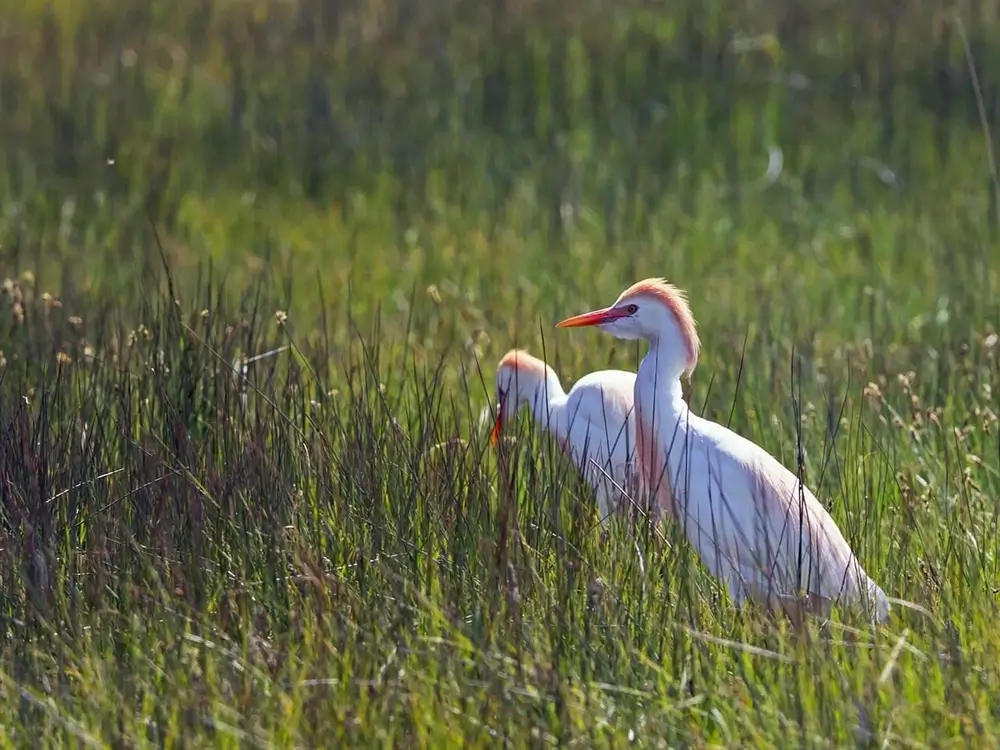
During the breeding season, the cattle egret has a brownish crown and chest, and its eyes, legs, and bill are red.
Habitat
The cattle egret is most often found near farmland and livestock. It is also found in wetlands.
Diet
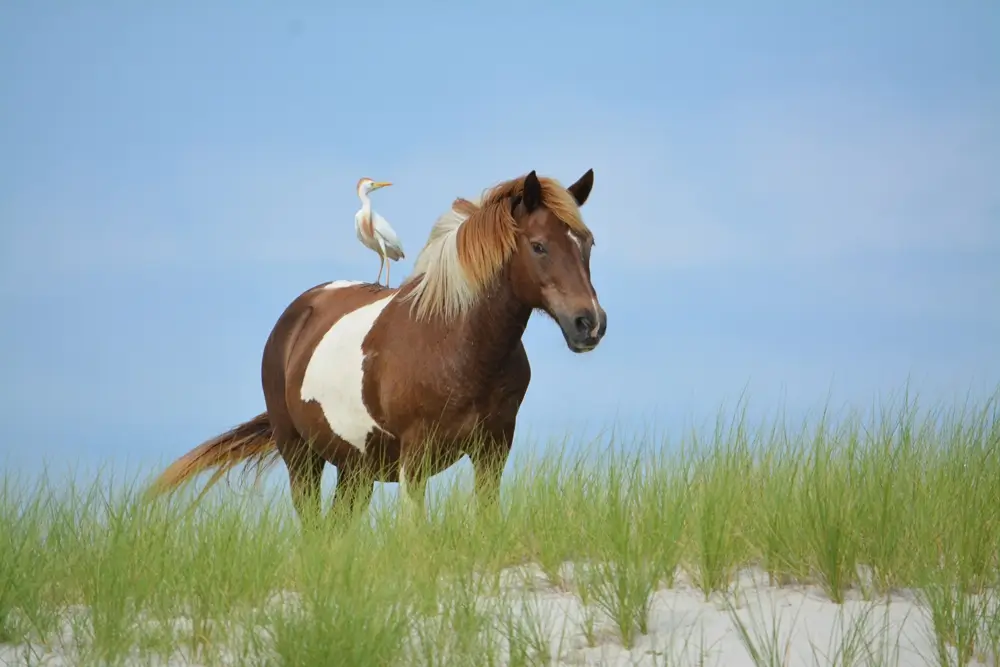
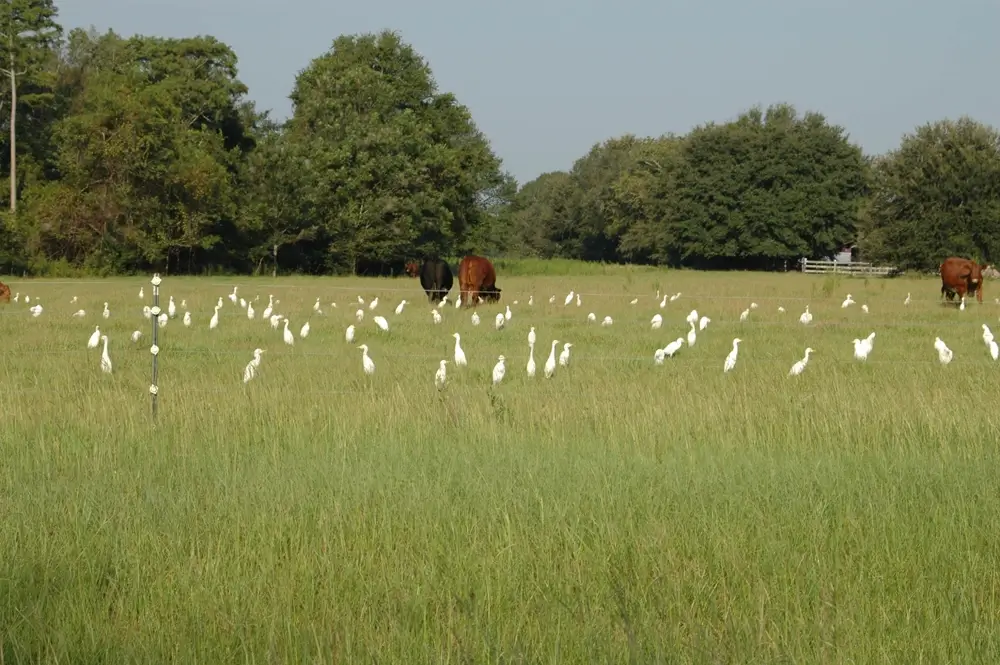
In Africa, the cattle egret eats insects that are stirred up by wild animals. They have adapted to following animals like cows in North America and eating insects like grasshoppers, crickets, spiders, and flies that are disturbed by cows and other livestock as they are grazing and moving around.
Life Cycle
Male cattle egrets claim territory before mating begins. They go through a variety of display behaviors to attract females. Females gather in their territory and sometimes jump on the backs of the males. Eventually, the male evicts all but one female.
Both the male and the female work together to build a nest. The male brings the materials, sometimes stealing sticks from the nests of other egrets. The female constructs the nest. The nest is made of sticks and is built in a bush or a tree.
The female lays three to five eggs, and both parents incubate the eggs. The chicks hatch in three to four weeks and fledge when they are a month old. Both parents care for the chicks. Cattle egrets nest in colonies with other species of egrets.
The cattle egret has an average lifespan of 2 to 3 years in the wild. In captivity, they can live to be 20 years old.
Behavior
Cattle egrets are very social. They gather in large colonies of cattle egrets and other bird species.
In addition to following livestock, they also follow farm equipment, like tractors, to catch insects that are disturbed.
Did You Know?
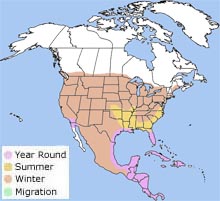
The cattle egret is a non-native species in North America. It probably flew to South America from Africa and then moved up into the United States and Canada.
Support for NatureWorks is provided by:
The Cattle Egret in NH
The cattle egret does not breed in New Hampshire, but it can be seen in the state in the winter.