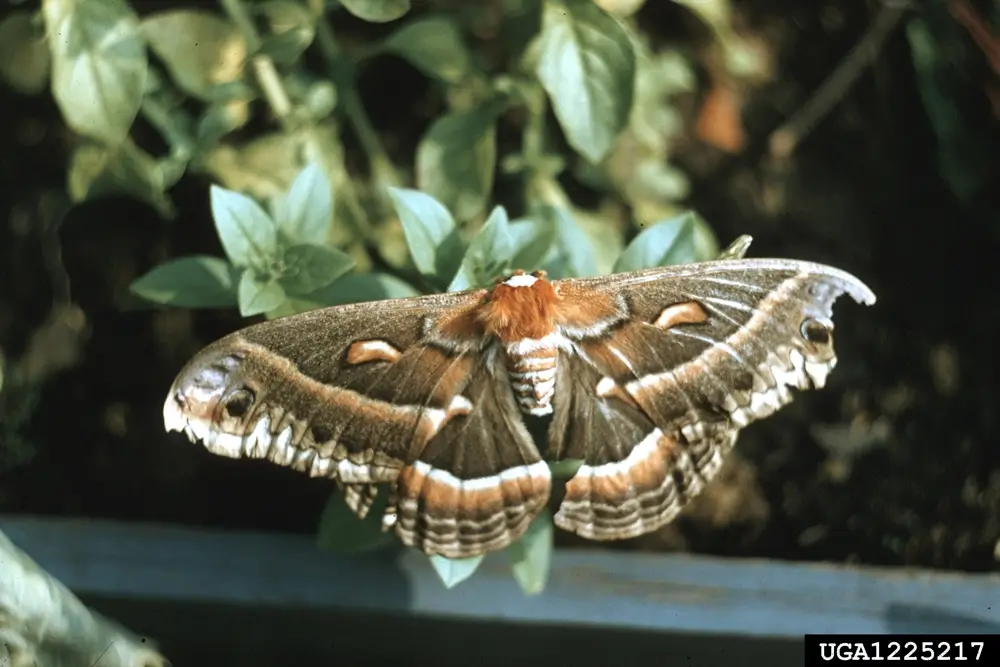
The cecropia moth has a wingspan of 5-6 inches (12.7-15.2 cm). It is the largest moth native to North America.
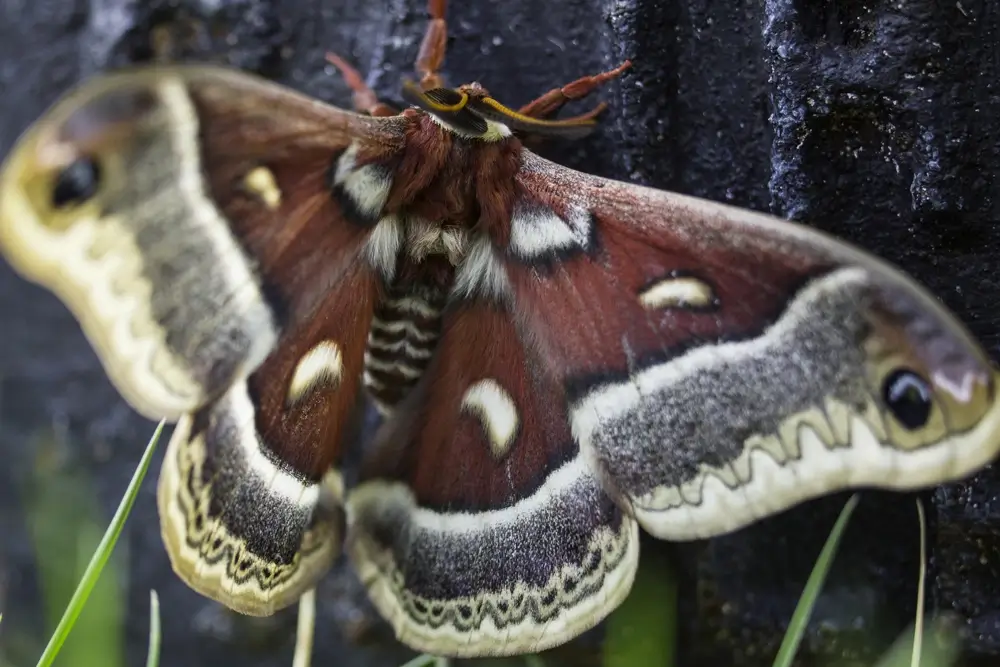
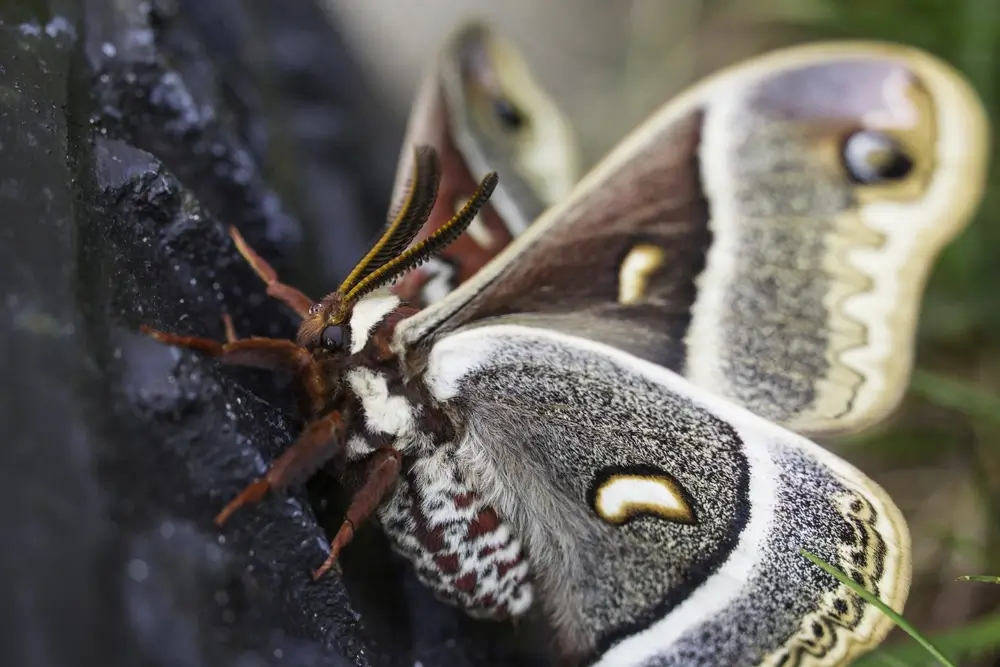
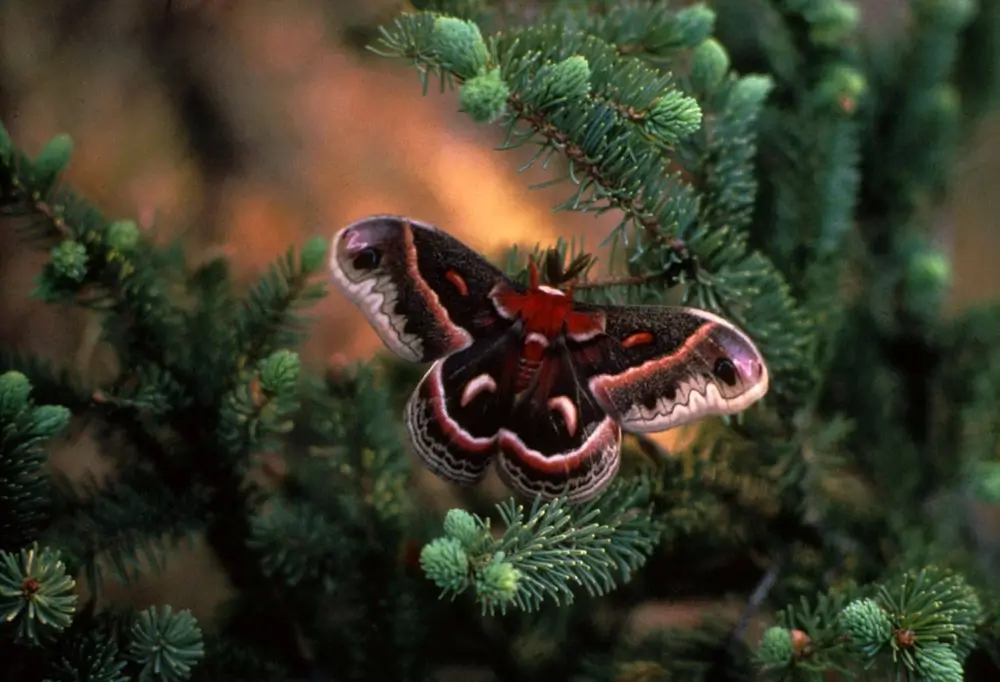
It is a very colorful moth. It has a red body with white stripes, reddish-brown wings with crescent-shaped white marks, and eyespots on the upper tips of its wings. The edges of its wings are a light tan.
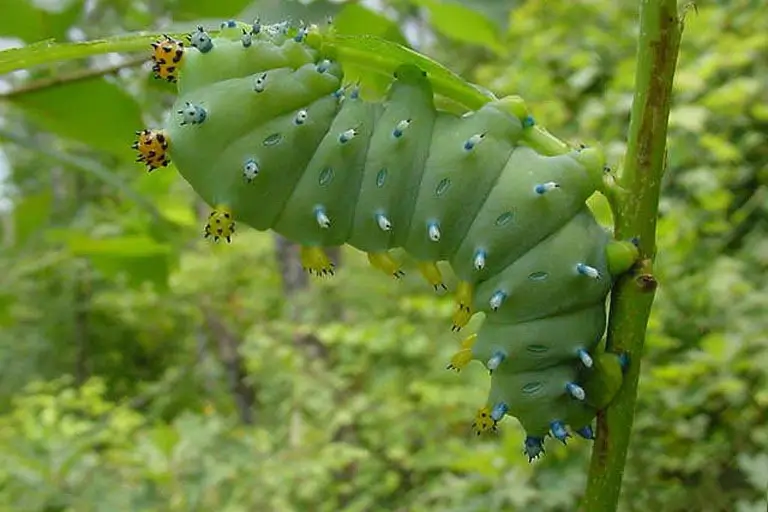
The cecropia caterpillar is about 4 inches (10.2 cm) in length and is greenish-blue, and has two rows of red, yellow, and blue spiny tubercles (round protrusions) on its body.
Habitat
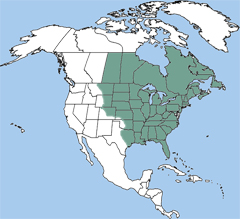
The cecropia moth is found in open areas with trees.
Diet
The cecropia caterpillar feeds on the leaves of many trees and shrubs, including ash, birch, boxelder, alder, elm, maple, poplar, wild cherry, plum, willow, apple, and lilac.
The cecropia moth does not eat. Its only purpose is to mate. It has no digestive system and a non-functioning mouth. It only lives for a few weeks.
Life Cycle
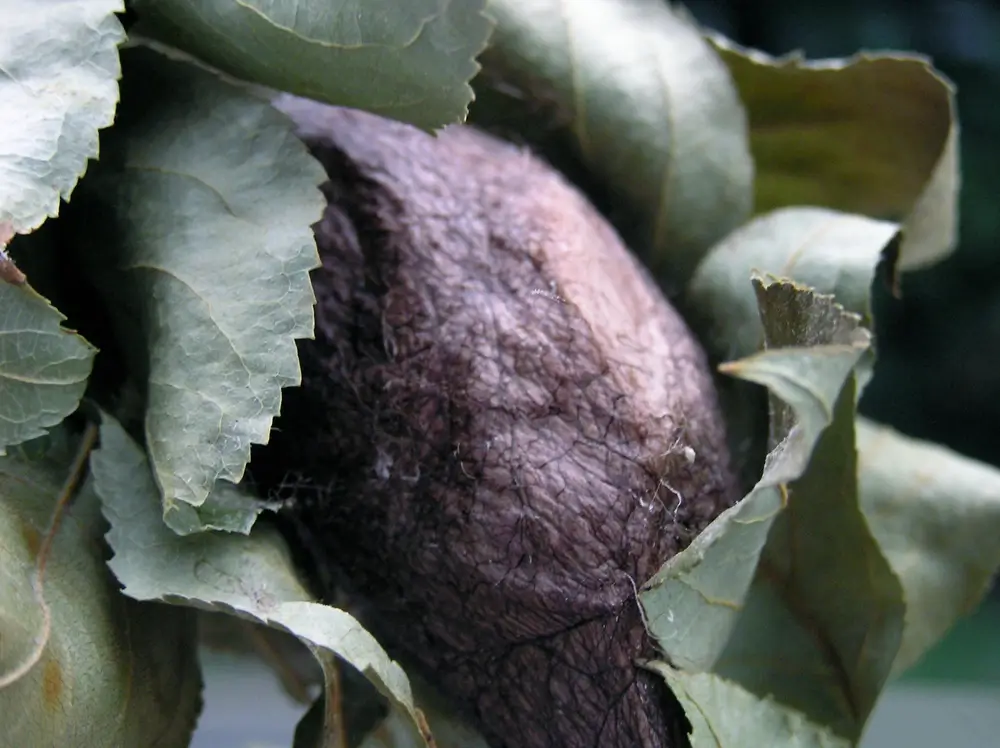
The female cecropia moth lays rows of eggs on both sides of a leaf on a tree or shrub. The eggs hatch in 10-14 days, and the caterpillars begin eating the leaves of the host tree or shrub. The cecropia cocoon is crescent-shaped and is attached to a tree branch. There is one generation of cecropia moths born each year. Adult cecropia moths only live around two weeks because they have no mouths or digestive systems..
Behavior
The cecropia moth is mostly nocturnal and is rarely seen during the day.
Did You Know?
The cecropia moth is the largest moth found in North American .