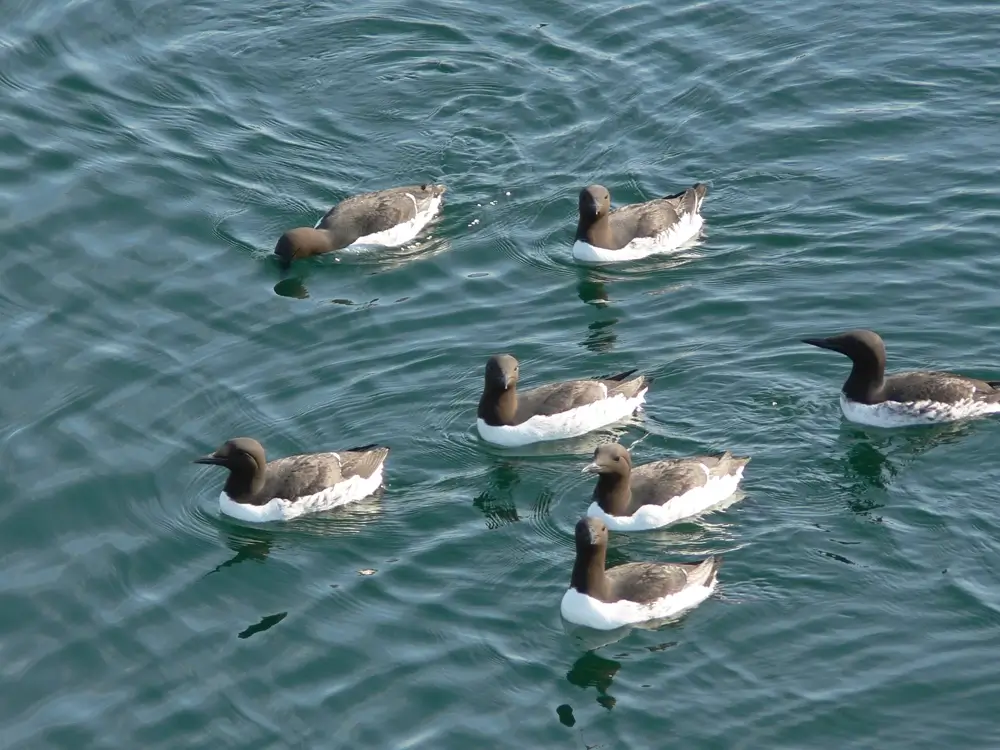
The common murre is a pelagic seabird. It spends most of its life on the open sea, except during the breeding season. It is 15-17 inches (38-43 cm) in length and has a wingspan of 25-28 inches (64-71 cm).
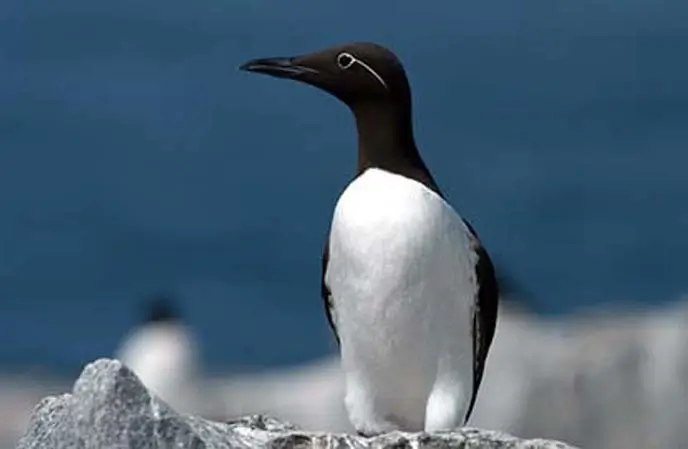
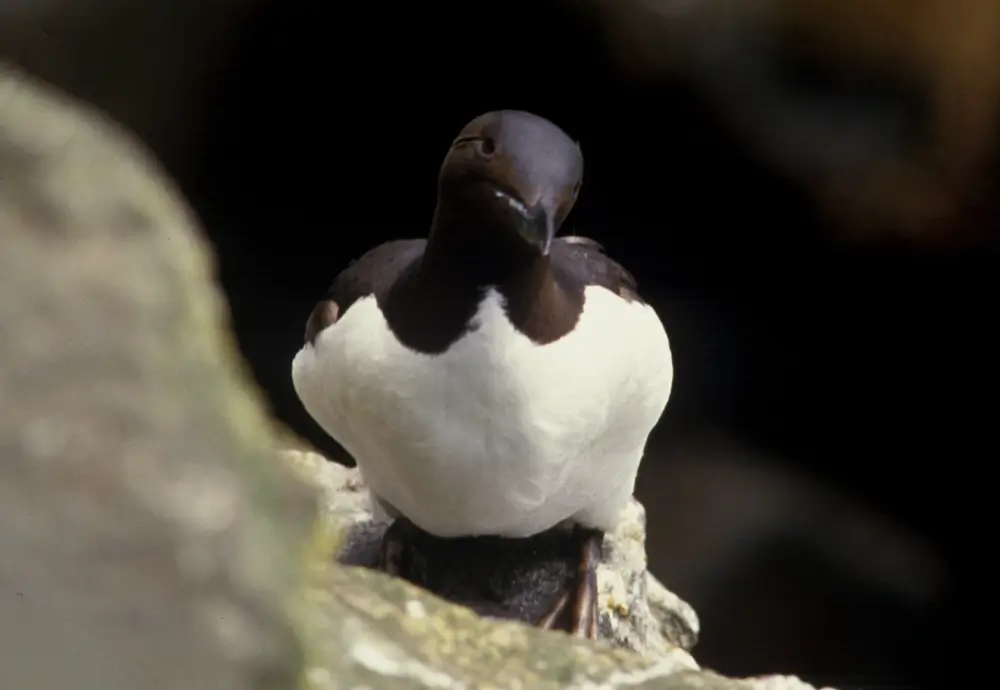
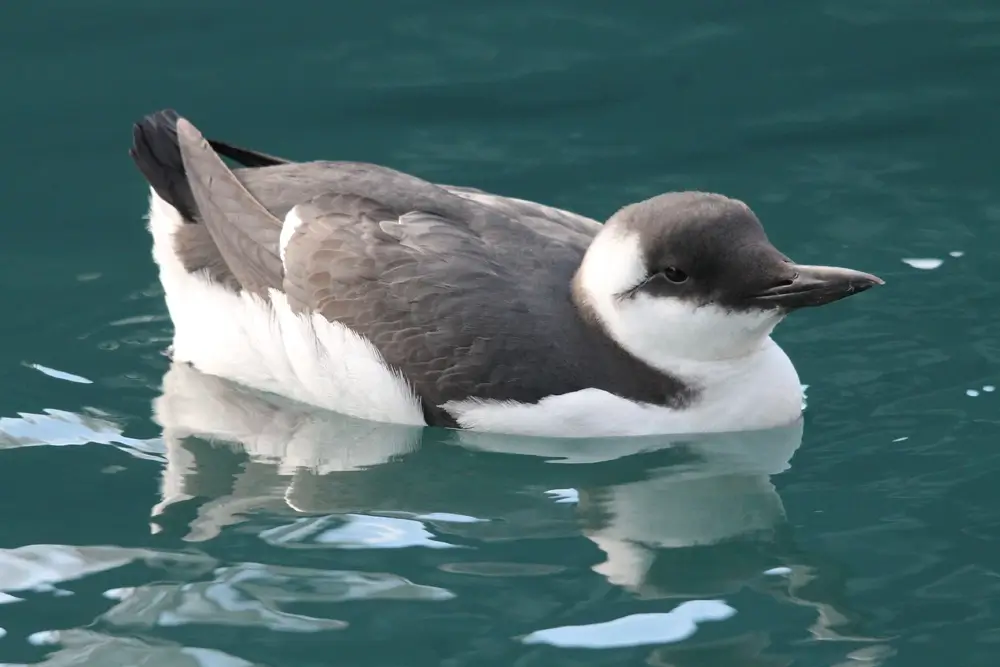
It has short wings with a thin white bar, a black head and back, and a white chest and belly. It has a long, black, pointed bill and black legs and feet.
Males and females look alike. The common murre’s coloring is duller in winter, and its neck and face may be white or gray.
Habitat
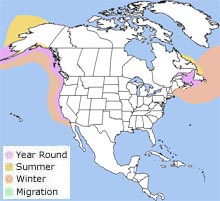
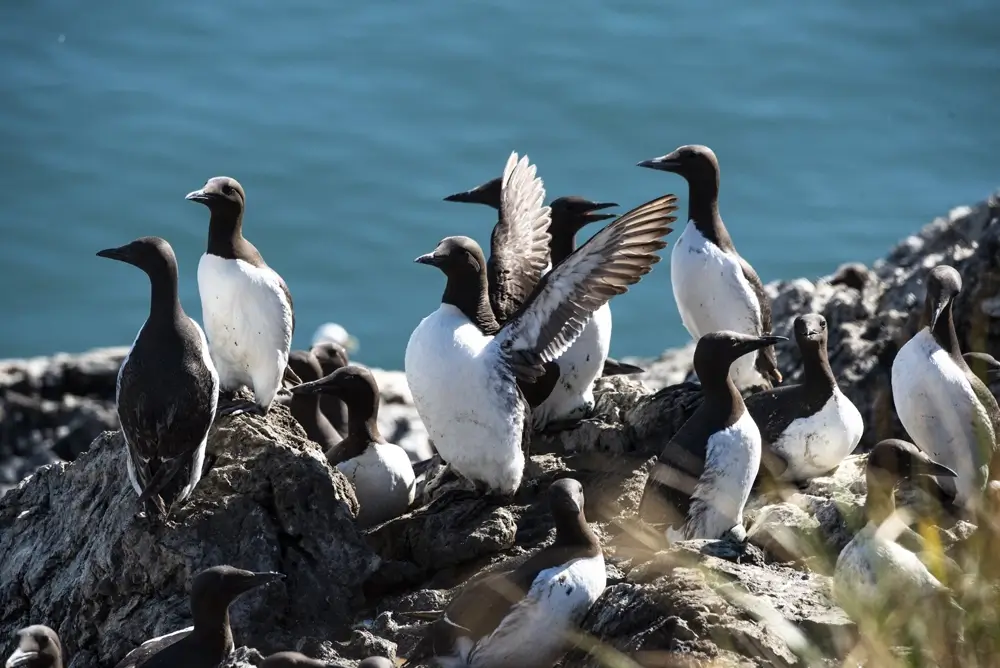
The common murre is found in open ocean waters in the winter and on rocky cliffs and islands in the breeding season.
Diet
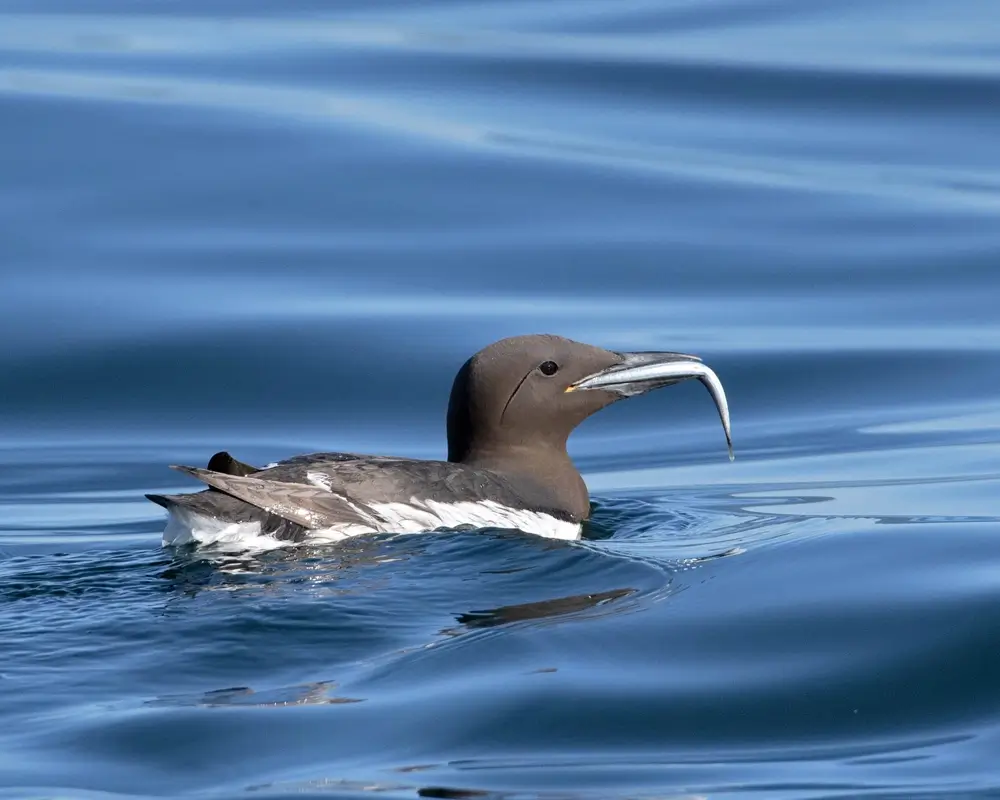
The common murre uses its torpedo-shaped body to dive underwater and catch prey like squid, krill, small fish, marine worms, shrimp, and mollusks. It uses its wings to help it swim, or “fly” underwater.
Life Cycle
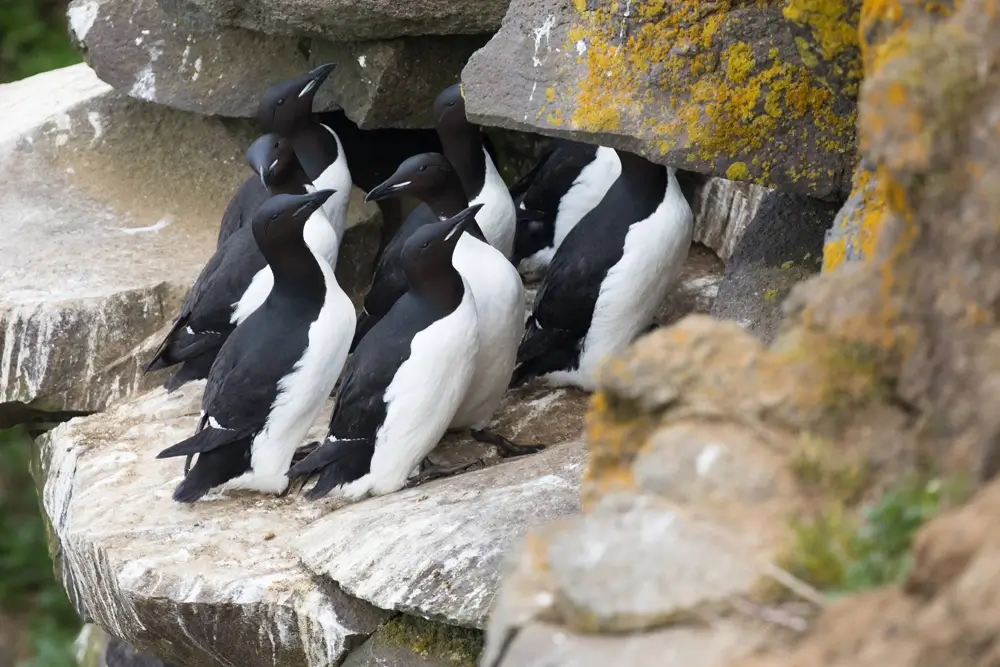
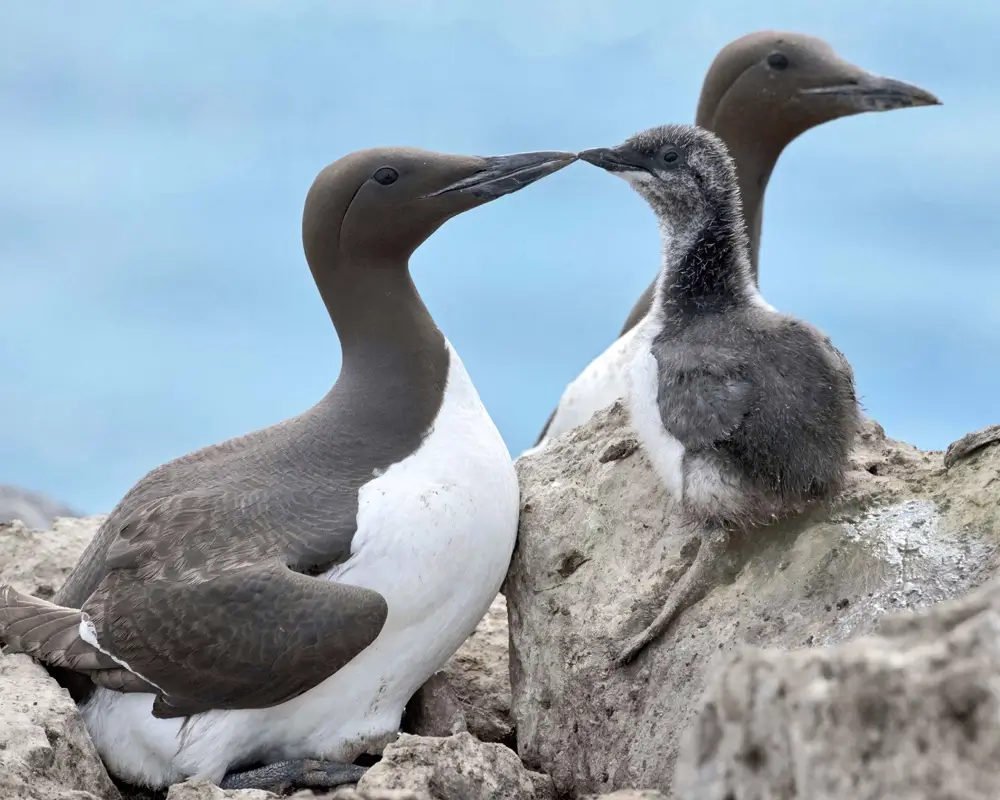
The male and female common murre court each other by bowing and preening. They nest in large colonies on rocky ledges and cliffs. The female lays a single egg in a shallow depression on the ground.
The egg can be green, blue, brown, white, or cream, and is shaped like a pear. If the egg is disturbed, it won’t roll off the cliff. Instead, it pivots around on its pointed end in a circle. Both the male and the female incubate the egg for 28-35 days. Both the male and the female care for and feed the chick until it fledges at 18-25 days. They bring the chick three to five fish each day.
When the chick is ready to fledge, the male swims below the cliff and calls out to it. The chick then hurls itself off the cliff edge and drops 800 to 1,000 feet (244-305 m) into the ocean, where it swims out to its father.
The male stays with the chick and cares for it and feeds it until it can fly, when it is 39-46 days old. Scientists think the common murre leaves the nest before it can fly or feed itself because it is too difficult for the adults to continue to bring it enough food on land. The common murre mates when it is 5-6 years old.
The common murre has a lifespan of around 20 years in the wild.
Behavior
The common murre has to run across the surface of the water to take off in flight, but it is a strong flyer once it is in the air. On land, it stands upright and looks like a penguin.
The common murre is built for swimming and diving. It can stay underwater for up to a minute and can dive to about 150 feet (45.7 m).
Did You Know?
Support for NatureWorks is provided by:
The Common Murre in NH
The common murre does not breed in New Hampshire, but is occasionally seen in the coastal waters of the state.