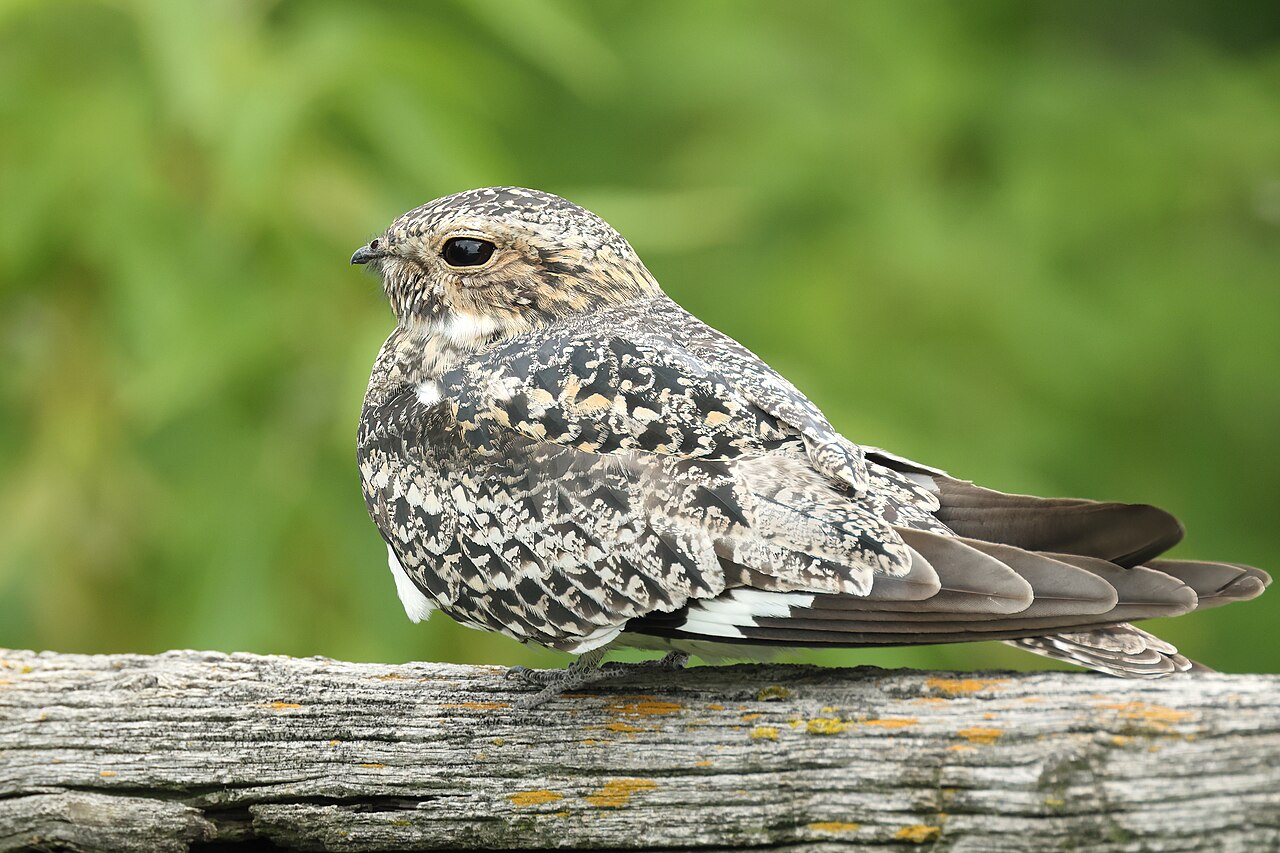
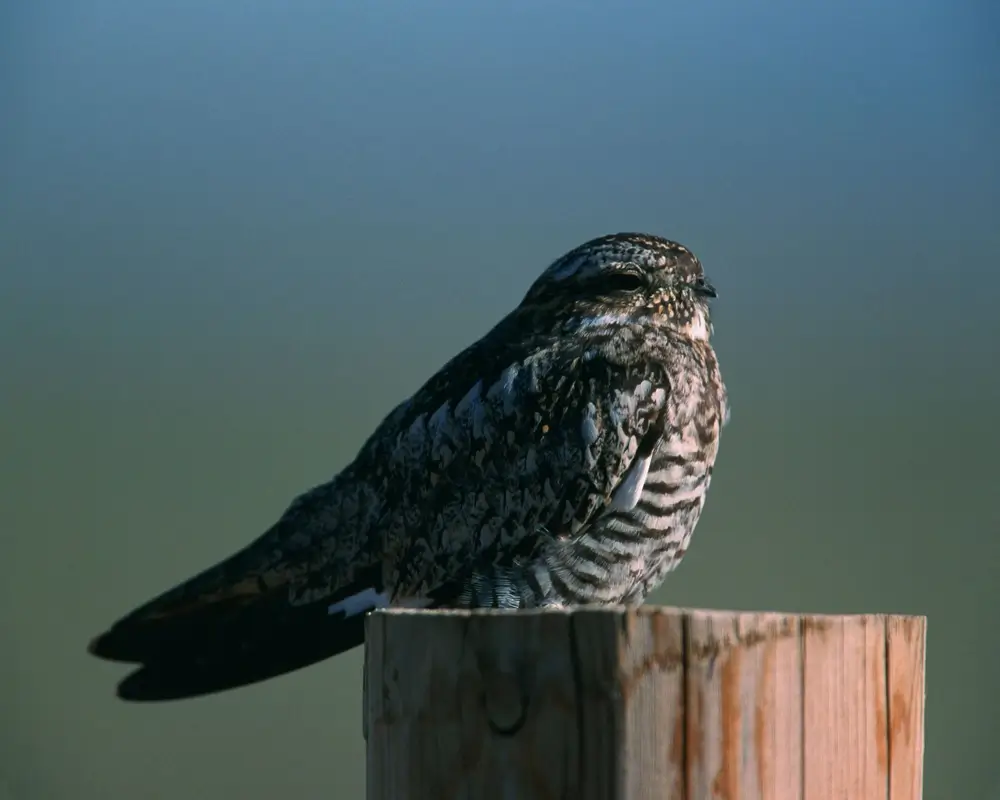
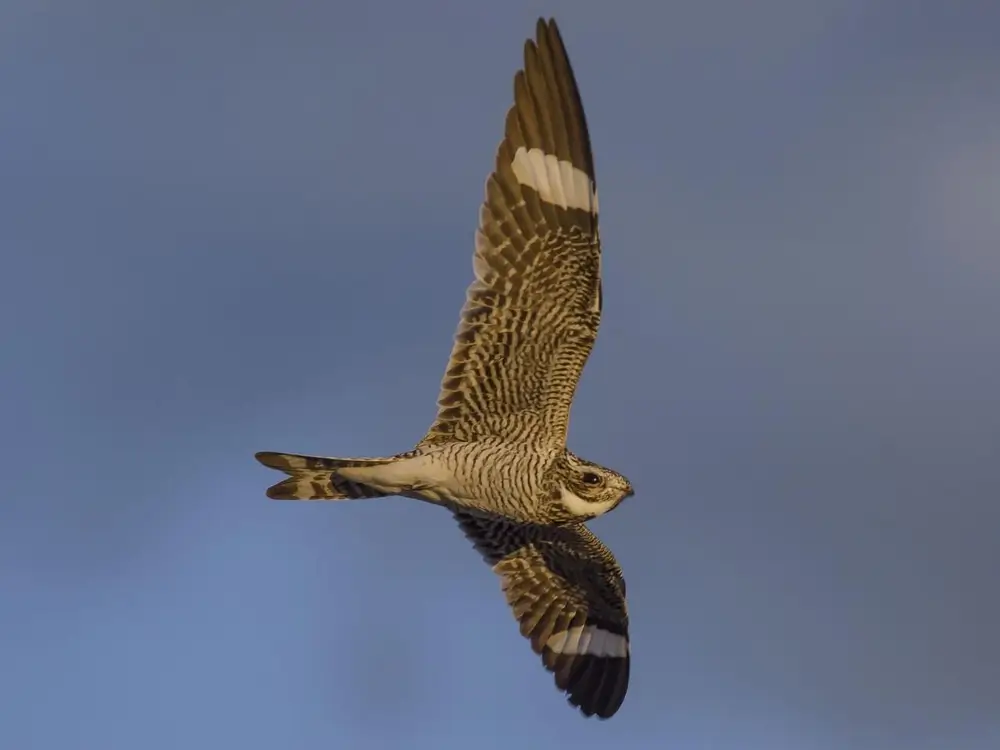
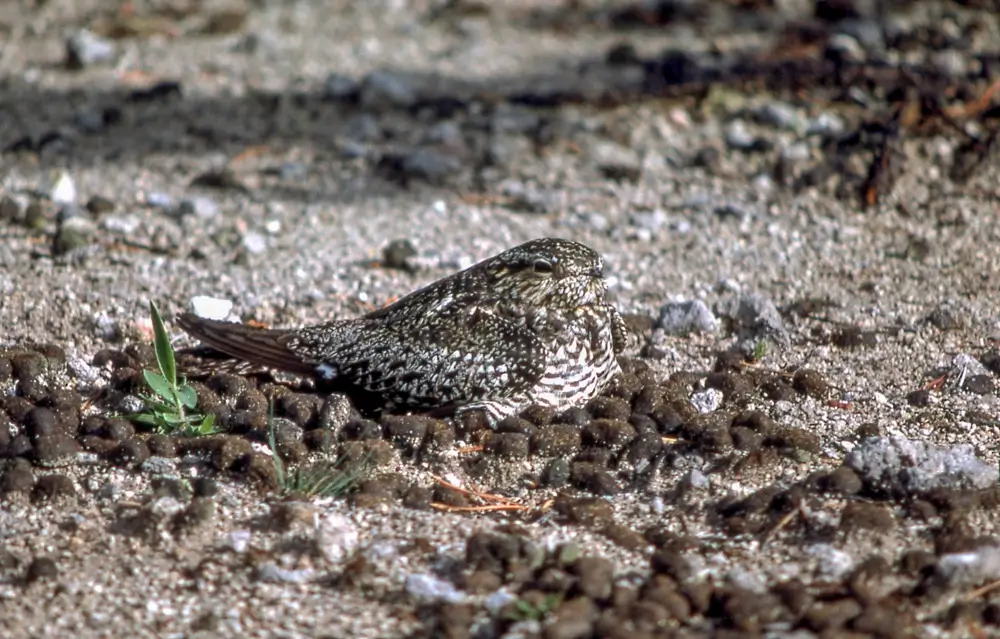
The common nighthawk is a jay-sized bird about 8.7-9.4 inches (22-24 cm) in length with a wingspan of 20.9-22.4 inches (53-57 cm).
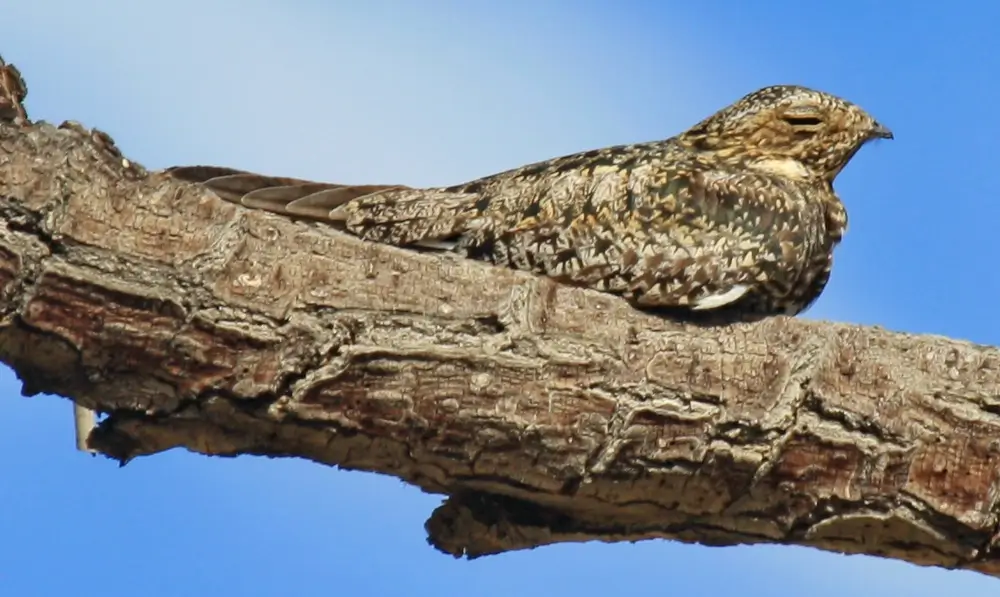
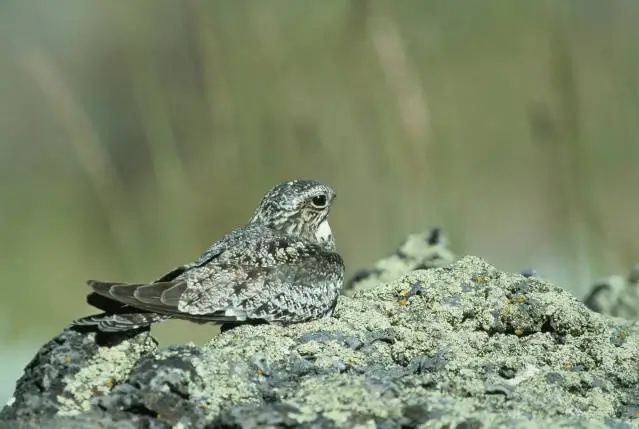
It has mottled grayish-brown feathers, a long forked tail, and long pointed wings with a broad white wing bar.
The common nighthawk has a large mouth with bristles that help it catch insects. Males have a white throat patch and a white tail bar. Females have a light brown or cinnamon-colored throat patch and no tail bar.
Habitat
The common nighthawk is found in open woodlands, clearings, and fields. It is also found in towns and cities.
Diet
The common nighthawk is sometimes called the mosquito hawk. It catches flying insects like flying ants, mosquitoes, moths, and grasshoppers while in flight. It feeds at dawn, dusk, and at night. It sometimes feeds during the day, especially if it is overcast.
Life Cycle
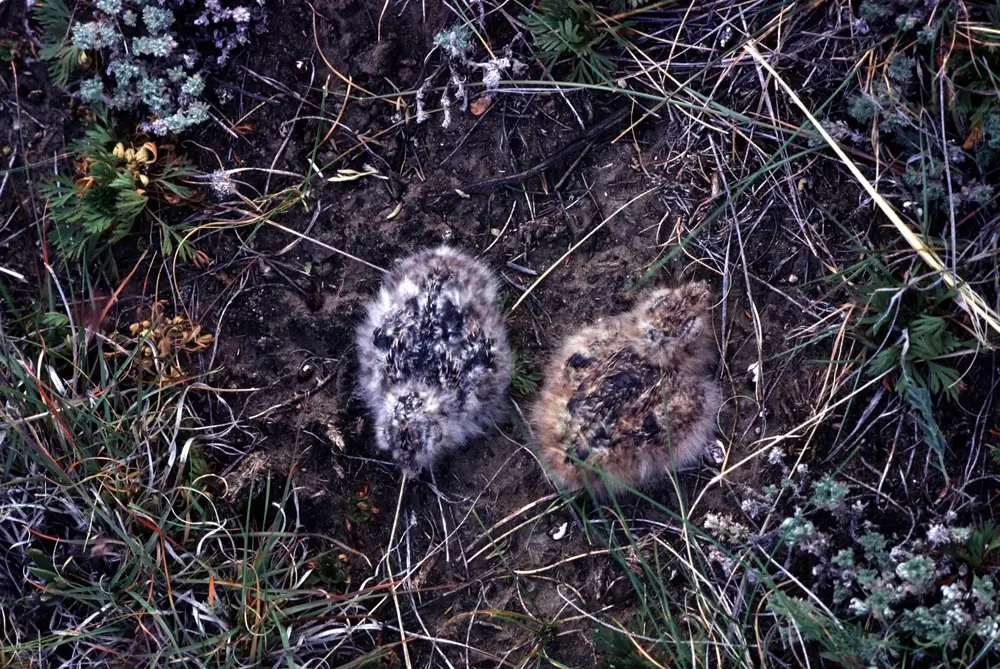
Mating season runs from April through July. The nighthawk doesn’t build a nest. The female lays from 1-3 eggs on the ground in an open, gravelly, or lightly vegetated area. In cities and towns, she often lays her eggs on a flat gravel-covered roof.
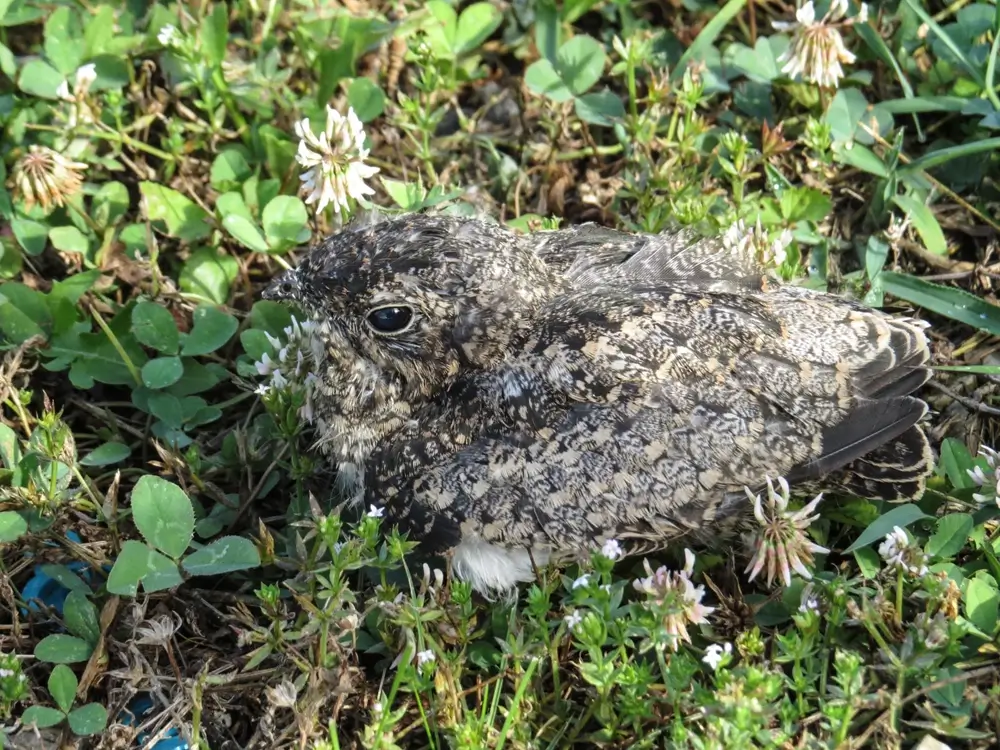
The female incubates the eggs for about 19 days. The chicks can move about on their own shortly after birth, but they are fed by both their parents for about a month. They fledge when they are around 23 days old.
The common nighthawk has a lifespan of 4-5 years in the wild.
Behavior
The common nighthawk has adapted to city life. Flat roofs make good nesting spots. Baseball fields and other open areas that have artificial lights attract insects, making them good hunting spots for the common nighthawk.
Did You Know?
The common nighthawk is not really a hawk. It is actually a member of the nightjar family. The nightjar family includes the whip-poor-will and the common poorwill.
Support for NatureWorks is provided by:
The Common Nighthawk in NH
The common nighthawk is found across New Hampshire. It is found in pine barrens, openings in Appalachian oak‐pine forests, rocky ridges, and urban habitats.
It is endangered in the state. Scientists believe this may be due to nesting habitat loss and increased use of insecticides that kill the insects that the common nighthawk needs to survive.
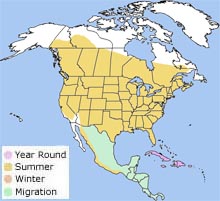
The common nighthawk breeds from the Yukon east to Nova Scotia and south through most of the United States, except Alaska and Hawaii. It winters in South America.