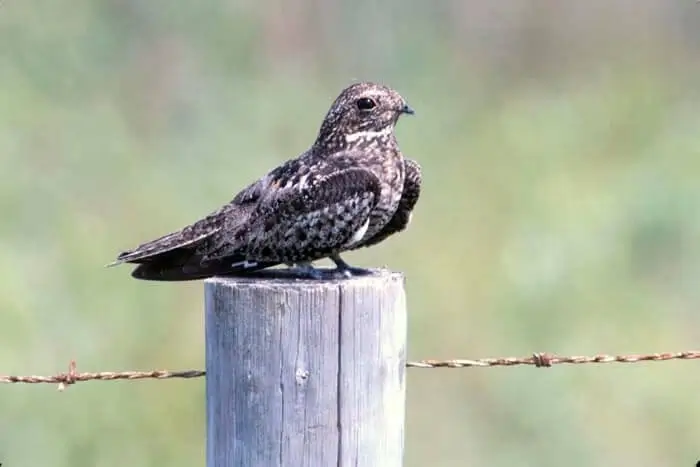
The order Caprimulgiformes includes the nightjars and nighthawks, a group of birds that are mostly active at night or during the twilight hours of dawn and dusk. These birds have large eyes that help them see in low light, short bills, and wide mouths that allow them to catch insects while flying. Their soft, mottled feathers provide excellent camouflage, helping them blend in with tree bark, leaves, and the ground while they rest during the day.
Caprimulgiform birds are found in forests, grasslands, deserts, and open woodlands throughout much of the world. They spend most of the daytime resting and become active in the evening when many insects are flying. Their diet consists mainly of moths, beetles, flies, mosquitoes, and other flying insects.
Nightjars and nighthawks are known for their silent flight, unusual calls, and remarkable camouflage. Although they are rarely seen during the day, they play an important role in nature by helping control insect populations.
Today, the order Caprimulgiformes contains a single family, Caprimulgidae, with about 98 species. Scientists once placed potoos, frogmouths, owlet-nightjars, and the oilbird in this order, but DNA studies have shown that these birds belong in separate orders.
FAMILIES
Caprimulgidae (nightjars, nighthawks)