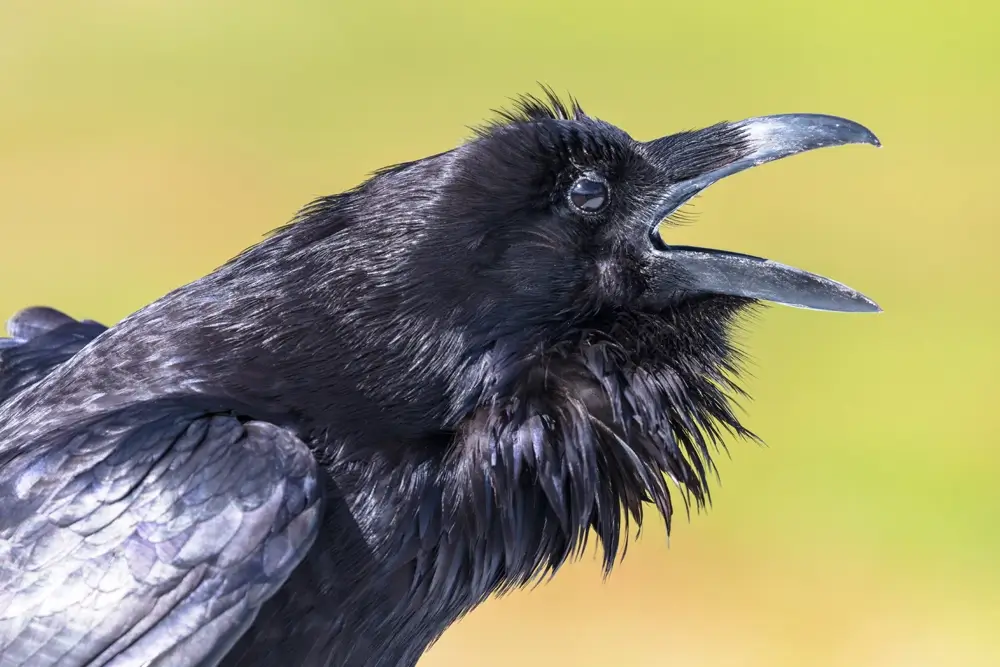
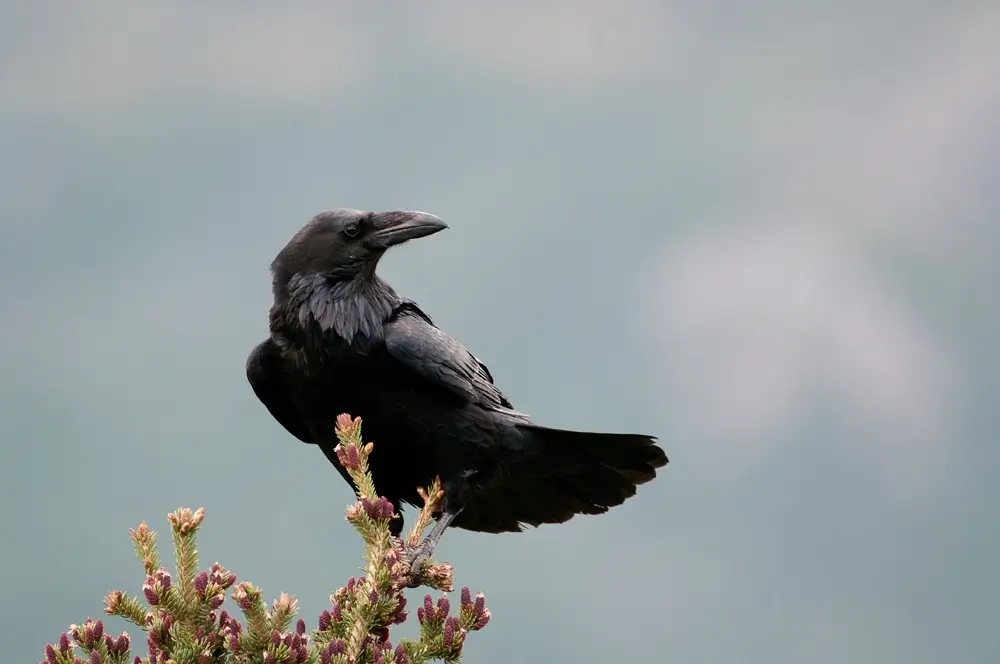
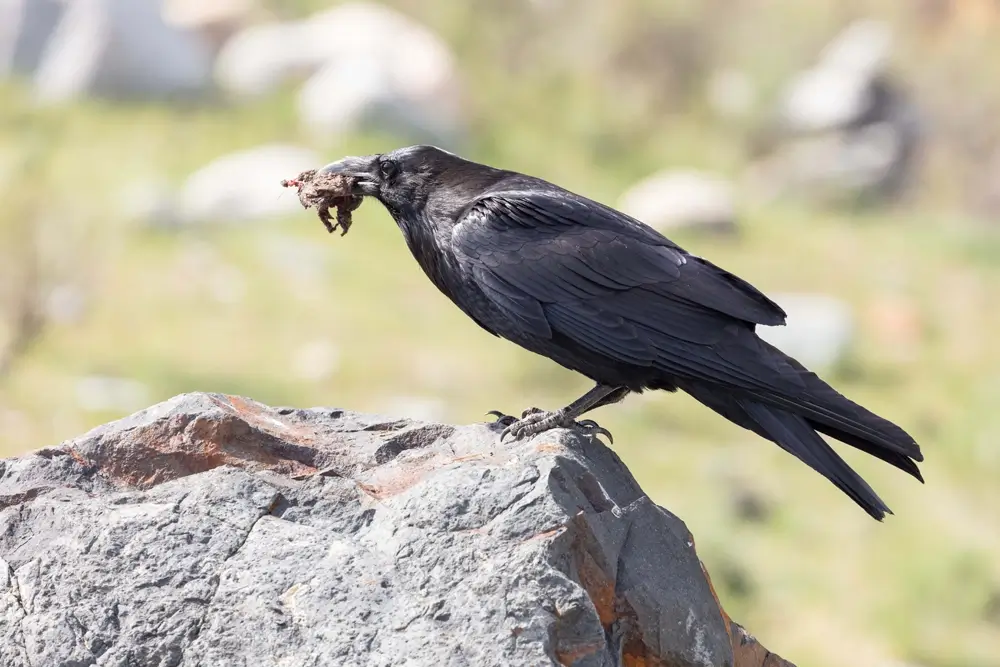
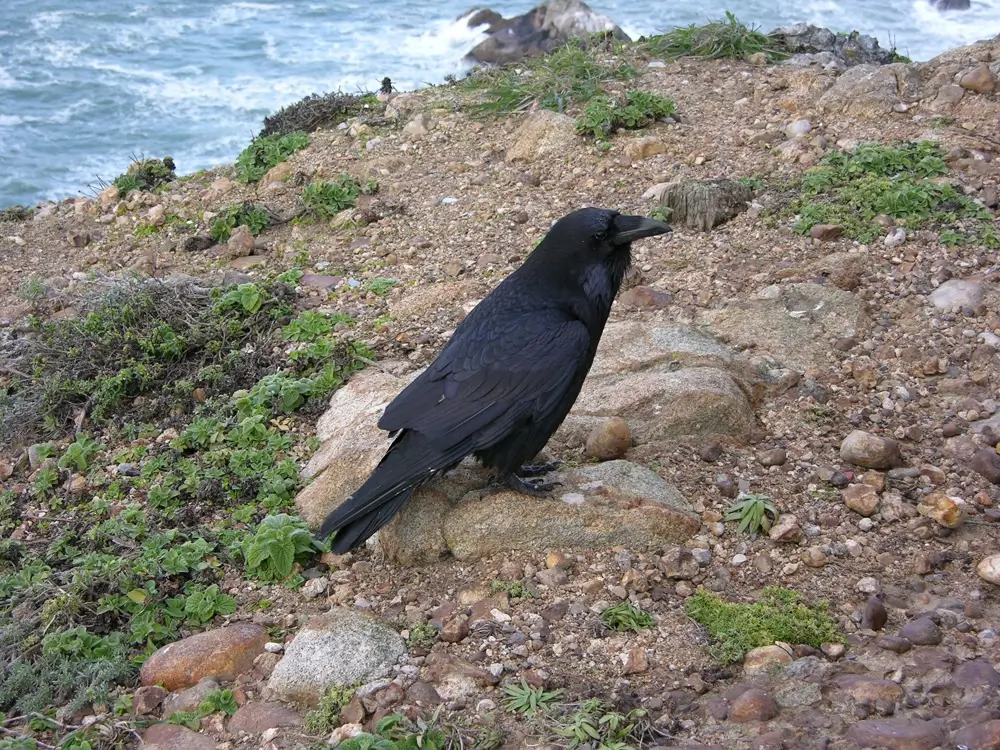
The common raven is 21-27 inches (53.3-68.6 cm) in length with a wingspan of 45.7-46.5 inches (116-118 cm).
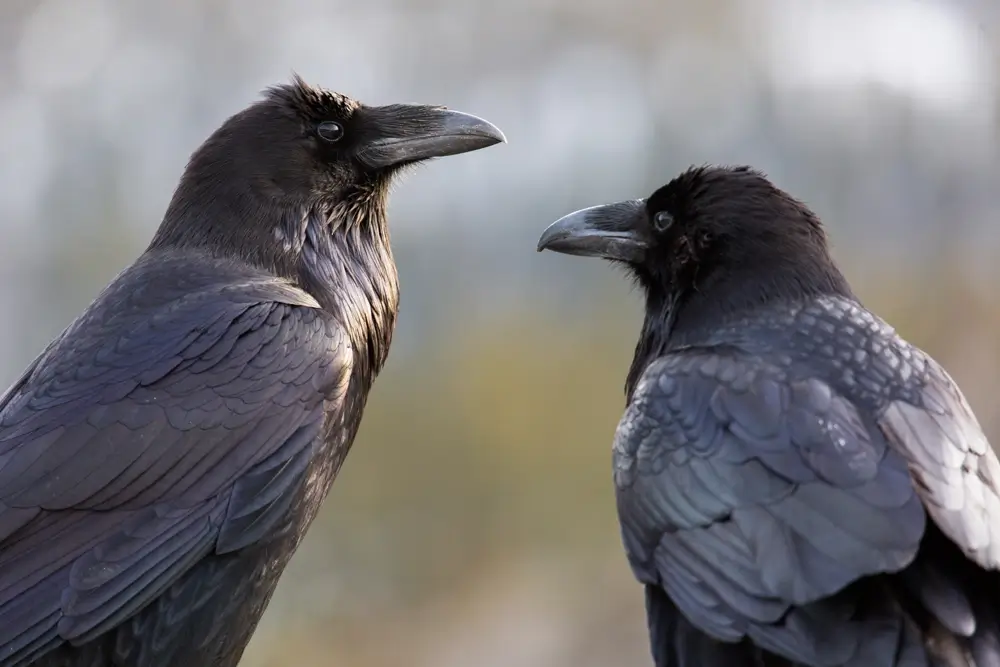
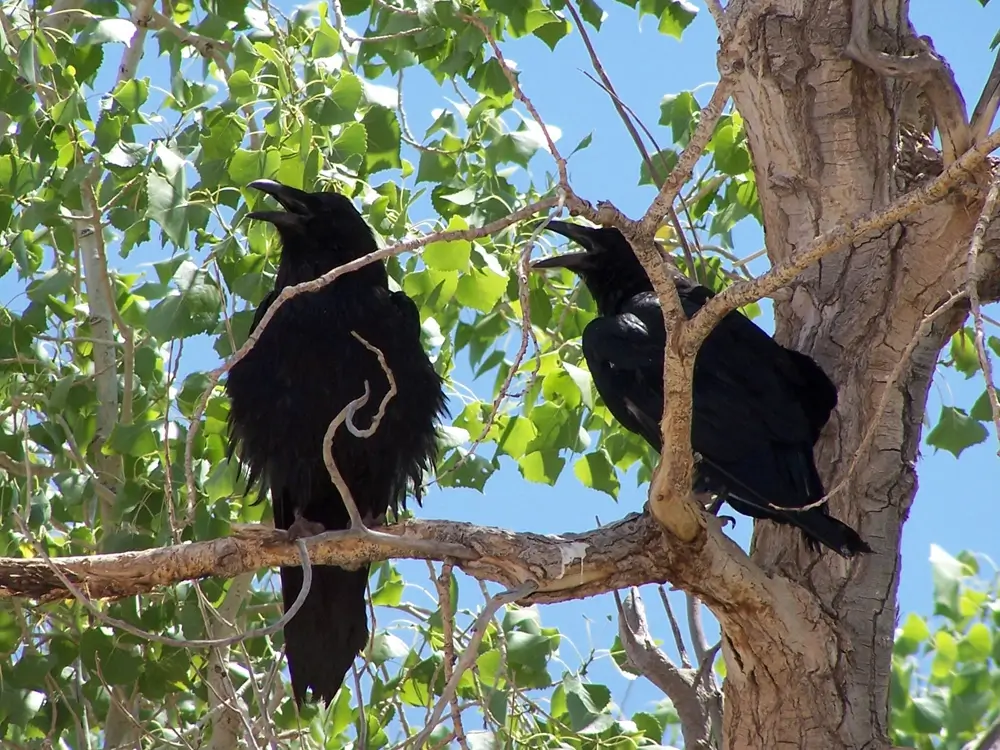
It is completely black. It has a large, thick, black bill and a wedge-shaped tail. It has a ruff of long, pointed feathers around its neck called a hackle.
The common raven is the largest songbird in North America. Males and females look alike, but males are slightly larger.
Habitat
The common raven is common in coniferous and deciduous forests, along seacoasts, in the tundra, in the prairie, and along river banks. In the western United States, it is also found in the desert and mountains.
Diet
The common raven is omnivorous. It eats a wide variety of foods, including fruits, acorns, seeds, nuts, lizards, birds, eggs, insects, mice, and frogs. It also eats garbage and carrion (dead animals).
Life Cycle
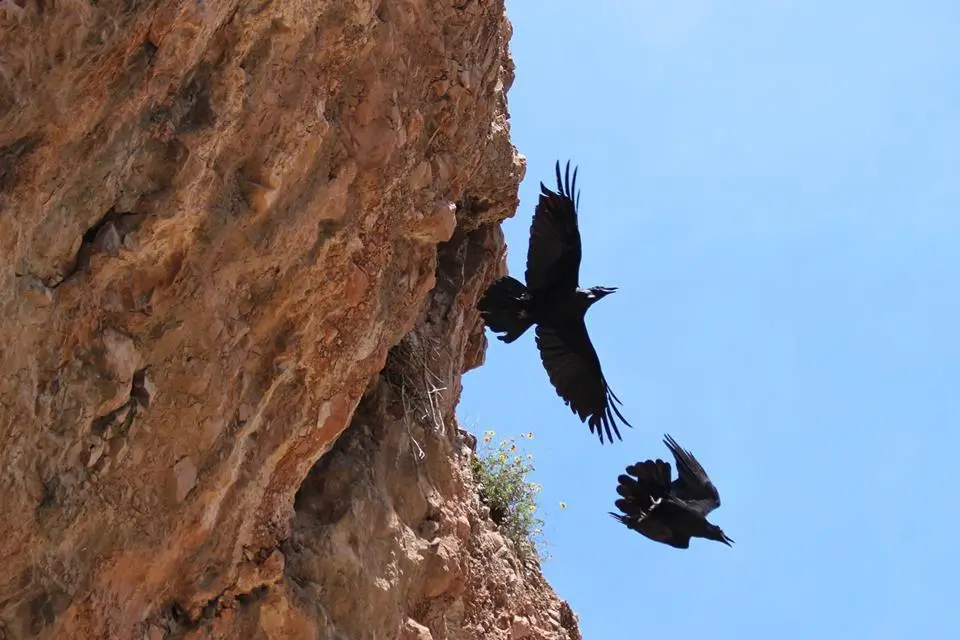
The female common raven lays 3-7 eggs in a cup-shaped nest made of sticks and twigs and lined with mud, fur, grass, and bark. The nest is placed on a cliff, a tree, a bridge, or a tower. The eggs hatch in 20-25 days.
The male brings food to the female while she is incubating the eggs. Both the male and the female care for and feed the chicks. The chicks fledge when they are 3-5 weeks old. Male and female pairs mate for more than one year and may use the same nesting site.
The common raven has a lifespan of 10-15 years in the wild.
Behavior
The common raven is an excellent flyer. It soars in the air on thermals and even somersaults and flies upside down.
Did You Know?
One of the most famous poems in American literature is “The Raven” by Edgar Allan Poe.
Support for NatureWorks is provided by:
The Common Raven in NH
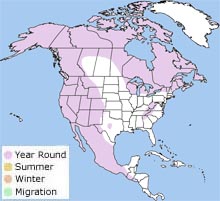
The common raven is a year-round resident of New Hampshire.
The common raven is found from northern Canada and Alaska south to New England, the Great Lakes, the Appalachian Mountains to Georgia, and throughout the western United States.
The common raven is also found in Europe, Asia, and Africa. The common raven does not migrate.