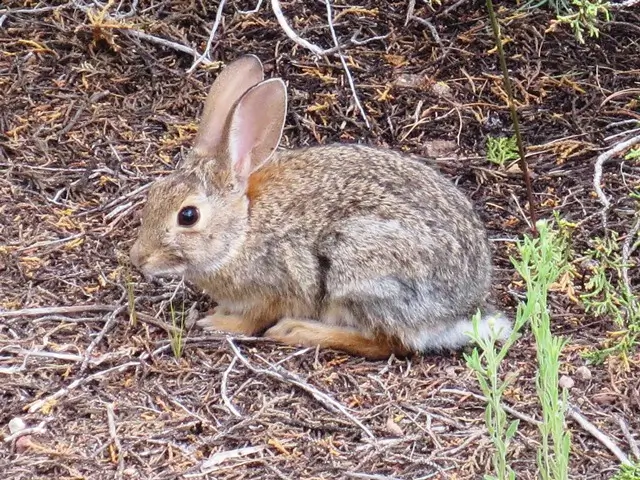
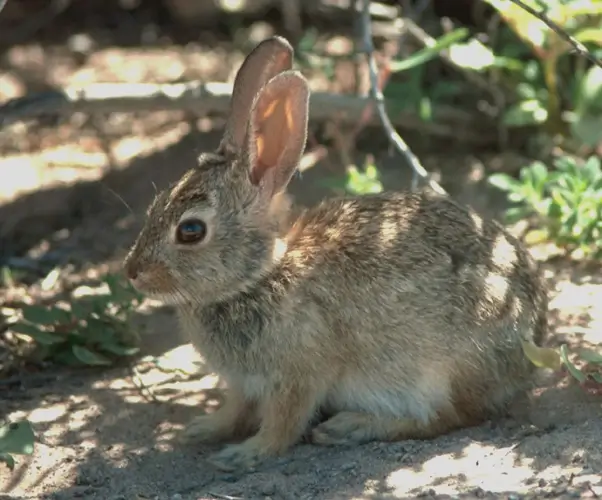
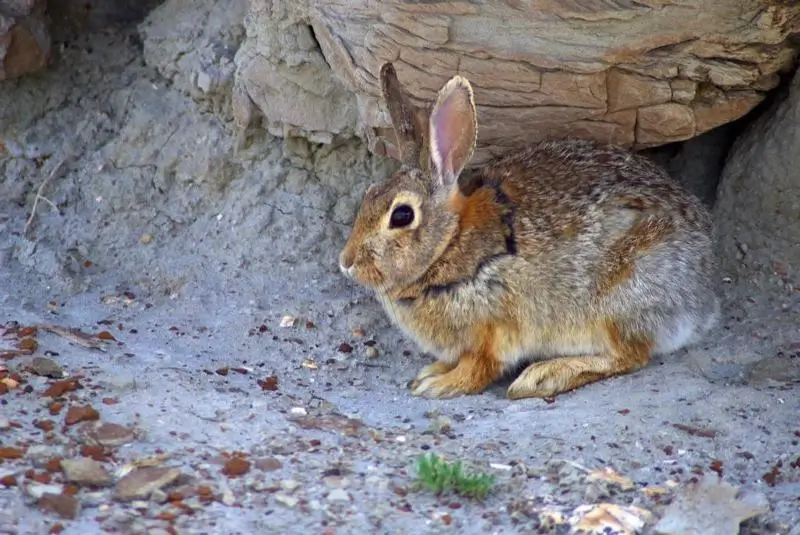
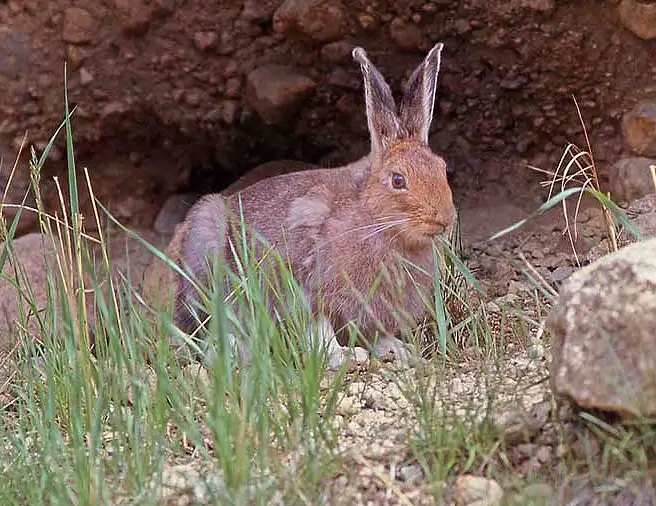
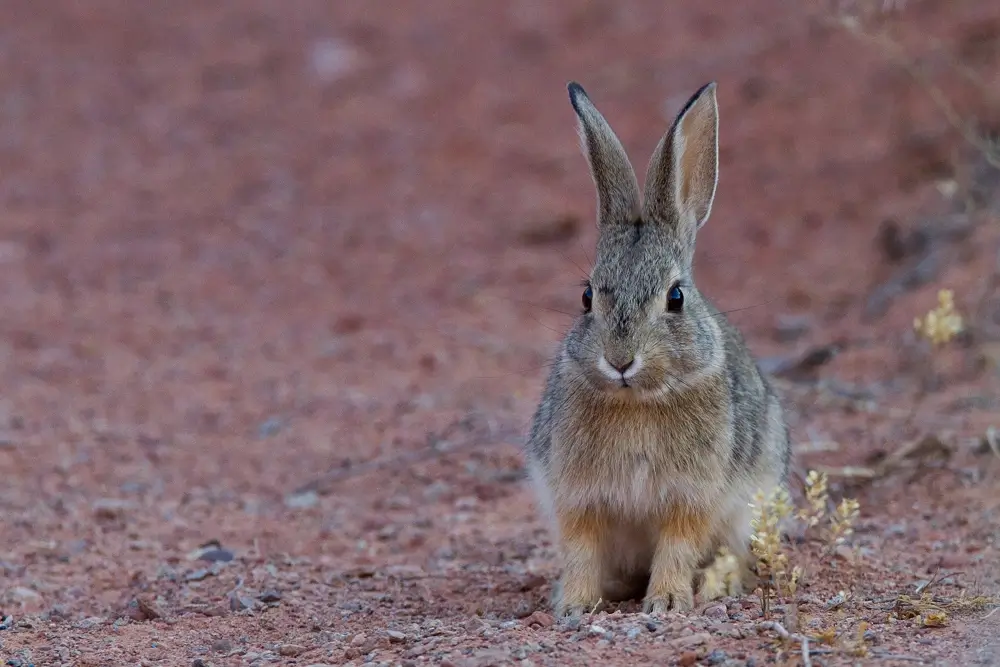
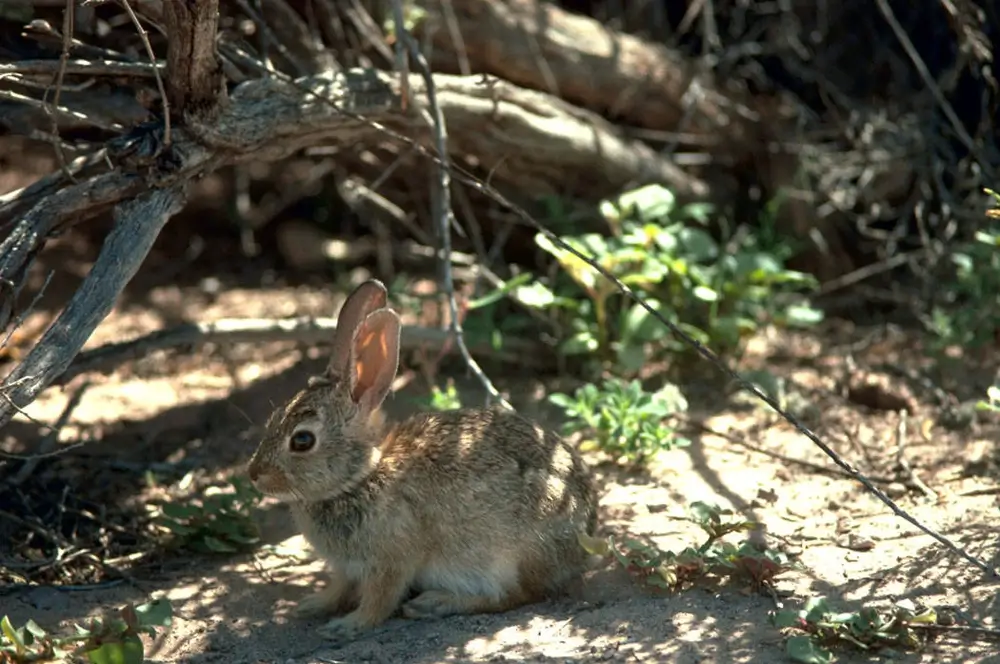
The desert cottontail has brown-gray fur on its upper body and lighter fur on its underside. It has a puffy, round tail; big eyes; and long, wide ears with a little fur in them.
It is 14 to 17 inches (36-43 cm) long and weighs 1.5-3 pounds (0.68-1.4 kg). The female desert cottontail is usually a little larger than the male.
Habitat
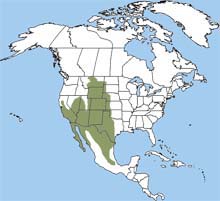
The desert cottontail is found in woodlands, grasslands, creosote brush, and desert areas.
Diet
The desert cottontail eats grasses, cacti, bark, twigs, and mesquite.
Life Cycle
Mating season runs from January to late summer. The female makes a nest by digging a shallow hole in the ground and lining it with fur and grass. A month after mating, she gives birth to 1-6 babies. Desert cottontail babies are called kits or kittens.
The kits are born naked and with their eyes closed. They leave the nest when they are two weeks old. They stay with their mother for another three weeks. They are ready to mate when they are about three months old. Females usually have 2-4 litters a year. Some females may have as many as six litters a year.
The desert cottontail has a lifespan of 1-4 years in the wild. Many desert cottontail kits only survive for a month or two. They are often the prey of hawks, owls, snakes, and coyotes.
Behavior
The desert cottontail is most active in the early morning and in the evening. It spends the hottest part of the day under cover. Sometimes the desert cottontail climbs sloping trees and tree stumps to sit and keep watch for predators and other dangers.
The desert cottontail does not build its own den, although it may scratch a depression under a bush or other vegetation. Sometimes it rests in the burrow of another animal. The desert cottontail can also swim, and it runs at speeds of up to 15 mph (24 kph).