Dickcissel

Spiza americana

Kingdom
Phylum
Class
Order
Family
Genus

Dickcissel

Spiza americana

Kingdom
Phylum
Class
Order
Family
Genus

Characteristics

The dickcissel is 5.5-6.3 inches (14-16 cm) in length with a wingspan of 9.8-10.2 inches (24.9-25.9 cm).

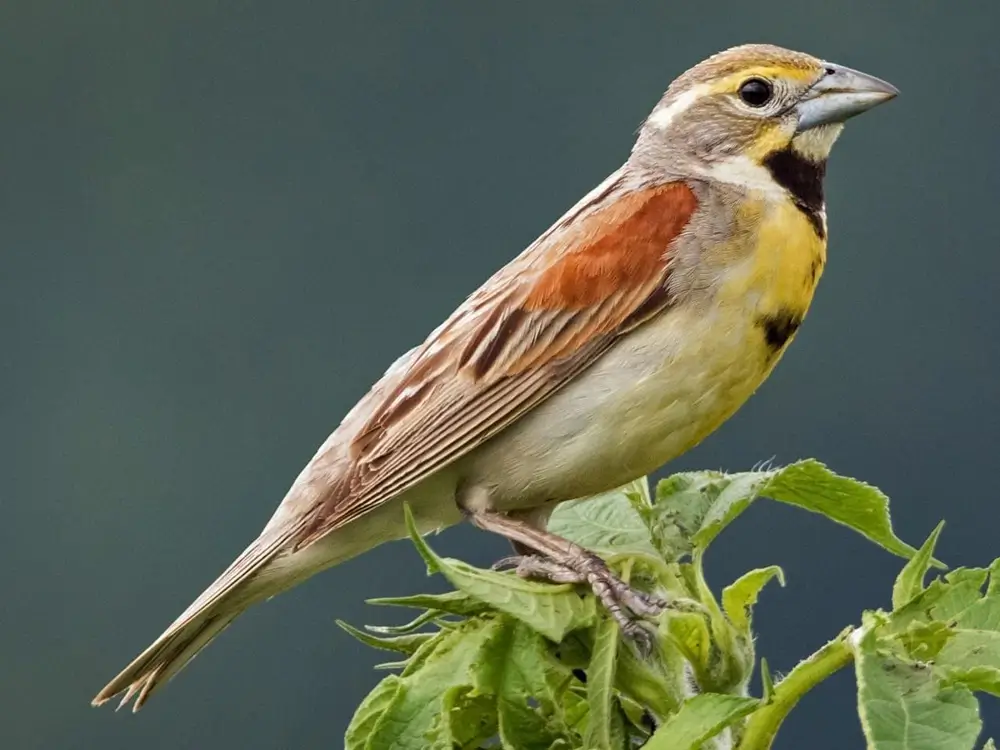
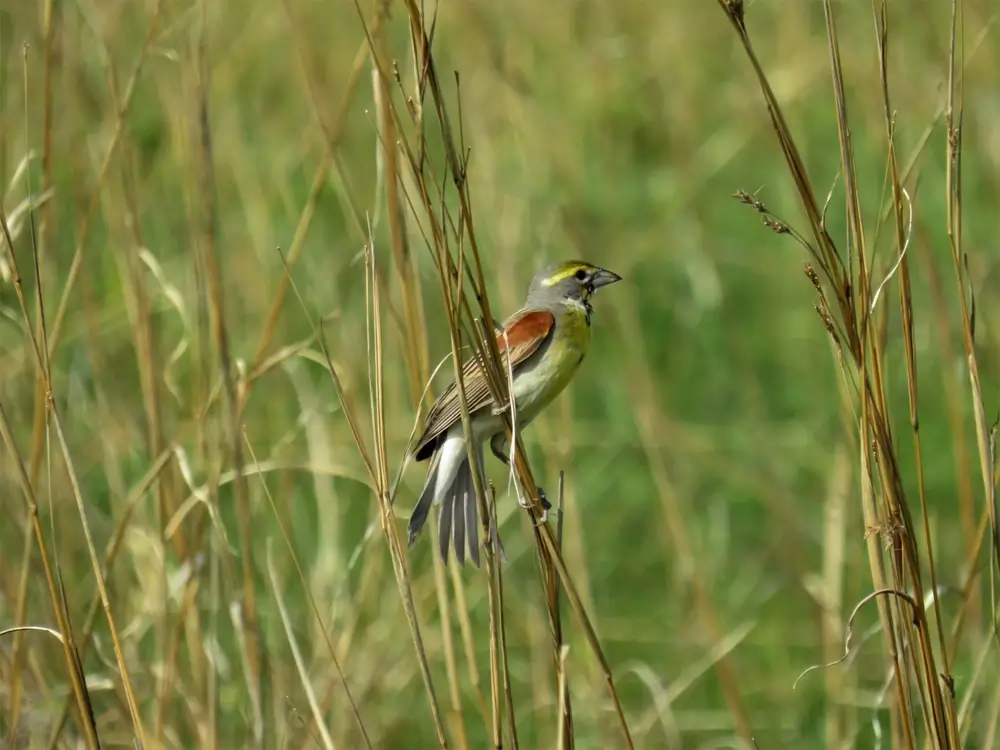
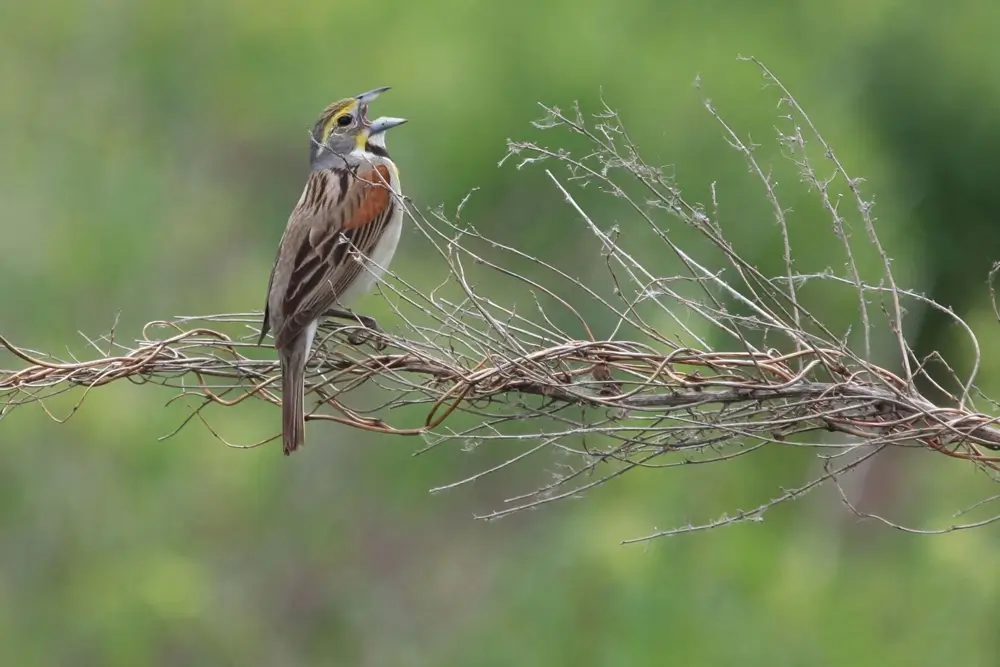
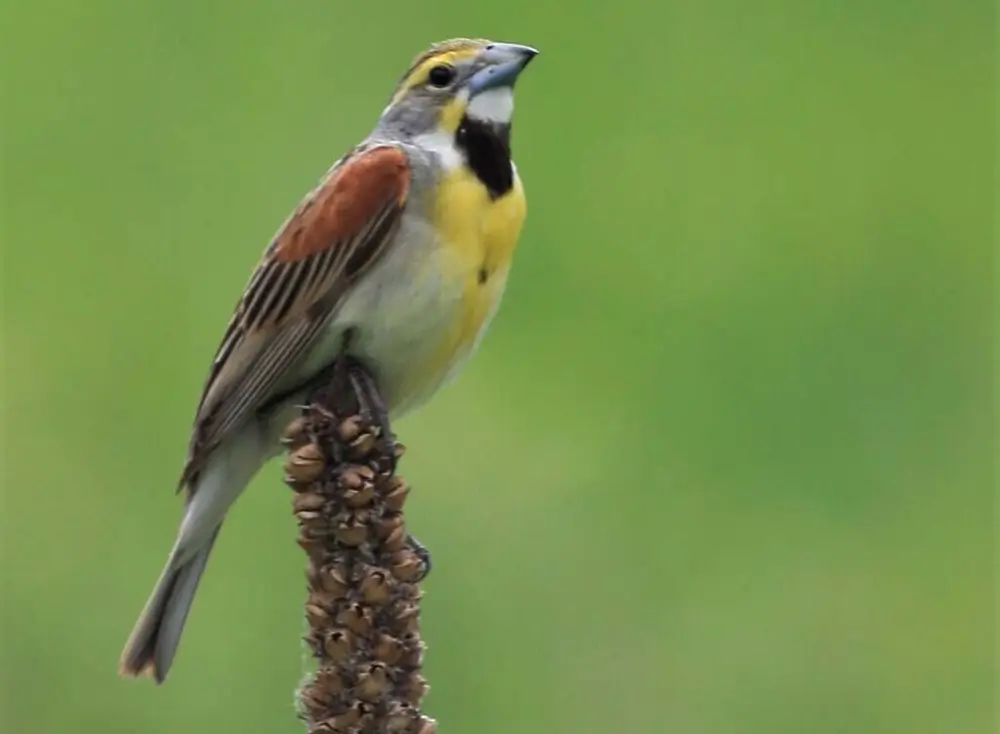
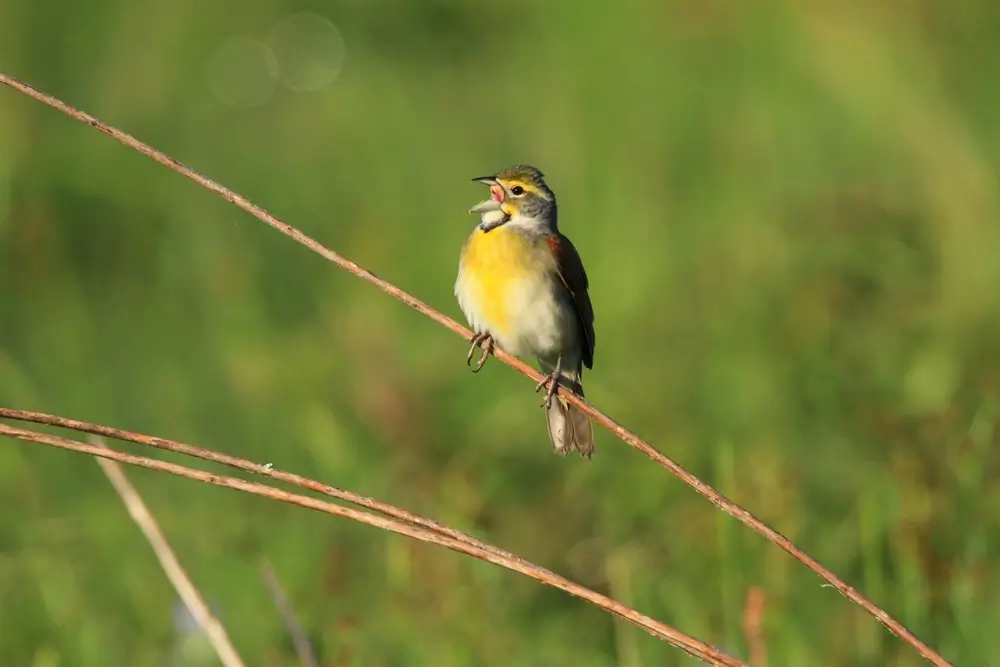
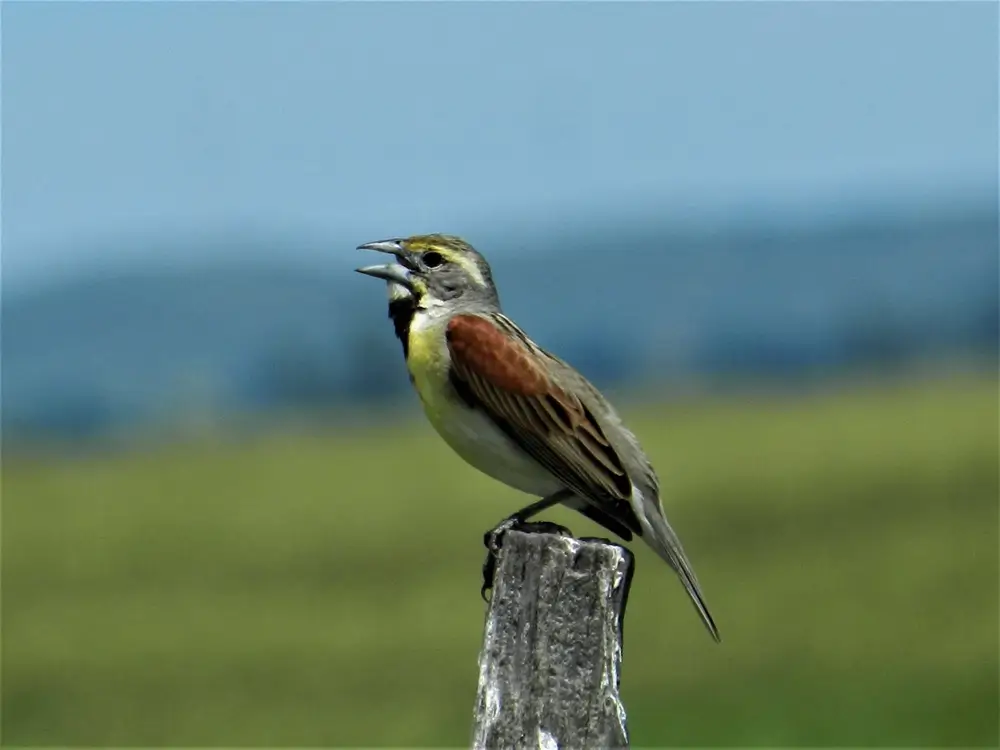
It has a short tail and a heavy, cone-shaped bill. The male has a gray head, back, and belly, and brown shoulders. He has a bright yellow breast with a black bib and yellow “eyebrows.”

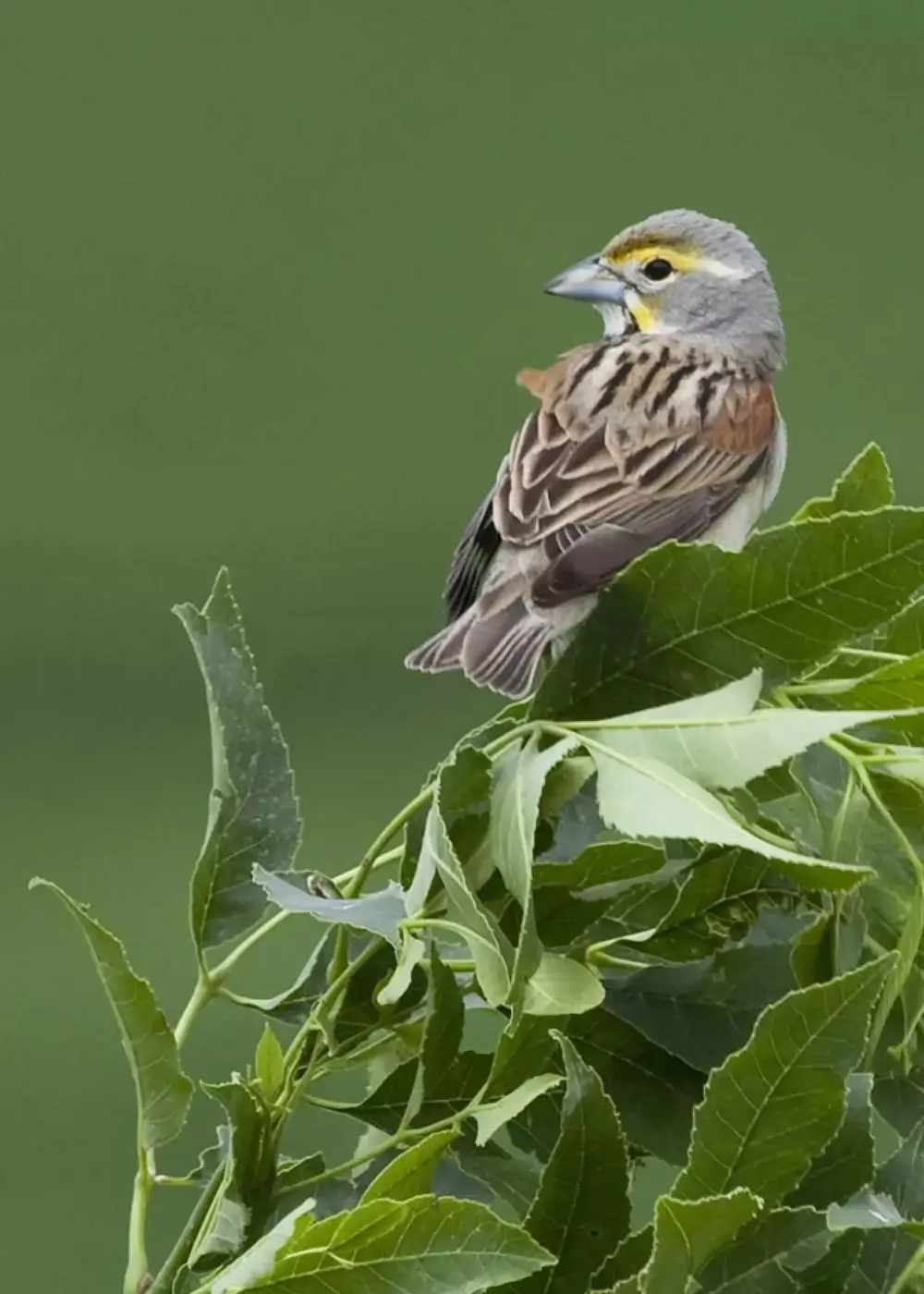
The female is brown on her underside and, unlike the male, does not have a black bib, yellow breast, or “eyebrows.”

Habitat

The dickcissel is found in grain fields and weedy areas.

Dickcissel populations may shift when food sources change.

Diet

The dickcissel forages on the ground for seeds and insects. In the winter, dickcissels feed in flocks and are considered pests by farmers.

Life Cycle

The female dickcissel lays 3-5 eggs in a nest in the grass or in a bush close to the ground. The eggs hatch in 13-15 days, and the chicks fledge (develop flight feathers) when they are 9-10 days old.

The dickcissel has a lifespan of 4-5 years.

Behavior

The dickcissel was once a common bird in the farmlands of the eastern United States. There are still small, isolated populations found on the east coast.

Did You Know?

The dickcissel is currently placed in the cardinal family, Cardinalidae. Scientists have debated for many years which birds it is most closely related to because it shares features with several different groups of birds.

In the past, it was classified with New World sparrows in the family Passerellidae and later with blackbirds and orioles in the family Icteridae.

Today, scientists use DNA evidence along with physical traits to better understand how the dickcissel is related to other birds.


Support for NatureWorks is provided by:

The Dickcissel in NH

While the dickcissel does not breed or winter in New Hampshire, it occasionally shows up in the state as a vagrant*.

*Vagrant birds are usually migratory birds that stray from their migratory path by accident or sometimes because of a storm.

World Status: Least Concern

Listen Here

Mike Nelson, xeno-canto.org
dickcissel

Range

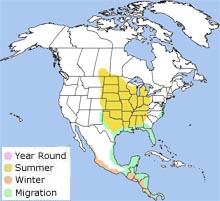
The dickcissel is found in the central United States from North Dakota south to Texas and east to Ohio and Tennessee, and Alabama.

It winters from southern Mexico to South America.