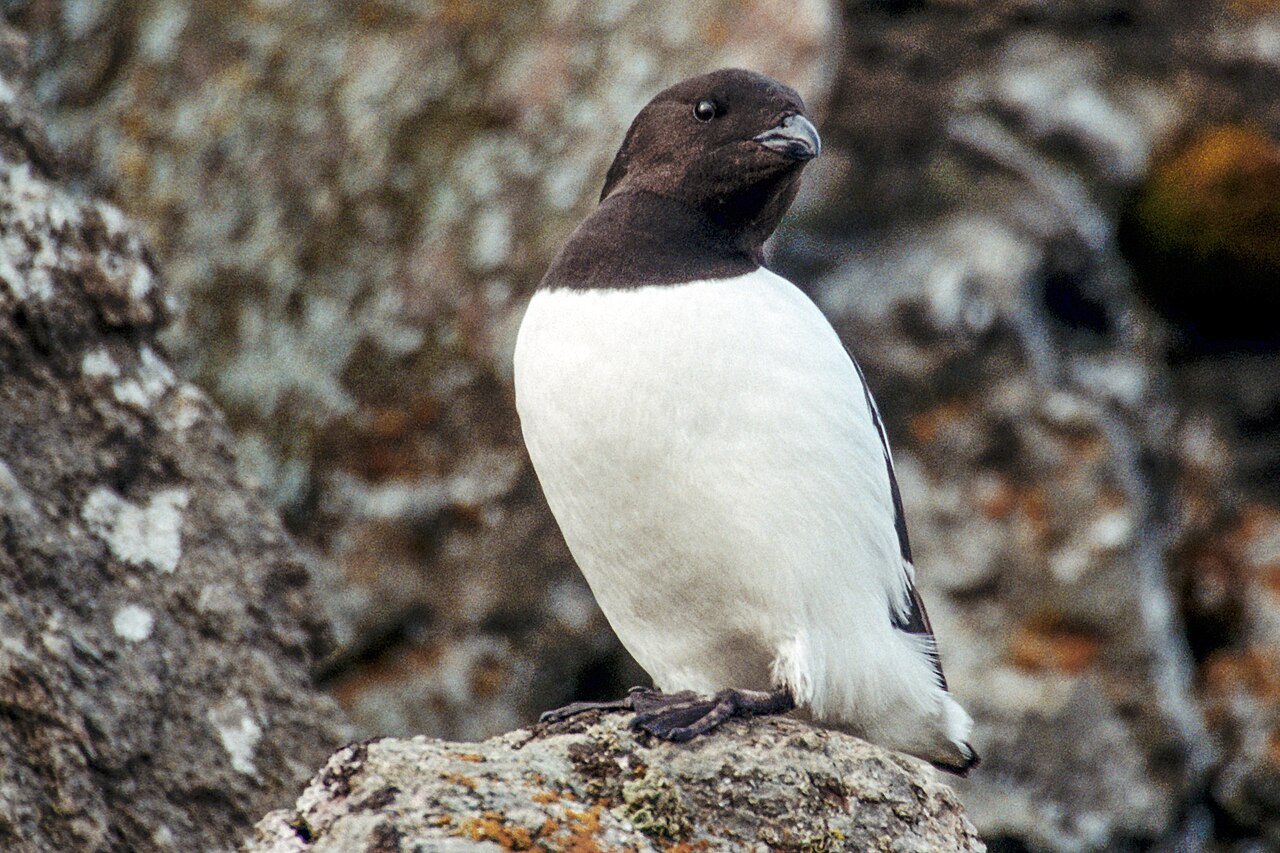
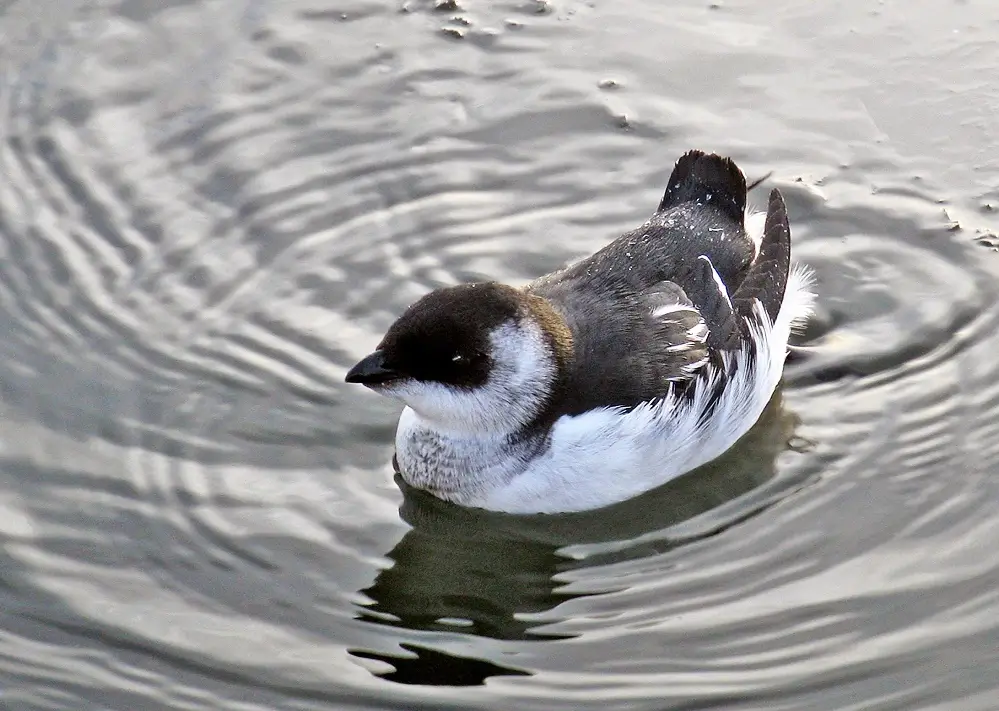
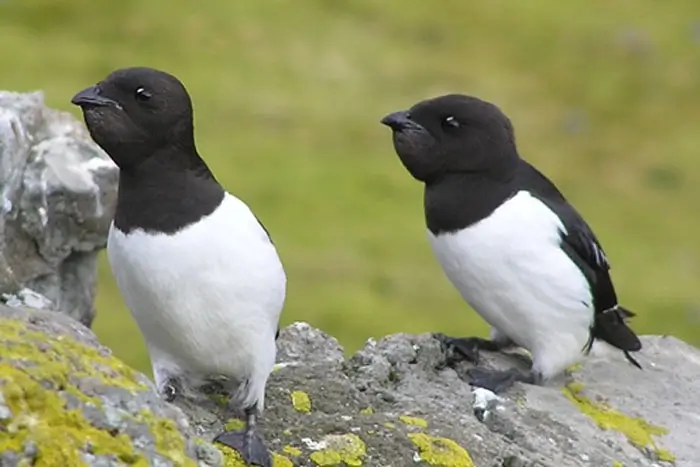
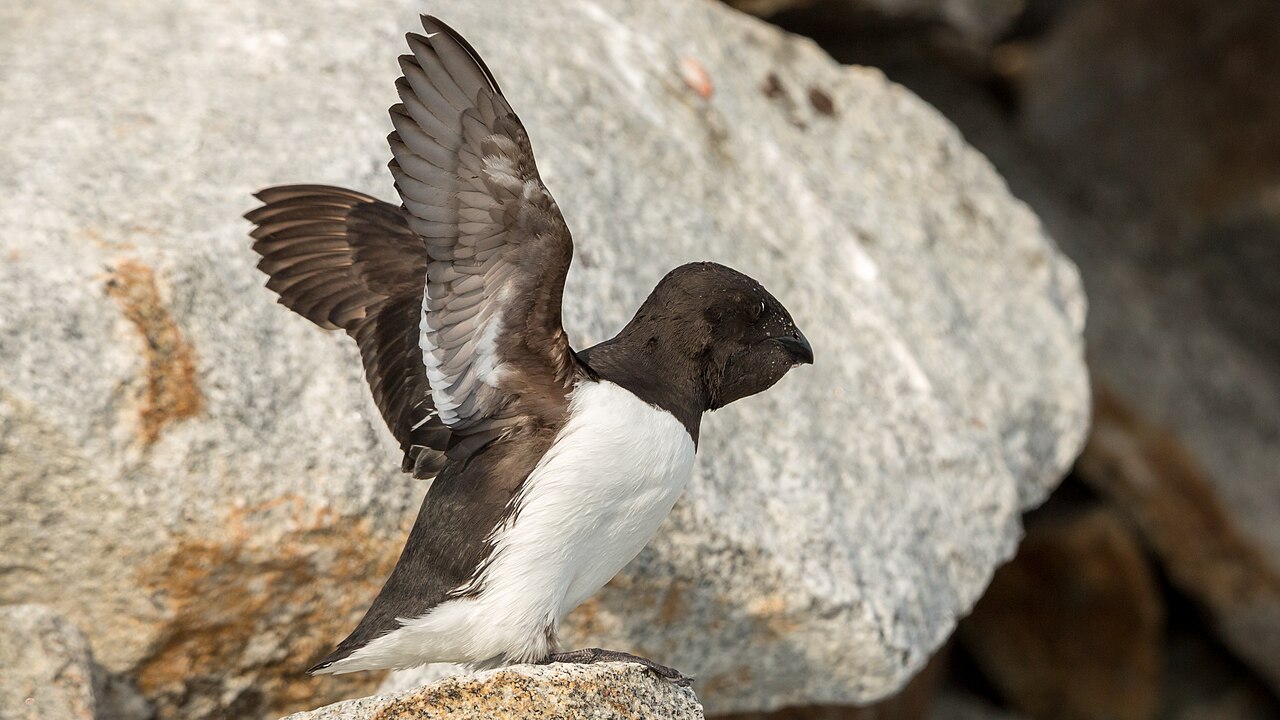
Closely related to the puffin, the dovekie is a small, stocky, black and white seabird. It is only 7.5-9.1 inches(19-23 cm) in length with a wingspan of 15.0 in (38 cm). It weighs 4.7-7.2 ounces (134-204 g).
With a short, stubby bill and a neck tucked into its body, the dovekie looks very compact, floating on the open ocean. Thick layers of fat insulate the dovekie from frigid ocean waters.
The dovekie is also known as the little auk.
Habitat
The dovekie spends most of its time in the ocean. It stays in parts of the ocean with lots of plankton for food.
The dovekie comes ashore only to breed. It looks for rocky slopes, eroded cliffs, and old lava flows.
Diet
The dovekie feeds mostly on zooplankton. It also eats crustaceans, mollusks, and small fish.
The dovekie can dive up to 130 feet (40 m) below the surface in search of prey. It uses its wings to swim through the water.
Life Cycle
In the summer, thousands of dovekies gather at nesting sites along ocean shores. Nests are made of pebbles, with a depression in the center for the egg to be laid.
The male defends the nest. The female lays one egg per year, which she incubates for about a month. Chicks fledge after 28 days, leaving the nest by themselves or in small groups.
The dovekie has a lifespan of 10-25 years.
Behavior
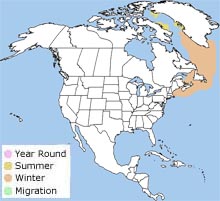
In the winter, dovekies stay at the southern edge of Arctic pack ice. With warming global weather, the pack ice has been retreating and the dovekies are following it.
Did You Know?
Support for NatureWorks is provided by:
The Dovekie in NH
The dovekie occasionally shows up in ocean waters off the coast of New Hampshire.