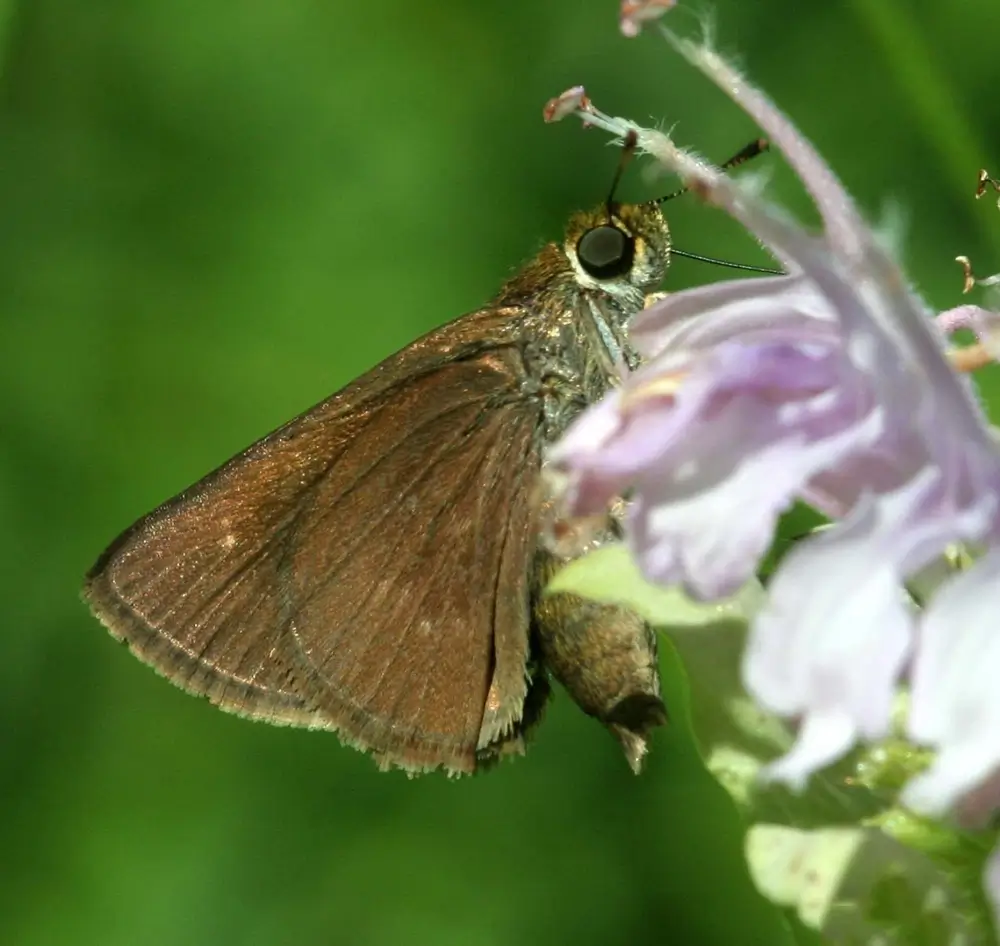
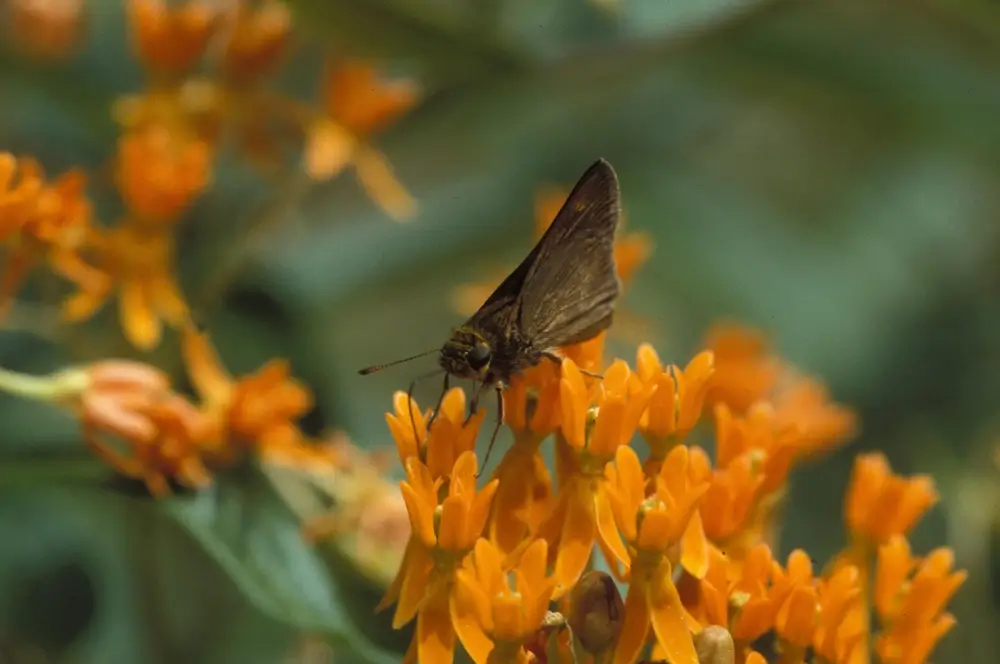
The dun skipper has a wingspan of 1 to 1.25 inches (2.5-3.2 cm). The uppersides of its wings are dark brown. The undersides of its wings are tan.
The male has a black stigma on his forewings. A stigma is a patch of scalloped orange forewings and hindwings. Females are a darker orange than males. They have black spots on the upper side of their wings and silver spots on the underside.
Habitat
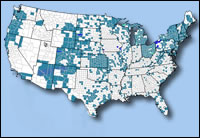
The dun skipper is found in moist areas, including woodland edges, roadsides, bogs, gardens, meadows, stream edges, and swamp edges.
Diet
The dun skipper caterpillar eats a variety of sedges, including sun sedge and chufa flatsedge.
The adult dun skipper is especially attracted to white, pink, or purple flowers, including fireweed, common milkweed, purple vetch, lotus, selfheal, peppermint, dogbane, and New Jersey tea.
Life Cycle
In the northern part of its range, the dun skipper has one brood from June to August. In the southern part of its range, it may have two broods between May and September. In the deep south, it may have more than two broods from March through October.
The female dun skipper lays single eggs on the leaves of a host grass plant. The larvae bind together leaves from the host plant with silk to make a shelter. The last brood of the season overwinters encased in their leaf homes.
Behavior
Late in the day, male dun skippers perch on plants about 2 to 3 feet (0.61-0.91 m) off the ground, waiting for females to fly by.