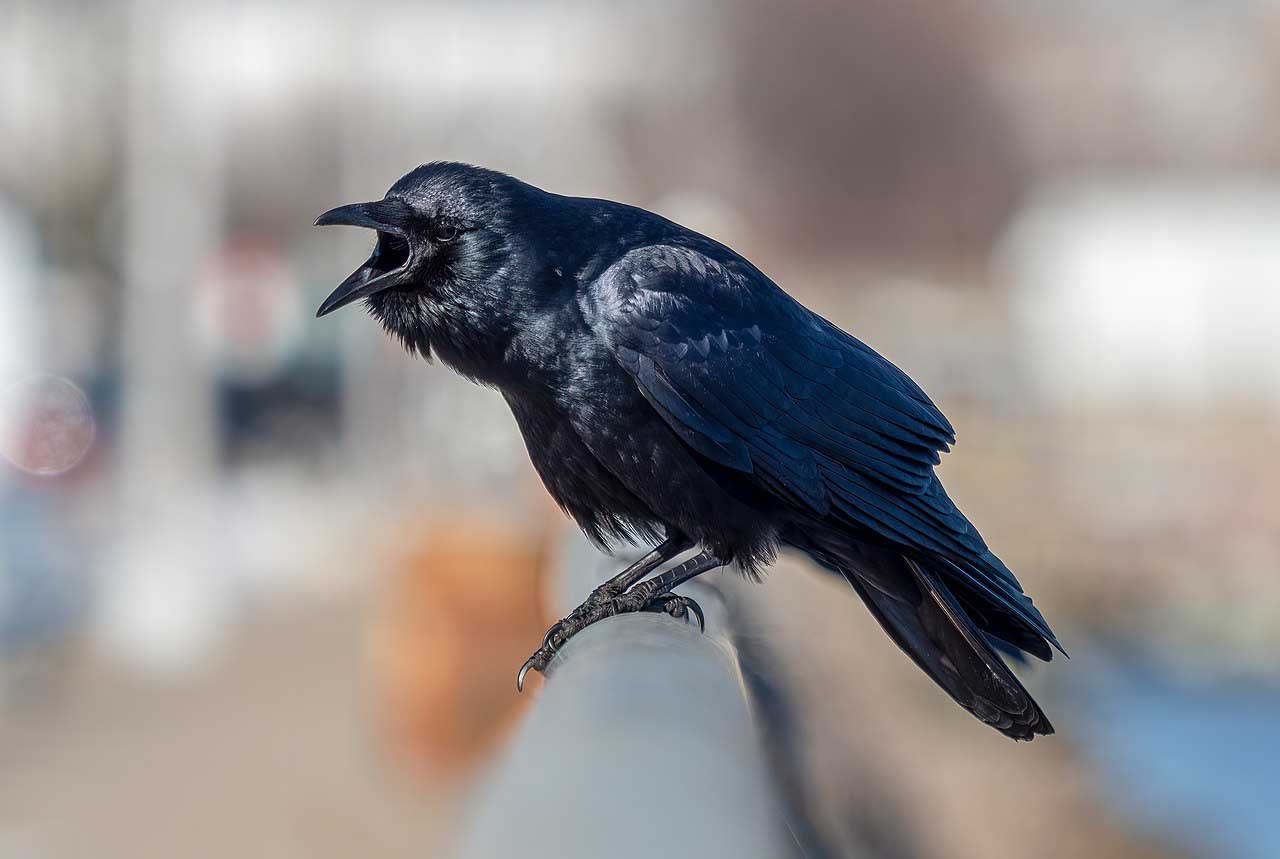
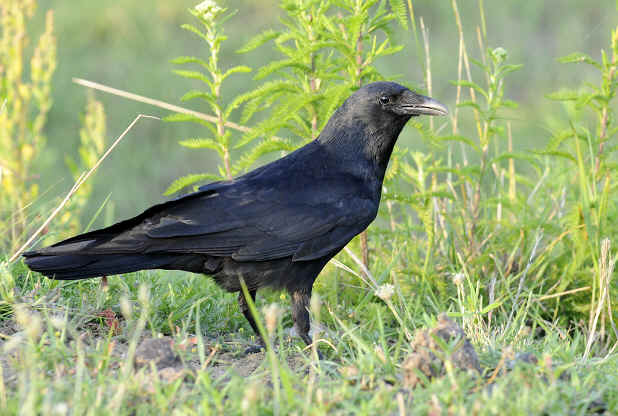
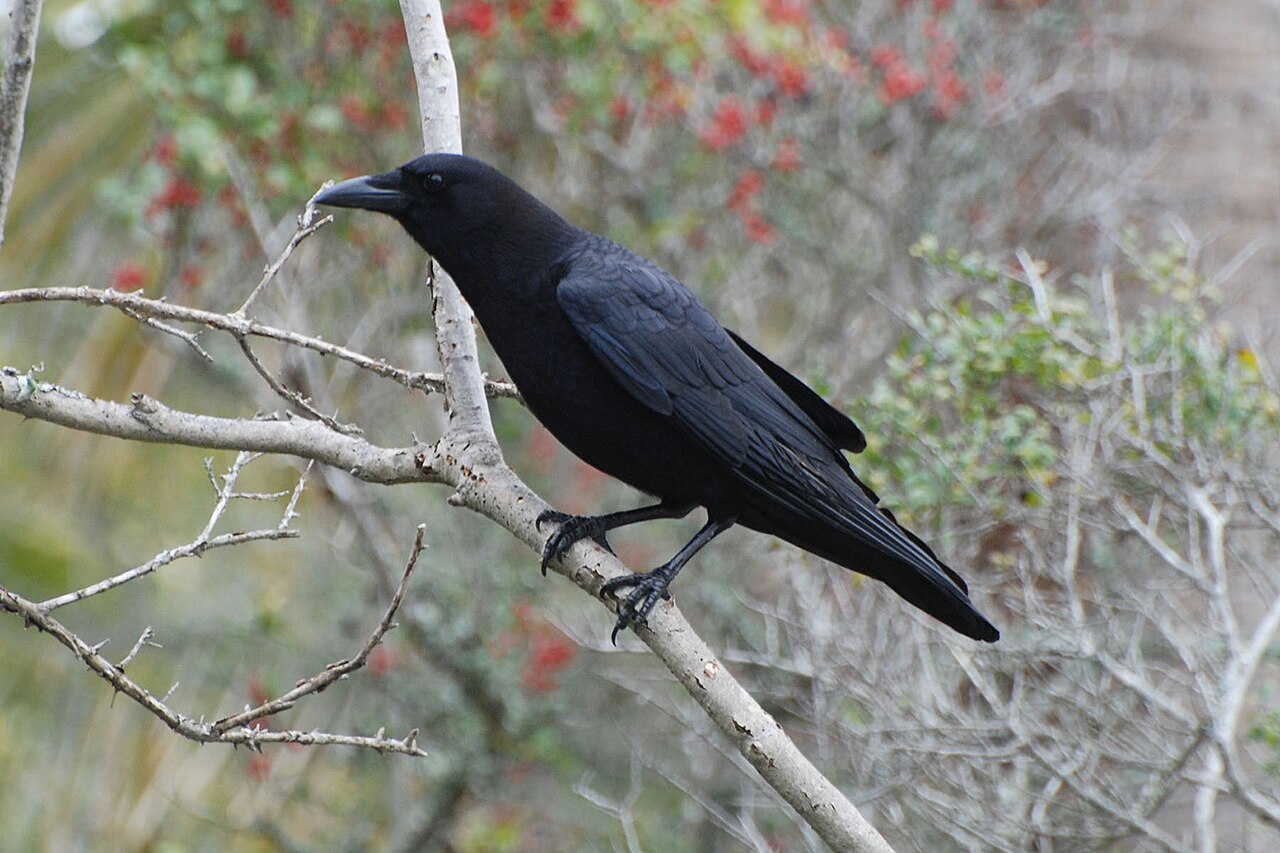
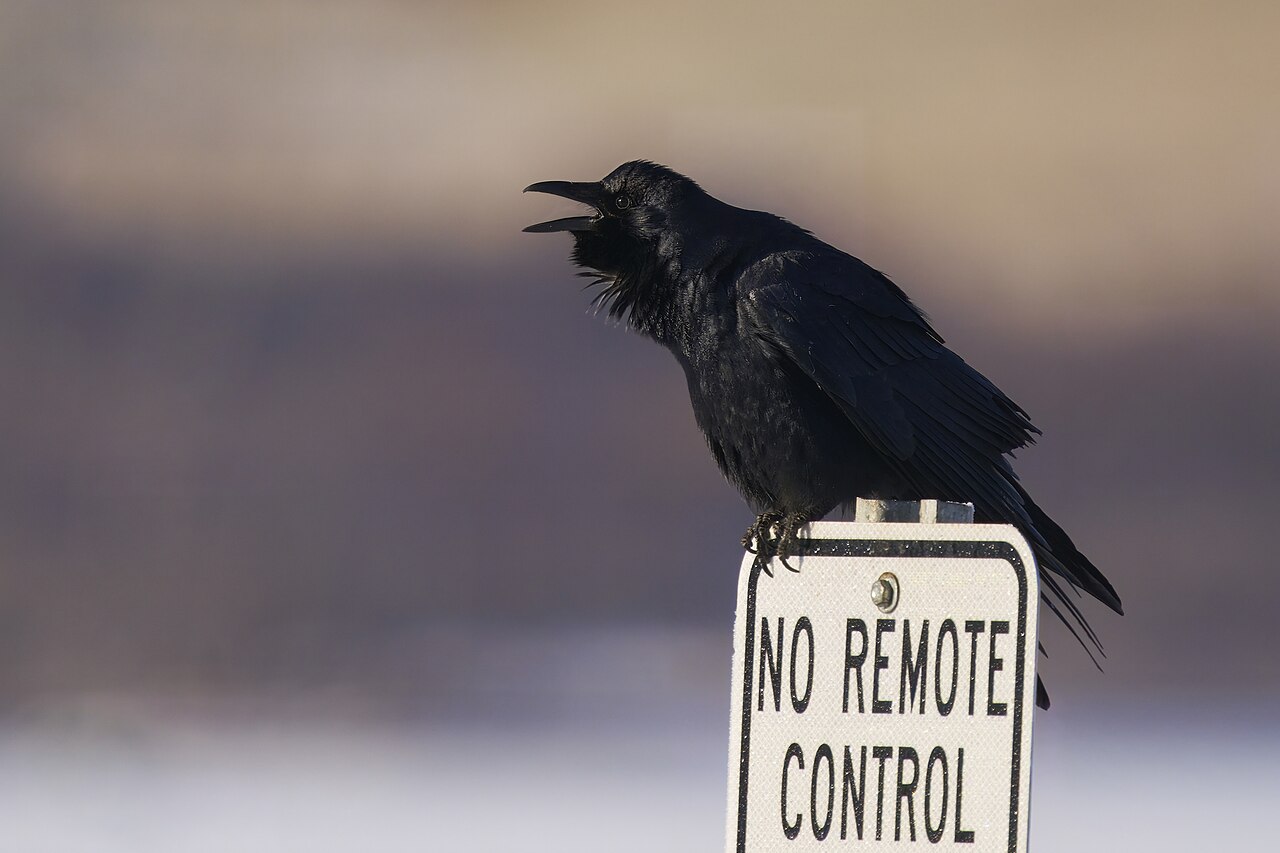
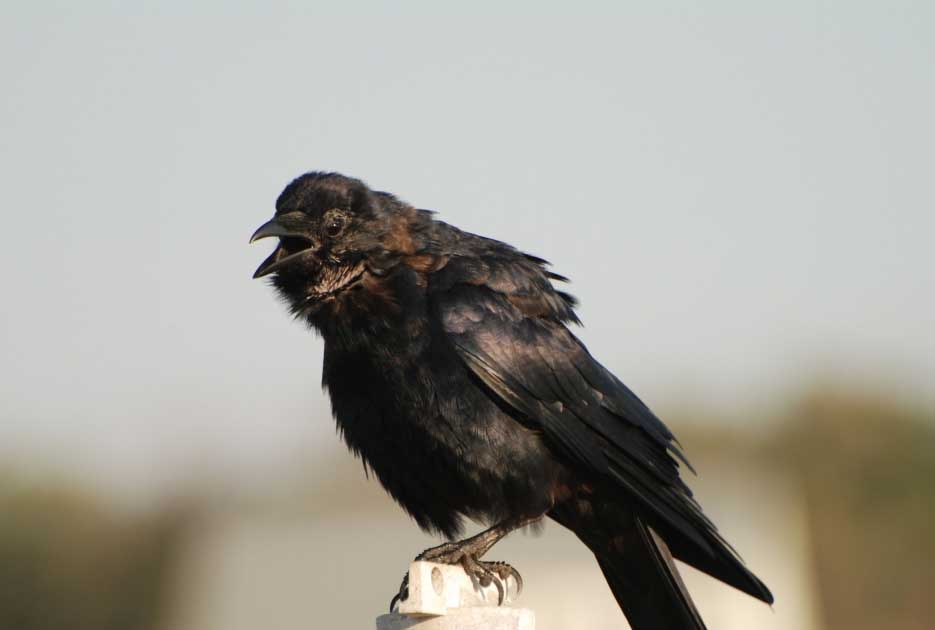
The fish crow is 14.2-15.8 inches (36-40 cm) in length with a wingspan of 33 inches (84 cm).
The fish crow is almost identical in looks to the American crow. Like the American crow, it is all black, but it is slightly smaller and has a longer tail and longer wings; the differences are very slight.
The only sure way to easily tell them apart is by their calls. The American crow has a “caw caw” call, and the fish crow has a nasal “nyuh unh” call.
Habitat
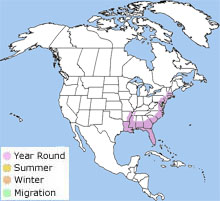
The fish crow is found along fresh and saltwater lakes, rivers, beaches, marshes, and estuaries. It may also be found at the edge of forested areas near marshes and estuaries.
Diet
The fish crow is omnivorous. It eats turtle and bird eggs, crabs, shrimp, fledgling birds, seeds, insects, peanuts, grains, and fruit. It also eats carrion and garbage.
It feeds on the ground, around the edge of the water, and in shallow water.
It also forages in trees for eggs and nestlings.
Life Cycle
The male and the female build a nest of twigs lined with pine needles, animal hair, weeds, grass, and Spanish moss.
The female lays 4-5 light blue-green eggs with brown blotches. The female incubates the eggs. The eggs hatch in 16 to 18 days. The male brings food to the female while she is incubating the eggs. The chicks fledge in 28 to 35 days.
The fish crow has a lifespan of 6-7 years im the wild.
Behavior
The fish crow’s range has been expanding. It has been moving up the Mississippi River and along its tributaries in recent years.
Did You Know?
Support for NatureWorks is provided by:
The Fish Crow in NH
Fish crows first showed up in New Hampshire in the 1970s, where they were found in the southeastern corner of the state.
Since then, their range has expanded to the Merrimack and Salmon Falls River valleys, the Lakes Region as far north as Plymouth and Conway, in the Keene region, and along the Connecticut River.