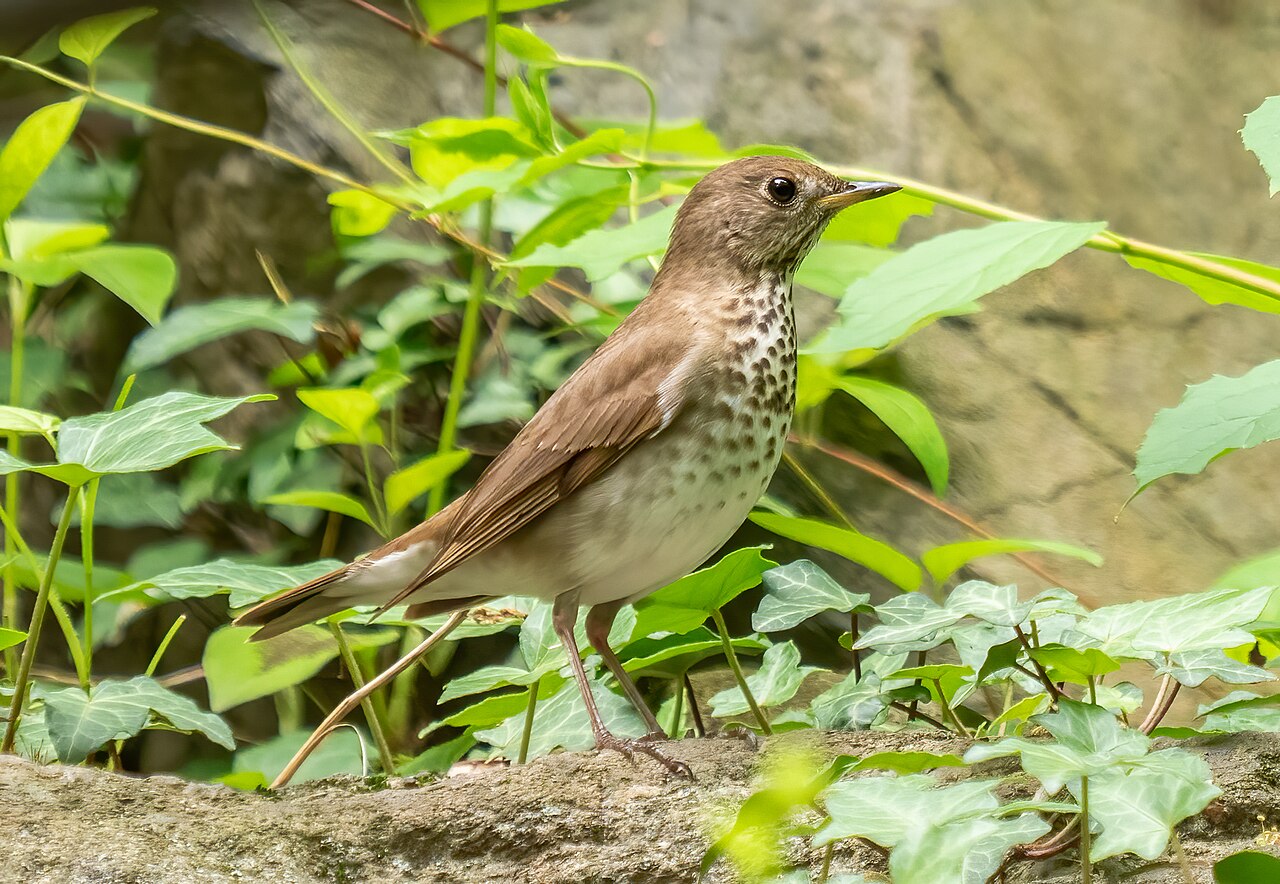
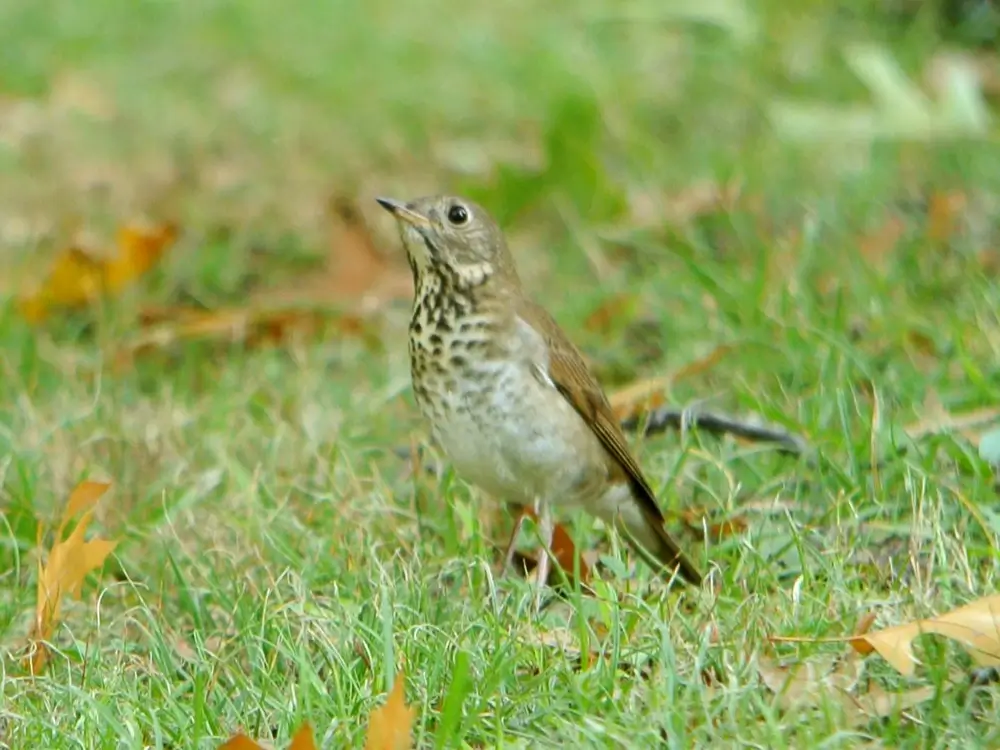
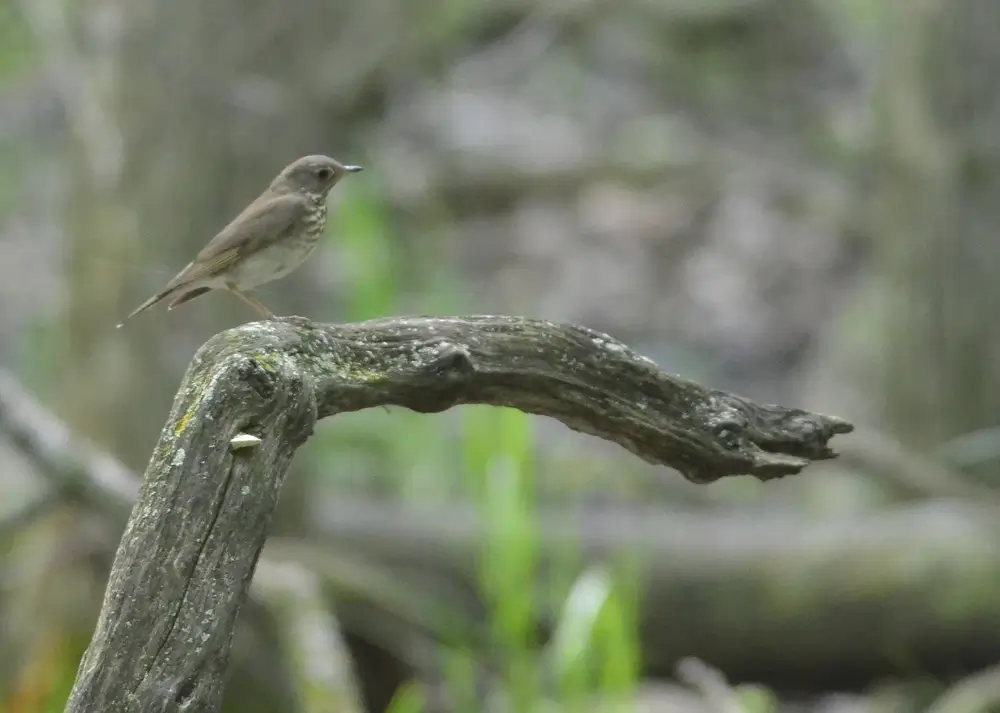
The gray-cheeked thrush is a small, shy bird around 6.3-6.7 inches (16-17 cm) in length with a wingspan of 12.6-13.4 inches (32-34 cm).
It has an olive-brown head, back, and wings, pink legs, and a white belly that is speckled with dark brown spots.
Habitat
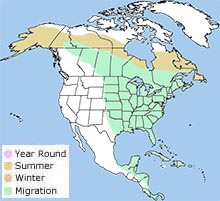
The gray-cheeked thrush spends the summer in areas made up of small shrubs with a dense understory. It lives in habitats that border the tundra.
The gray-cheeked thrush winters in the understory of tropical forests.
Diet
Most of the gray-cheeked thrush’s diet is made up of insects like beetles, weevils, ants, wasps, and caterpillars. It may also eat spiders, crayfish, sow bugs, and earthworms, and will also eat grapes, wild cherries, blackberries, raspberries, and other fruit.
Life Cycle
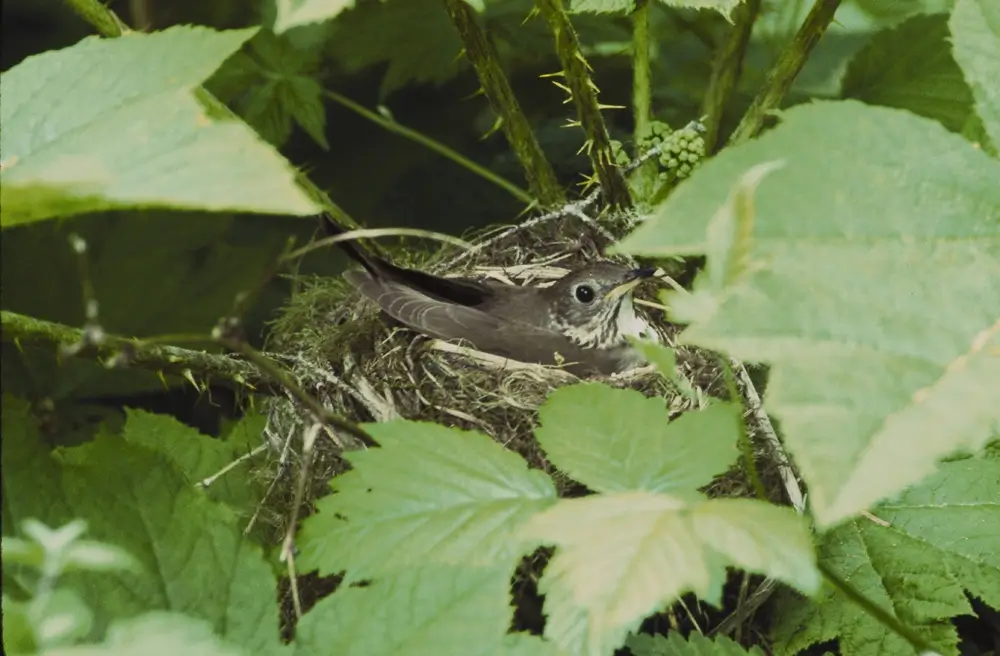
The female gray-cheeked thrush builds the nest out of dried grasses mixed with mud to make the nest stronger. She lays 3-5 light greenish-blue eggs and incubates them for about two weeks.
Right after hatching, the young chicks cannot feed themselves and depend on their parents for food. The gray-cheeked thrush typically has one brood per season. Sometimes, it will lay a second brood if the first one fails to survive.
Behavior
The gray-cheeked thrush is a seed spreader. When it eats fruit, it may not fully digest it and will spread the seeds when it poops.
Did You Know?
The gray-cheeked thrush lives farther north than other birds in its family.
Support for NatureWorks Redesign is provided by:
The Gray-Cheeked Thrush in NH
The gray-cheeked thrush does not breed in New Hamshire, but it may pass through the state during its migration to South America.