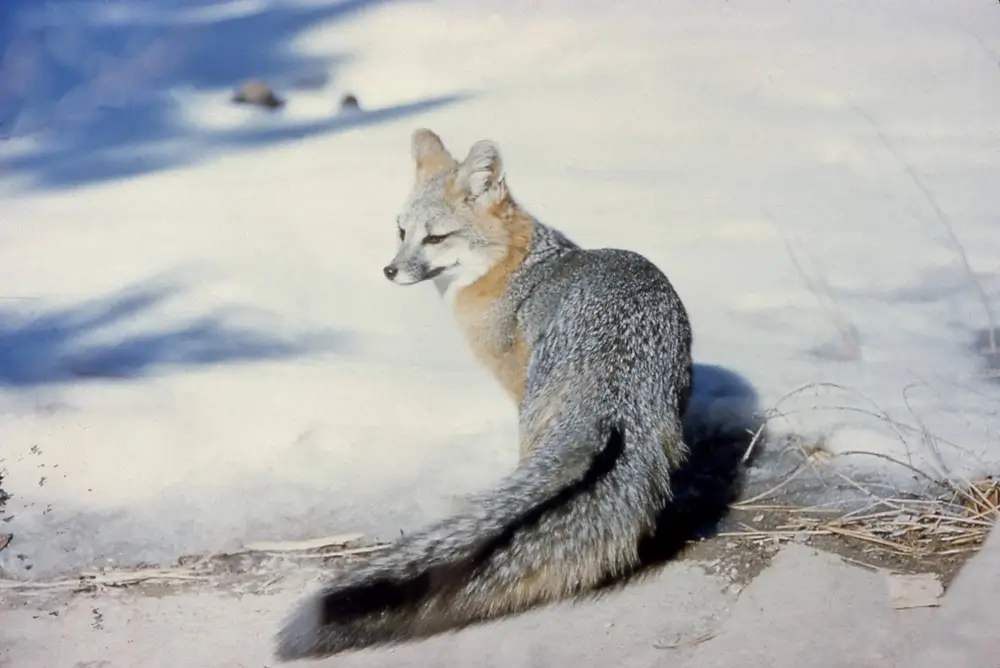
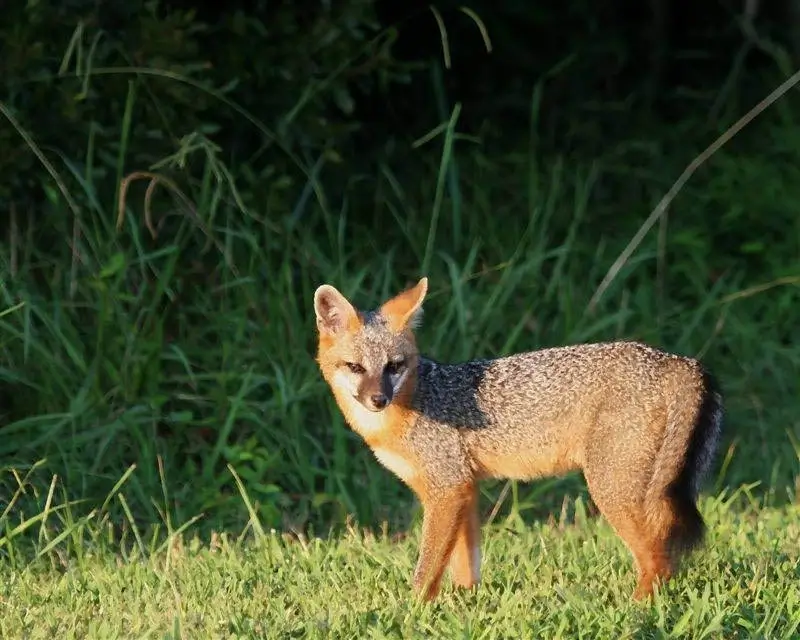
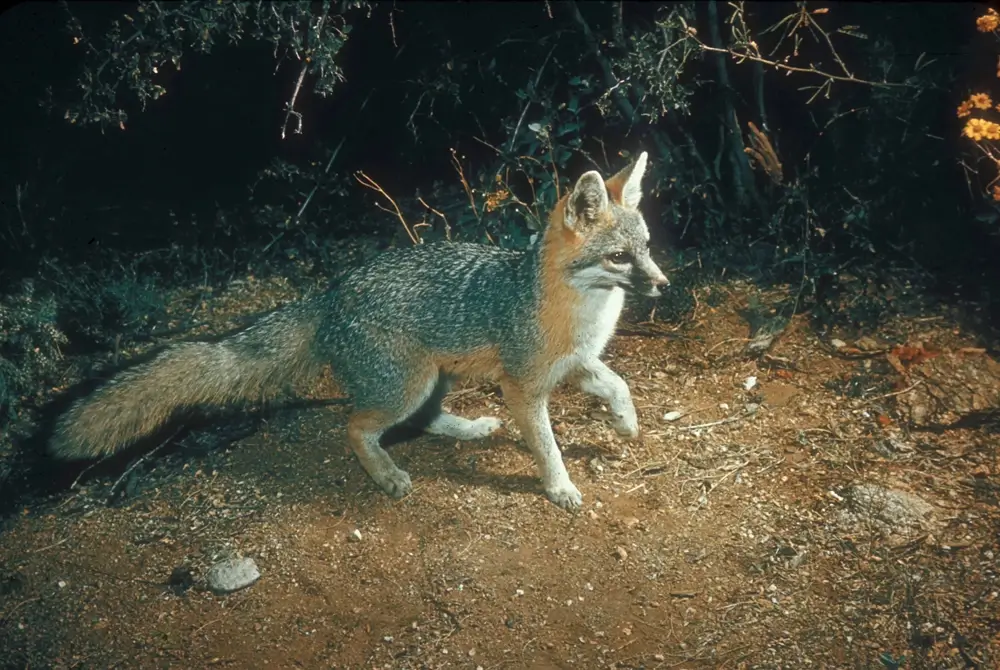
Gray foxes are smaller than red foxes. They are 2.5-3.8 feet (0.76-1.2 m) from the tip of their nose to the end of their tail and weigh 7-15.4 pounds (3.6-7 kg).
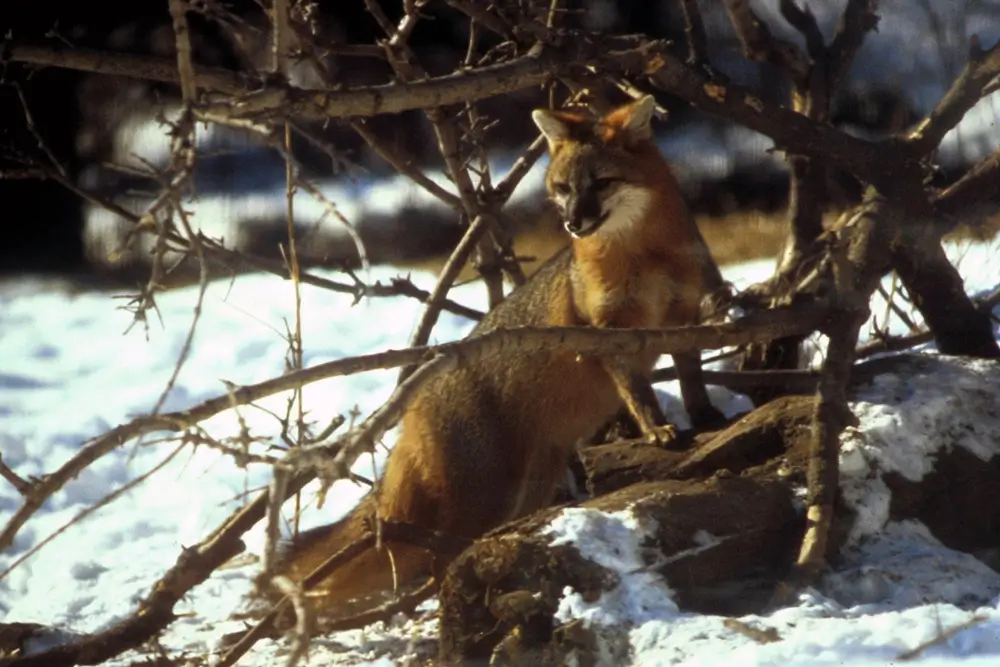
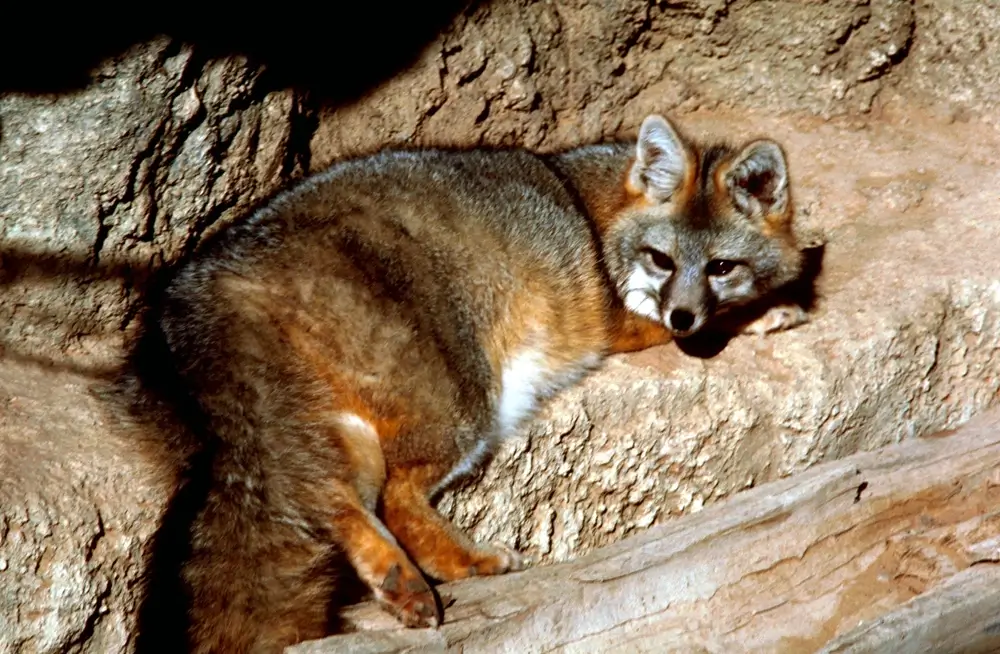
The gray fox is a peppery gray on top. It is reddish-brown on its sides, chest, and the back of its head. Its legs and feet are also a reddish color. It has a long bushy tail with a black stripe on top. The gray fox has pointed ears, a pointed muzzle, and long, hooked claws.
Habitat
The gray fox lives in a wide variety of habitats but prefers areas with lots of brush or woods.
Diet
The gray fox is a solitary hunter and eats a wide variety of foods. A large part of its diet is made up of small mammals like mice, voles, and eastern cottontail rabbits.
It also eats birds, insects, and plants like corn, apples, nuts, berries, and grass. In the summer and autumn, grasshoppers and crickets are an important part of its diet.
Life Cycle
Mating season is between January and April. About 53 days after mating, the female gives birth to one to seven pups. The male helps feed the pups.
They are weaned when they are about three months old and can hunt on their own when they are four months old.
The pups leave their mother in the autumn. The same males and females usually mate together every year.
In the wild, gray foxes have a lifespan of 6-8 years. In captivity, they can live for 12-15 years.
Behavior
The gray fox makes its den in rocky crevices, caves, hollow logs, and trees. It sometimes enlarges a woodchuck burrow and uses it as a den. Dens are usually used only during the mating season and when raising young.
Did You Know?
The gray fox can climb trees. It occasionally climbs a tree to forage for food or just to rest.
Support for NatureWorks Redesign is provided by:
The Gray Fox in NH
The gray fox is found throughout New Hampshire, but it is most commonly found in the southern part of the state, and it is rare in Coos County.
The gray fox is found from southern Canada to northern Colombia and Venezuela. It is not found in some mountainous parts of the Northwest United States and in the Great Plains.